
What To Wear When Working In The Garden During Summer
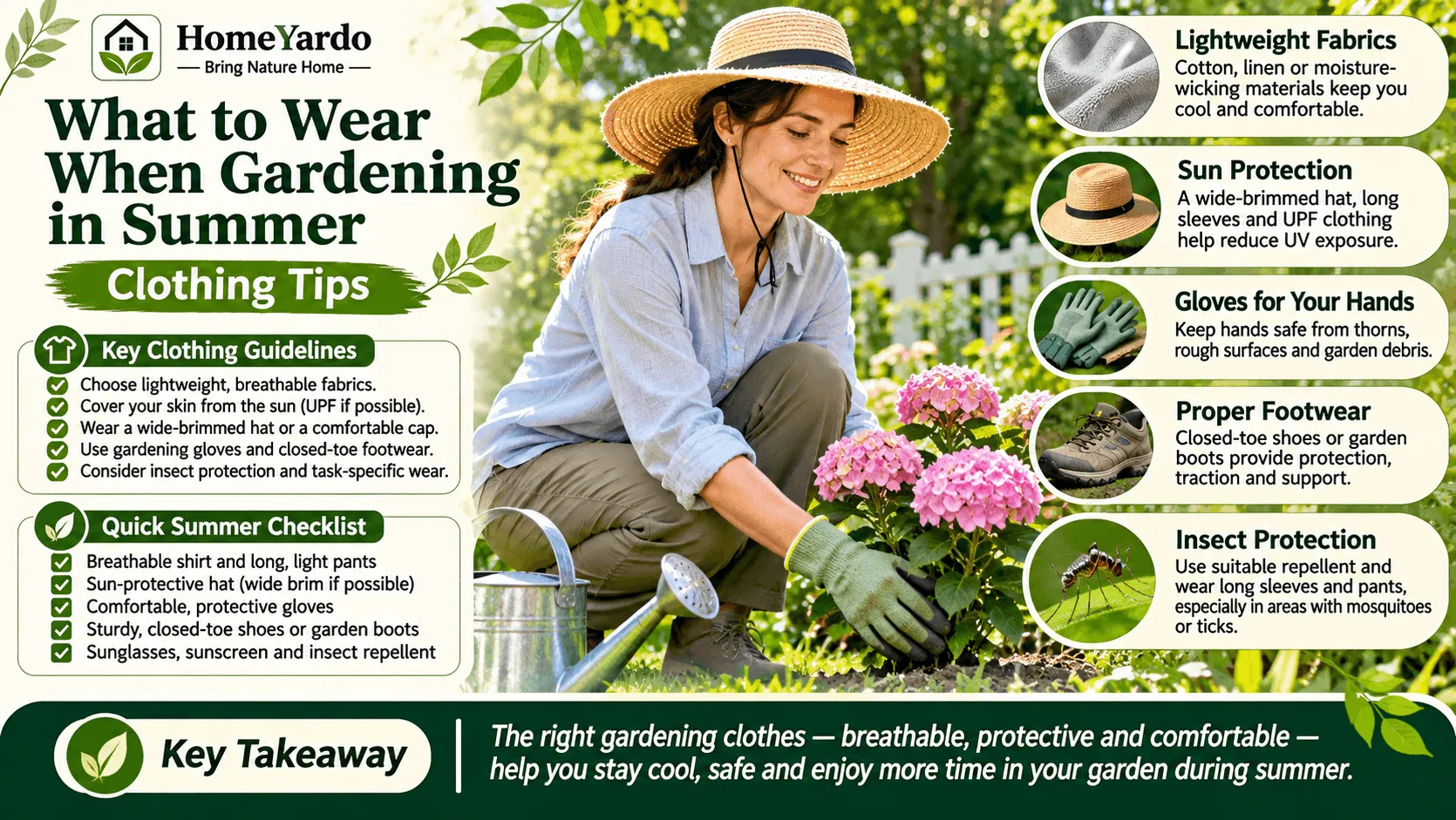
As a result of active plant growth, blooming flowers, and the need for frequent watering, pruning and other maintenance on many vegetable gardens, summer is one of the most active times for gardeners. While working outside during the summer months provides a number of benefits to gardeners, there are several disadvantages associated with working outside during the hot summer months. These disadvantages include but are not limited to being exposed to high temperatures, direct sunlight, sweating excessively, and being bitten by insects while gardening. If individuals do not wear clothing that will provide protection against these conditions while gardening, they may find themselves experiencing some level of discomfort while gardening.
Clothing worn for gardening can have an impact on how comfortable you are while working in the garden for long periods. Lightweight fabric, proper protective footwear, appropriate head wear and other comfortable accessory options will assist in preparing the gardener for various types of outdoor work. Learning what type of clothing is best for gardening during the summer months will increase your comfort and provide the necessary support to maintain basic outdoor safety.
If your summer gardening involves maintaining seasonal blooms, explore these summer flowers that bloom and their watering, pruning, and care requirements.
Choose Lightweight and Breathable Fabrics
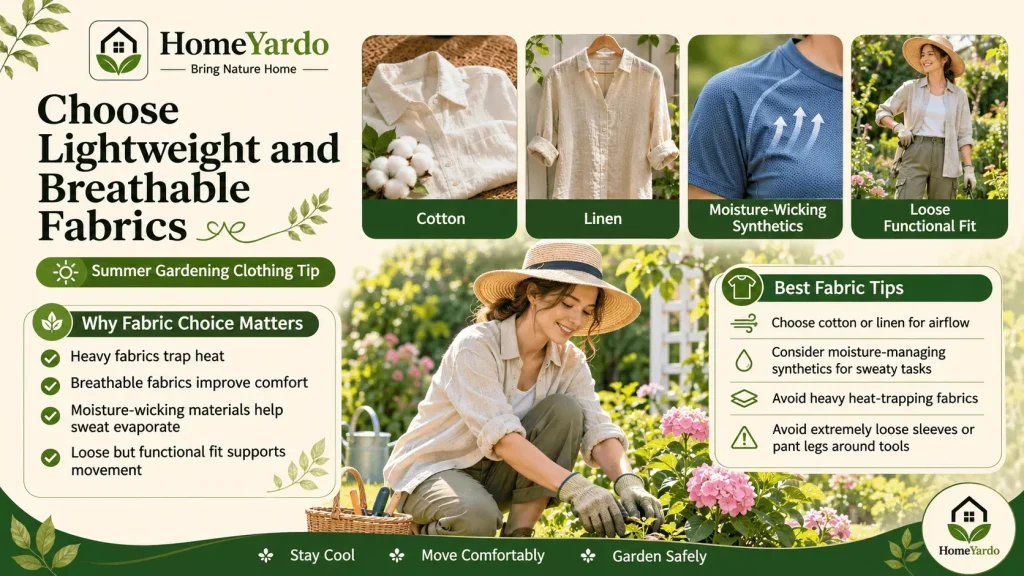
One of the most essential aspects of choosing your summer garden clothing is selecting the right type of fabric. Fabrics that are heavy may contain the heat from your body and make it difficult to perform physical tasks such as gardening while directly in the sun.
The reason many people choose to wear clothing made from cotton or linen is that these materials provide a way for your body to breathe and feel soft on your skin. When it gets hot outside, wearing lightweight cotton shirts, loose-fitting pants, and breathable blouses can help to alleviate any discomfort you may be experiencing.
Synthetic materials, which also feature moisture-management capabilities, are yet another choice. These types of materials have been engineered so they pull sweat off of your body and allow for rapid evaporation. This is especially helpful during high-intensity workouts or any activity where there will be significant amounts of perspiration.
Additionally, gardeners must take into account how well fitting their clothing is. While loosely fitting yet functional apparel typically allows for greater mobility compared to tightly fitting clothing, it is important to avoid wearing extremely loose sleeves or pants legs when operating gardening equipment due to the potential of those parts being caught up in the tools or machine.
Wear Clothing That Protects Your Skin from Sun Exposure
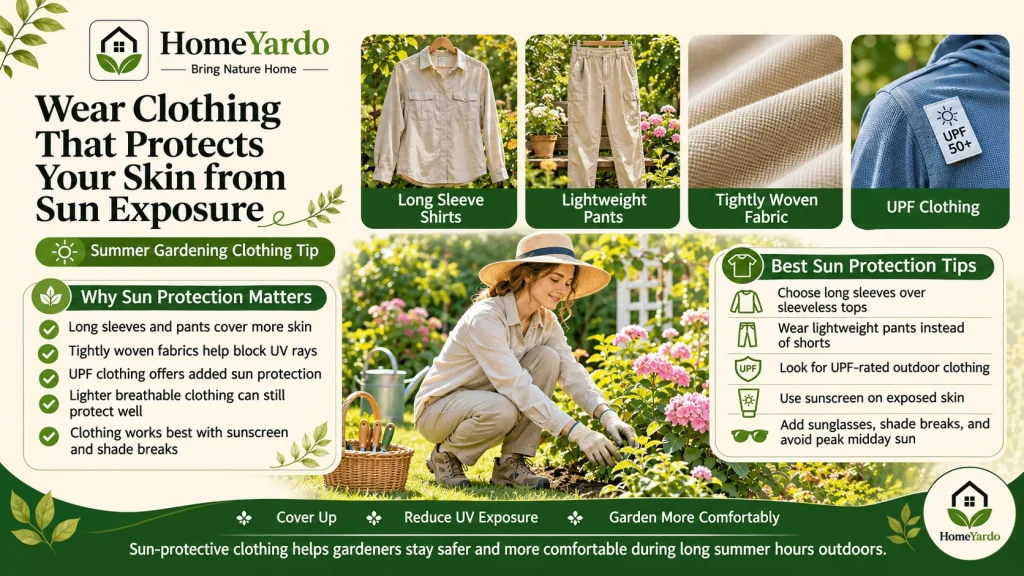
Spending a lot of time outside will increase your exposure to UV rays. For that reason, protecting your skin should be considered when selecting suitable clothing for working in the garden.
When choosing what to wear to protect yourself from the sun, long sleeve shirts and lightweight pants offer greater protection from UV rays than short sleeve shirts and shorts. Additionally, selecting tightly woven fabric will limit the amount of UV ray exposure to your skin.
Gardening and outdoor clothes often come with a Ultraviolet Protection Factor (UPF). The UPF of a piece of clothing is determined by how well the fabric stops UV rays. Clothes that have the right amount of UPF protection will give you more protection from the sun when you’re working outside for hours at a time.
The protection level offered by a garment may depend on the color of the fabric as well as on how well it has been cared for. While there may be some correlation between the color of a garment and the amount of UV protection provided, the general characteristics of a garment such as the amount of area covered, the type of weave used, the thickness of the material, and the UPF rating are likely better indicators of the overall level of UV protection available from that garment.
Clothing should be used as part of a complete system of protection. Using a broad-spectrum sunscreen on all parts of your body that are exposed to the sun, using sunglasses, resting in the shade periodically, and avoiding the most intense sunlight during mid-day can assist in reducing excessive sun exposure.
Select Comfortable Headwear and Fabric Accessories
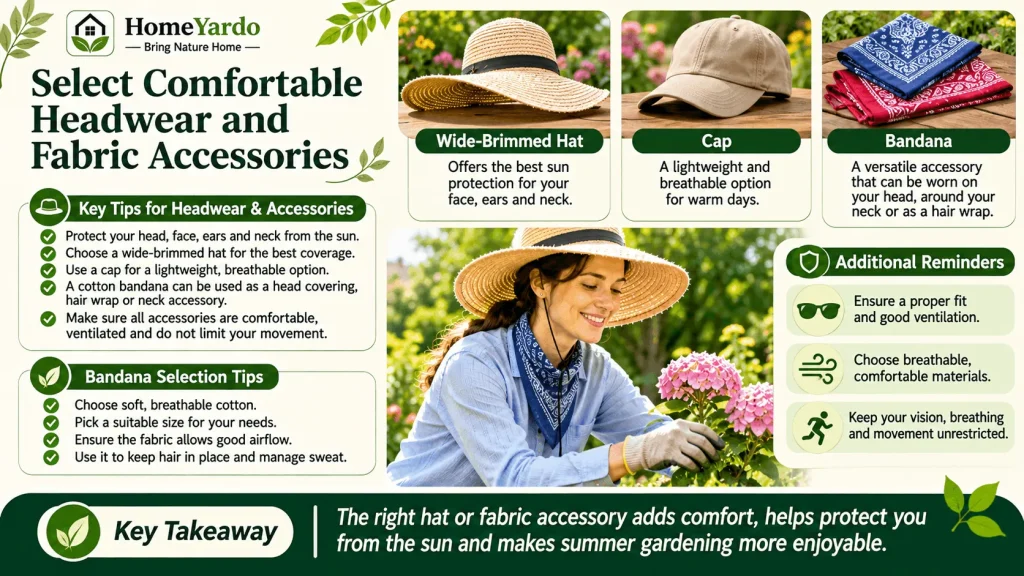
Headgear is an important component of your summer gardening attire. When you garden in an area that does not have shade from trees or plants, you will likely spend much of your gardening time with your head and face exposed directly to the sun.
Wide-brimmed hats are beneficial since they allow a person to shade his/her face, ears, and neck. Caps are light weight, yet they do not fully cover the ears and back of the neck as a wide-brimmed hat does. Gardeners must select headwear which fits properly, provides adequate ventilation, and is comfortable.
Fabric accessories also offer many practical advantages. For instance, you can use a cotton bandana as a head covering, hair wrap, or neck accessory by folding it. A bandana can keep your hair out of your eyes and allow you to quickly change from one task to another in the garden.
When choosing a bandana, you should look at what type of material it is made out of (e.g., cotton), how soft the material feels against your skin, what size the bandana will be, and how well the material allows air to pass through. A cotton bandana can be a great choice for day-to-day wear. The cotton fabric selection from 4inbandana shows how a traditional accessory like a bandana can also function as a useful everyday item.
Regardless of which type of accessory you choose to wear, you should always make sure that it will not limit your ability to see clearly, breathe easily, or move around comfortably. Additionally, a bandana is not a suitable substitute for a sun-protective hat that is designed to protect your head and face from the sun’s harmful rays.
Choose the Right Gardening Gloves and Footwear
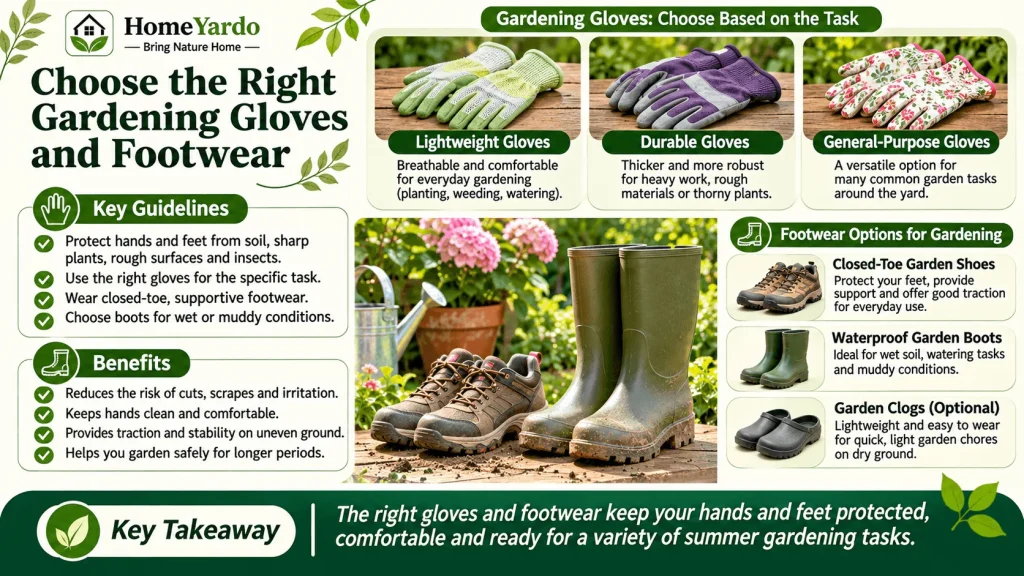
Outdoor gardeners must protect their hands and feet appropriately. Soil, rough surfaces, sharp plants, insects, and other possible toxins can be encountered by a gardener when doing various gardening jobs.
Gardening gloves are used to keep your hands safe while planting, pruning, using compost, and weeding. Gloves that are lightweight and breathable are appropriate for most of the daily activities in the garden when it is hot outside. On the other hand, thicker and more robust gloves are required when dealing with plants with thorns or materials that are rough.
For additional outdoor precautions, these yard maintenance tips to keep snakes away also explain why sturdy footwear and protective clothing matter when working near dense vegetation.
Your footwear is also important. Closed toe shoes prevent you from having your feet hurt by dropped tools, sharp items, rocks, and the chance of stepping on bugs. Good garden shoes will provide traction, support, and plenty of room to allow your feet to move naturally.
When you garden on wet soil or water plants, waterproof gardening boots are usually more effective. Selecting your footwear based upon the condition of the ground and the type of gardening work that you will perform can minimize discomfort as well as the potential for minor injuries.
Consider Insect Protection and Outdoor Safety
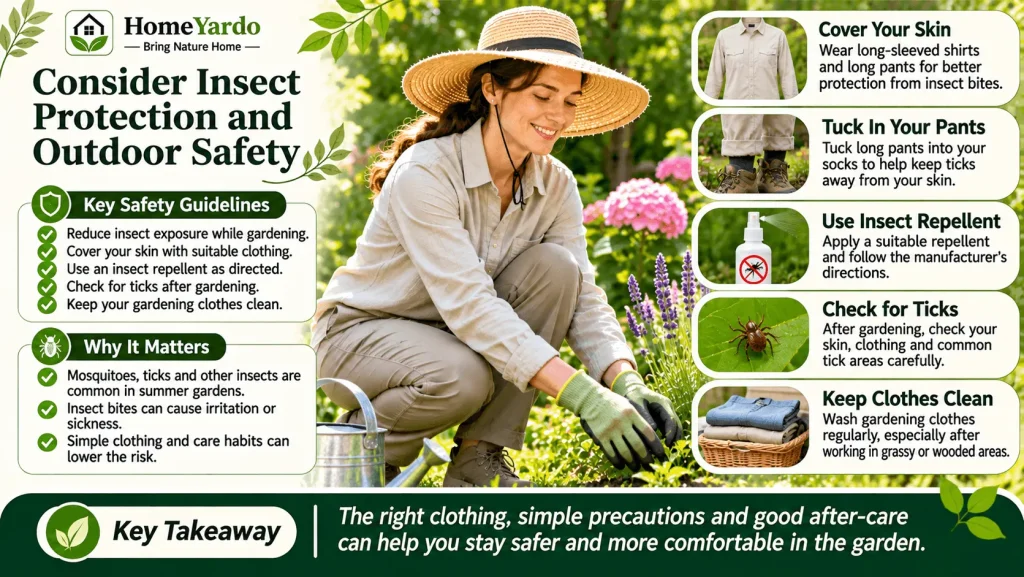
Different types of insects, such as mosquitoes, ticks, etc., are attracted to summer gardens. Gardeners who work around tall grass, shrubs, compost piles, and/or thick plants may need to take extra steps with their clothing choices.
Long pants and long-sleeved shirts can help protect against exposed skin. When you tuck your long pants into your socks, this will help protect you from ticks in those areas where they are most prevalent. Light-colored clothing can make it easier to see some of the insects.
Suitable insect repellants can be applied per the manufacturer’s directions. When you finish gardening, make sure to check all exposed skin, clothing, and locations that ticks typically attach themselves to.
Regularly clean your clothing after you have been out in the woods, or after you have been in an area of high density of plants/vegetation. Regular use of these simple methods will help provide for a safe outdoor experience.
Dress According to the Gardening Activity
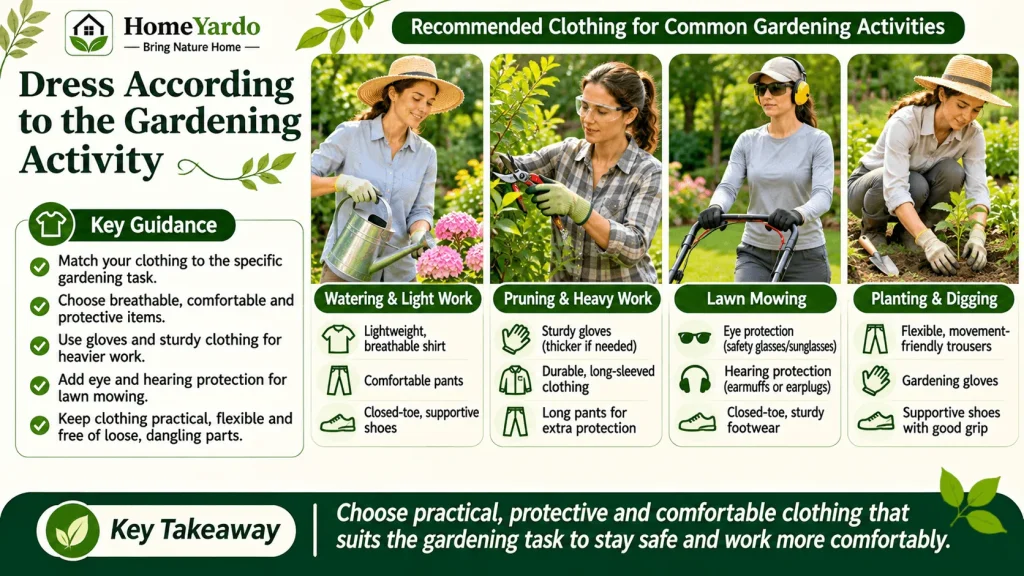
Different types of garden tasks require different kinds of clothes. Select your outfit according to the specific gardening activity you plan to do, as this will help keep you comfortable and safe.
To water plants and perform simple yard work, it is generally acceptable to wear light-weight breathable clothing (shirts) along with comfortable pants and appropriate footwear. If you plan on doing some heavy duty yard work such as cutting back shrubs or working with thorns, it is highly recommended that you invest in a pair of sturdy gloves and/or durable clothing.
Lawn mowing requires some other thought. Depending on what type of mower you are using, you will need to think about wearing proper footwear, eye protection, and hearing protection. You must avoid wearing loose-fitting clothes or dangling items when working with moving parts.
In order to make repeated movements associated with planting and digging less strenuous on the body, it is recommended to wear flexible trousers, supportive shoes and gloves. A second shirt or towel may also be beneficial on extremely warm days.
Maintain and Care for Summer Gardening Clothes
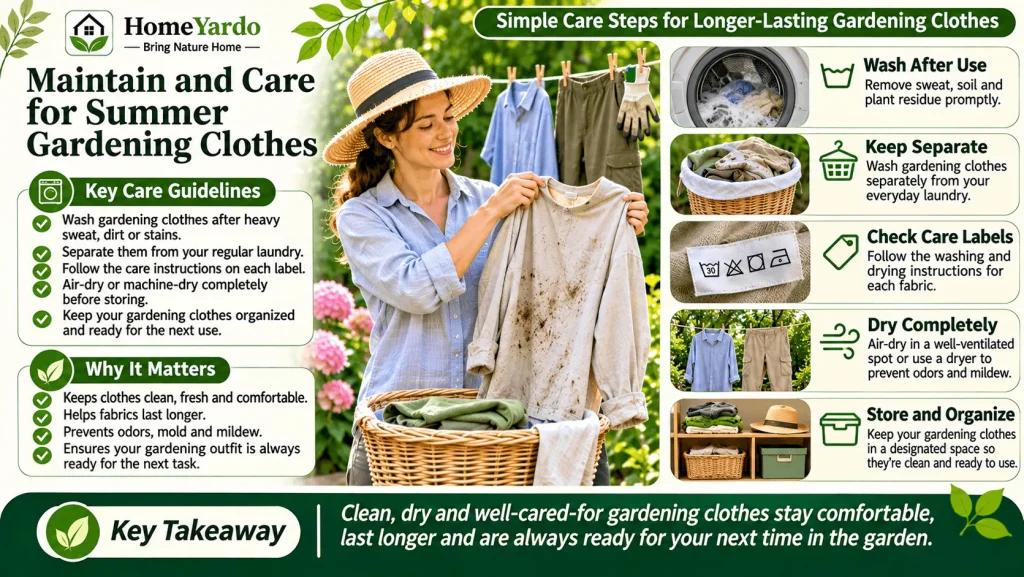
The process of maintaining your regular wardrobe for gardening purposes ensures that you will always have comfortable gardening clothes to wear, and they will be available for multiple uses. During a single day of gardening activity, you can easily develop a significant amount of perspiration, dirt, grass stains, and other types of residue from plants on your clothing.
When gardening, you should always wash your clothes after you have sweated a lot or if they are very dirty. It may be necessary to separate your dirty gardening clothes from the rest of your laundry, and you will need to follow the care instructions that are printed on the labels of your clothes.
Similarly to the attention given to fabric accessories, most cotton items are able to be washed using the care label instructions. However, many of the more delicate types of fabric will have different requirements for washing.
Before putting away clothes, allow them to fully dry. Drying your clothes will help avoid bad smells and other issues related to wetness. If you have gardening clothes that you use only for gardening purposes, you may find it easier to keep your equipment organized and ready for the next time you go outside if you create a designated space for these items.
You can also explore DIY outdoor storage ideas for tools and yard gear to keep gardening gloves, tools, and other outdoor equipment organized between uses.
Final Thoughts
When selecting clothing to use while gardening during the summer months, there are many other factors to consider besides just what you should wear for warm weather. Factors that will allow for an easier, safer, and more enjoyable gardening experience include using breathable materials, wearing some type of head covering, using protective hand gear such as gloves, selecting proper shoes/boots, and utilizing UV protection in your choice of attire.
When deciding what to wear while gardening, it is important for you to take into account the weather conditions you will be working under, how long you anticipate completing your gardening activity, and exactly what types of gardening activities you intend on participating in. By using a combination of correct clothing, drinking plenty of water, wearing sunscreen, seeking shade as needed, and taking regular breaks, you will find that outdoor gardening activities become much easier to manage.
Preparation allows gardeners to spend more time working in the garden, and stay comfortable and safe from heat, insects, etc., during the summer months.
FAQ’s
When gardening in summer, wear lightweight, breathable clothing that allows comfortable movement. Long-sleeved shirts, loose-fitting pants, a wide-brimmed hat, gardening gloves, and closed-toe shoes are practical options. Choose clothing that provides sun protection without trapping excessive heat.
Lightweight cotton, linen, and moisture-wicking synthetic fabrics are common choices for summer gardening. Cotton and linen allow airflow, while moisture-wicking materials help move sweat away from the skin. The best fabric depends on temperature, humidity, gardening activity, and personal comfort.
Yes, lightweight long-sleeved shirts can help protect your arms from direct sunlight, insects, and minor contact with plants. Choose breathable, loose-fitting fabrics with a suitable UPF rating when possible. Avoid thick materials that may trap excessive heat.
Closed-toe gardening shoes with slip-resistant soles, adequate support, and breathable materials are suitable for many summer gardening activities. Waterproof boots may be more appropriate when working in wet soil, while sturdier footwear is useful for digging, pruning, or handling heavy equipment.
Gardening gloves help protect your hands from dirt, rough surfaces, plant thorns, and minor injuries. Lightweight, breathable gloves work well for planting and weeding, while thicker gloves may be needed for pruning thorny shrubs or handling rough materials.
A wide-brimmed hat is generally a suitable choice because it provides shade for the face, ears, and neck. Look for a comfortable fit, breathable materials, and adequate coverage. A baseball cap offers some facial shade but provides less protection for the ears and neck.
Wear breathable clothing, drink water regularly, take breaks in shaded areas, and schedule demanding gardening tasks during cooler parts of the day. Avoid prolonged work during extreme heat, and stop if you experience symptoms such as dizziness, weakness, or unusual fatigue.
Shorts may feel comfortable during light gardening tasks, but they leave more skin exposed to sunlight, insects, and scratches. Lightweight long pants generally offer better coverage, particularly when working around dense plants, tall grass, or thorny vegetation.