DIY Outdoor Storage Ideas For Tools And Yard Gear
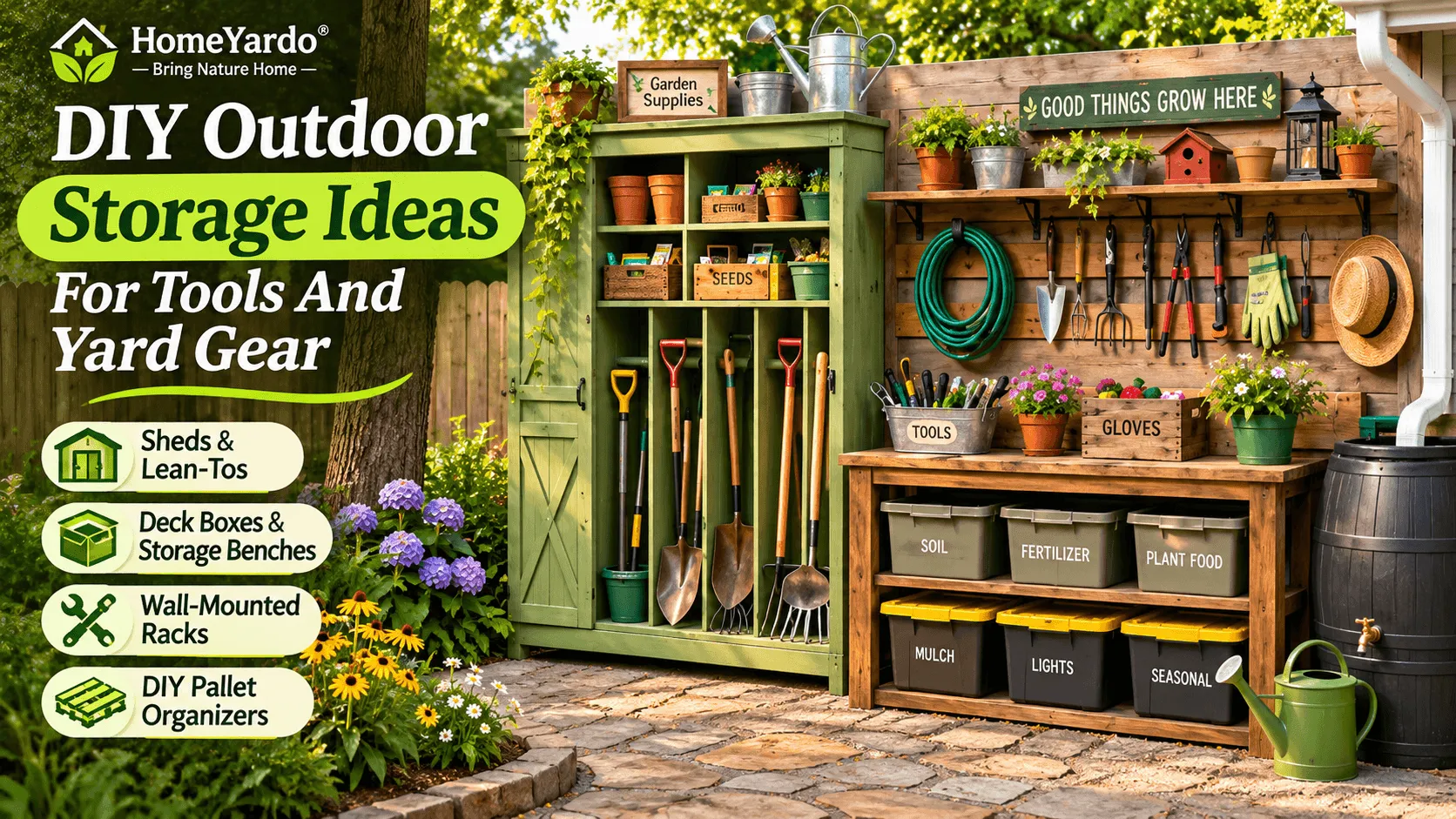
DIY outdoor storage ideas can help you organize garden tools, lawn equipment, and seasonal yard gear without filling every corner of your garage. From small storage sheds and lean-tos to deck boxes, wall-mounted racks, and storage benches, there are practical solutions for nearly every yard size and budget.
Lawn mowers, rakes, hoses, wheelbarrows, and gardening supplies can quickly take over valuable garage space. When everything ends up in the same corner, finding a tool becomes frustrating, and parking your car may feel like solving a puzzle.
The solution isn’t necessarily to build a large shed. Sometimes, a few shelves, a weather-resistant box, and a well-placed tool rack are enough.
This guide covers outdoor storage projects for large and small spaces, including how to choose a location, protect equipment from weather damage, improve security, and decide which belongings should stay in the garage.
Why Move Some Storage Outside The Garage?
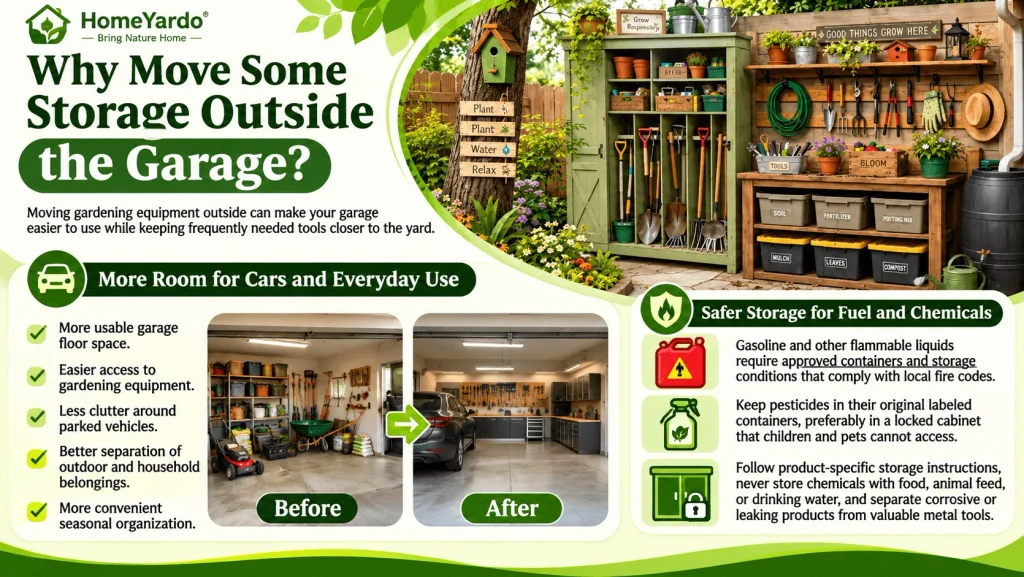
Moving gardening equipment outside can make your garage easier to use while keeping frequently needed tools closer to the yard.
The goal is to create dedicated storage areas rather than simply moving clutter from one place to another.
More Room for Cars and Everyday Use
Lawn mowers, wheelbarrows, and fertilizer spreaders occupy valuable floor space. Moving appropriate equipment into dedicated outdoor storage can create room for parking, workbenches, and garage shelving.
It also makes routine gardening easier. Instead of walking through a crowded garage to find a shovel, you can keep it near the garden where you need it.
A well-organized outdoor storage area offers several benefits:
- More usable garage floor space.
- Easier access to gardening equipment.
- Less clutter around parked vehicles.
- Better separation of outdoor and household belongings.
- More convenient seasonal organization.
Safer Storage for Fuel and Chemicals
Storage decisions should also account for fire hazards and chemical exposure.
Gasoline and other flammable liquids require approved containers and storage conditions that comply with local fire codes. A suitable detached, ventilated storage location may be safer than an attached garage, but an ordinary garden shed is not automatically appropriate for fuel storage.
Fertilizers, pesticides, and other garden chemicals also need careful handling.
Keep pesticides in their original labeled containers, preferably inside a locked cabinet that children and pets cannot access. Follow product-specific storage instructions, and never keep chemicals alongside food, animal feed, or drinking water.
Separate potentially corrosive or leaking products from valuable metal tools.
Plan Your Outdoor Storage Before You Build
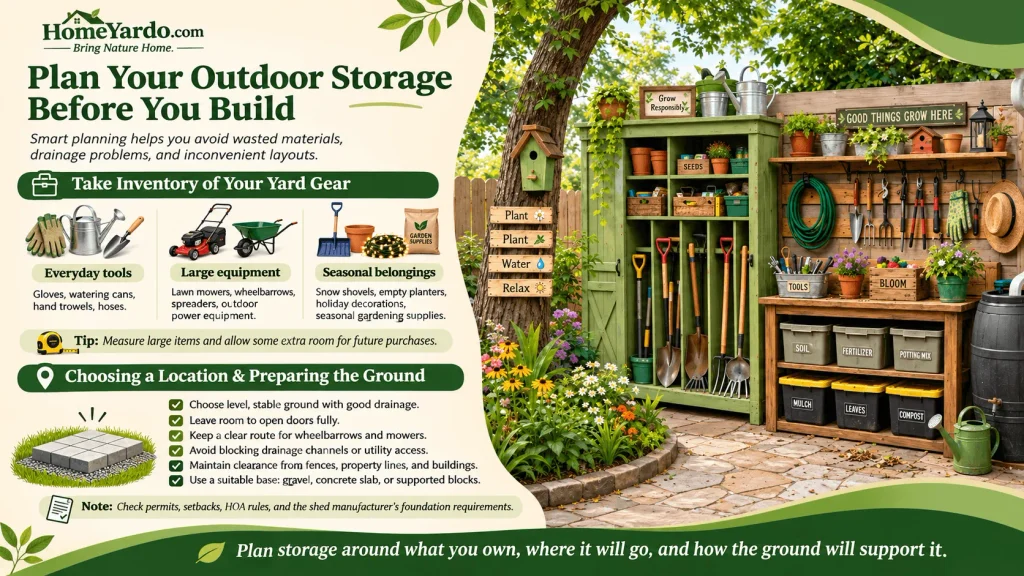
Before choosing a shed, bench, or shelving system, consider what you own, how often you use it, and where the storage will fit.
A little planning can prevent wasted materials, drainage problems, and inconvenient layouts.
Take Inventory of Your Yard Gear
Start by listing everything you want to store outdoors.
Separate your equipment into three groups:
- Everyday tools: Gardening gloves, watering cans, hand trowels, and hoses.
- Large equipment: Lawn mowers, wheelbarrows, spreaders, and outdoor power equipment.
- Seasonal belongings: Snow shovels, empty planters, holiday decorations, and seasonal gardening supplies.
Measure the largest items, including handles and attachments. Make sure storage doors are wide enough to move equipment without awkward lifting.
Allow some extra space for future purchases, but avoid choosing an unnecessarily large structure.
Choosing a Location and Preparing the Ground
Look for a level area that drains well after rainfall.
A storage shed placed in a low, muddy corner may develop moisture problems even when its roof is completely waterproof.
When selecting a location:
- Choose stable ground away from standing water.
- Leave enough room to open doors fully.
- Provide a clear route for wheelbarrows and lawn mowers.
- Avoid blocking drainage channels or utility access.
- Maintain suitable clearance from fences, property lines, and buildings.
Depending on the project, a compacted gravel foundation, concrete slab, or properly supported block foundation can provide a stable base.
Follow the shed manufacturer’s foundation requirements.
Before construction, check local building permits, property setbacks, homeowners association rules, and applicable structural requirements. Permit exemptions vary by location, and an exempt shed may still need to meet zoning or building standards.
DIY Shed and Lean-To Storage Ideas
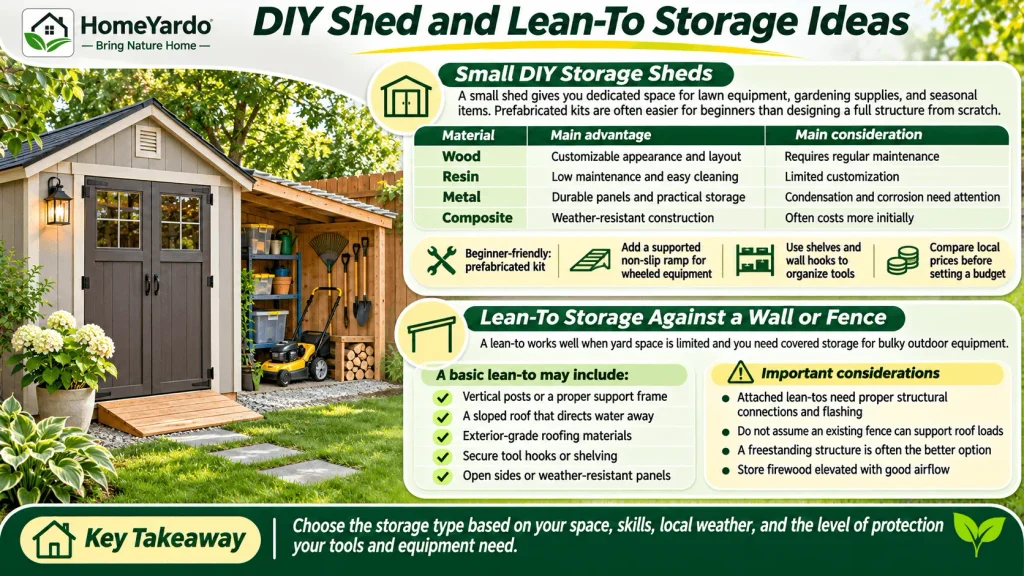
Sheds and lean-tos work well when you have larger equipment or several bulky items.
The right option depends on available space, construction skills, local weather, and the amount of protection your belongings need.
Small DIY Storage Sheds
A small shed creates a dedicated space for lawn equipment, gardening supplies, and seasonal belongings.
You can build one using a prefabricated kit or construct a custom structure with timber framing and exterior-grade materials.
Common shed materials include:
| Material | Main advantage | Main consideration |
|---|---|---|
| Wood | Customizable appearance and layout | Requires regular maintenance |
| Resin | Low maintenance and easy cleaning | Limited customization |
| Metal | Durable panels and practical storage | Condensation and corrosion need attention |
| Composite | Weather-resistant construction | Often costs more initially |
For a beginner-friendly project, a prefabricated kit may be easier than designing an entire building.
Add a ramp if you plan to store a lawn mower or other wheeled equipment. Make sure the ramp is appropriately supported and has a non-slip surface.
Inside the shed, install shelves for smaller supplies and use wall-mounted hooks to keep long-handled tools organized.
Budget consideration: Small shed kits can cost several hundred to several thousand dollars, depending on size, material, foundation, delivery, and installation. Compare current local prices before setting your budget.
Lean-To Storage Against a Wall or Fence
A lean-to is a useful alternative when you have limited yard space.
This type of structure uses a narrow footprint and can provide covered storage for ladders, wheelbarrows, gardening tools, and other outdoor equipment.
A basic lean-to may include:
- Vertical posts or a properly designed support frame.
- A sloped roof that directs water away.
- Exterior-grade roofing materials.
- Secure tool hooks or shelving.
- Open sides or weather-resistant panels.
An attached lean-to needs suitable structural connections and flashing to prevent water from entering the adjoining building.
Do not assume an existing fence can support a roof or heavy storage loads. A freestanding structure is often the better choice when the fence was not designed for additional weight.
If you store firewood beneath a covered structure, keep it elevated and allow airflow around the stack.
Small-Space Outdoor Storage Solutions
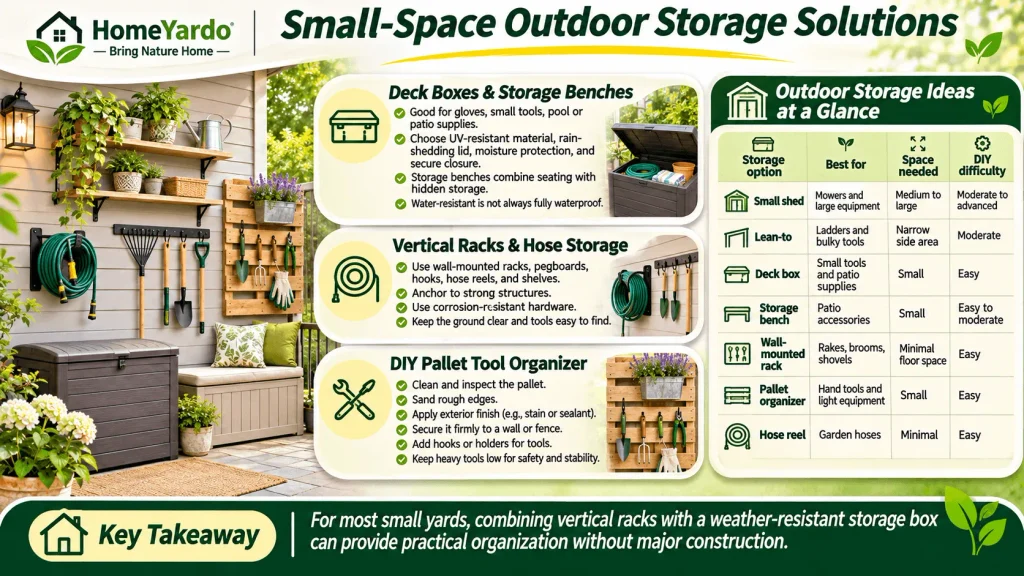
A large shed isn’t necessary for every property.
Patios, side yards, balconies, and compact gardens can benefit from smaller projects that use vertical space and multifunctional furniture.
Deck Boxes and Storage Benches
A deck box is one of the simplest ways to organize everyday outdoor belongings.
It works particularly well for gardening gloves, small tools, pool accessories, and patio supplies.
Choose a model with:
- UV-resistant exterior materials.
- A lid that sheds rainwater.
- Suitable ventilation or moisture protection.
- A secure closure.
- Enough capacity without overwhelming the space.
A storage bench provides another practical option by combining seating with hidden storage.
For a DIY version, build a weather-resistant wooden box with a hinged lid and reinforce the structure for its intended use. Add appropriate supports and hardware if the bench will hold seated adults.
Remember that water-resistant storage is not necessarily waterproof. Textiles and sensitive items may still need sealed inner containers.
Vertical Racks and Hose Storage
Vertical storage helps keep the ground clear and makes tools easier to find.
Install heavy-duty hooks or racks on a suitable wall, shed frame, or reinforced post.
Useful ideas include:
- A wall-mounted rack for shovels and rakes.
- A pegboard inside a covered storage area.
- Dedicated hooks for watering cans and hand tools.
- A hose reel mounted near an outdoor faucet.
- Shelves for pots, trays, and lightweight supplies.
Use corrosion-resistant screws and hardware designed for outdoor conditions.
Always anchor racks to a structure capable of supporting the weight. Avoid attaching heavy tools to weak fence boards or unsupported panels.
DIY Pallet Tool Organizer
A wooden pallet can become a simple organizer for gardening equipment.
Choose a clean, structurally sound pallet with known treatment markings. Avoid pallets with chemical spills, unknown contamination, or extensive damage.
A basic project involves:
- Cleaning and inspecting the pallet.
- Sanding rough edges and exposed splinters.
- Applying an appropriate exterior finish.
- Securing the pallet to a suitable supporting structure.
- Adding hooks or tool holders where needed.
Keep heavy tools low and ensure the organizer cannot tip or pull away from its supports.
Outdoor Storage Ideas at a Glance
| Storage option | Best for | Space needed | DIY difficulty |
|---|---|---|---|
| Small shed | Mowers and large equipment | Medium to large | Moderate to advanced |
| Lean-to | Ladders and bulky tools | Narrow side area | Moderate |
| Deck box | Small tools and patio supplies | Small | Easy |
| Storage bench | Patio accessories | Small | Easy to moderate |
| Wall-mounted rack | Rakes, brooms, shovels | Minimal floor space | Easy |
| Pallet organizer | Hand tools and light equipment | Small | Easy |
| Hose reel | Garden hoses | Minimal | Easy |
For most small yards, a combination of vertical racks and a weather-resistant storage box provides enough organization without requiring major construction.
Weatherproofing and Securing Your Outdoor Storage
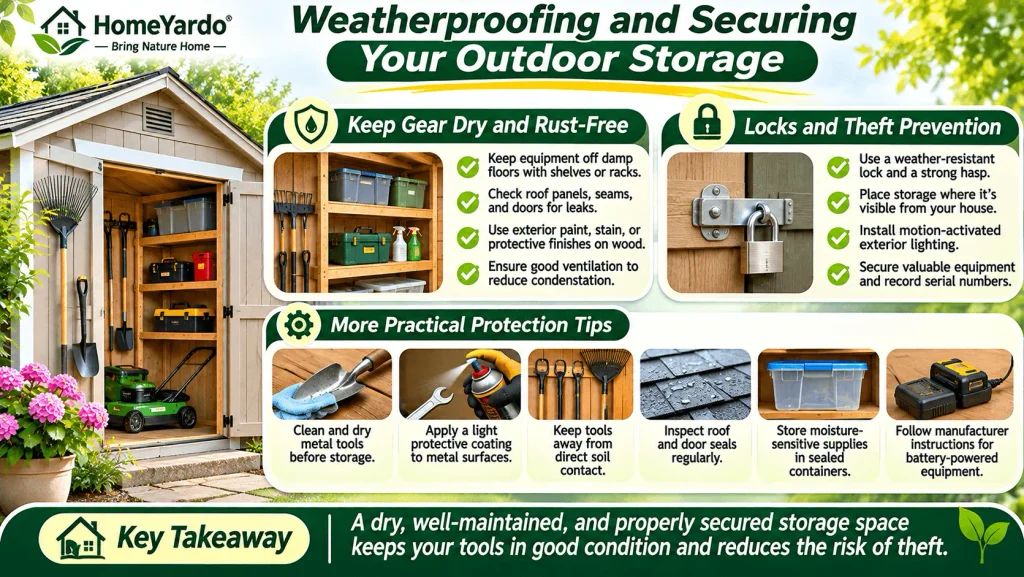
Outdoor storage must handle changing temperatures, sunlight, wind, rain, and moisture.
Even a well-built structure can damage its contents if water enters through the roof, condensation forms inside, or the ground stays wet.
Keeping Gear Dry and Rust-Free
Start by keeping equipment off damp floors.
Install shelves, racks, or raised platforms where appropriate. Check that roof panels, seams, and doors prevent rainwater from entering.
For wooden structures, use suitable exterior paint, stain, or protective finishes and maintain them according to product instructions.
Ventilation also matters. A completely sealed shed can trap humid air and encourage condensation.
To protect equipment:
- Clean and dry metal tools before storage.
- Apply a light protective coating to appropriate metal surfaces.
- Keep tools away from direct soil contact.
- Inspect the roof and door seals regularly.
- Store moisture-sensitive supplies in suitable sealed containers.
- Follow manufacturer instructions when storing battery-powered equipment.
In damp climates, moisture control may require more attention than simply installing a thicker door or adding extra insulation.
Locks and Theft Prevention
Outdoor equipment can be expensive, particularly power tools, bicycles, and lawn machinery.
Use a weather-resistant lock with a properly installed hasp or locking mechanism.
Additional precautions include:
- Positioning storage where it is reasonably visible from the house.
- Installing motion-activated exterior lighting.
- Securing valuable equipment when appropriate.
- Recording equipment serial numbers.
- Keeping photographs and purchase records.
A lockable shed is a useful deterrent, but no outdoor storage system can guarantee protection against theft.
Balancing Garage and Outdoor Storage
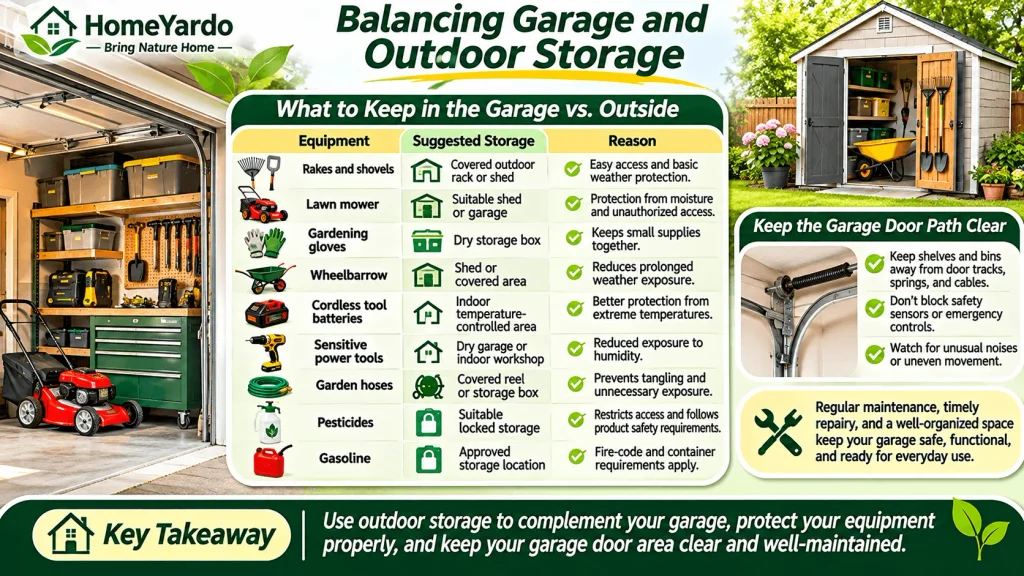
Outdoor storage works best when it complements your garage rather than replacing it completely.
Some belongings tolerate outdoor conditions well, while others need a more stable environment.
What to Keep in the Garage vs. Outside
| Equipment | Suggested storage | Reason |
|---|---|---|
| Rakes and shovels | Covered outdoor rack or shed | Easy access and basic weather protection |
| Lawn mower | Suitable shed or garage | Protection from moisture and unauthorized access |
| Gardening gloves | Dry storage box | Keeps small supplies together |
| Wheelbarrow | Shed or covered area | Reduces prolonged weather exposure |
| Cordless tool batteries | Indoor temperature-controlled area | Better protection from extreme temperatures |
| Sensitive power tools | Dry garage or indoor workshop | Reduced exposure to humidity |
| Garden hoses | Covered reel or storage box | Prevents tangling and unnecessary exposure |
| Pesticides | Suitable locked storage | Restricts access and follows product safety requirements |
| Gasoline | Approved storage location | Fire-code and container requirements apply |
Always follow the manufacturer’s storage instructions for powered equipment, batteries, and chemicals.
Keeping the Garage Door Path Clear
Moving yard equipment outside creates an opportunity to reorganize the garage.
Keep storage shelves, bins, and equipment away from garage door tracks, springs, cables, and safety sensors.
Avoid stacking belongings near moving door components or blocking access to emergency controls.
Repeated use can reveal problems with a garage door that previously went unnoticed. Unusual noises, uneven movement, or difficulty opening and closing may indicate that an inspection is needed.
If the door is moving unpredictably or showing signs of mechanical damage, professional Dependable Garage Door Repair can help address potential problems before they become more serious.
An older or damaged door may also affect security, weather protection, and everyday garage access.
For homeowners considering a replacement, Skilled Garage Door Installation can provide an opportunity to choose a properly fitted door with suitable durability and insulation for the property.
For ongoing care, a regular garage door maintenance checklist can help homeowners identify common warning signs and understand which maintenance tasks require a trained technician.
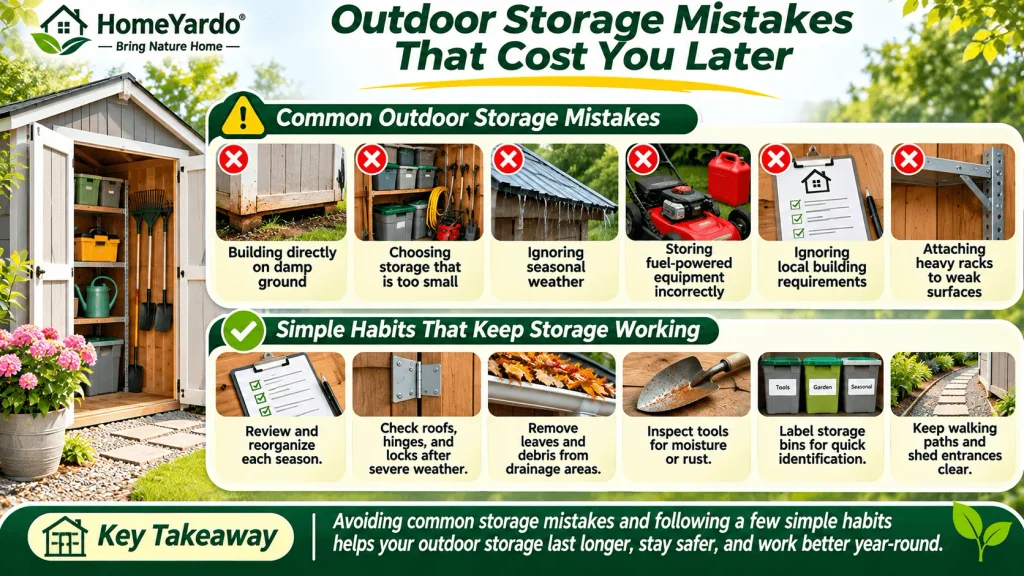
Outdoor Storage Mistakes That Cost You Later
Outdoor storage projects don’t always fail because of poor construction.
Sometimes the real problem is choosing the wrong location, underestimating the space needed, or forgetting about moisture.
Common Outdoor Storage Mistakes
Building directly on damp ground
A wooden shed floor placed directly on soil may absorb moisture and deteriorate. Use an appropriate foundation and maintain drainage around the structure.
Choosing storage that is too small
A tightly packed shed makes equipment difficult to remove and increases the chance of accidental damage.
Ignoring seasonal weather
Strong wind, heavy rainfall, snow, and intense sunlight affect outdoor structures differently. Choose materials and anchoring methods suitable for local conditions.
Storing fuel-powered equipment incorrectly
Before long-term storage, follow the equipment manufacturer’s fuel, cleaning, and maintenance instructions. Proper preparation can help prevent starting problems and fuel-system damage.
Ignoring local building requirements
Even a small structure may be subject to property setbacks, height restrictions, drainage requirements, or other local rules.
Attaching heavy racks to weak surfaces
A rack loaded with metal tools needs secure support. Use appropriate anchors and avoid overloading fences or thin wall panels.
Simple Habits That Keep Storage Working
An outdoor storage system should be easy to maintain throughout the year.
A few regular habits can prevent clutter from returning:
- Review and reorganize equipment each season.
- Check roofs, hinges, and locks after severe weather.
- Remove leaves and debris from drainage areas.
- Inspect stored tools for moisture or rust.
- Label storage bins for quick identification.
- Keep walking paths and shed entrances clear.
You can also create a small seasonal checklist so everyone in the household knows where equipment belongs.
Final Takeaway
The best DIY outdoor storage ideas are the ones that match your equipment, available space, budget, and local weather.
A small shed may be ideal for lawn equipment, while a lean-to can make use of a narrow side yard. For smaller spaces, wall-mounted racks, storage benches, and deck boxes offer practical alternatives without major construction.
Start by measuring your equipment and choosing a dry, accessible location. Build or install storage that is secure, easy to maintain, and suitable for the belongings you plan to keep there.
As you reclaim garage space, remember that keeping the garage itself secure and functional matters too. Homeowners who need professional help with a garage door can consider Garage Doors Guaranteed for assistance with its operation and condition.
With thoughtful planning, every tool can have a dedicated place, and you can spend less time searching for equipment and more time enjoying your outdoor space.
FAQ’s
Wall-mounted hooks, a simple wooden tool rack, or a repurposed pallet organizer can be affordable options. Use weather-resistant materials and install the rack in a sheltered location to reduce moisture exposure.
Use covered wall-mounted racks, storage benches, waterproof-rated containers, or a small lean-to. Keep metal tools clean and dry, and avoid leaving moisture-sensitive equipment exposed.
A lawn mower can be stored in a suitable shed or covered enclosure if its manufacturer permits those conditions. Protect it from rain, standing water, and extreme temperatures, and follow the equipment’s storage instructions.
Use suitable roofing, exterior finishes, door seals, and raised storage surfaces. Make sure rainwater drains away from the structure and provide ventilation to limit condensation.
Wall-mounted tool racks, narrow storage cabinets, compact deck boxes, and storage benches are practical choices because they use limited floor space.
Clean and dry tools before storing them, keep them away from damp ground, and apply a suitable protective coating to exposed metal surfaces. Check storage conditions regularly for condensation.
A shed works well for garden equipment and large yard tools. A dry, temperature-stable garage or indoor workspace is often preferable for sensitive power tools, batteries, and equipment that could be damaged by extreme weather.
Permit requirements depend on local building and zoning rules. Some small sheds may qualify for exemptions, but property setbacks, building heights, structural requirements, and homeowners association restrictions may still apply.
Install a suitable lock, position the storage where it is reasonably visible, consider motion-activated lighting, and record serial numbers for valuable equipment. For larger items, use additional securing devices where appropriate.