Building A Home In Winter: Pros, Cons, And Key Tips
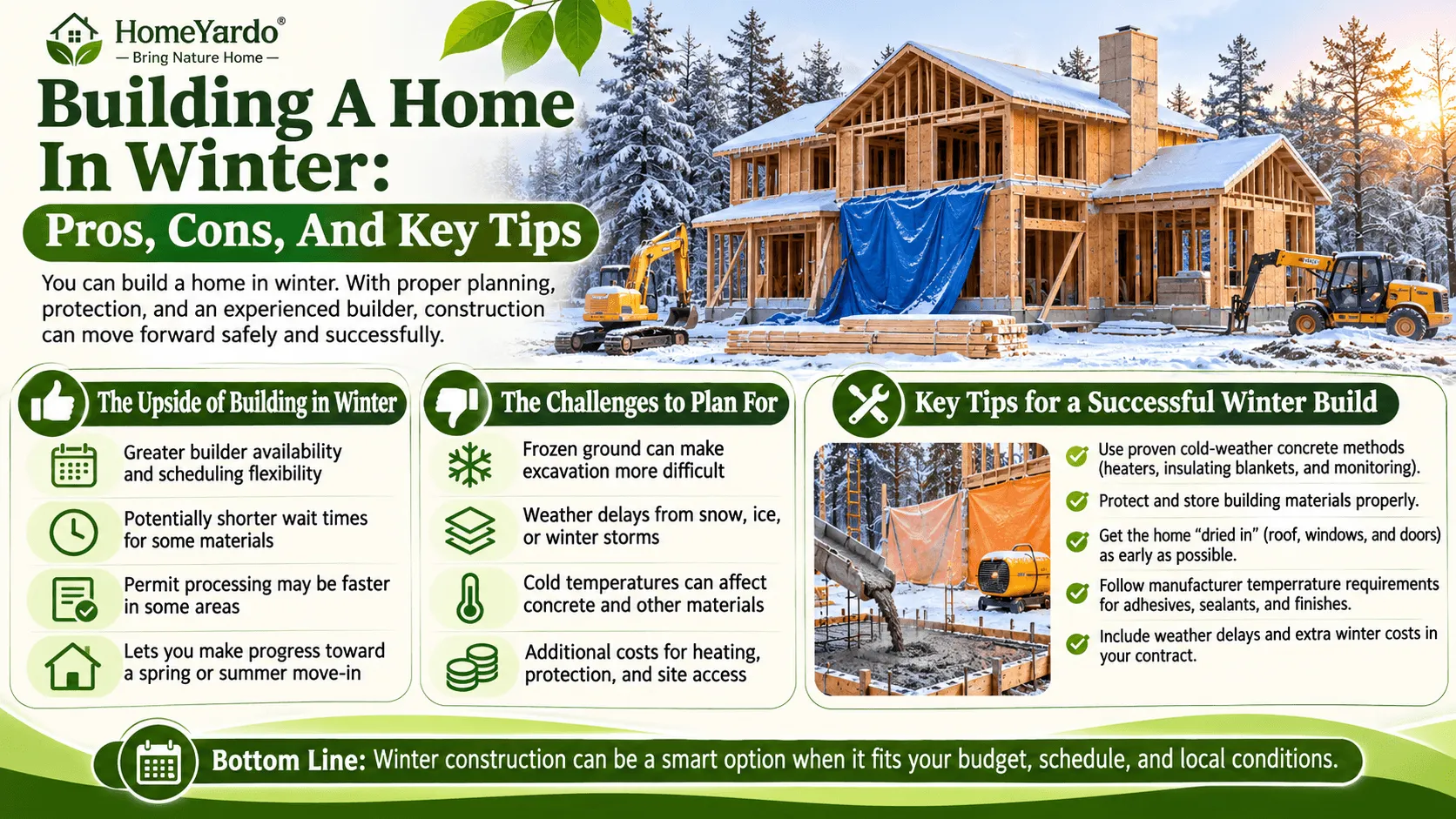
Building a home in winter is possible, and it can offer advantages such as greater builder availability, flexible scheduling, and the opportunity to make progress before the busy spring construction season. However, frozen ground, snow, shorter daylight hours, and cold-sensitive building materials can make the process more demanding.
Across the United States, residential construction continues through winter when site conditions allow. Experienced builders use insulated concrete blankets, ground heaters, temporary enclosures, and careful scheduling to protect materials and maintain construction quality.
The real question is not simply whether you can build a house in winter. It is whether the potential scheduling benefits outweigh the added costs and weather-related risks for your particular project.
This guide explains the pros and cons of winter home construction, how builders manage freezing conditions, and what homeowners should discuss with their contractor before work begins.
The Upside of Building In Winter
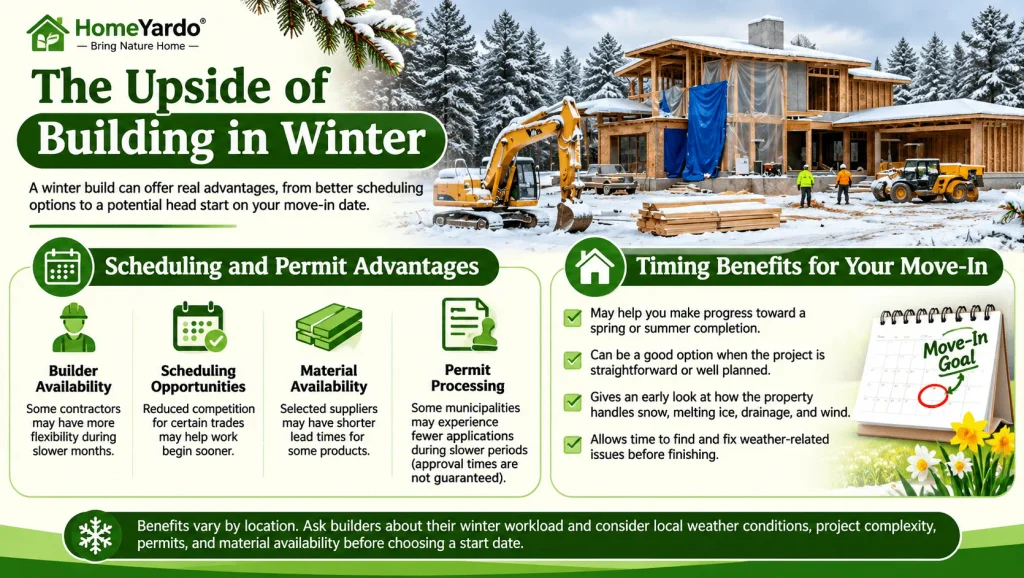
Winter is not always the busiest season for residential construction. In some regions, reduced demand creates scheduling opportunities that may benefit homeowners planning a new build.
The advantages depend on local weather conditions, builder availability, and the stage of construction.
Scheduling and Permit Advantages
One possible benefit of winter construction is access to contractors who have fewer competing projects.
Potential advantages include:
- Builder availability: Some contractors and subcontractors may have more flexibility during slower winter months.
- Scheduling opportunities: Reduced competition for certain trades may help work begin sooner.
- Material availability: Selected suppliers may have shorter lead times for some products, although winter weather can still disrupt deliveries.
- Permit processing: Some municipalities may experience fewer applications during slower periods, but approval times are never guaranteed.
These benefits vary considerably by location. In areas with severe winters, construction demand may decline because difficult working conditions outweigh the scheduling advantages.
Ask prospective builders about their actual winter workload rather than assuming every contractor has additional availability.
Timing Benefits for Your Move-In
Starting construction during winter may help homeowners make progress toward a spring or summer completion date, particularly when the project is relatively straightforward or substantial planning has already been completed.
However, a winter start does not guarantee a spring move-in.
Construction timelines depend on house size, design complexity, permit approvals, foundation requirements, subcontractor schedules, and material availability.
For homeowners evaluating the overall process, understanding the steps to building a house can help establish realistic expectations before choosing a construction start date.
Winter weather can also provide an early opportunity to observe how the property handles snow, melting ice, drainage, and wind exposure while the builder is still involved.
Any problems discovered during construction should be evaluated and corrected before the affected areas are concealed or finished.
The Challenges Cold Weather Brings
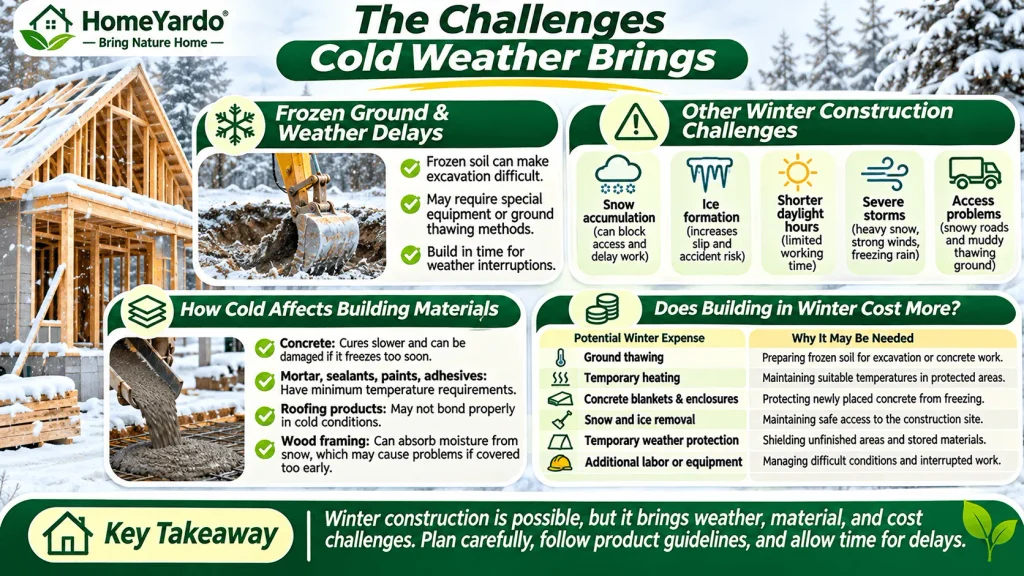
Although winter construction is practical under suitable conditions, freezing temperatures introduce challenges that can affect project costs, safety, and scheduling.
Understanding these risks makes it easier to evaluate whether starting immediately is better than waiting for milder weather.
Frozen Ground and Weather Delays
Frozen soil can make excavation difficult, particularly when frost extends well below the surface.
Depending on site conditions, contractors may need additional equipment or ground-thawing methods before excavation and foundation work can proceed.
Other common challenges include:
- Snow accumulation: Heavy snowfall may block site access, delay deliveries, or require repeated clearing.
- Ice formation: Slippery surfaces increase the risk of falls and equipment accidents.
- Shorter daylight hours: Limited natural light can reduce available working time or require additional lighting.
- Severe storms: Heavy snow, strong winds, and freezing rain may temporarily stop construction.
- Access problems: Snow-covered roads and muddy thawing ground can interfere with machinery and delivery trucks.
A winter construction schedule should include realistic allowances for weather interruptions.
Builders must also follow applicable workplace safety requirements when evaluating whether outdoor activities can continue.
How Cold Affects Building Materials
Cold temperatures can affect how construction materials perform during installation and curing.
Concrete requires particular attention because low temperatures slow the chemical reaction that allows it to gain strength.
Fresh concrete exposed to freezing conditions before developing sufficient strength may suffer permanent damage.
Mortar, sealants, paints, adhesives, and certain roofing products also have manufacturer-specified application temperatures.
Applying these products outside approved conditions can lead to poor bonding, incomplete curing, or premature failure.
Wood framing presents another concern. Snow and moisture can accumulate on exposed lumber, and covering damp framing too early may trap moisture inside completed walls.
The solution is to protect materials, monitor conditions, and follow product instructions rather than rushing work to maintain the schedule.
Does Building a Home in Winter Cost More?
Winter construction can cost more than building during milder conditions, although the difference depends on location, project size, and weather severity.
Additional expenses may include:
| Potential Winter Expense | Why It May Be Needed |
|---|---|
| Ground thawing | Preparing frozen soil for excavation or concrete work |
| Temporary heating | Maintaining suitable temperatures in protected work areas |
| Concrete blankets and enclosures | Protecting newly placed concrete from freezing |
| Snow and ice removal | Maintaining safe access to the construction site |
| Temporary weather protection | Shielding unfinished areas and stored materials |
| Additional labor or equipment | Managing difficult working conditions and interrupted work |
There is no reliable fixed amount that applies to every winter home build.
A mild winter in one region may create relatively little additional expense, while repeated freezing temperatures and storms in another location can significantly increase costs.
Request an itemized winter construction allowance from your builder and clarify which expenses are included in the contract.
Homeowners planning a new house should also account for broader expenses such as permits, utility connections, and site preparation. HomeYardo’s guide to the hidden costs of building a home explains additional budget considerations for Western Canadian projects, many of which are relevant to construction planning elsewhere.
How Builders Handle Cold-Weather Construction
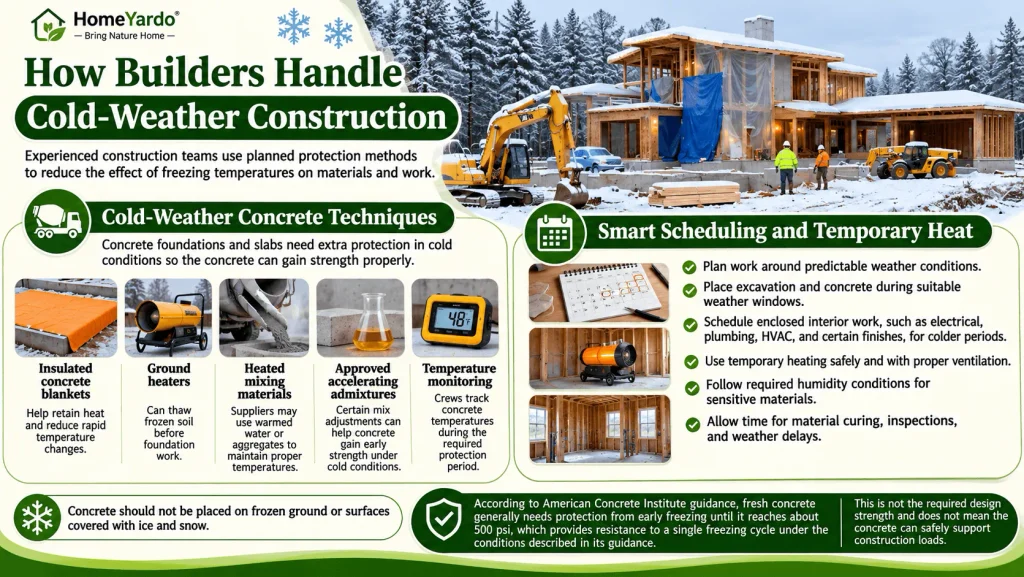
Experienced construction teams use planned protection methods to reduce the effect of freezing temperatures on materials and working conditions.
Successful winter construction depends on preparing those measures before severe weather arrives.
Cold-Weather Concrete Techniques
Concrete foundations and slabs require special care during winter because concrete must maintain suitable conditions while gaining strength.
Contractors may use several protective methods:
- Insulated concrete blankets: These help retain heat and reduce rapid temperature changes.
- Ground heaters: These can thaw frozen soil before foundation work.
- Heated mixing materials: Concrete suppliers may use warmed water or aggregates to maintain appropriate delivery temperatures.
- Approved accelerating admixtures: Certain mix adjustments can help concrete gain early strength under cold conditions.
- Temperature monitoring: Crews track concrete temperatures during the required protection period.
Concrete should not be placed directly against frozen ground or surfaces covered with ice and snow.
According to guidance from the American Concrete Institute, fresh concrete generally needs protection from early freezing until it develops sufficient strength. Approximately 500 psi is an important early-strength threshold for resistance to a single freezing cycle under the conditions described in its guidance.
That threshold does not mean the concrete has reached its required structural design strength or can safely support construction loads.
Builders must follow the project specifications, engineer’s instructions, applicable codes, and suitable cold-weather curing procedures.
Homeowners should ask how the contractor will monitor concrete temperatures and determine when protective measures can safely be removed.
Smart Scheduling and Temporary Heat
Winter construction schedules work best when contractors organize activities around predictable weather conditions.
For example, crews may prioritize excavation and concrete placement during suitable weather windows while scheduling protected interior work for colder periods.
After the building is enclosed, tasks such as electrical installation, plumbing, HVAC work, and certain interior finishes may continue under controlled conditions.
Temporary heating can support these activities, but it must be installed and operated safely.
Fuel-burning heaters require appropriate ventilation and precautions against carbon monoxide exposure and fire hazards.
Temperature-sensitive materials may also require specific humidity conditions, not simply warm air.
Builders should maintain a schedule that allows sufficient time for material curing, inspections, and unavoidable weather delays.
Protecting Materials and Getting the House Dried In
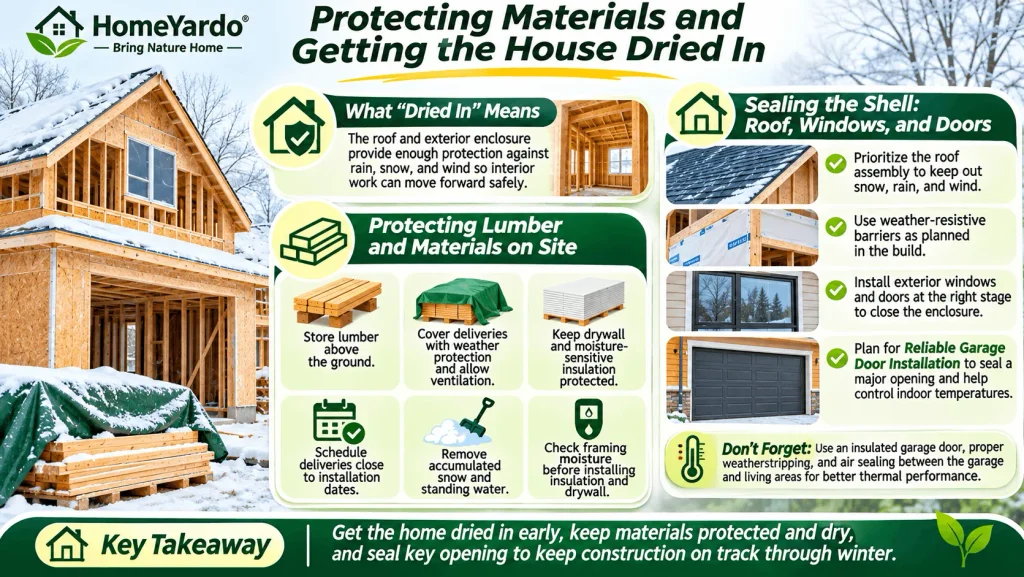
One of the most important goals during winter construction is getting the home dried in.
A house is generally considered dried in when its exterior roof and weather-resistant enclosure provide sufficient protection against rain, snow, and wind for the next construction stages.
This milestone allows contractors to protect interior materials and begin establishing suitable working conditions.
Protecting Lumber and Materials on Site
Construction materials should be protected from unnecessary moisture exposure from delivery through installation.
Important precautions include:
- Storing lumber and other suitable materials above the ground.
- Covering deliveries with appropriate weather-resistant protection while allowing necessary ventilation.
- Keeping drywall and moisture-sensitive insulation in protected storage.
- Scheduling deliveries close to installation dates when practical.
- Removing accumulated snow and standing water from exposed construction areas.
- Checking framing moisture conditions before installing insulation and drywall.
A waterproof covering can protect materials from precipitation, but wrapping wet materials too tightly may prevent them from drying.
Contractors should follow product storage requirements and confirm that materials are suitable for installation before closing wall assemblies.
Sealing the Shell: Roof, Windows, and Doors
Completing the building enclosure early helps protect the unfinished home from winter weather.
The construction sequence should prioritize the roof assembly, weather-resistive barriers, exterior windows, and doors according to the approved building plans.
A garage can represent one of the largest openings in the building envelope.
Leaving this opening exposed during winter allows snow, wind, and cold air to enter, making it harder to maintain suitable conditions in connected work areas.
Arranging Reliable Garage Door Installation at the appropriate stage can help complete the enclosure, protect the garage interior, and support temperature control during later construction work.
The installation schedule should be coordinated with the builder so the garage door is fitted after the necessary structural preparations and measurements are complete.
An insulated garage door may also improve thermal performance in the finished home, particularly when the garage is attached to conditioned living spaces.
However, insulation alone is not enough. Proper weatherstripping, perimeter sealing, and the insulation and air sealing of walls or ceilings separating the garage from living areas also matter.
What to Ask Your Builder Before Starting
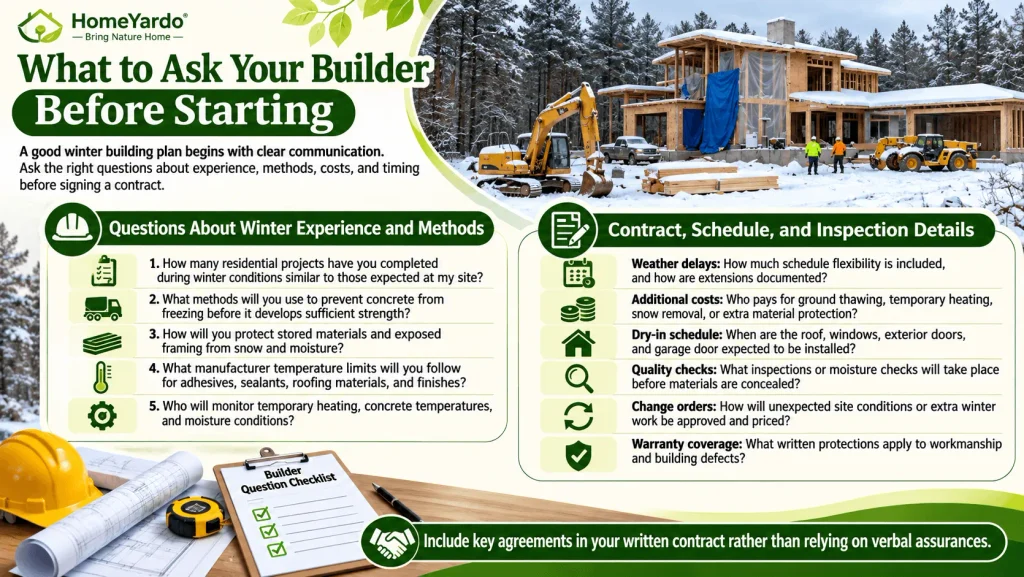
A good winter building plan begins with clear communication.
Before signing a contract or approving a winter start date, homeowners should understand the contractor’s experience, protection methods, and approach to unexpected costs.
Questions About Winter Experience and Methods
Ask prospective builders:
- How many residential projects have you completed during winter conditions similar to those expected at my site?
- What methods will you use to prevent concrete from freezing before it develops sufficient strength?
- How will you protect stored materials and exposed framing from snow and moisture?
- What manufacturer temperature limits will you follow for adhesives, sealants, roofing materials, and finishes?
- Who will monitor temporary heating, concrete temperatures, and moisture conditions?
A capable contractor should explain these procedures clearly and identify when specialist input or engineering review is required.
Contract, Schedule, and Inspection Details
Winter-related allowances should be addressed before construction begins.
Discuss the following points:
- Weather delays: How much schedule flexibility is included, and how are extensions documented?
- Additional costs: Who pays for ground thawing, temporary heating, snow removal, or extra material protection?
- Dry-in schedule: When are the roof, windows, exterior doors, and garage door expected to be installed?
- Quality checks: What inspections or moisture checks will take place before materials are concealed?
- Change orders: How will unexpected site conditions or extra winter work be approved and priced?
- Warranty coverage: What written protections apply to workmanship and building defects?
Ask for important agreements to be included in the written construction contract rather than relying on verbal assurances.
Winter Build Mistakes To Avoid
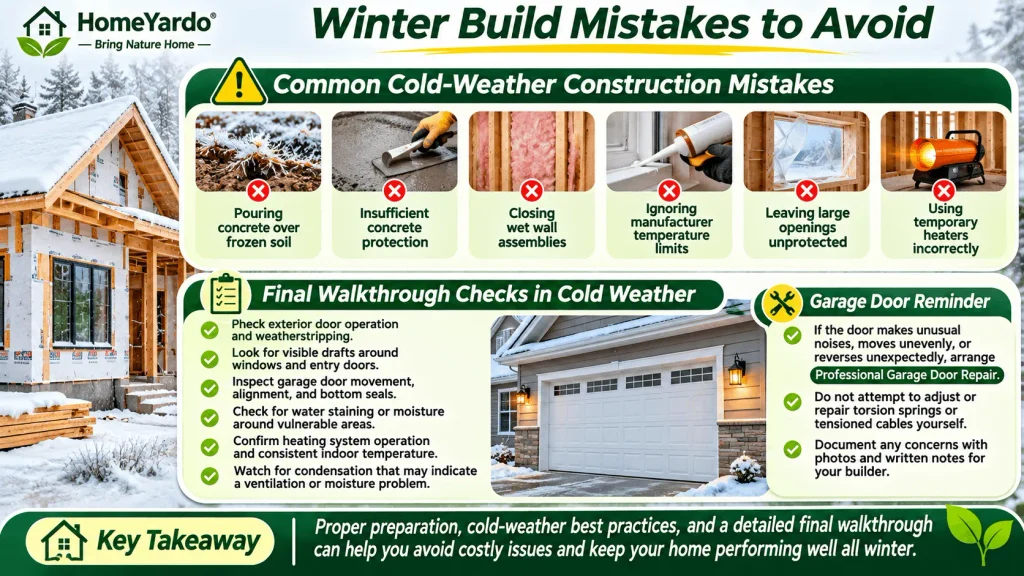
Many cold-weather construction problems result from inadequate preparation or work performed outside suitable installation conditions.
Avoiding shortcuts during vulnerable stages can protect the home’s long-term performance.
Common Cold-Weather Construction Mistakes
Common mistakes include:
- Pouring concrete over frozen soil: Thawing ground may settle unevenly and contribute to cracking or movement.
- Insufficient concrete protection: Allowing fresh concrete to freeze too early may reduce its strength and durability.
- Closing wet wall assemblies: Installing insulation and drywall before framing has dried sufficiently may trap unwanted moisture.
- Ignoring manufacturer temperature limits: Sealants, coatings, and adhesives can fail when installed outside approved conditions.
- Leaving large openings unprotected: Unfinished windows and doors allow precipitation to enter the structure.
- Using temporary heaters incorrectly: Poorly installed or unventilated heating equipment can introduce serious safety risks.
The cost of preventing these problems is usually easier to manage than the disruption of removing finished materials or repairing defective work later.
Final Walkthrough Checks in Cold Weather
A winter walkthrough gives homeowners an opportunity to observe how the completed home performs under cold-weather conditions.
Pay particular attention to:
- Exterior door operation and weatherstripping.
- Visible drafts around windows and entry doors.
- Garage door movement, alignment, and bottom seals.
- Water staining or visible moisture around vulnerable areas.
- Heating system operation and indoor temperature consistency.
- Condensation that may indicate a ventilation or moisture-control problem.
The garage door deserves attention because repeated cold-weather operation may reveal problems with rollers, tracks, seals, or door balance.
If the door makes unusual noises, moves unevenly, or reverses unexpectedly, arrange Professional Garage Door Repair to evaluate the problem before regular use.
Do not attempt to adjust or repair garage door torsion springs or tensioned cables yourself.
Document any concerns with photographs and written notes. Submit them to your builder and request confirmation of the agreed correction process.
Warranty coverage depends on the contract, the nature of the problem, and applicable law, so not every item discovered during a walkthrough is automatically covered.
Is It Better to Build a House In Winter or Summer?
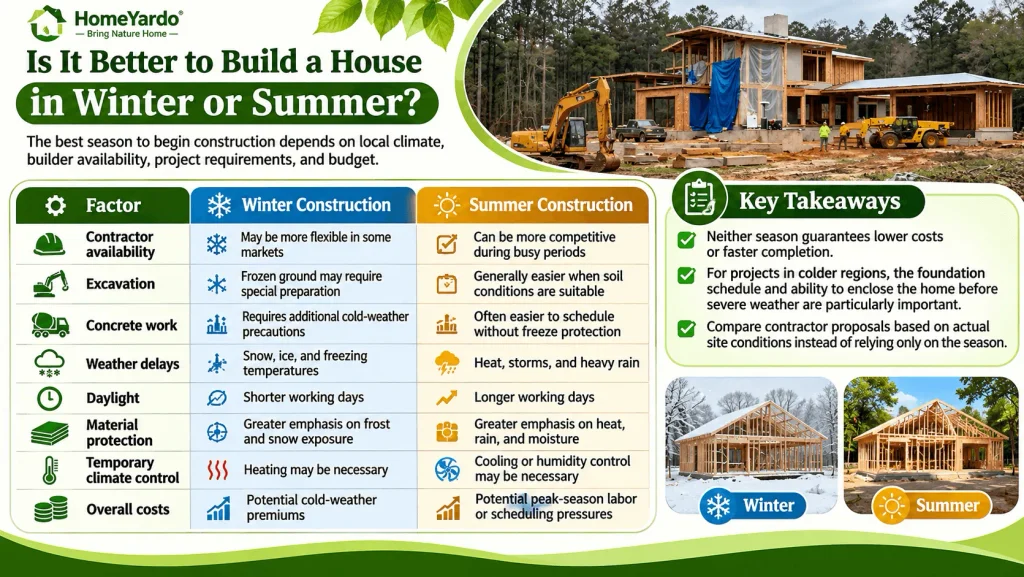
The best season to begin construction depends on local climate, builder availability, project requirements, and budget.
Winter may offer scheduling flexibility, while summer generally provides longer daylight hours and fewer freezing-related material restrictions.
| Factor | Winter Construction | Summer Construction |
|---|---|---|
| Contractor availability | May be more flexible in some markets | Can be more competitive during busy periods |
| Excavation | Frozen ground may require special preparation | Generally easier when soil conditions are suitable |
| Concrete work | Requires additional cold-weather precautions | Often easier to schedule without freeze protection |
| Weather delays | Snow, ice, and freezing temperatures | Heat, storms, and heavy rain |
| Daylight | Shorter working days | Longer working days |
| Material protection | Greater emphasis on frost and snow exposure | Greater emphasis on heat, rain, and moisture |
| Temporary climate control | Heating may be necessary | Cooling or humidity control may be necessary |
| Overall costs | Potential cold-weather premiums | Potential peak-season labor or scheduling pressures |
Neither season guarantees lower costs or faster completion.
For projects in colder regions, the foundation schedule and ability to enclose the home before severe weather are particularly important.
Homeowners should compare contractor proposals based on actual site conditions instead of relying only on the season.
Start Your Build With Confidence, Whatever the Season
Building a home in winter can be a practical choice when the contractor has the right experience and the project includes suitable weather protection.
Potential advantages include more flexible contractor schedules and the opportunity to begin construction before the spring rush. However, freezing temperatures, difficult excavation, material limitations, and weather delays can increase costs or extend the schedule.
The best approach is to plan around actual site conditions rather than assume winter will be mild.
Prioritize proper foundation preparation, safe heating, material storage, and early completion of the building enclosure. Make sure your contract addresses weather delays and winter-related expenses.
As construction progresses, pay particular attention to exterior openings that affect weather protection and indoor comfort, including the garage door. Davis Overhead Door, LLC provides garage door installation and related services that homeowners can discuss when planning this part of a new build.
With realistic expectations, experienced contractors, and appropriate safeguards, a winter construction project can progress successfully without sacrificing building quality.
Final Takeaway
Building a home in winter is possible, but success depends on preparation rather than favorable weather alone.
The main benefits are potential scheduling flexibility and an earlier construction start. The main disadvantages are frozen ground, cold-sensitive materials, weather delays, and extra protection costs.
Choose a builder with relevant winter experience, request a detailed construction plan, and confirm how the foundation, framing, materials, and building enclosure will be protected.
A well-managed winter build can be a sound option when the project budget and schedule account for local conditions.
FAQ’s
Yes. Homes can be built during winter when contractors follow appropriate cold-weather construction methods. Builders may use ground heaters, insulated concrete blankets, temporary enclosures, and protective material storage to manage freezing temperatures.
Not necessarily. Some contractors may offer more flexible scheduling or pricing during slower months, but temporary heating, ground thawing, snow removal, and concrete protection can increase expenses. Compare written estimates rather than assuming winter construction is cheaper.
The main disadvantages include frozen ground, shorter daylight hours, snow and ice delays, additional material protection requirements, and potentially higher construction costs. Poor moisture management or concrete protection can also cause long-term problems.
Yes, concrete foundation work can proceed in freezing weather when approved cold-weather procedures are used. The ground and contact surfaces must be suitable, and newly placed concrete needs appropriate temperature control and protection while developing strength.
There is no standard winter delay. The additional time depends on local temperatures, storm frequency, site conditions, construction methods, and the project’s stage. Some projects experience limited interruption, while others require significant schedule adjustments.
Spring often provides milder working conditions, while winter may offer contractor scheduling opportunities. The better choice depends on the local climate, foundation requirements, material availability, and whether the builder can manage cold-weather construction safely.
Builders may use temporary heating systems, weather-resistant enclosures, and insulation after the structure reaches suitable construction stages. Heating equipment must be operated safely, and temperature and moisture levels should meet the requirements of the materials being installed.
Ask about cold-weather building experience, concrete protection procedures, moisture management, winter-related costs, weather delay allowances, inspections, and the planned dry-in date. Ensure important responsibilities and financial terms are documented in the construction contract.