How To Repaint A Commercial Space Without Disrupting Business

Commercial repainting doesn’t have to mean closing your doors, cancelling appointments, or losing valuable working hours. With proper scheduling, suitable coatings, and an experienced painting contractor, many businesses can refresh their interiors while keeping daily operations running.
For a business, a fresh coat of paint is rarely just about appearance. It’s the first thing a patient notices when entering a clinic, the backdrop to meetings in an office, and the surface that withstands daily wear from carts, furniture, and cleaning crews.
Yet business owners and property managers often delay repainting because they worry about disruption, unpleasant odours, and unexpected downtime.
The good news? A carefully planned commercial painting project can take place after hours, over weekends, or in manageable phases. Here’s how to approach it without putting business on hold.
Why Commercial Repainting Requires a Different Approach
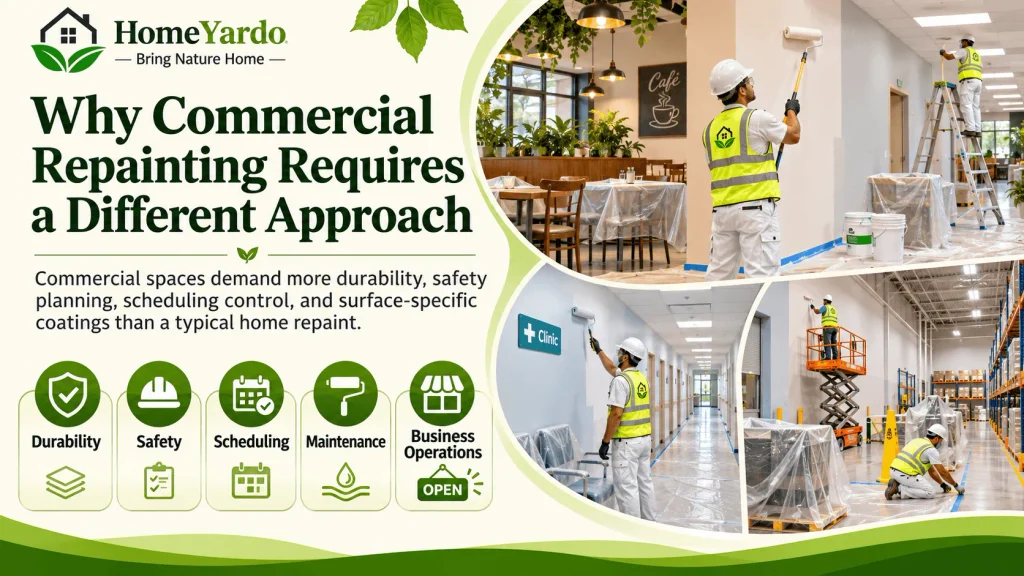
Painting a commercial space involves more planning than repainting a typical living room. Although the equipment may be similar, commercial buildings have different demands regarding durability, safety, scheduling, and maintenance.
A restaurant kitchen may need coatings compatible with frequent cleaning and exposure to grease. Medical clinics need finishes that can tolerate their approved cleaning and disinfecting procedures. Warehouses may require industrial coatings, floor markings, or specialized surface preparation.
Commercial properties also introduce practical considerations that residential painting projects rarely involve.
These include:
- Building management approvals and access restrictions.
- Employee and customer safety during the project.
- Protection of inventory, furniture, and electronics.
- Contractor insurance and workplace compliance.
- Ventilation, drying times, and reopening requirements.
The goal is not simply to finish painting quickly. It’s to achieve a durable, professional result while protecting business operations.
Plan Commercial Painting Around Your Business Hours
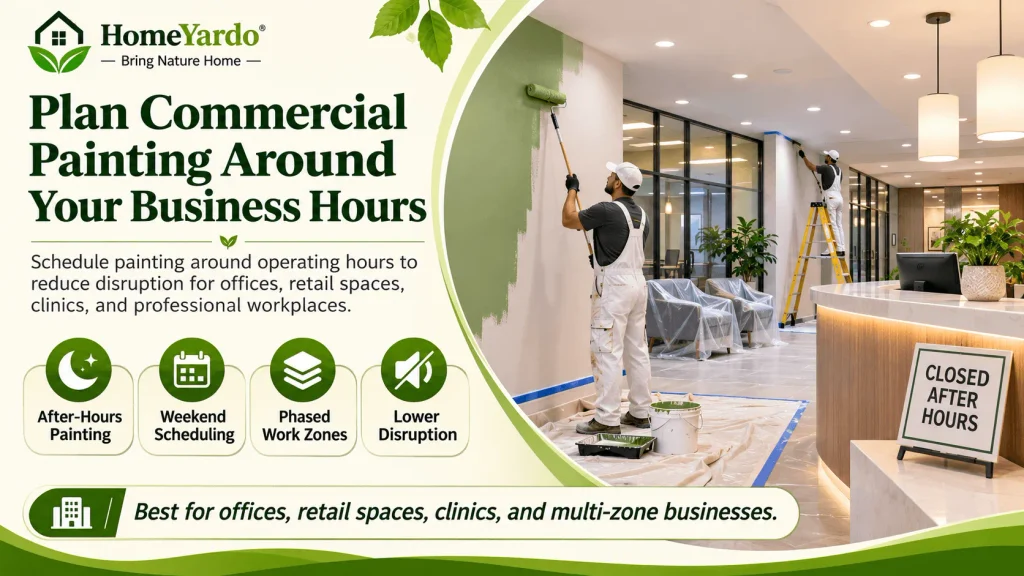
One of the biggest advantages of working with an experienced contractor is the ability to arrange painting around your operating schedule.
Before requesting quotes, identify your busiest periods, areas that cannot be closed, and any upcoming events that could affect the project. Understanding how employees, customers, and deliveries move through the property can also make temporary work zones easier to manage. The same principles used to turn a building plan into a functional space can help identify access routes and operational areas that should remain available during repainting.
After-Hours Painting for Offices and Retail Spaces
After-hours painting allows contractors to work when employees and customers have left the building.
This arrangement often works well for offices, retail stores, reception areas, and other businesses with predictable closing times.
However, the contractor must account for surface preparation, application, ventilation, cleanup, and the coating manufacturer’s requirements before an area can reopen.
A freshly painted wall may feel dry while the coating is still curing.
Weekend Painting for Clinics and Professional Offices
Weekend painting can work well for clinics, schools, and professional offices that operate mainly during weekdays.
It provides a longer uninterrupted work period and may allow several rooms to be completed together.
Businesses should still confirm whether ventilation can be maintained and whether the selected coatings will be suitable for occupancy when operations resume.
Phased Painting for Businesses That Cannot Close
Some businesses operate around the clock or cannot afford to shut down an entire floor.
Phased painting divides the project into smaller zones. One section is prepared, painted, inspected, and reopened before work begins in the next area.
For example, a retail store could repaint its back office and storage areas before moving to customer-facing sections.
This approach helps maintain access, reduces disruption, and makes scheduling more manageable.
Create A Painting Schedule That Minimizes Downtime
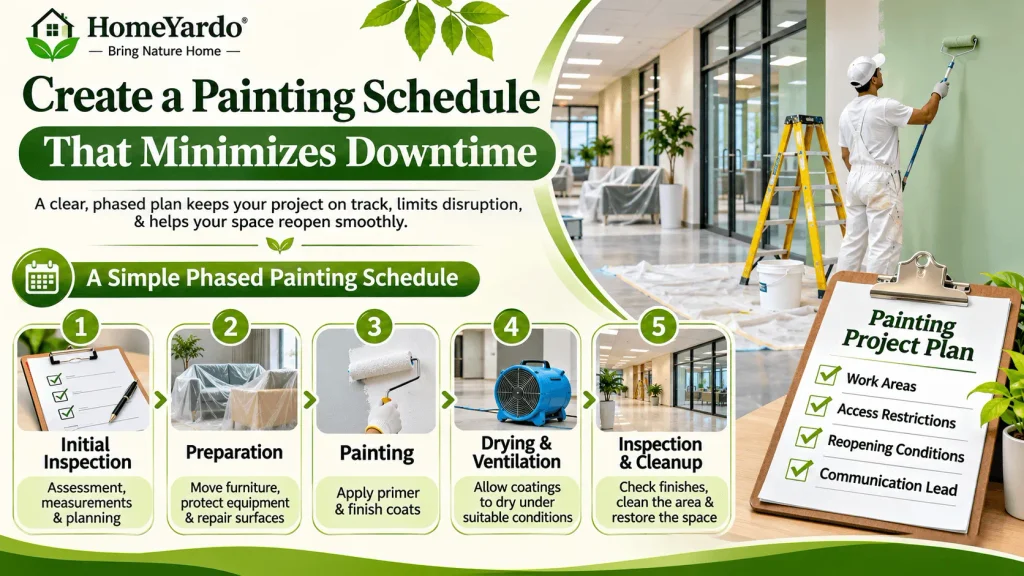
A written project schedule helps prevent misunderstandings between the contractor, employees, and building management. For larger properties with multiple tenants or occupied work areas, a structured plan can help coordinate contractor access, building operations, and reopening requirements. Our guide to commercial painting project planning explains how property managers can organize these responsibilities across different work zones.
It should explain which areas will be worked on, when access will be restricted, and what conditions must be met before each zone reopens.
A simple phased project might follow this sequence:
| Project stage | Work involved | Business impact |
|---|---|---|
| Initial inspection | Surface assessment, measurements, and planning | Minimal disruption |
| Preparation | Moving furniture, protecting equipment, and repairing surfaces | Temporary access restrictions |
| Painting | Primer and finish-coat application | Work zones remain restricted |
| Drying and ventilation | Allowing coatings to dry under suitable conditions | Occupancy restrictions may continue |
| Inspection and cleanup | Checking finishes, cleaning, and restoring the space | Areas reopen after approval |
This is a planning example rather than a fixed timeline. Actual durations depend on the coating system, surface condition, temperature, humidity, and ventilation.
Assign one person from your business to communicate with the painting crew. This helps resolve access issues and scheduling changes without involving multiple employees.
Choose Commercial Paints and Coatings for Your Space

The right coating should match how a commercial area is used, not simply how you want it to look. Paint is not the only finish worth considering when refreshing a customer-facing interior. For restaurants and retail environments, slatted wall panels for commercial spaces offer another design option where appearance, durability, and acoustic comfort need to be considered together.
Different rooms experience different amounts of moisture, abrasion, cleaning, and physical contact.
Durable Finishes for High-Traffic Areas
Corridors, reception areas, stairwells, and retail spaces frequently experience scuffs and repeated cleaning.
Washable eggshell, satin, and semi-gloss finishes are common options where appropriate, although performance depends on the specific paint formulation.
Low-sheen coatings may work better in meeting rooms and offices where strong reflections can be distracting.
For metal surfaces, commercial doors, or industrial areas, contractors may recommend specialized primers and coatings.
Low-VOC Paints for Occupied Commercial Buildings
Paint odour becomes a concern when employees or customers need to return soon after painting.
Canada’s VOC concentration limits for architectural coatings establish requirements for 53 categories of architectural coatings, with limits ranging from 100 to 800 grams per litre, depending on the product category.
Low-VOC or zero-VOC products may help reduce solvent emissions, but these labels do not guarantee that a freshly painted room is safe for immediate occupancy.
Adequate ventilation, manufacturer instructions, and suitable drying and curing conditions remain necessary.
Weather-Resistant Coatings for Commercial Exteriors
Commercial buildings in Toronto and the Greater Toronto Area face changing weather conditions throughout the year.
Exterior coatings must withstand moisture, ultraviolet exposure, and temperature fluctuations.
Freeze-thaw cycles can also contribute to problems when water enters cracks or poorly protected surfaces.
An experienced contractor should evaluate the substrate and select a compatible exterior coating system before work begins.
Don’t Overlook Surface Preparation
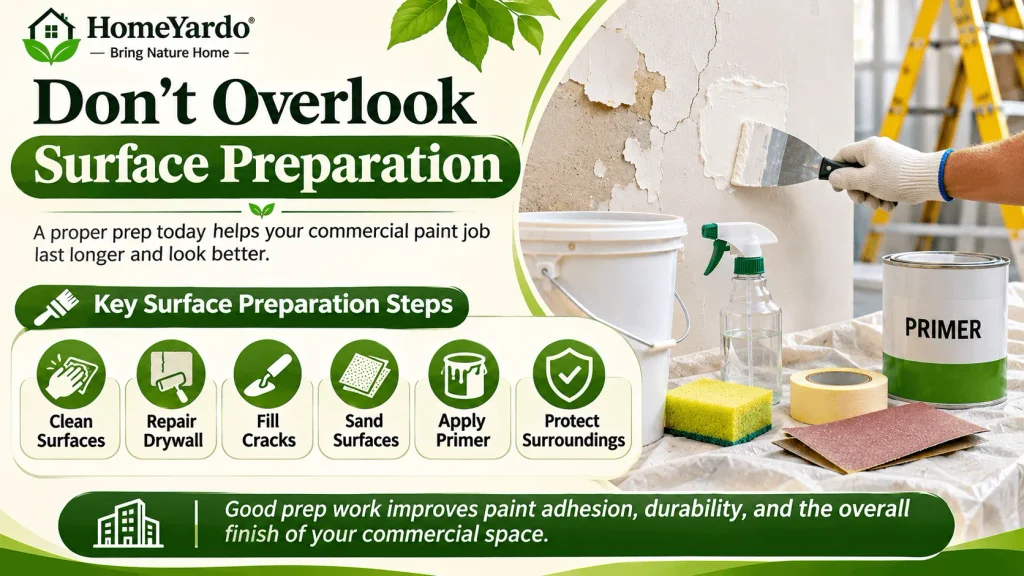
Poor surface preparation can shorten the life of even a high-quality commercial paint job.
Before painting begins, contractors should inspect surfaces for peeling coatings, moisture damage, cracks, grease, and other conditions that could affect adhesion.
Typical preparation work includes:
- Cleaning walls to remove dirt and grease.
- Repairing damaged drywall and corner beads.
- Filling cracks and surface imperfections.
- Sanding or treating glossy surfaces where required.
- Applying suitable bonding or corrosion-resistant primers.
- Protecting floors, fixtures, equipment, and surrounding areas.
Not every surface needs the same treatment. Previously painted drywall, masonry, and exposed metal each have different preparation requirements.
When comparing contractor estimates, check whether the cost of preparation is clearly included.
An inexpensive quote may become less attractive if important repair work is excluded.
Protect Employees, Customers, and Equipment During Painting
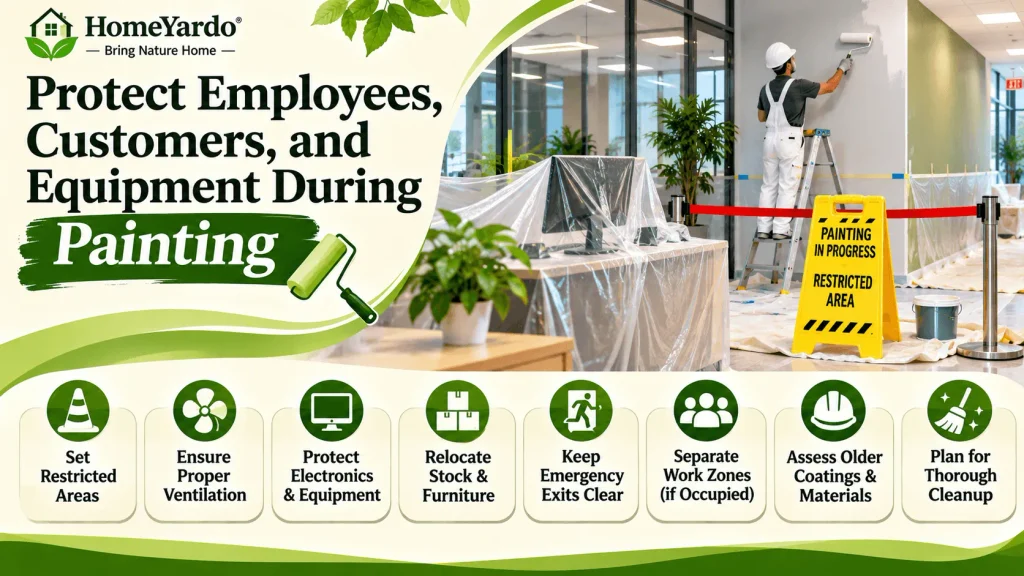
Even when painting takes place outside normal business hours, safety needs to be part of the project plan.
Before work begins, identify how contractors will manage restricted areas, ventilation, equipment protection, and cleanup.
Sensitive electronics should be protected from dust and overspray. Stock and furniture may need to be relocated temporarily.
Emergency exits, fire protection equipment, and accessible routes must remain available as required by the building’s safety arrangements.
In buildings that remain occupied, work zones should be separated from employees and customers where necessary.
Staff should also know which areas are temporarily unavailable and whom to contact if a problem arises.
For older buildings, potentially hazardous existing coatings or materials may require assessment and specialized handling before sanding or removal.
These precautions help avoid turning a straightforward repaint into an operational or safety problem.
Check Contractor Insurance and Compliance Before Painting
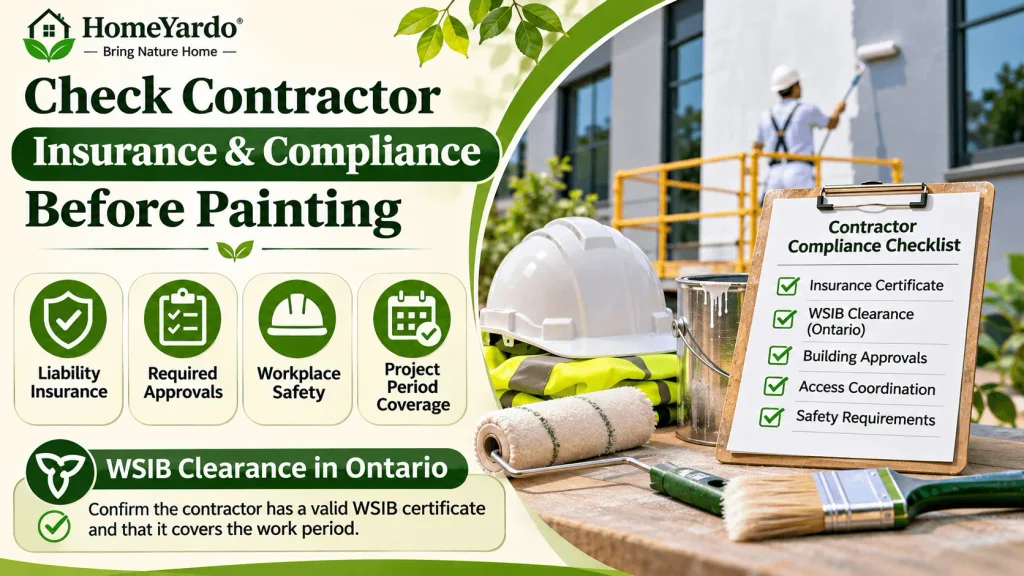
Before hiring a commercial painting company, confirm that it meets the requirements of your property and local jurisdiction.
Ask for a certificate of liability insurance and confirm that the coverage matches your landlord’s or property manager’s requirements.
You should also establish who is responsible for obtaining building approvals, coordinating access, and meeting applicable workplace safety requirements.
Verify WSIB Clearance in Ontario
Businesses in Ontario should check whether the contractor has a valid Workplace Safety and Insurance Board clearance certificate.
Under the WSIB’s clearance policy, a valid clearance confirms the contractor’s account is in good standing and provides protection against certain unpaid premium liabilities for the certificate’s validity period.
Confirm the certificate covers the relevant work period and check whether additional documentation is needed for subcontractors.
Taking care of these requirements before painting begins reduces the likelihood of avoidable administrative problems.
How To Choose the Right Commercial Painting Contractor

Finding an experienced contractor is one of the most important parts of planning a repaint.
Professional painting contractors for commercial spaces should understand that business continuity matters alongside appearance and coating performance.
A reliable contractor will typically inspect the property before preparing a detailed quote.
They should also ask about your operating hours, building access, surface conditions, and any restrictions that could affect the schedule.
What Should Be Included in a Commercial Painting Quote?
A written estimate should identify:
- Areas and surfaces included in the project.
- Required preparation and repair work.
- Proposed primers, paints, and coating systems.
- Number of coats and application methods.
- Expected working hours and project phases.
- Protection, ventilation, and cleanup arrangements.
- Labour, materials, additional charges, and payment terms.
- Warranty coverage and procedures for correcting defects.
Ask who will supervise the work and how changes will be approved.
A clear estimate makes it easier to compare contractors based on scope and quality rather than price alone.
How Often Should a Commercial Space Be Repainted?
There is no universal repainting schedule for every commercial property.
The frequency depends on foot traffic, surface condition, cleaning practices, building use, and coating quality.
A quiet professional office may remain presentable for years, while a busy restaurant, gym, or retail store may develop visible wear much sooner.
Instead of relying on a fixed number of years, inspect commercial interiors regularly for scuffs, discolouration, peeling, and damage.
High-contact areas may benefit from planned touch-ups between full repainting projects.
Keeping records of the original paint products and colours can also make future maintenance easier.
Final Takeaway
Repainting a commercial property doesn’t have to interrupt business operations.
A successful project starts with understanding how the space is used, choosing a suitable painting schedule, and selecting coatings that meet the building’s performance requirements.
After-hours work, weekend scheduling, and phased painting can all help reduce downtime when supported by realistic preparation, drying, ventilation, and reopening plans.
Choose a contractor who provides a detailed written scope, communicates clearly, and understands the operational needs of commercial properties.
With those arrangements in place, your business can maintain its professional appearance without unnecessary disruption.
FAQ’s
Yes, some businesses can remain open during commercial painting if the work is divided into controlled zones and suitable safety measures are followed. The contractor must manage ventilation, access restrictions, and exposure risks. Areas being painted should remain restricted until they are suitable for occupancy.
Yes. Overnight commercial painting is possible when the contractor can complete the planned work safely and allow enough time for required drying and ventilation. However, overnight application does not guarantee that the space will be ready to reopen the next morning.
Project duration depends on the size of the property, surface preparation, number of coats, coating specifications, and scheduling restrictions. Small projects may take a few shifts, while larger commercial properties can require multiple phases over several days or weeks.
Durable, washable coatings designed for frequent cleaning are generally suitable for high-traffic commercial interiors. Depending on the application, satin or semi-gloss finishes may be appropriate. The specific product should be selected according to the surface, cleaning requirements, and expected wear.
Schedule painting during closed hours, divide larger projects into manageable zones, protect working areas, and establish clear reopening requirements. A written plan and regular communication with the contractor help minimize operational interruptions.
Review the contractor’s insurance, relevant experience, written estimate, surface preparation plan, product specifications, and warranty terms. In Ontario, verify applicable WSIB clearance requirements and confirm that building management has approved the work.
Repainting frequency varies according to building use and surface condition. High-traffic areas may require more frequent maintenance than private offices. Regular inspections and targeted touch-ups can extend the time between full repaints.