DIY Garage Insulation: Keep The Cold Out This Winter
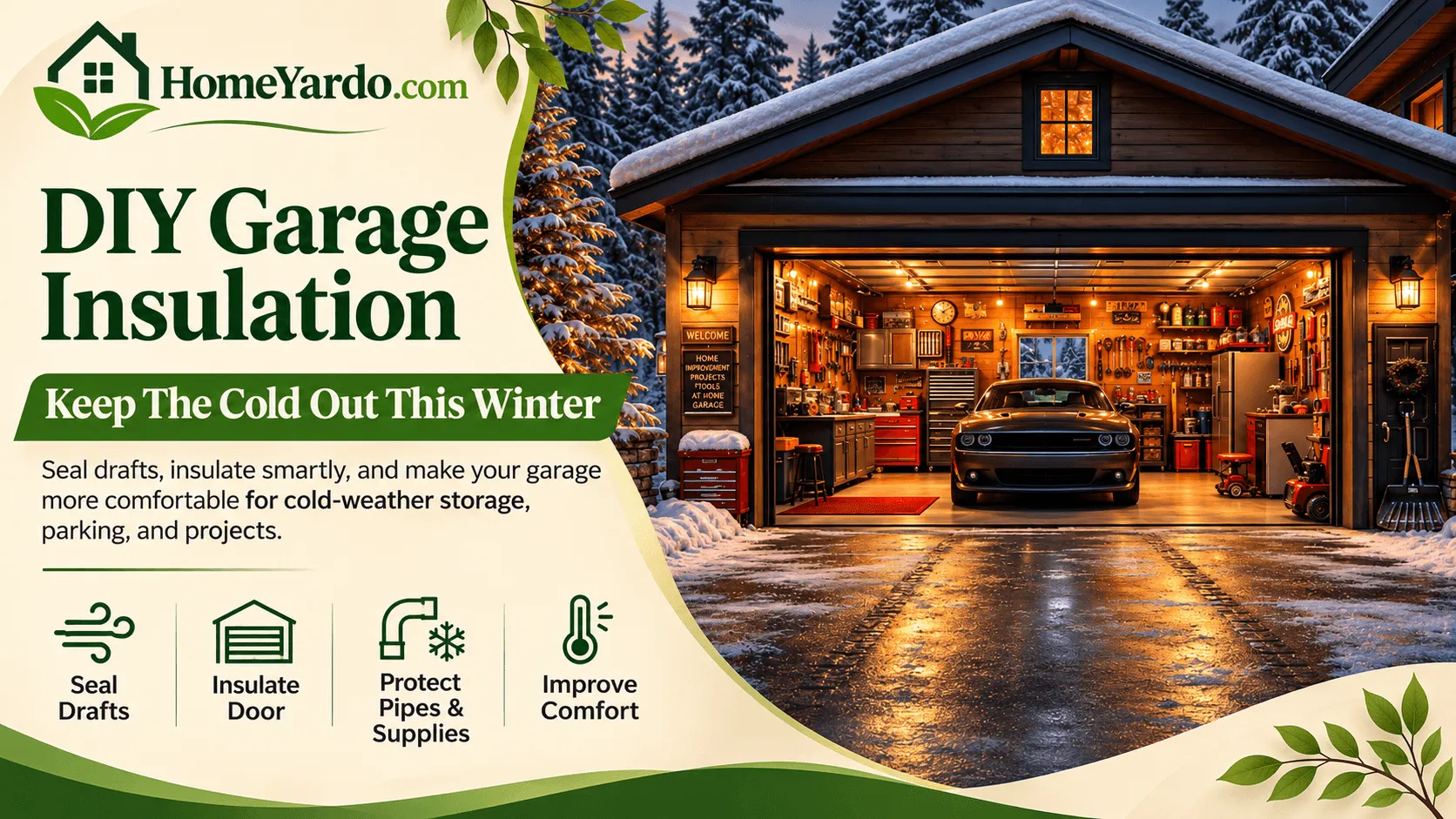
DIY garage insulation can help reduce cold drafts, protect stored belongings, and make your garage more comfortable during winter. Start by sealing gaps around the garage door, adding insulation to suitable door panels, and insulating unfinished walls or ceilings where needed.
You do not have to renovate the entire garage to notice an improvement.
An attached garage can become especially uncomfortable when cold air passes through worn weatherstripping or thin metal doors. Rooms above or beside it may feel colder, too. Exposed plumbing and temperature-sensitive supplies can also be affected during freezing weather.
This guide explains how to find common heat-loss areas, choose garage insulation materials, insulate your garage door, and avoid mistakes that could affect moisture control or door safety.
Why an Uninsulated Garage Lets the Cold Win
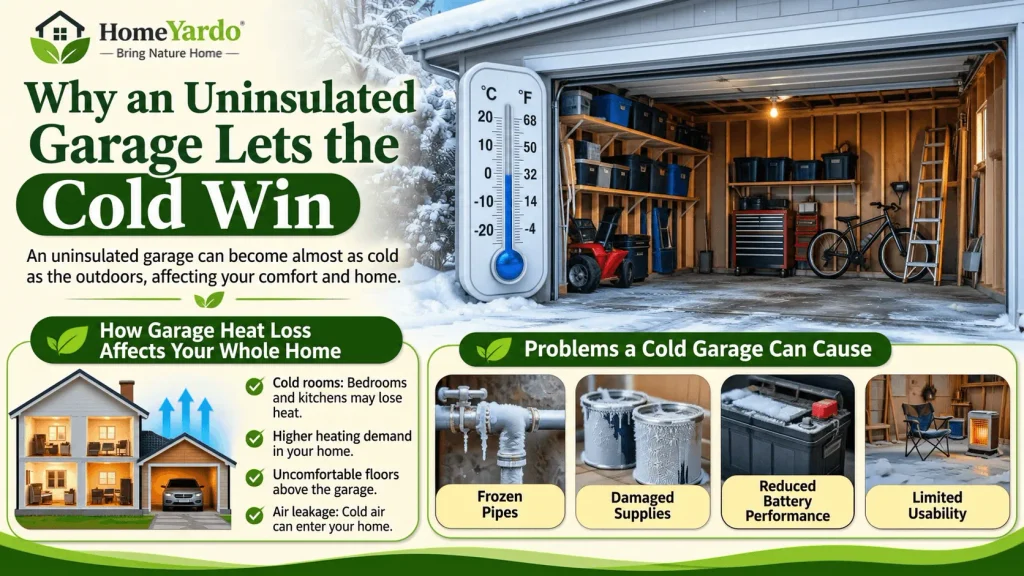
An uninsulated garage can become almost as cold as the outdoors, particularly when drafts enter around the door or unfinished surfaces allow heat to escape.
Insulation slows heat transfer, while air sealing reduces uncontrolled airflow. Both matter when preparing a garage for winter.
How Garage Heat Loss Affects Your Whole Home
If your garage shares walls or a ceiling with heated living spaces, cold temperatures can affect the comfort of nearby rooms.
Common problems include:
- Cold rooms: Bedrooms above garages and kitchens beside them may lose heat through poorly insulated shared surfaces.
- Higher heating demand: Your heating system may run longer to maintain comfortable temperatures in affected rooms.
- Uncomfortable floors: Floors above an unheated garage may feel particularly cold.
- Air leakage: Gaps around the connecting door can allow cold air and garage pollutants into the house.
Sealing and insulating the shared boundaries is often more useful for household comfort than insulating every exterior surface of an unheated garage.
Problems a Cold Garage Can Cause
Freezing temperatures can create problems beyond personal comfort.
- Frozen pipes: Plumbing in poorly protected areas may freeze and burst during extreme cold.
- Damaged supplies: Water-based paint, adhesives, and certain cleaning products can lose quality when frozen.
- Reduced battery performance: Cold temperatures reduce a car battery’s available starting power.
- Limited usability: A freezing garage is less comfortable for hobbies, home workouts, and workshop projects.
Insulation can reduce temperature swings, but it does not guarantee that an unheated garage will remain above freezing.
Find Where the Cold Is Sneaking In
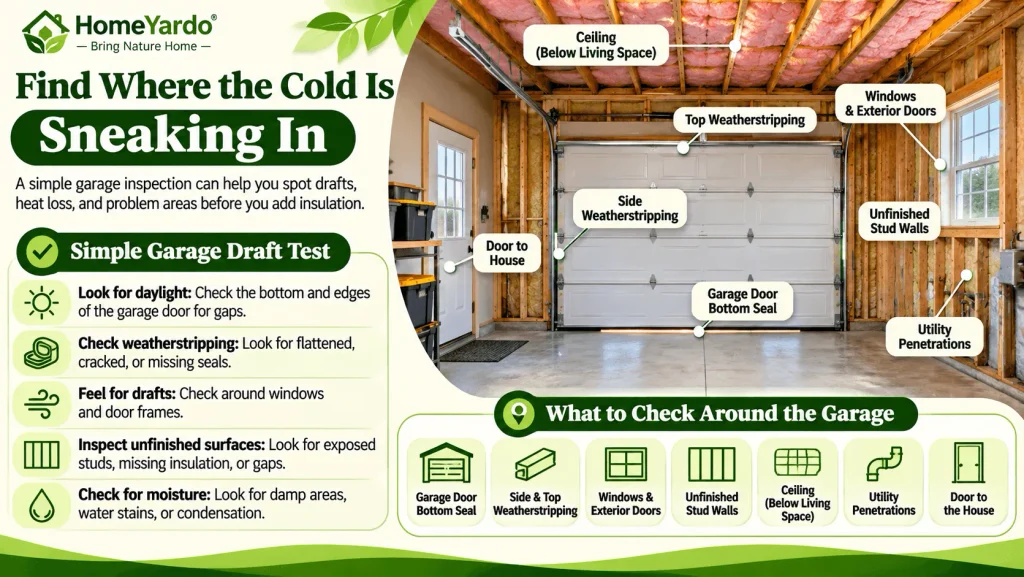
Before buying insulation, inspect the garage for drafts and exposed surfaces. A short inspection can help you prioritize the work.
Simple Garage Draft Test
Try these checks on a cold or windy day.
- Look for daylight. Close the garage door during the daytime and check its bottom and edges for visible gaps.
- Check the weatherstripping. Look for flattened, cracked, or missing seals.
- Feel for drafts. Carefully check around accessible windows and door frames.
- Inspect unfinished surfaces. Look for exposed studs, missing insulation, or gaps around plumbing and wiring.
- Check for moisture. Damp areas, water stains, and condensation should be investigated before insulation is installed.
A thin tissue can help reveal airflow near a suspected gap. Avoid using flames or smoking materials around stored fuels, solvents, and other combustible products.
What to Check Around the Garage
Pay attention to these common trouble spots:
- The garage door bottom seal
- Side and top weatherstripping
- Windows and exterior entry doors
- Unfinished stud walls
- The ceiling beneath living spaces
- Gaps around utility penetrations
- The door connecting an attached garage to the house
Do not seal combustion-air openings, appliance vents, or other openings required for safe ventilation.
Choosing the Right Garage Insulation
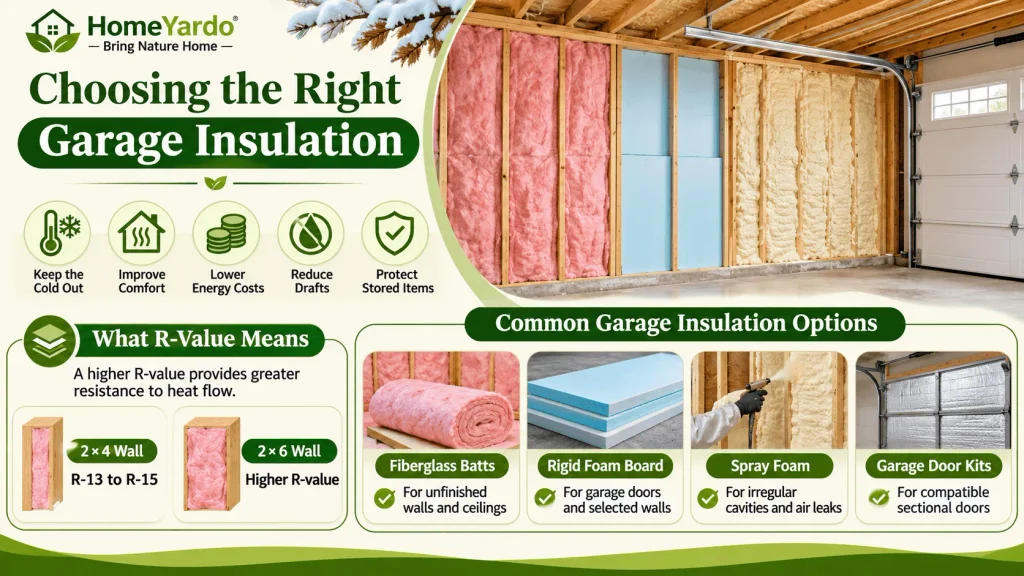
The best garage insulation material depends on where it will be installed, how much space is available, and whether the garage is attached to the house.
Fiberglass batts, rigid foam boards, and professionally installed spray foam are common choices. Each has different installation and fire-protection requirements.
What R-Value Means for Garage Insulation
R-value measures a material’s resistance to heat flow. Higher R-values generally provide greater thermal resistance.
For traditional wood-framed walls:
- A 2×4 wall cavity may accommodate fiberglass batts rated around R-13 to R-15.
- A 2×6 wall cavity can accommodate thicker insulation with a higher R-value.
- Ceilings and floors adjoining conditioned rooms may require additional insulation based on the local climate and building code.
A higher R-value is not always the only priority. Poorly installed insulation with gaps, compression, or air leakage can perform below expectations.
Fiberglass Batts, Foam Board, and Spray Foam
| Insulation type | Best use | Main consideration |
|---|---|---|
| Fiberglass batts | Unfinished framed walls and ceilings | Affordable but must fit without compression or gaps |
| Rigid foam board | Compatible garage door panels and selected wall assemblies | Requires appropriate attachment and fire protection |
| Spray foam | Irregular cavities and difficult air leaks | Usually best handled by trained installers |
| Garage door insulation kits | Compatible sectional garage doors | Adds weight and must not interfere with movement |
Fiberglass insulation is often practical for homeowners working with accessible framing. Wear gloves, long sleeves, eye protection, and suitable respiratory protection during installation.
Foam products require extra care because exposed foam may need an approved protective covering under local building and fire codes.
Insulating the Garage Door the Smart Way
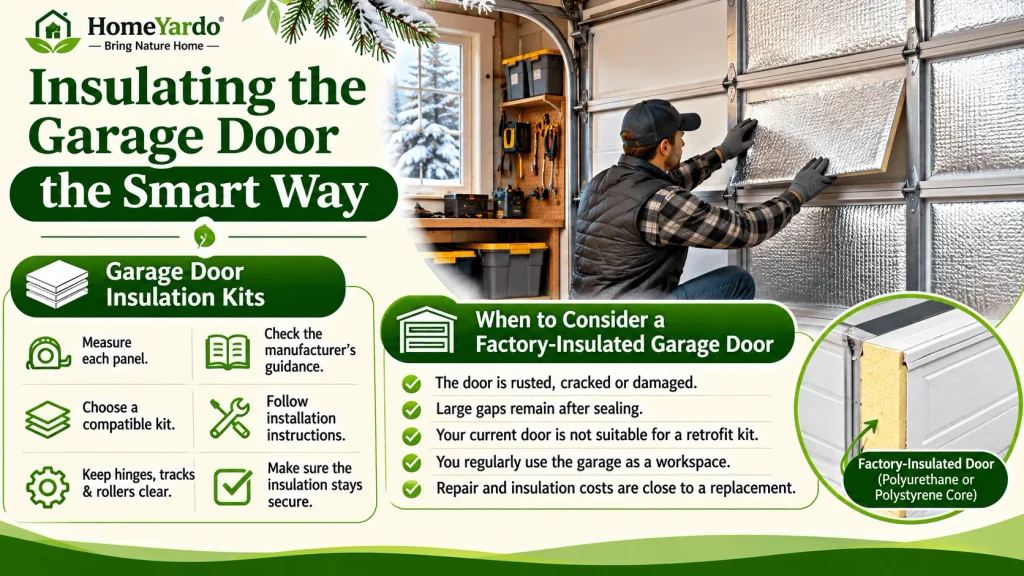
The garage door is one of the largest exposed surfaces in many garages. A thin, uninsulated metal door offers little resistance to outdoor temperatures.
However, adding insulation is worthwhile only when the door is structurally sound and designed to accept the material.
Garage Door Insulation Kits
Garage door insulation kits commonly contain lightweight foam panels or reflective insulation systems.
Before installation:
- Measure the height, width, and depth of each door panel.
- Check the garage door manufacturer’s guidance about added insulation and weight.
- Select a kit compatible with the door construction.
- Follow the kit manufacturer’s attachment instructions.
- Keep hinges, tracks, rollers, cables, and other moving components clear.
- Check that the insulation remains secure when the door opens and closes.
Do not attach heavy panels or modify door hardware to make insulation fit.
Reflective materials also need suitable installation conditions, often including an adjacent air space, to deliver the advertised radiant-heat benefits.
When an Insulated Garage Door Makes More Sense
A factory-insulated garage door may be a better investment when the existing door is badly damaged, poorly sealed, or nearing the end of its service life.
Modern insulated doors often use polyurethane or polystyrene cores that provide thermal resistance within the door assembly.
Consider replacement when:
- The door has significant rust, cracks, or damaged sections.
- Large gaps remain despite replacing the seals.
- The existing door is unsuitable for retrofit insulation.
- You regularly use the garage as a workspace.
- Repair and insulation costs approach the cost of a suitable replacement.
Compare complete door construction, insulation performance, durability, and installation requirements instead of relying on a single advertised R-value.
Seal the Gaps With Garage Weatherstripping
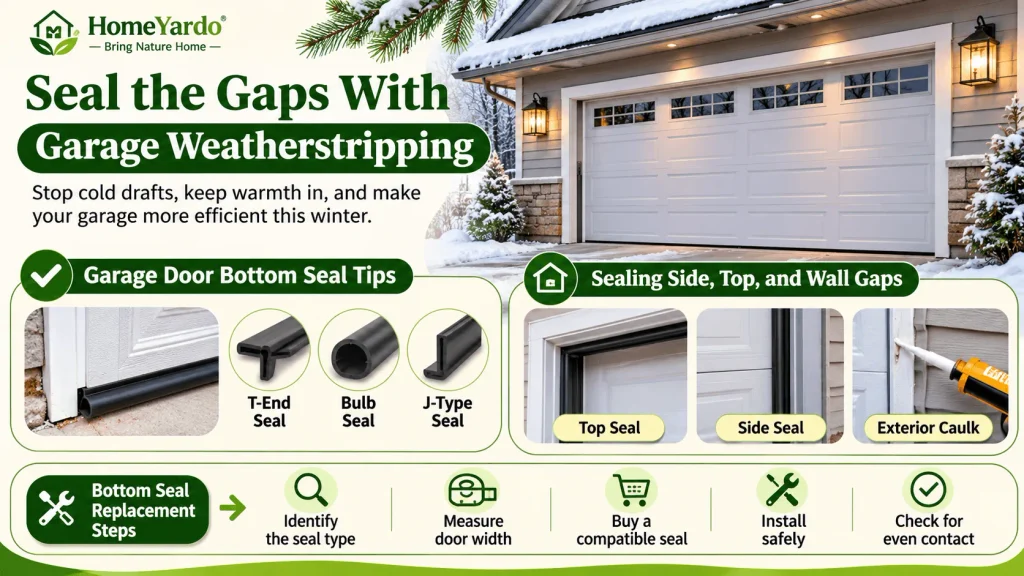
Weatherstripping reduces air movement around the garage door. It is one of the simplest improvements for homeowners dealing with winter drafts.
Even a well-insulated door can perform poorly when cold air enters through damaged seals.
Garage Door Bottom Seal Tips
The bottom seal closes the gap between the garage door and the floor.
Common styles include T-end, bulb, and J-type seals.
For replacement:
- Identify the existing seal profile and retainer.
- Measure the width of the door.
- Purchase a compatible replacement.
- Follow the manufacturer’s safe installation procedure.
- Check that the new seal contacts the floor evenly.
An uneven concrete floor may also benefit from a properly installed threshold seal.
Avoid choosing an oversized seal that prevents the door from closing or causes unnecessary pressure on the opener.
Sealing Side, Top, and Wall Gaps
Vinyl weatherstop molding can reduce drafts along the sides and top of the garage door opening.
For stationary cracks, use an appropriate sealant based on the material, gap size, and location.
- Apply exterior-rated caulk around suitable window and door-frame joints.
- Use compatible sealants around accessible utility penetrations.
- Choose fire-rated sealing materials where required by the garage-to-house separation assembly.
- Weatherstrip the connecting door without changing its required fire-safety features.
Keep the garage-to-house door properly closed and maintain any required self-closing mechanism.
How to Insulate Unfinished Garage Walls and Ceilings
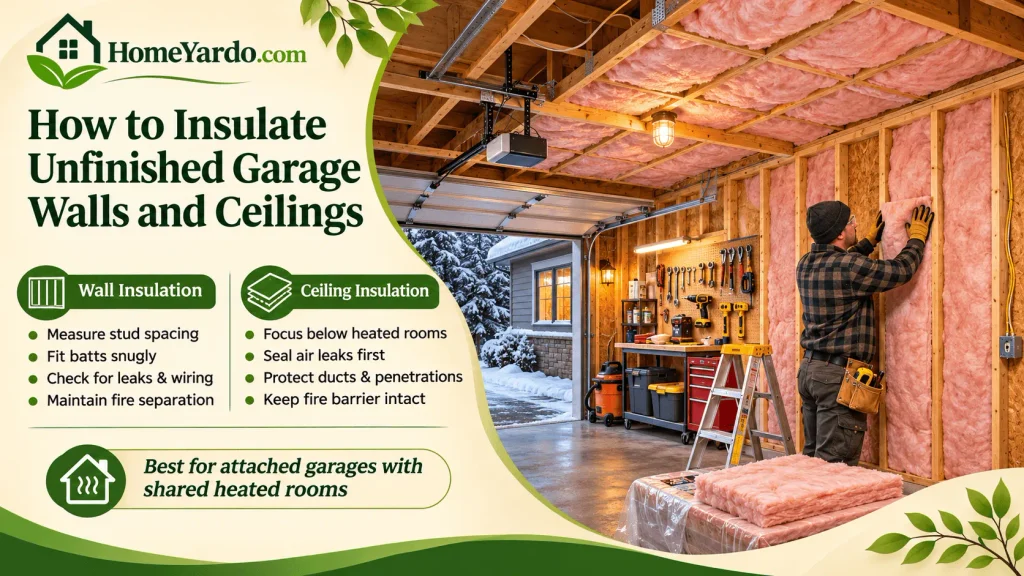
After dealing with drafts and the garage door, consider whether unfinished walls or ceilings need insulation.
This step is especially helpful where the garage shares surfaces with heated rooms.
Insulating Unfinished Garage Walls
For accessible framed walls, fiberglass batts are a common DIY option.
Measure the stud spacing and cavity depth before selecting the insulation.
Fit each batt snugly around framing without crushing it. Avoid gaps at corners, edges, and around electrical boxes.
Before covering the wall, check for plumbing leaks, moisture problems, and electrical concerns.
Follow local requirements for insulation facings, vapor control, and protective wall finishes.
Walls separating an attached garage from living space must retain the required fire-resistant separation.
Insulating the Garage Ceiling
Ceiling insulation may matter more than exterior garage wall insulation when a heated bedroom sits directly above the garage.
However, this work can require removing existing drywall and carefully treating air leaks, floor framing, ducts, and utility penetrations.
Garage ceilings below living spaces also have fire-protection requirements.
If the ceiling is already finished or contains complicated services, a qualified insulation contractor is often the safer choice.
Do not remove or compromise a required garage ceiling fire barrier without an approved repair plan.
Mistakes That Undo Your Insulation Work
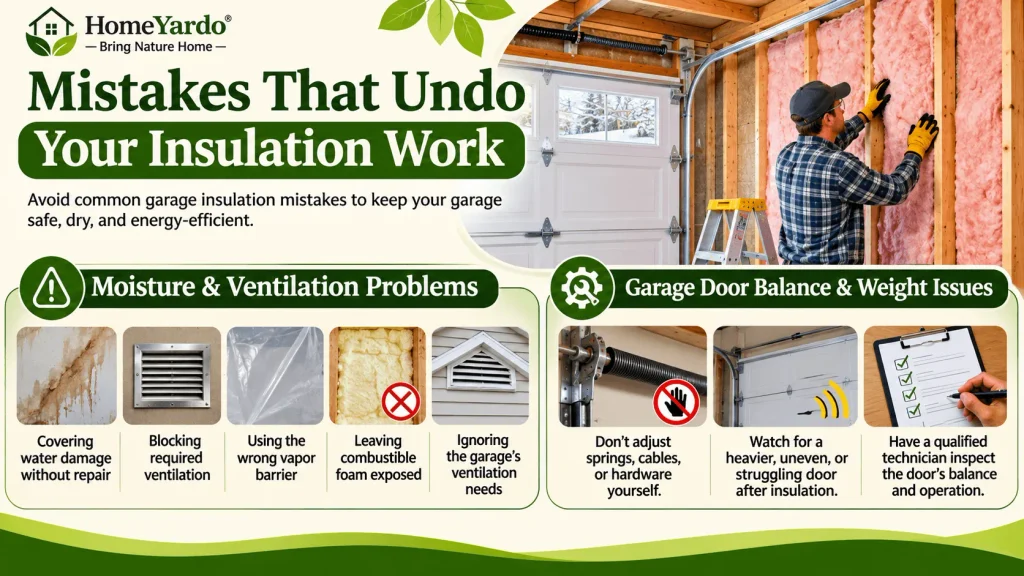
Garage insulation problems often result from overlooked moisture, unsafe materials, or changes to the garage door’s weight.
Avoiding these issues can prevent expensive repairs later.
Moisture and Ventilation Problems
Insulation should never be installed over an unresolved leak or damp surface.
Trapped moisture may reduce insulation performance and contribute to mold or material damage.
Common mistakes include:
- Covering water-damaged walls before fixing the leak
- Blocking required appliance ventilation
- Installing an unsuitable vapor barrier
- Leaving combustible foam exposed where protective covering is required
- Sealing gaps without considering the garage’s existing ventilation system
Fuel-burning appliances need appropriate combustion air and exhaust arrangements. If a furnace, water heater, or other fuel-burning appliance is located in the garage, have its installation assessed before changing ventilation.
Never run a vehicle engine inside the garage to warm the space.
Garage Door Balance and Weight Issues
Adding insulation changes the weight of a garage door. Some doors can accommodate compatible kits, while others may require a professional assessment.
Extra weight can affect the counterbalance system and place additional strain on the opener.
Do not adjust torsion springs, extension springs, cables, or spring-connected brackets yourself.
If you notice that the door feels unusually heavy, moves unevenly, or begins struggling after insulation is installed, stop using it until the problem is assessed.
A qualified technician can inspect the counterbalance system and operating components.
If your door needs professional attention, contact the best local garage door company available in your area. A technician can check the spring system, verify safe operation, and identify any problems related to the added insulation.
For more guidance on routine inspections, read HomeYardo’s garage door maintenance checklist.
Final Takeaway: A Warmer Garage Starts This Weekend
DIY garage insulation does not have to become a major renovation.
Start by locating drafts, replacing worn weatherstripping, and checking whether your garage door can safely accept insulation. Then consider unfinished walls or ceilings, especially those separating the garage from heated living spaces.
The goal is to reduce unwanted heat loss while keeping the garage safe, dry, and functional.
Remember that insulation does not generate heat. An unheated garage can still reach freezing temperatures during severe winter weather.
If the garage door becomes noisy, difficult to lift, or unreliable after an insulation upgrade, Assurance Garage Door Repair can assess its operation and determine whether professional adjustments or repairs are needed.
With sensible upgrades and routine maintenance, your garage can become a more comfortable and useful space through the colder months.
FAQ’s
Replacing damaged weatherstripping and sealing suitable air leaks are usually inexpensive starting points. Fiberglass batts can also be affordable for unfinished framed walls. Actual costs depend on the garage size and materials.
Yes. Many homeowners can install compatible insulation kits, replace weatherstripping, and insulate accessible wall cavities. Garage door spring work, complicated ceiling assemblies, and fire-safety modifications should be handled by qualified professionals.
Fiberglass batts are common for unfinished framed walls, while compatible rigid foam panels may work for garage doors. The best choice depends on the garage’s construction, climate, and whether it adjoins heated living areas.
Insulating a suitable garage door can reduce heat transfer through its panels. The improvement depends on the existing door, insulation material, weatherstripping, and overall garage construction.