Yard Maintenance Tips To Make Your Outdoor Space Less Snake-Friendly
Yard maintenance tips to keep snakes away start with something simple: making your outdoor space less inviting to wildlife looking for food and shelter. You do not need to remove every shrub, replace your landscaping, or turn your backyard into an empty lawn. A few consistent maintenance habits can make a meaningful difference.
Picture yourself moving a bag of potting soil beside the shed when something slips beneath the bottom board. Suddenly, the woodpile, garden beds, and overgrown fence line look like places you should have checked earlier.
Snakes are a natural part of many outdoor environments. Most would rather avoid people, and many help control rodents. Still, homeowners can reduce unwanted encounters by cutting back dense vegetation, removing clutter, managing food sources, and closing suitable openings around buildings.
Why Snakes End Up In Residential Yards
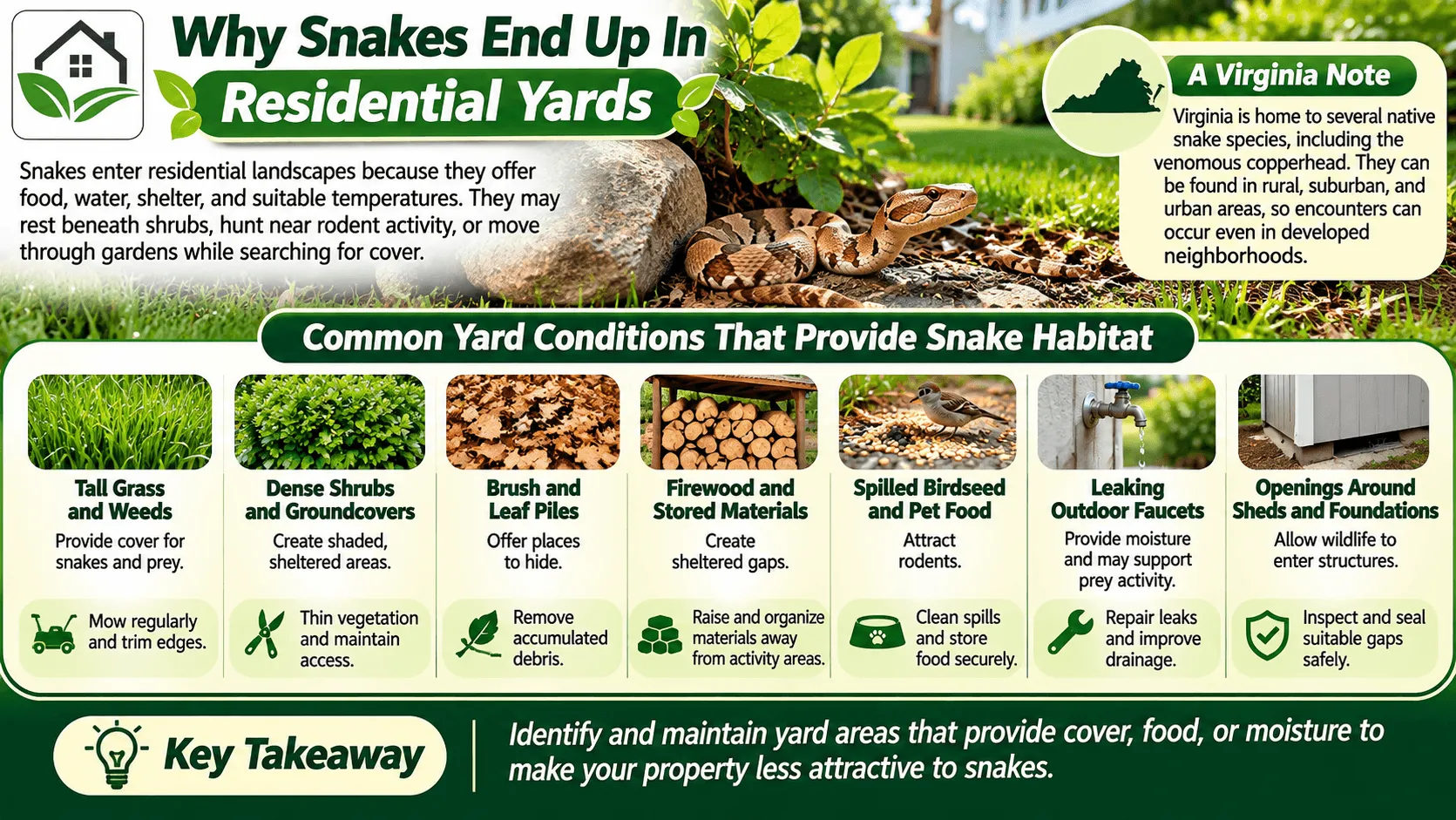
Snakes typically enter residential landscapes because they offer some combination of food, water, shelter, and suitable temperatures. They may rest beneath shrubs, hunt near rodent activity, or move through gardens while searching for cover.
Because snakes depend on environmental temperatures to regulate their body heat, both sunny and shaded areas can attract them at different times.
In Virginia, homeowners may encounter several native snake species, including the venomous copperhead. If you are concerned about a copperhead in Virginia, learning where it commonly shelters can help you identify places that deserve extra attention during yard maintenance.
According to Prince William Times, copperheads occur in rural, suburban, and urban environments across Virginia. Living in a developed neighborhood does not automatically eliminate the possibility of an encounter.
The same approach used for yard maintenance to prevent pests can help homeowners identify vegetation, moisture, and storage conditions that make outdoor areas attractive to wildlife.
Common Yard Conditions That Provide Snake Habitat
Not every untidy corner attracts snakes, but certain conditions provide shelter or support the animals they eat. Identifying these areas helps homeowners prioritize maintenance rather than treating the entire landscape as a problem.
| Yard condition | Why it matters | Recommended maintenance |
|---|---|---|
| Tall grass and weeds | Provide cover for snakes and small prey animals | Mow regularly and trim neglected edges |
| Dense shrubs and groundcovers | Create shaded, sheltered areas | Thin vegetation and maintain visible access |
| Brush and leaf piles | Offer places to hide | Remove accumulated debris |
| Firewood and stored materials | Create sheltered gaps | Raise and organize materials away from activity areas |
| Spilled birdseed and pet food | Attract rodents | Clean spills and store food securely |
| Leaking outdoor faucets | Provide moisture and may support prey activity | Repair leaks and improve drainage |
| Openings around sheds and foundations | Allow wildlife to enter structures | Inspect and seal suitable gaps safely |
These changes will not guarantee a snake-free property. They can, however, reduce the features that make residential yards attractive to snakes and their prey.
Keep Grass, Shrubs, and Garden Beds Trimmed Back
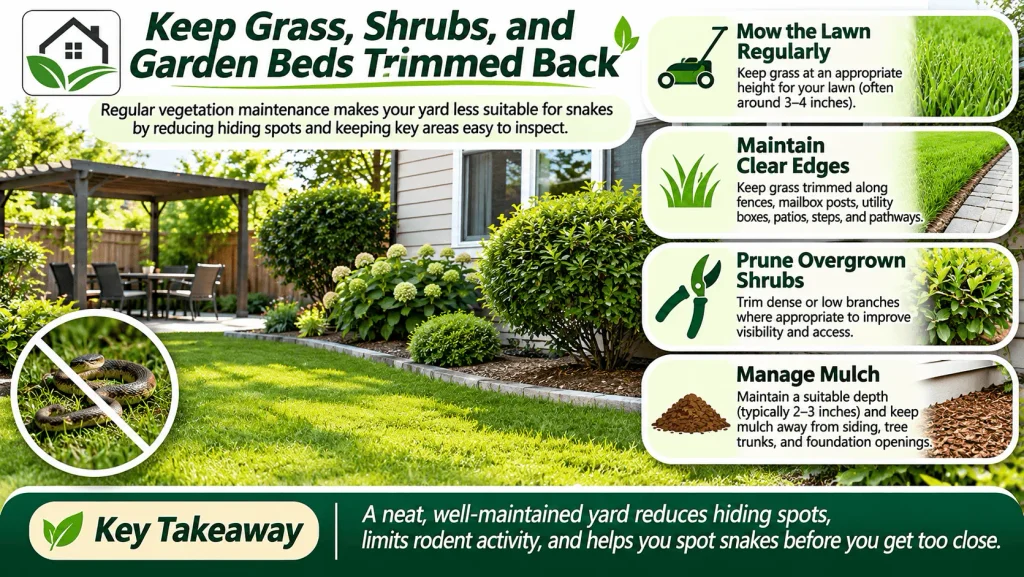
Vegetation maintenance is one of the simplest ways to make a yard less suitable for snakes. Thick growth can conceal movement, shelter rodents, and make it difficult to see where you are placing your hands or feet.
Focus on keeping frequently used areas open and easy to inspect, especially around entrances, patios, walkways, and children’s play spaces.
Mow the Lawn and Maintain Clear Edges
Regular mowing limits areas of tall grass where snakes and small mammals can remain concealed. The correct mowing height depends on your grass species, growing conditions, and season.
For many established lawns, a mowing height around three to four inches can be appropriate, but it should not be treated as a universal snake-prevention measurement.
Pay particular attention to places the mower cannot reach, including:
- Fence lines and property boundaries
- Areas around mailbox posts and utility boxes
- Grass behind outdoor storage containers
- Edges of patios, steps, and pathways
Keeping these areas maintained makes it easier to notice wildlife before accidentally disturbing it.
Prune Overgrown Shrubs and Manage Mulch
Dense shrubs, ivy, and groundcovers can create sheltered spaces near a home’s exterior. Pruning lower branches where appropriate improves visibility and allows easier cleaning around planting beds.
There is no need to remove healthy landscaping simply because snakes might occasionally pass through it. Instead, prevent plants from becoming tangled, inaccessible masses.
Mulch should also be maintained at a suitable depth for the plants and soil conditions. In many ornamental beds, two to three inches of organic mulch is sufficient.
Avoid piling mulch directly against siding, tree trunks, or foundation openings. Keep the immediate building perimeter accessible for inspection.
Good vegetation management also includes maintaining healthy trees so that branches, shade, and landscaping remain suitable for the property.
Clear Brush Piles, Woodpiles, and Outdoor Clutter
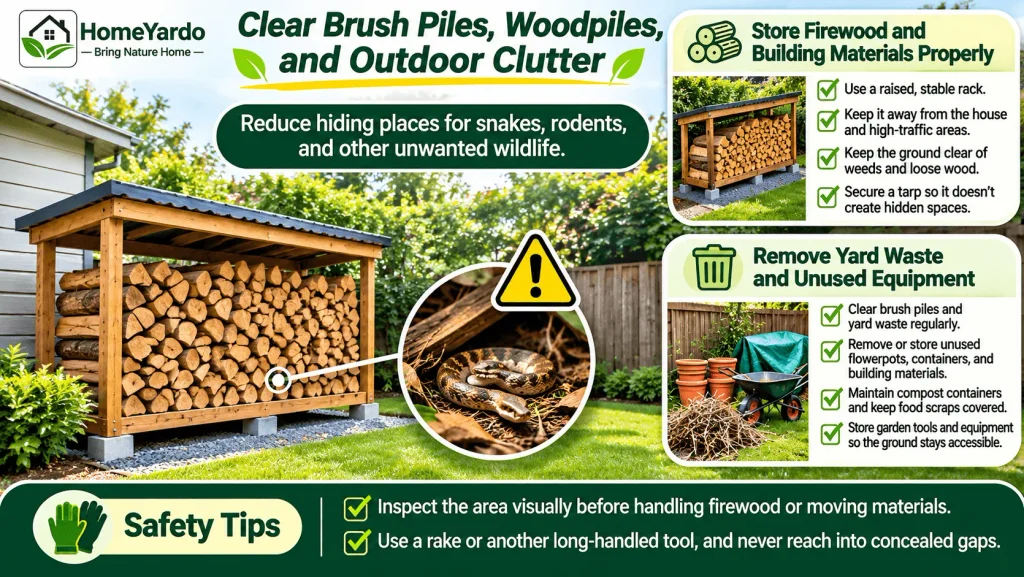
A pile of leftover lumber or an unused garden tarp may seem harmless, but it can create a sheltered space for snakes, rodents, and other animals.
Outdoor clutter is particularly worth addressing near garages, sheds, patios, and areas where people frequently walk.
Store Firewood and Building Materials Properly
Firewood stacks often contain narrow gaps where small animals can shelter. Organizing the stack improves access and reduces the amount of loose debris around it.
Whenever practical, store firewood on a stable, raised rack away from the house and frequently used outdoor areas. Keep the surrounding ground clear of weeds and scattered logs.
If you use a tarp, secure it so it does not create unnecessary pockets of sheltered space beneath the pile.
Before collecting firewood, inspect the area visually. Never reach into concealed gaps without checking for wildlife.
Remove Yard Waste and Unused Equipment
Brush piles, discarded flowerpots, empty containers, loose stones, and construction materials can gradually turn a tidy backyard into a collection of hiding places.
Remove unwanted materials regularly rather than allowing them to accumulate through several seasons.
Keep compost containers maintained and avoid leaving food scraps exposed where they may attract rodents. Store garden tools and equipment so the ground beneath them remains accessible.
When moving old materials, use a rake or another long-handled tool where appropriate. Do not place your hands beneath boards, rocks, or containers you cannot see under.
Reduce Rodents and Other Food Sources Around The Yard
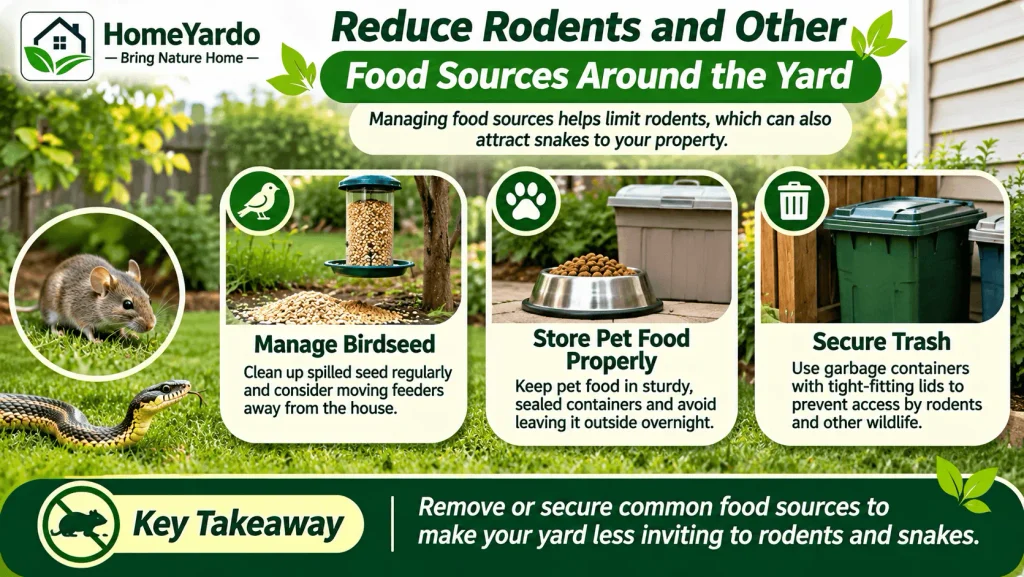
Removing shelter helps, but managing food sources is just as important. Some snakes visit residential properties because mice, voles, and other small animals are already present.
A yard that supports a persistent rodent population may continue attracting predators even after vegetation has been trimmed.
Keep Birdseed, Pet Food, and Trash Secure
Spilled birdseed is a common source of food for mice and other wildlife. If you use bird feeders, clean beneath them regularly and consider moving them away from the house.
Store birdseed and pet food in sturdy, tightly closed containers.
Avoid leaving pet food outside overnight, and make sure garbage containers close properly. These habits help reduce the food sources that can support rodent activity.
If you notice burrows, droppings, or repeated signs of rodents, address the underlying issue rather than relying on snake deterrents alone.
Seal Gaps Around Sheds, Decks, and Foundations
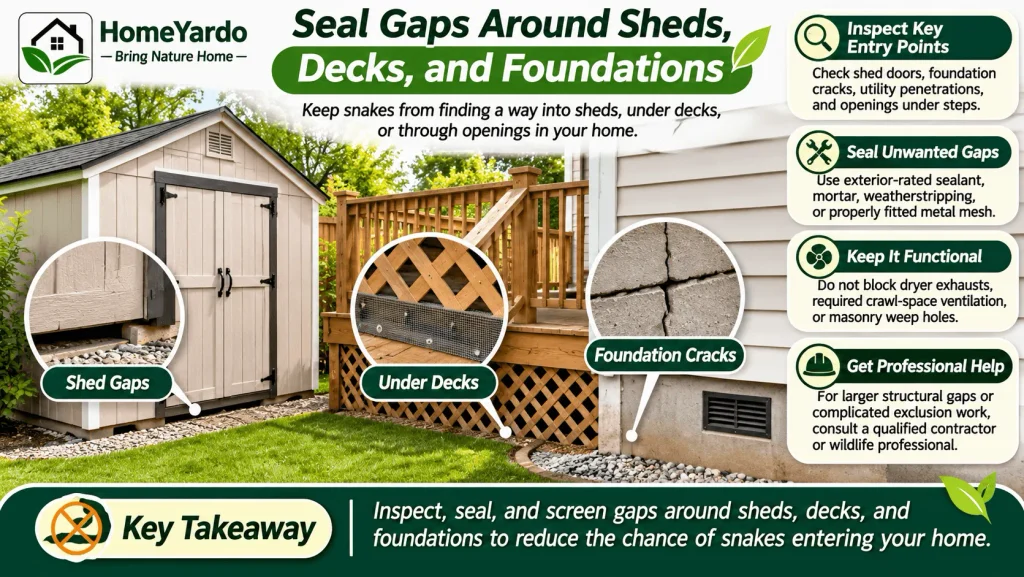
Snakes may enter gaps beneath outdoor structures or occasionally move through openings in buildings. A poorly maintained shed, crawl space, or foundation can provide access to a sheltered area.
Start with a visual inspection rather than immediately covering every opening. Some building gaps serve an important drainage or ventilation purpose and must remain functional.
Inspect Entry Points Without Blocking Ventilation
Walk around the property and inspect areas such as shed doors, foundation cracks, utility penetrations, and openings beneath steps.
Where suitable, use exterior-rated sealant, mortar, weatherstripping, or properly fitted metal mesh to close unwanted access points.
Small snakes may pass through surprisingly narrow gaps, so do not overlook minor openings.
Before sealing an area, make sure no animal is trapped inside. Do not block dryer exhausts, required crawl-space ventilation, or masonry weep holes. Any protective screening must preserve the building component’s intended function and follow applicable requirements.
For larger structural gaps or complicated exclusion work, consult a qualified contractor or wildlife professional.
Avoid Snake Repellents That Do Not Work Reliably
When homeowners discover a snake near the house, buying a repellent may seem easier than cleaning the entire yard. Unfortunately, many commonly advertised deterrents do not provide dependable protection.
Mothballs are not an appropriate outdoor snake-control method. Their misuse can expose people, pets, and wildlife to harmful chemicals.
There is also insufficient reliable evidence that common home remedies such as sulfur, strong-smelling household products, or ultrasonic devices consistently prevent snakes from entering outdoor spaces.
Habitat management remains the more practical approach. Focus on reducing shelter, controlling rodents, maintaining vegetation, and securing buildings rather than expecting a product to create an invisible barrier around the property.
Practice Safe Yard Maintenance During Snake Season
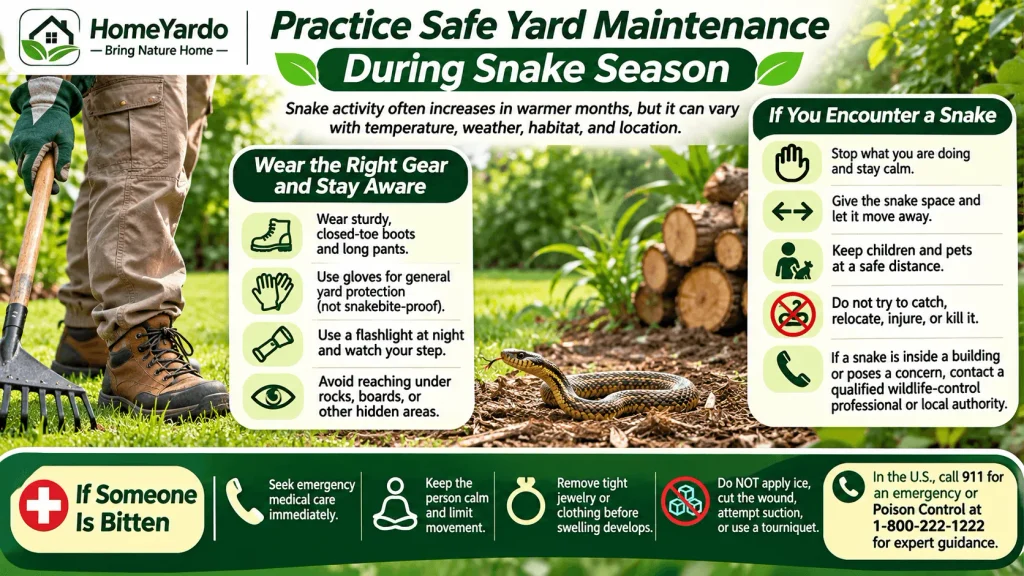
Snake activity changes with temperature, weather, habitat, and location. In many regions, homeowners are more likely to encounter active snakes during warmer months.
However, there is no single calendar date when all snakes emerge or disappear. Warm spells and local conditions can influence activity outside the expected season.
Wear Protective Clothing and Check Hidden Areas
Choose sturdy, closed-toe boots and long pants when working near dense vegetation, woodpiles, or neglected garden areas.
Gloves can protect your hands from ordinary gardening injuries, but they should not be considered reliable protection against a snakebite.
Use a flashlight when walking outdoors after dark. Watch the ground around steps, trash containers, and pathways before moving through poorly lit areas.
If you cannot see beneath a rock, board, or other object, avoid reaching underneath it.
What to Do If You Encounter a Snake
If you notice a snake while mowing, gardening, or moving outdoor equipment, stop what you are doing.
Give the animal space and allow it to move away without interference. Keep children and pets at a safe distance.
Do not attempt to catch, relocate, injure, or kill the snake. Handling increases the chance of a bite, particularly when the animal feels threatened.
If a snake remains inside a building or presents an ongoing concern in an occupied area, contact a qualified wildlife-control professional or the appropriate local authority.
If someone is bitten by a snake that may be venomous, seek emergency medical care immediately. In the United States, call 911 for an emergency or Poison Control at 1-800-222-1222 for expert guidance.
Keep the person calm, limit unnecessary movement, and remove tight jewelry or clothing before swelling develops. Do not apply ice, cut the wound, attempt suction, or use a tourniquet.
A Simple Seasonal Yard Maintenance Checklist
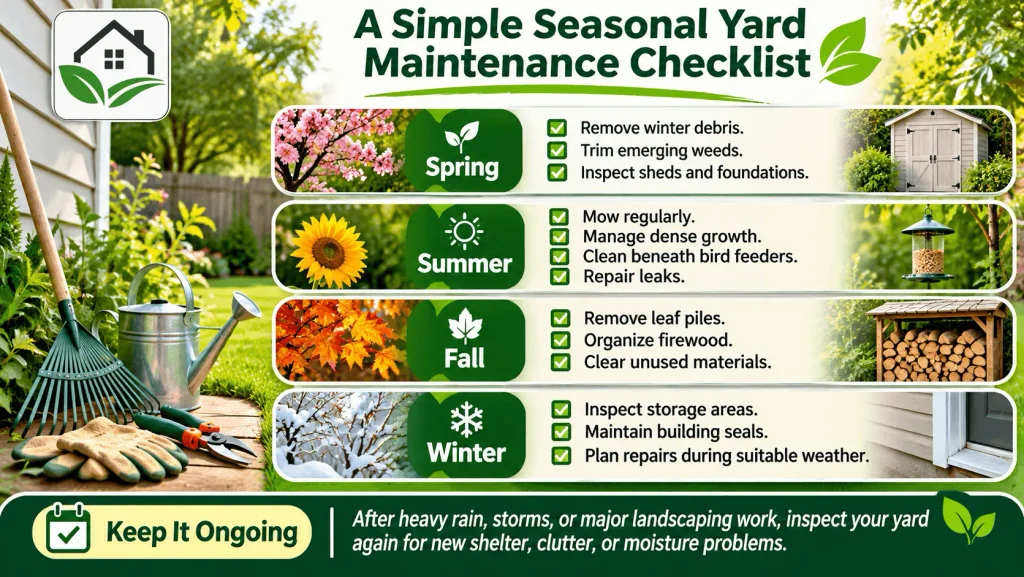
Keeping a yard less attractive to snakes is an ongoing process, not a single weekend project. Small inspections throughout the year can prevent clutter and vegetation from building up unnoticed.
Use this schedule as a starting point and adjust it to local weather conditions.
| Season | Maintenance priorities |
|---|---|
| Spring | Remove winter debris, trim emerging weeds, and inspect sheds and foundations |
| Summer | Mow regularly, manage dense growth, clean beneath bird feeders, and repair leaks |
| Fall | Remove leaf piles, organize firewood, and clear unused materials |
| Winter | Inspect storage areas, maintain building seals, and plan repairs during suitable weather |
After heavy rain, storms, or major landscaping work, inspect the yard again. Fallen branches, shifted materials, and new moisture problems may create shelter that was not there before. Homeowners can also incorporate these tasks into their regular seasonal pest checks to identify new hiding places, moisture problems, and potential entry points.
Final Takeaway
Making your outdoor space less snake-friendly does not require removing everything that makes a garden enjoyable. The goal is to reduce avoidable hiding places and food sources while keeping paths, entrances, and activity areas easy to inspect.
Start with the ground around your house. Trim neglected vegetation, clear stored debris, manage rodent attractants, and inspect building openings. Repeat these tasks throughout the year rather than allowing small problems to accumulate.
No maintenance method can completely prevent snakes from entering a yard. With consistent upkeep and safe outdoor habits, though, you can reduce unwanted encounters while maintaining a healthy, usable landscape.
Frequently Asked Questions
Regular mowing, clearing brush piles, trimming dense vegetation, removing rodent food sources, and sealing suitable building gaps can make a yard less attractive to snakes. These steps reduce shelter and access rather than guaranteeing complete prevention.
Shorter, well-maintained grass reduces concealment and improves visibility, but it cannot prevent every snake from entering a lawn. Follow the recommended mowing height for your grass species and maintain neglected edges.
Mulch does not automatically attract snakes, but thick, undisturbed mulch and dense nearby vegetation can provide shelter. Maintain appropriate mulch depth and avoid excessive buildup against buildings.
Removing or relocating woodpiles can reduce sheltered areas used by snakes and their prey. Store firewood on raised racks, keep surrounding vegetation trimmed, and inspect the area before moving logs.
Mothballs should not be used as outdoor snake repellents. Many commercial deterrents also lack strong evidence of reliable performance. Habitat management and safe exclusion are generally more dependable approaches.
Copperheads may use residential yards that provide suitable cover, prey, and temperature conditions. Woodpiles, dense vegetation, rocks, and areas supporting small mammals can offer opportunities for shelter and hunting.