Roofing Contract Checklist: 10 Things to Confirm First
A roofing contract is a legally binding document between a roofer and the client which outlines the duties the roofer will provide for the job and the payment required for the service. Once the roofer’s crew is booked and the contract is on the table, most homeowners actually skim the contract in favor of getting started. It is vital that homeowners read through the contract properly to ensure the agreement is suitable for both parties.
Why a Written Roofing Contract Matters
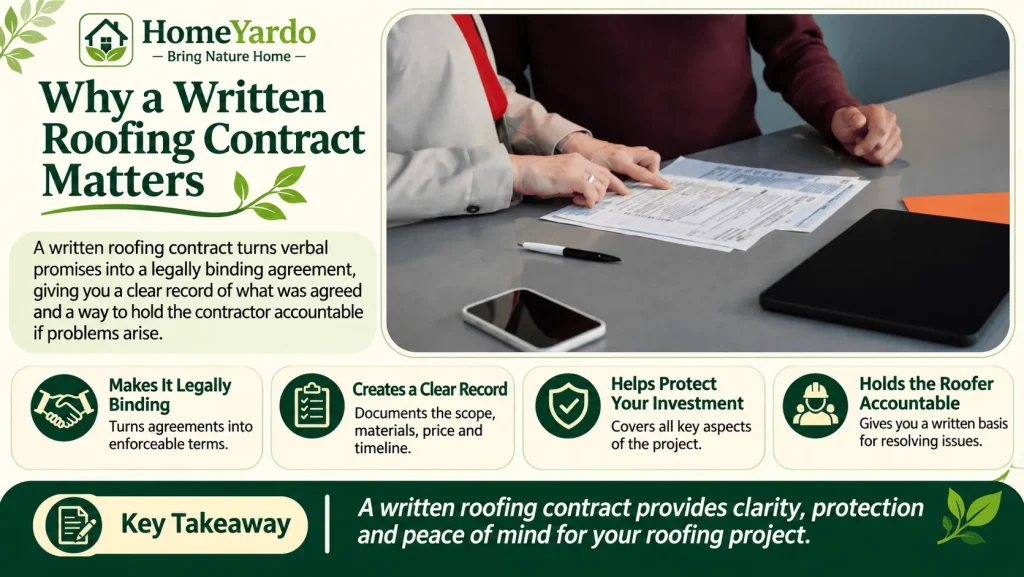
A written roofing contract is important because it transforms any verbal promises made into an agreement that is legally binding. It gives the client a clear record of what was agreed, which makes it much easier to hold the roofing contractor to their responsibilities if anything goes wrong. The contract will cover all aspects of the project in a fixed agreement which helps protect the homeowner’s investment.
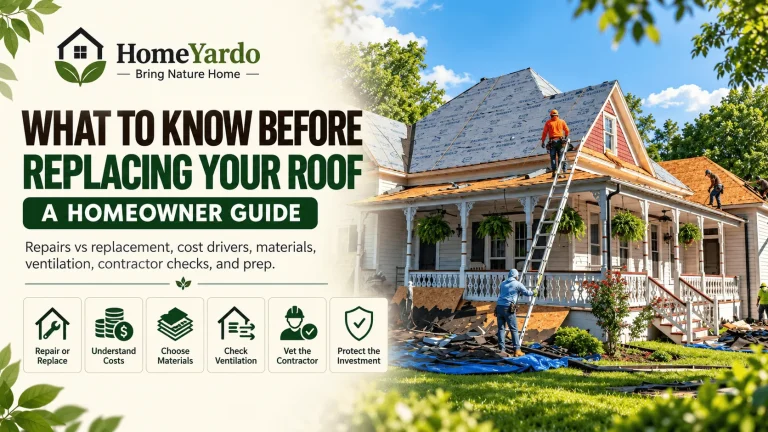
Before reviewing the contract, homeowners can also explore what to know before replacing your roof to understand project planning, roofing materials, and contractor expectations.
The Checklist
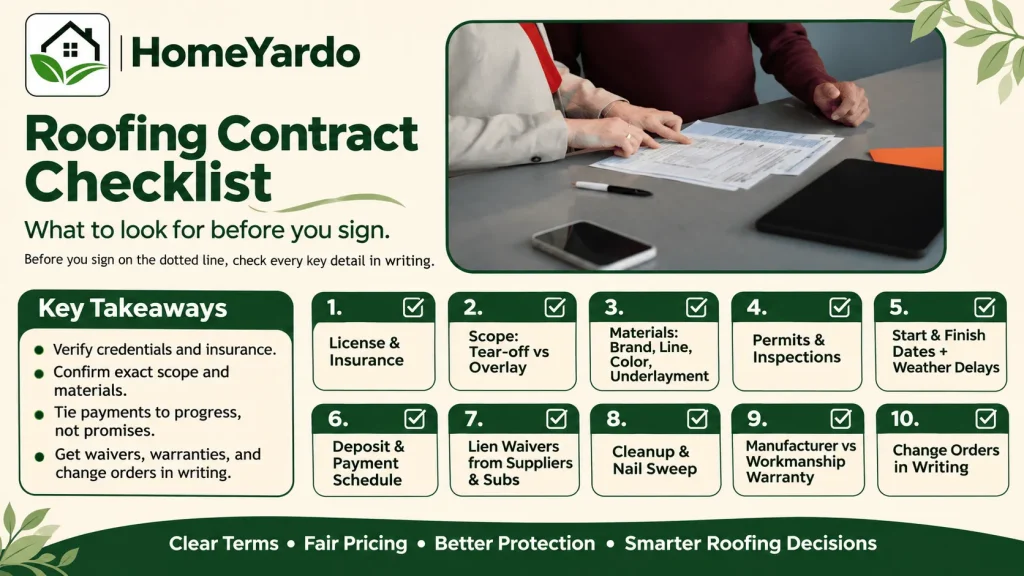
Before you sign on the dotted line, here is exactly what to look for in a roofing contract.
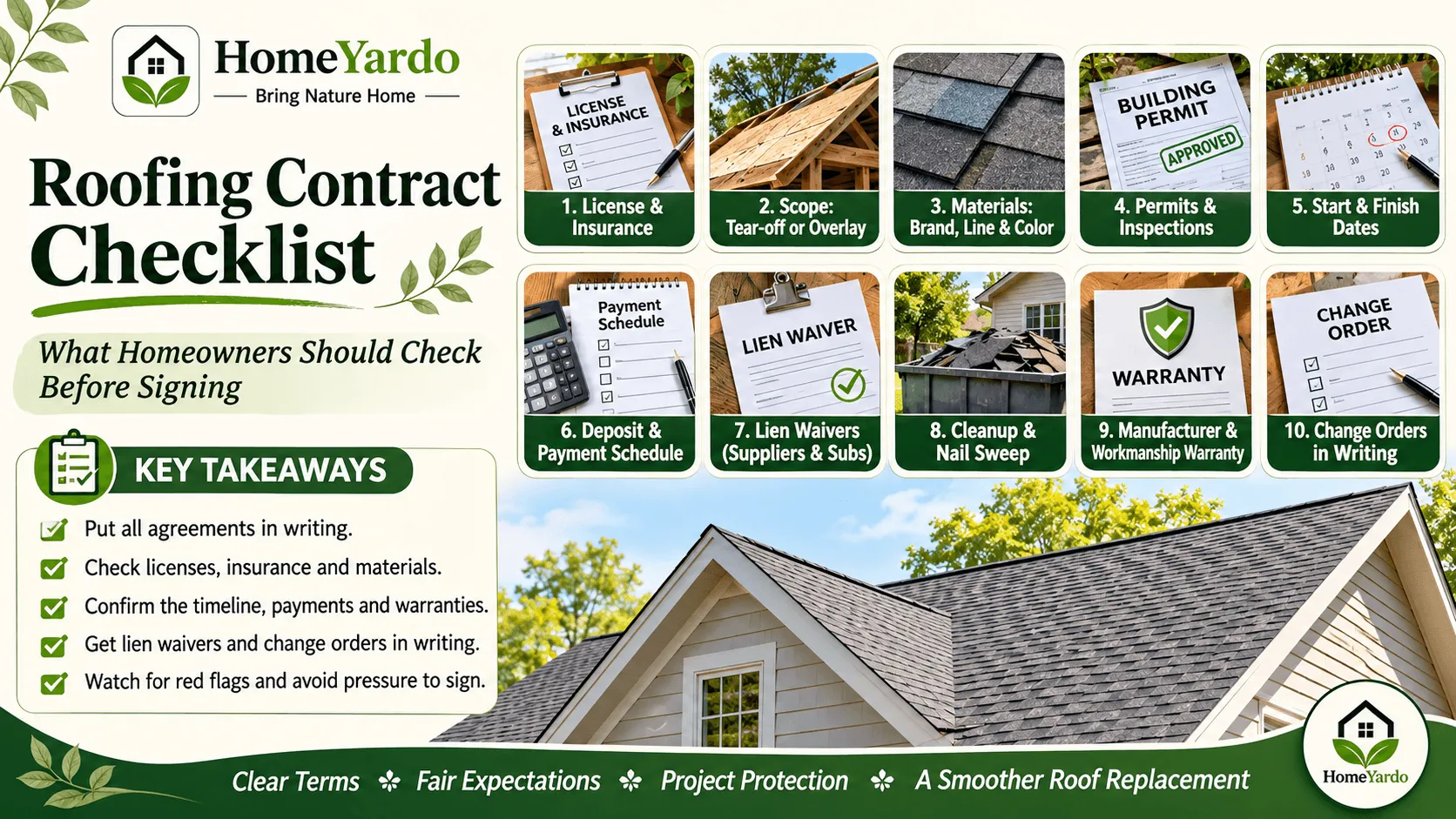
1. License and Insurance
Requirements vary by state but the contract must declare the contractor’s official state license number or city registration number. Roofers must also have Commercial General Liability insurance, which covers accidental damage to your property, and workers’ compensation where the state requires it for injuries to the crew.
2. Scope: tear-off vs overlay, decking price per sheet
The contract must state the type of work you are having done. A tear-off removes all roofing layers so the deck underneath can be checked for rot or water damage. An overlay installs new roof shingles on top of the already existing layer. The contract should also state the agreed unit price per sheet to replace damaged or rotted wood decking.
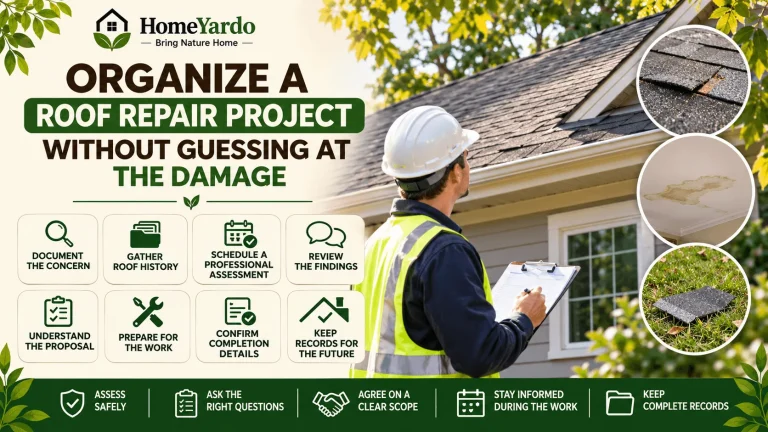
If you’re unsure whether a complete replacement is necessary, review how to plan a roof repair project before agreeing to the contractor’s proposed scope.
3. Materials: brand, line, color, underlayment
The contract must clearly state exact material specifications to prevent any material substitutions that you didn’t agree to. Specify the exact brand name, product line, color and underlayment type to ensure the right materials are used.
4. Permits and Inspections
The contractors must acquire the necessary permit for the job which covers all parts of the job. They must also comply with building regulations and health and safety laws to protect workers and the property. The contractor is also responsible for scheduling and coordinating mandatory building inspections with local authorities both during and after the job.
5. Start and finish dates and weather delays
The roofing contract must provide a clear timeline of start date and estimated completion date with key milestones included to measure progress. There should also be a clause which accounts for any possible weather delays to avoid conflict over time extensions.
6. Deposit and payment schedule
The full amount should never be paid up front. Instead, negotiate a deposit with your contractor and then agree on a payment schedule which is tied to project milestones. The final payment should only be made after a full inspection of the work and once the contractor has provided the final signed lien waivers.
7. Lien waivers from suppliers and subs
Lien waivers are receipts from the supplier or contractor which state they have been paid and waive any rights to place a mechanic’s lien on your house. There are conditional and unconditional waivers and it’s important that you know the difference.
A conditional waiver takes effect only after your payment is cleared. An unconditional waiver takes effect as soon as it’s signed, regardless of whether the money has arrived. They act as proof that everyone involved in the project has been paid. If your contractor skips paying the shingle supplier, that supplier may then file a lien on your home, so read up on protecting yourself from supplier liens before you hand over the final payment. You should collect the waivers before each payment for protection.
8. Cleanup and nail sweep
To protect your home from excess debris and metal pieces, the contract should include a specific cleanup routine after each work day and an extensive cleanup once the job is finished. The contract should also state that the contractors will dispose of the waste materials with a disposal cost agreed on.
9. Manufacturer vs workmanship warranty
The manufacturer warranty covers the materials and ensures you’re protected by the company if there are any damages or imperfections. The workmanship warranty covers the work done by the contractors if there are any installation problems such as poor fitting or slipped shingles. A roofing contract template should include both warranties to protect homeowners if anything is wrong.
10. Change orders in writing
If the project requires any modifications, a change order must be written and signed by both parties before the changes are made. All adjustments made to the materials and timeline must be included in the change order.
Red Flags in a Roof Replacement Contract
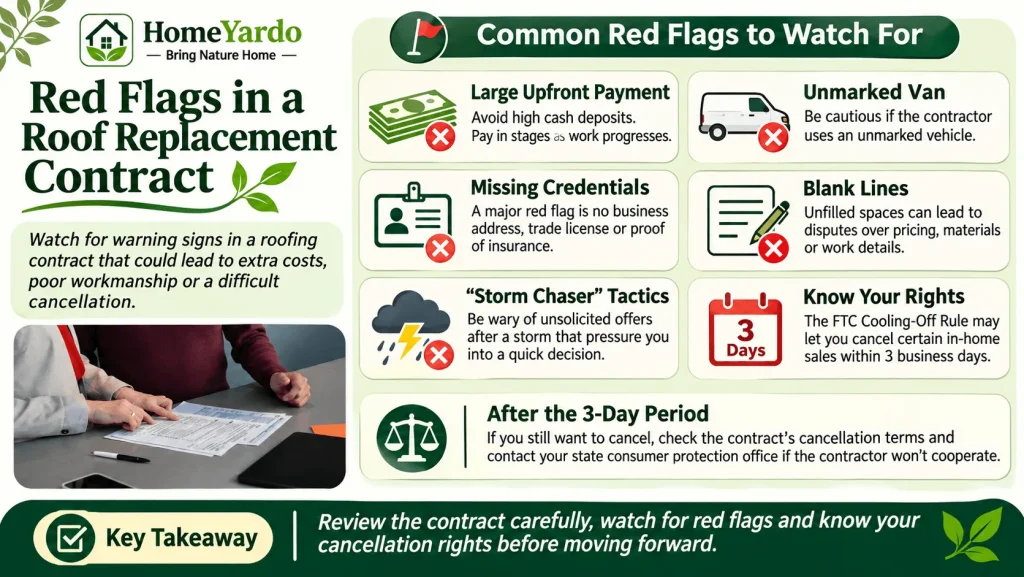
It is vital that you’re aware of possible red flags in a roof replacement contract. Contractors should never ask for a large upfront cash deposit, and payments should only be made after certain milestones are completed. A major red flag is if the contractor has no business address, trade license or uses an unmarked van. Blank lines on the contract are also a red flag as certain specifications are not explicitly stated and can cause problems down the line with pricing and materials.
Cold callers known as ‘storm chasers’ claim that your roof is in need of immediate repair after a storm which panics homeowners into a rushed decision. However, the FTC Cooling-Off Rule gives homeowners the right to cancel certain sales made at your home within 3 business days. If you want to get out of a roofing contract after that, start with the cancellation terms in the contract itself, and contact your state consumer protection office if the roofer will not cooperate.
After severe weather, homeowners should also understand what to check after a storm hits your roof before agreeing to emergency repairs or a full replacement.
Roofing Contract Template vs the Roofer’s Own Contract
A basic roofing contract template is a neutral document which makes sure all aspects of this checklist are included to protect both the homeowner and the contractor. The roofer’s own contract may focus more on protections heavily biased in their favor.
A template helps to create fair expectations with the ability to negotiate terms and make changes that suit both parties. You can then add important details such as timeline, full project details, payment schedule, licensing and warranties to create the finished written agreement.
For additional guidance on written agreements, contractor verification, and project responsibilities, see HomeYardo’s home remodeling guide.
Before the First Shingle Comes Off
Before any work begins, go through this checklist with the contract in front of you and ask the roofer to fill in any blank lines. Only sign it when you are happy with every single part, and keep a signed copy with your lien waivers and change orders until the warranty period ends.
FAQ’s
A roofing contract should include the contractor’s business details, applicable license and insurance information, scope of work, material specifications, permits, project timeline, payment schedule, warranties, cleanup responsibilities, and procedures for change orders. All agreed terms should be documented before work begins.
Before signing, verify the contractor’s credentials, insurance, proposed materials, total price, payment terms, start and completion dates, permit responsibilities, and warranty coverage. Check for missing information, unclear pricing, and clauses that could result in unexpected charges.
Deposit requirements vary by state and contractor. Some states limit the amount contractors can collect upfront. Homeowners should check applicable local laws, avoid paying the full project cost in advance, and agree to a written payment schedule linked to project progress.
Cancellation rights depend on state law, contract terms, and where or how the agreement was made. The FTC Cooling-Off Rule may provide a three-business-day cancellation period for qualifying sales made at a homeowner’s residence or certain other locations. Not every roofing contract qualifies.
Common warning signs include missing contractor information, vague material specifications, unusually large upfront payment demands, unclear warranty terms, blank spaces, and pressure to sign immediately. Homeowners should also be cautious when contractors refuse to provide written estimates or proof of insurance.
Yes, a written workmanship warranty is advisable. It explains what installation-related problems the contractor agrees to correct, how long the coverage lasts, and which exclusions apply. Manufacturer warranties and workmanship warranties typically cover different types of problems.
If damaged decking is discovered during a roof replacement, the contractor should explain the necessary repairs and provide the additional cost according to the agreed contract terms. A written change order should document any change in materials, pricing, or project timeline before the additional work proceeds.
Lien waivers can help protect homeowners from payment disputes involving subcontractors and suppliers. Requirements and the legal effect of different waivers vary by state. Homeowners should understand when conditional or unconditional waivers become effective and request appropriate documentation before releasing payments.