Organize A Roof Repair Project Without Guessing At the Damage

A ceiling mark, a piece of roofing material in the yard, or a concern raised during another home project can leave a homeowner unsure what to do next. It is tempting to search for a matching photograph and assume the solution will be the same. A more useful approach is to document the concern safely and arrange an assessment of the actual roof.
Organizing the project does not require climbing a ladder or learning repair techniques. It means knowing what information to share, what questions to ask about the findings, and how to keep the agreed work clear from the first appointment through the final review.
Separate What You Saw From What You Suspect

Begin with a factual description. Note where you saw the concern, when you first noticed it, and whether it appears to have changed. A photograph taken from a safe, accessible location can help explain the observation. Do not enter an unsafe area or climb onto the roof to improve the picture.
A mark indoors does not tell you everything about its source, and a piece of material outdoors may not establish the condition of the whole roof. Avoid labeling an observation as a specific defect until it has been assessed. If the situation presents an immediate hazard or active damage, seek appropriate urgent assistance rather than waiting to assemble a complete record.
Bring Together the Roof’s Available History
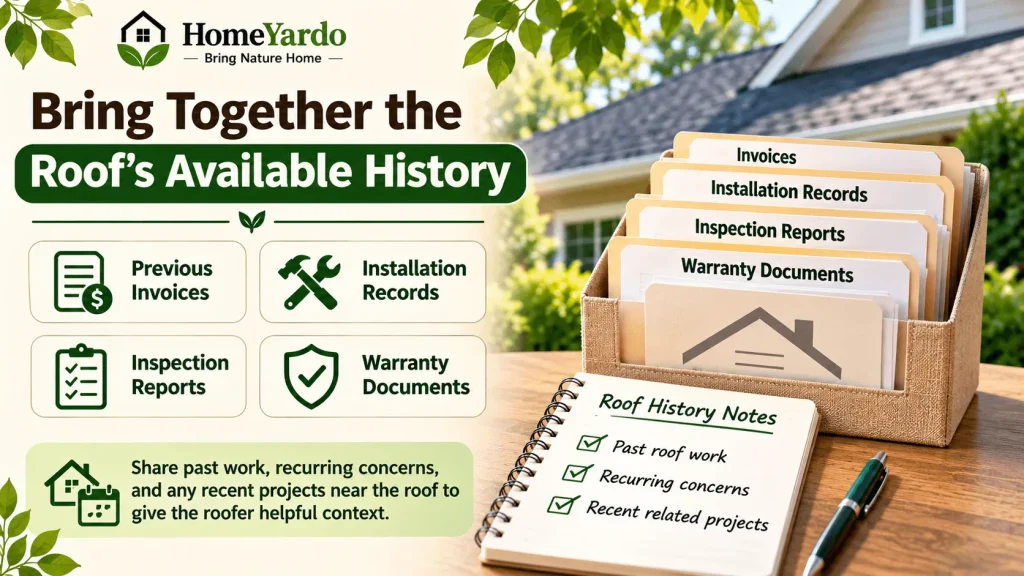
Look for previous invoices, installation records, inspection reports, and any warranty documents already in your possession. If the home is new to you, distinguish documented facts from estimates provided during the sale. A rough age can be useful context, but it should not be presented as an exact installation date without evidence.
Tell the roofer about relevant previous work and any recurring concerns. If another contractor has recently worked near the roof, describe the work without assuming it caused the problem. The goal is to provide context that supports assessment, not assign responsibility before anyone has established what happened. For more context about roof age and durability, see HomeYardo’s article on how long a roof actually lasts in a harsh four-season climate.
Make the Appointment About Assessment

When arranging a visit, explain the concern and ask what the assessment will involve. Confirm the appointment arrangements, any applicable charge, and whether someone needs to be present. Let the company know about access limitations so the visit can be planned appropriately.
Homeowners considering Reborn Roofing’s Bartlett roof repair services can review its local service page before requesting an assessment. Bring the observations and available records to the conversation, then ask for recommendations based on the property rather than assuming that a general service description determines the work required.
Avoid asking for a firm repair scope based only on your own diagnosis. Photos and descriptions can help a company understand the request, but they are not a substitute for whatever professional evaluation the situation requires. HomeYardo’s guide on when your roof needs replacement provides additional context without replacing a property-specific assessment.
Ask to Understand the Findings
After the assessment, request an explanation of the findings in plain language. If photographs are available, ask the roofer to identify what each one shows and how it relates to the concern you reported. A picture is more useful when it is connected to a specific explanation rather than presented without context.
Ask what is known, what remains uncertain, and whether further investigation is recommended. If both repair and replacement are discussed, request the reasoning behind each option. Do not assume that an older roof automatically requires replacement or that a small visible issue guarantees a small repair. The condition and proposed scope need individual consideration.
Keep Different Kinds of Work Distinct
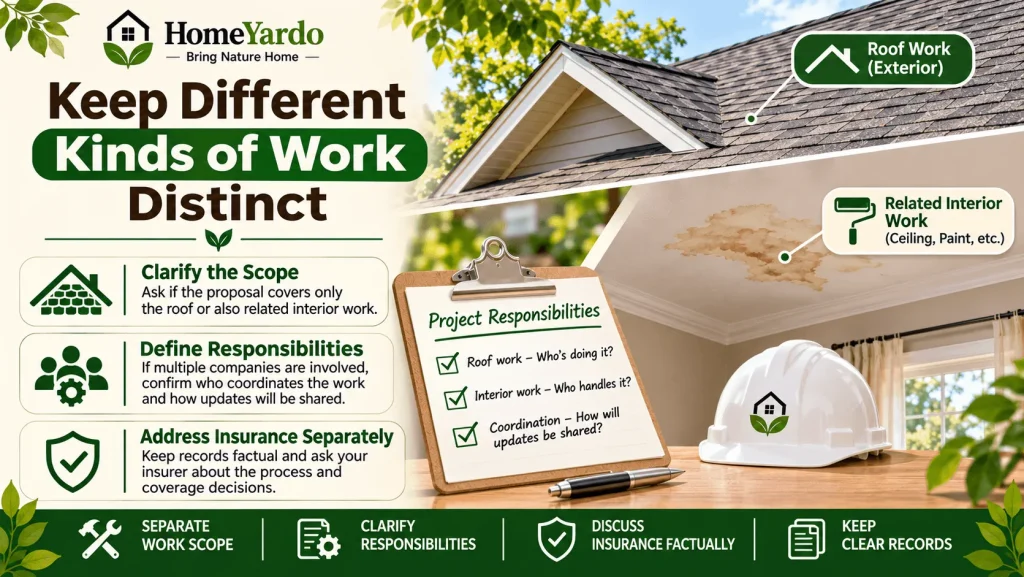
A project may involve more than the exterior roofing surface. Ask whether the proposal addresses only the roof or also includes any related interior work. Do not assume that repairing a source of water entry automatically includes repairing a ceiling, repainting, or other restoration.
If separate companies are involved, clarify who coordinates the work and how information will be shared. Write down responsibilities so the household knows which contact handles which question. This is particularly helpful when one task depends on another being completed first.
If you are discussing possible insurance involvement, keep records factual and ask the insurer directly about its process and coverage decisions. A contractor’s estimate is not a promise that a claim will be covered. Do not alter descriptions or infer a cause simply to make paperwork fit a preferred outcome.
Review the Proposal as a Defined Scope
Request a written description of the repair area, proposed work, and included materials. Ask about exclusions, site protection, cleanup, and how unexpected findings would be handled. A proposal should help you understand the boundaries of the project rather than leave you guessing about what a general phrase includes.
Discuss how changes must be approved and who may authorize them. If the roofer discovers an additional concern, ask how it will be documented and priced before the scope expands. Keep the current agreement and any approved changes together so an earlier version does not become a source of confusion.
When comparing proposals, compare the described work as well as the price. Ask about differences instead of assuming every company is quoting an identical approach. An unanswered question should stay visible until it is resolved, not become an assumption that the less detailed proposal includes everything.
Prepare The Household For The Work
Ask which areas around the home must remain clear and how access will be managed. Discuss vehicles, pets, deliveries, and ordinary household routines before work begins. Follow the contractor’s instructions about staying away from the active work area rather than trying to inspect progress from close range.
Agree on a contact method and ask how schedule changes will be communicated. Weather and other conditions may affect the plan, so request the project-specific sequence without treating a general estimate as an unconditional promise. Knowing who will update you is often more helpful than repeatedly guessing when the next step will happen.
Finish With Documentation And Open Questions Resolved
At completion, review what was done and ask about any remaining items. Save the invoice, applicable warranty terms, photographs supplied by the contractor, and any care instructions. Clarify who to contact if the original concern continues or a new question appears.
A roof repair file can be simple: the initial observation, the assessed findings, the approved scope, and the completion record. Keeping those pieces connected makes the project easier to understand now and easier to explain during future home maintenance. It also lets you participate confidently without taking on unsafe inspection or technical work yourself.
Final Takeaway
Organizing a roof repair project begins with documenting the concern, not diagnosing it.
Clear observations, available records, a professional assessment, and a written scope help homeowners understand what is proposed and why. Communication during the work and complete records afterward make the process easier to manage.
The goal is not to become a roofing expert. It is to make sure the repair is based on established findings and that every party understands the agreed responsibilities.
FAQ’s
Start by documenting visible concerns safely, collecting previous roofing records, and booking a professional assessment. Review the findings, obtain a written proposal, confirm responsibilities and payment terms, then keep records of the completed work.
Write down when and where you noticed the concern, take photographs from a safe location, and gather any existing roof documents. Do not climb onto the roof or attempt to diagnose concealed damage.
A professional assessment is generally appropriate when the cause, location, or extent of the problem is uncertain. The findings help define the repair scope and identify whether further investigation is needed.
Ask what was found, why the recommended repair is necessary, what materials will be used, what the proposal excludes, how changes will be approved, and what warranty terms apply. Confirm licensing, insurance, and permit requirements where applicable.