Rats and Rabies Risk in Florida: What Homeowners Should Know
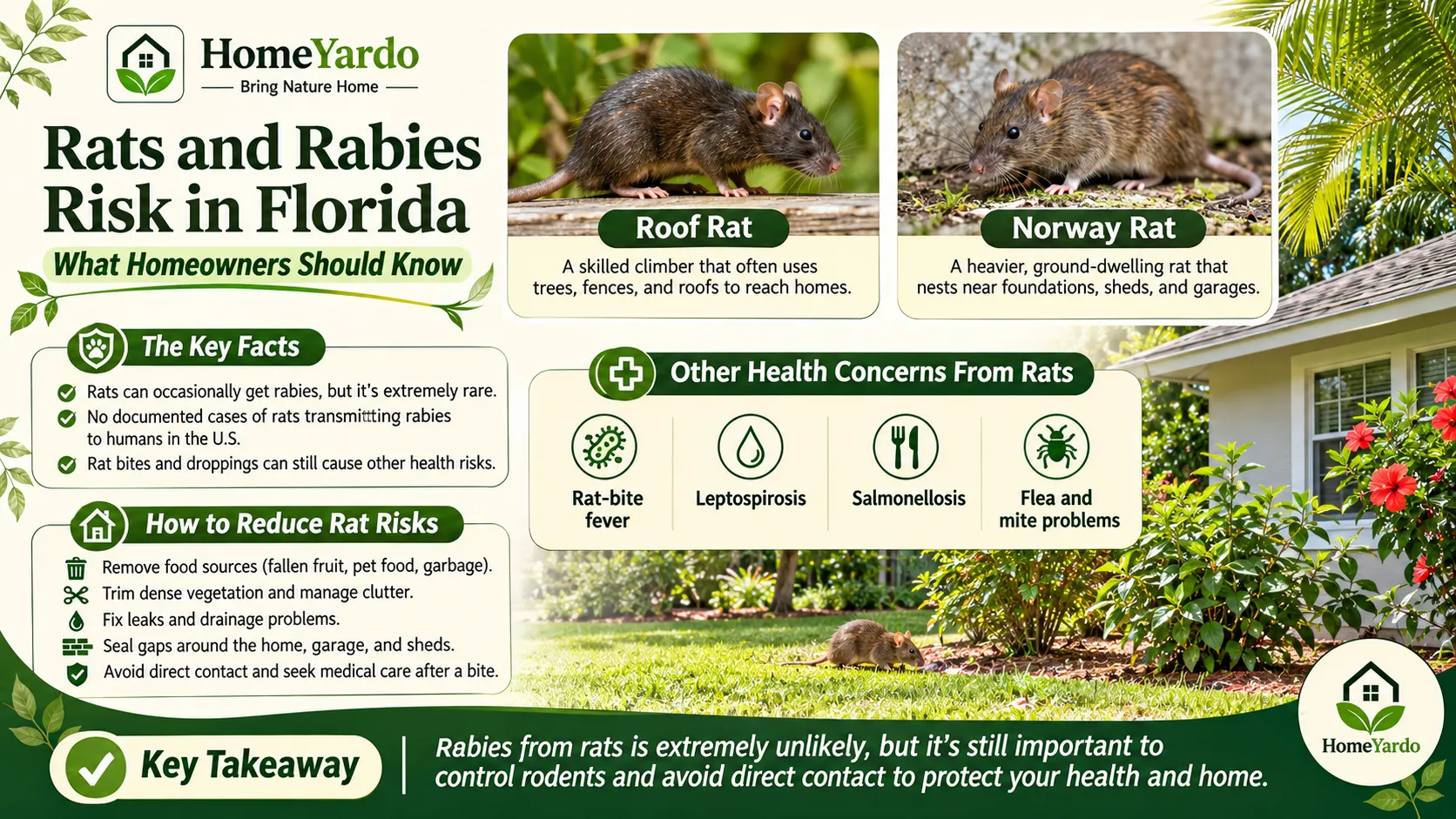
Rats and rabies risk in Florida are often misunderstood. Although rats can occasionally become infected with rabies, infections are extremely rare, and there are no documented cases of rats transmitting rabies to humans in the United States. Florida homeowners should still avoid direct contact with wild rodents because rat bites, contaminated surfaces, and droppings can present other health risks.
Finding a rat in the yard, hearing scratching noises inside a shed, or discovering droppings near stored belongings can understandably raise concerns about disease.
Florida’s warm climate, mature landscaping, fruit trees, and outdoor storage areas provide opportunities for rodents to find food and shelter. Roof rats and Norway rats can move between yards, garages, and homes when suitable conditions exist.
Understanding the difference between an unlikely rabies exposure and other recognized rodent-related health concerns helps homeowners respond appropriately.
The following sections explain how rats move around Florida properties, what public health agencies say about rabies, which other diseases deserve attention, and how basic property maintenance can reduce unwanted contact.
How Rats Move Through Yards Before Reaching the House
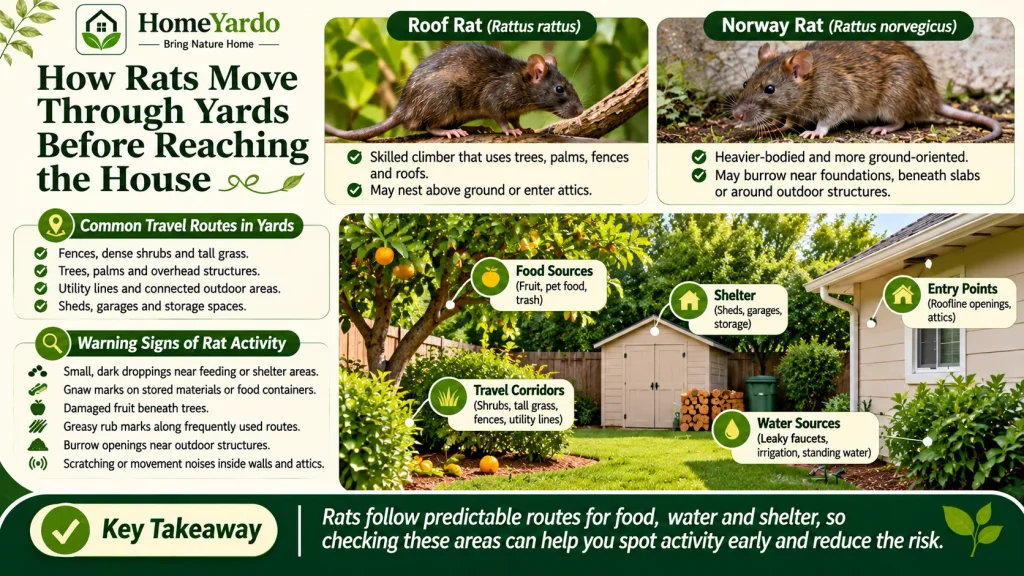
Rats usually follow routes that provide food, water, and shelter.
Fences, dense shrubs, tall grass, utility lines, and stored materials can create protected travel corridors. Fruit trees and unsecured garbage provide feeding opportunities, while sheds and garages offer places to hide.
In Florida, two rat species are especially relevant to residential properties.
Roof Rats and Norway Rats in Florida
Roof rats (Rattus rattus) are skilled climbers that often use trees, palms, fences, and elevated structures. They may nest above ground or enter attics through accessible roofline openings.
These rodents are sometimes called palm rats, citrus rats, or black rats.
Norway rats (Rattus norvegicus) are generally heavier-bodied and more closely associated with ground-level shelter. They may burrow near foundations, beneath slabs, or around outdoor structures.
Both species can take advantage of accessible food and poorly maintained storage areas.
Because rats are often active after dark, homeowners may notice indirect evidence before seeing the animals themselves.
Common warning signs include:
- Small, dark droppings near feeding or shelter areas
- Gnaw marks on stored materials or food containers
- Damaged fruit beneath trees
- Greasy rub marks along frequently used routes
- Burrow openings near outdoor structures
- Scratching or movement noises inside walls and attics
These signs indicate possible rodent activity, but they do not establish whether an animal has rabies.
A careful exterior inspection can help identify where rats may be moving between the yard and the house.
Putting the Rabies Question in Context
Rabies is a serious viral disease affecting the nervous system of mammals. It is usually transmitted through the saliva of an infected animal, most often through a bite.
However, the likelihood of rabies varies substantially among animal species.
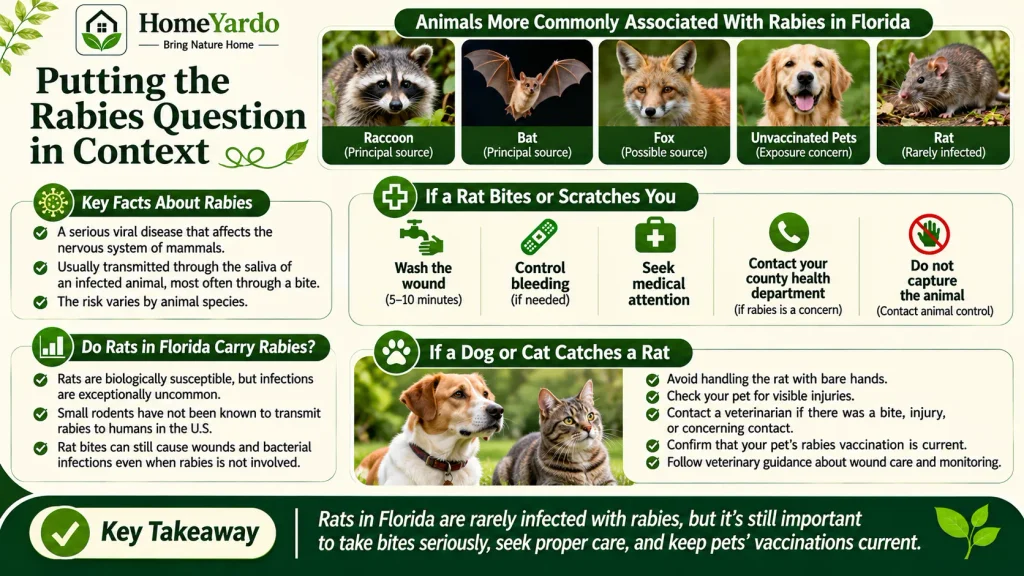
In Florida, raccoons and bats are among the principal wildlife sources of rabies. Other mammals, including foxes and unvaccinated domestic animals, can also present exposure concerns.
Small rodents such as rats and mice are rarely found infected with the virus.
Do Rats in Florida Carry Rabies?
Many homeowners ask, “do rats in Florida carry rabies” after encountering a rodent near their property.
The answer requires an important distinction.
Rats are mammals and are biologically susceptible to rabies, but naturally occurring infections are exceptionally uncommon.
According to public health guidance, small rodents such as rats and mice have not been known to transmit rabies to humans in the United States.
That does not mean every animal bite is harmless.
Rat bites can cause wounds and bacterial infections even when rabies is not involved.
Public health professionals consider the species, circumstances of the encounter, animal behavior, and local disease activity when evaluating a possible rabies exposure.
Homeowners should not attempt to diagnose rabies by observing a rat’s appearance or behavior.
What Should You Do If a Rat Bites or Scratches You?
A bite or scratch from a wild rat deserves prompt attention, primarily because of wound infection and other rodent-associated diseases.
If an exposure occurs:
- Wash the wound immediately. Use plenty of soap and running water, scrubbing thoroughly for five to ten minutes as recommended by the Florida Department of Health.
- Control bleeding. Apply gentle pressure with a clean cloth if necessary.
- Seek medical attention promptly. A healthcare professional can assess infection risk, tetanus vaccination status, and whether antibiotics or additional treatment are necessary.
- Contact the local county health department when rabies exposure is suspected. Health officials can assess the circumstances and advise on appropriate next steps.
- Do not attempt to capture the animal yourself. Contact animal control if professional handling or evaluation is required.
Rabies post-exposure vaccination is generally not needed after ordinary rat bites because the associated risk is extremely low. However, that decision belongs to healthcare and public health professionals.
If the animal behaved unusually or the circumstances are unclear, do not make assumptions about the appropriate treatment.
What If a Dog or Cat Catches a Rat?
Dogs and cats may occasionally catch or confront wild rats.
For a healthy-appearing small rodent, rabies exposure is generally considered very low risk. However, pets may still suffer bite wounds or other injuries.
If a pet catches or is bitten by a rat:
- Avoid handling the rat with bare hands.
- Check the pet for visible injuries without putting yourself at risk.
- Contact a veterinarian if there was a bite, injury, or concerning contact.
- Confirm that the pet’s rabies vaccination remains current.
- Follow veterinary guidance about wound care and monitoring.
Florida public health guidance distinguishes exposures involving healthy-appearing small rodents from encounters with animals more commonly associated with rabies.
Pet owners should still consult a veterinarian when injuries occur or the circumstances are uncertain.
Other Health Concerns That Make Avoiding Rats Wise
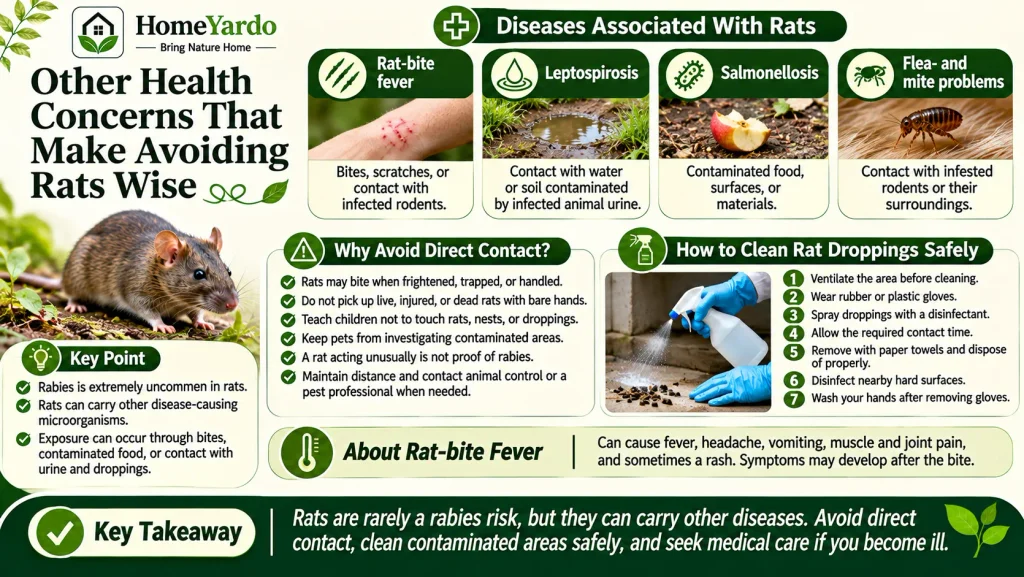
Rabies may be extremely uncommon in rats, but that does not make wild rodents safe to handle.
Rats can carry microorganisms associated with disease. Exposure may occur through bites, scratches, contaminated food, or contact with urine and droppings.
The type and likelihood of illness depend on the pathogen and how exposure occurs.
Diseases Associated With Rats
| Health Concern | Possible Exposure Route |
|---|---|
| Rat-bite fever | Bites, scratches, or contact with infected rodents |
| Leptospirosis | Contact with water or soil contaminated by infected animal urine |
| Salmonellosis | Contaminated food, surfaces, or materials |
| Flea- and mite-associated problems | Contact with infested rodents or their surroundings |
Not every rat carries these organisms, and finding droppings does not mean a person has developed an infection.
However, the possibility of contamination is a sound reason to keep rodents away from living spaces and food-storage areas.
Rat-bite fever deserves particular attention after a bite. Symptoms can include fever, headache, vomiting, muscle pain, joint pain, and sometimes a rash. Symptoms may develop after the wound has begun healing.
Anyone who becomes ill after rodent contact should tell their healthcare professional about the exposure.
Why Direct Contact With Rats Should Be Avoided
Wild rats may bite when frightened, trapped, or handled.
Even an injured or apparently inactive rodent should not be picked up with bare hands.
Children should be taught not to touch unfamiliar animals, nests, droppings, or dead rodents.
Pet owners should also prevent animals from investigating contaminated storage areas or feeding on dead wildlife.
A rat behaving unusually during daylight is not proof of rabies. Illness, injury, disturbance, or food availability may affect its behavior.
The safest response is to maintain distance and contact animal control or a qualified pest professional when assistance is needed.
How to Clean Rat Droppings Safely
Rodent-contaminated areas require careful cleaning.
Sweeping or vacuuming dry droppings can disturb contaminated particles and release them into the air.
The CDC recommends wet cleaning and disinfection rather than dry sweeping.
For a small, manageable contaminated area:
- Ventilate enclosed sheds or storage spaces before cleaning, following CDC guidance.
- Wear rubber or plastic gloves.
- Spray droppings and contaminated materials thoroughly with a suitable disinfectant.
- Allow the disinfectant to remain for the required contact time.
- Remove the wetted materials with paper towels and dispose of them appropriately.
- Disinfect nearby hard surfaces.
- Wash gloved hands before removing gloves, then wash your hands again.
Dead rodents also require disinfection and appropriate bagging before disposal.
Heavy infestations, contaminated ventilation systems, and large nesting areas may require professional cleanup.
Avoid allowing children or pets into contaminated spaces until cleaning has been completed safely.
Yard-Management Steps That Reduce Rodent Pressure
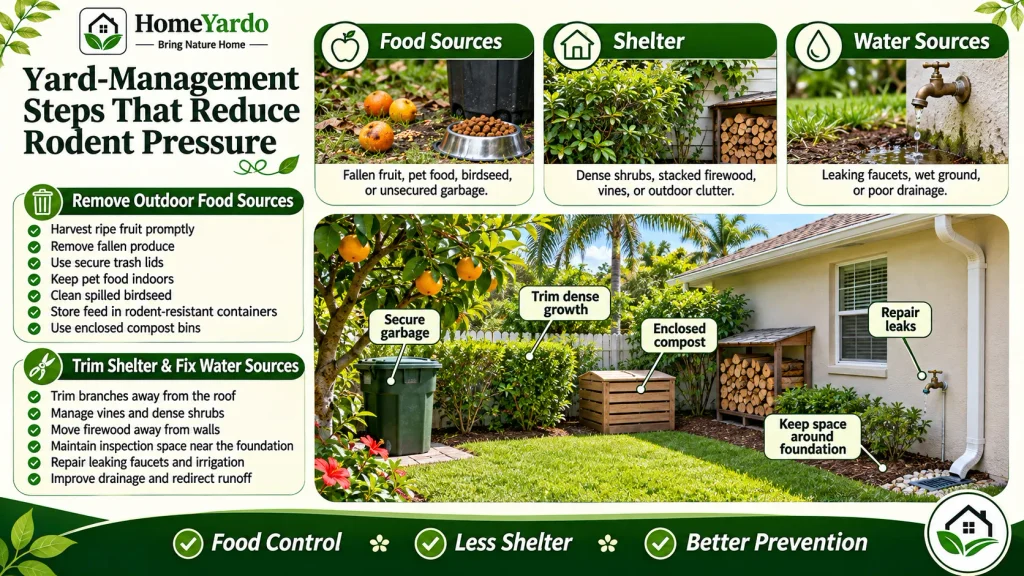
Many rodent problems begin with accessible food, shelter, and water around the property.
Reducing these conditions can discourage rats from remaining near the house.
The goal is not to remove every tree or shrub. Instead, homeowners should focus on reducing reliable food sources and protected travel routes.
Remove Outdoor Food Sources
Start with everyday items that provide easy meals.
Fallen citrus, avocados, pet food, birdseed, and poorly secured garbage can all attract rodents.
Useful maintenance practices include:
- Harvesting ripe fruit promptly
- Removing fallen produce regularly
- Using secure lids on outdoor trash containers
- Keeping pet food indoors when not in use
- Cleaning spilled birdseed from feeding areas
- Storing food and animal feed in rodent-resistant containers
Compost also deserves attention.
A completely enclosed compost bin is generally less accessible to rodents than an open pile.
Avoid placing meat, oily food waste, and dairy products in ordinary backyard compost systems. Follow local guidance for acceptable compost materials.
Keeping these areas clean also reduces conditions that attract other pests. HomeYardo’s guide to preventing pests in your home, yard, and garden explains how food, shelter, moisture, and structural openings can contribute to recurring pest problems.
Trim Dense Vegetation and Remove Hiding Places
Roof rats can use connected branches, vines, and fences to move toward structures.
Overgrown shrubs and thick ground cover may also conceal nesting sites or signs of activity.
Inspect the landscaping around the property and:
- Trim branches that touch or overhang the roof.
- Manage climbing vines near walls and vents.
- Thin dense shrubs where appropriate.
- Remove accumulations of dead palm fronds.
- Keep stored lumber and firewood away from exterior walls.
- Maintain enough space around the foundation for inspection.
Avoid pruning near electrical utility lines or unstable branches without qualified help.
The aim is to maintain healthy landscaping while removing unnecessary shelter and easy access to the building.
Repair Water Sources and Drainage Problems
Rats also need access to water.
Leaking outdoor faucets, damaged irrigation equipment, dripping hose connections, and persistently wet areas may provide additional resources.
Inspect outdoor plumbing and drainage regularly.
Repair leaks and make sure gutters and downspouts direct water away from the structure.
If rainfall or irrigation repeatedly leaves water standing beside the foundation, identify the underlying drainage problem rather than relying on temporary cleanup.
Homeowners can use HomeYardo’s guide on how to fix yard drainage to understand common causes of pooling water and when professional repairs may be appropriate.
Removing unnecessary water sources supports both property maintenance and general pest prevention.
Checking Structures for Entry Points
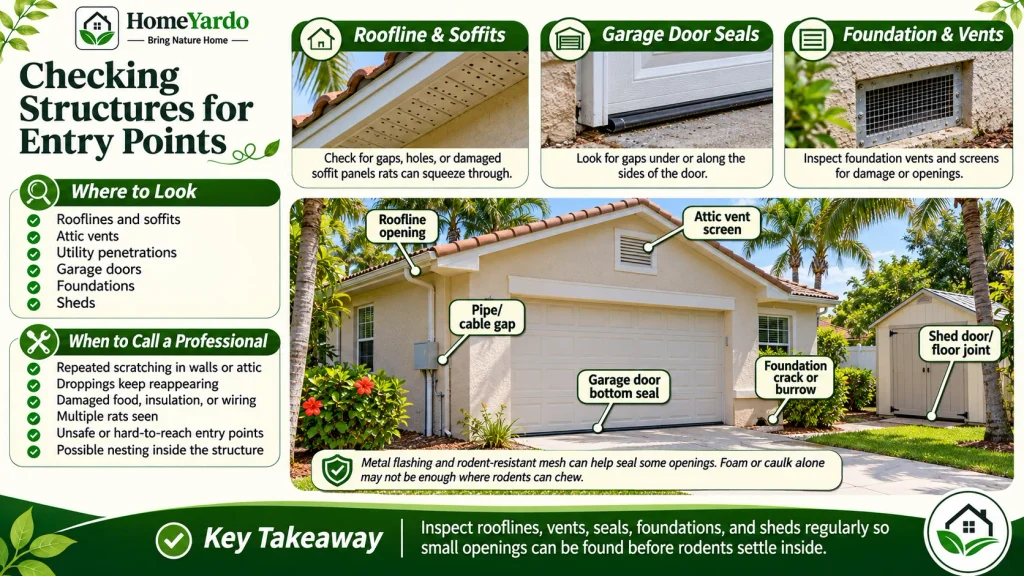
A clean yard can reduce the conditions that attract rats, but it does not guarantee rodents will stay away.
Small openings around the building may still provide access to walls, garages, crawl spaces, and attics.
Rats can enter through surprisingly narrow gaps, sometimes approximately half an inch wide.
Mice can fit through even smaller openings.
Florida homeowners should inspect their properties periodically, particularly after storms, roof repairs, or changes to outdoor structures.
Where to Look for Rodent Entry Points
Check the following areas:
- Rooflines and soffits: Look for damaged materials, openings, and gnaw marks.
- Attic vents: Inspect screens and surrounding edges for deterioration.
- Utility penetrations: Check gaps around pipes, cables, and service lines.
- Garage doors: Look for damaged or poorly fitting perimeter seals.
- Foundations: Inspect cracks, openings, and evidence of burrowing.
- Sheds: Examine floor joints, door gaps, vents, and storage areas.
Durable metal flashing and appropriately installed rodent-resistant mesh may be suitable for some openings.
Expanding foam or ordinary caulk alone may not provide a reliable barrier where rodents can chew through the material.
Keep required ventilation and drainage openings functional when making repairs.
Garage access points deserve particular attention. HomeYardo’s garage door weather seal guide explains how deteriorating seals can create gaps that allow drafts, moisture, and pests to enter.
When Is Professional Rodent Control Necessary?
A qualified pest professional may be needed when signs of activity continue despite outdoor maintenance.
Consider arranging an inspection if:
- Scratching noises repeatedly occur inside walls or attics.
- Rodent droppings keep appearing after cleanup.
- Food packaging, insulation, or electrical wiring shows damage.
- Multiple rats are seen around the same structure.
- The suspected entry point is difficult or unsafe to reach.
- Rodents may already be nesting inside the building.
Sealing openings without assessing an active infestation can trap animals inside inaccessible spaces.
Professional inspection can help determine the appropriate sequence of exclusion, population control, cleanup, and follow-up monitoring.
If rodenticides are proposed, ask how children, pets, and non-target wildlife will be protected. Any pesticide use must follow the applicable label and regulations.
A Practical Florida Homeowner Rat Safety Checklist
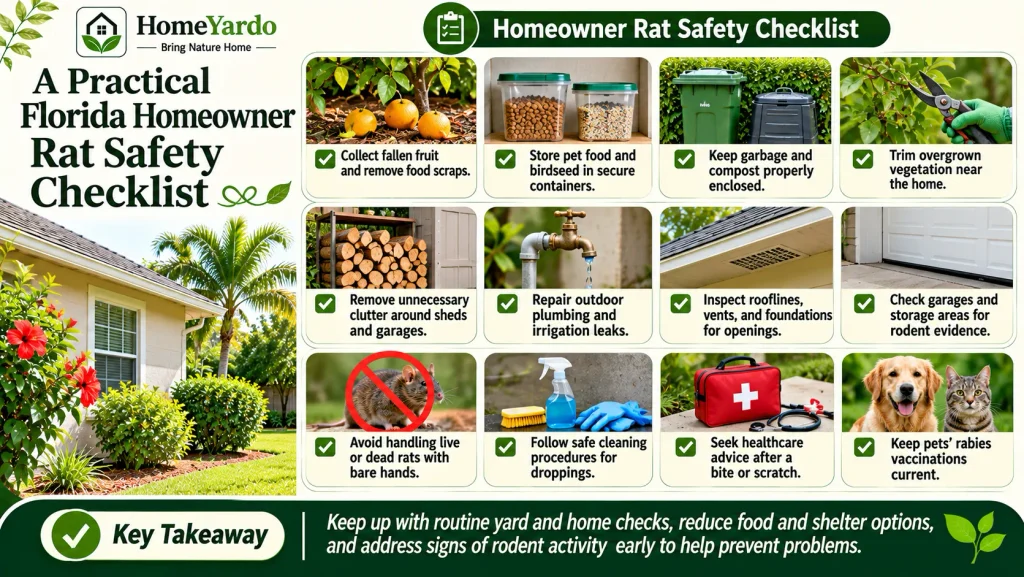
Regular inspections are more useful than relying on a one-time cleanup.
The following checklist combines basic property maintenance with steps that reduce unnecessary rodent contact.
- Collect fallen fruit and remove accessible food scraps.
- Store pet food and birdseed in secure containers.
- Keep garbage and compost properly enclosed.
- Trim overgrown vegetation near the home.
- Remove unnecessary clutter around sheds and garages.
- Repair outdoor plumbing and irrigation leaks.
- Inspect rooflines, vents, and foundations for openings.
- Check garages and storage areas for rodent evidence.
- Avoid handling live or dead rats with bare hands.
- Follow safe cleaning procedures for droppings.
- Seek healthcare advice after a bite or scratch.
- Keep pets’ rabies vaccinations current.
Inspect outdoor food sources frequently and review building conditions during routine seasonal maintenance.
Record recurring rodent sightings or other signs so that a pest professional can identify patterns if an inspection becomes necessary.
Final Takeaway
Rats are rarely infected with rabies, and transmission from rats to humans has not been documented in the United States.
For Florida homeowners, the more immediate concerns are bites, bacterial infections, contaminated surfaces, and damage caused by rodents entering structures.
A sensible prevention approach includes securing food, maintaining vegetation, fixing water leaks, inspecting buildings, and avoiding direct contact with wildlife.
Any rat bite or scratch should receive prompt medical assessment, even when rabies is unlikely.
If rodents repeatedly appear around the property or have entered the home, a qualified pest professional can help locate the source and recommend appropriate control measures.
Understanding the actual health risks allows homeowners to protect their families without unnecessary alarm.
FAQ’s
Rabies transmission from rats to humans has not been documented in the United States. Small rodents are rarely infected, so the risk is extremely low. However, a rat bite still requires medical attention because of possible bacterial infection and other health concerns.
No. Rabies is extremely uncommon in rats. Florida public health agencies identify raccoons and bats as major wildlife sources of rabies rather than common household rodents.
Immediately wash the wound thoroughly with soap and running water and seek medical care promptly. A healthcare professional can evaluate infection risk, tetanus protection, and the circumstances of the bite. Contact your county health department if there is concern about rabies exposure.
Rats may be associated with rat-bite fever, leptospirosis, salmonellosis, and certain parasites. Exposure can occur through bites, contaminated food or water, urine, droppings, or contact with infected animals. The risks vary depending on the disease and exposure route.
Rabies transmission from a healthy-appearing small rodent is considered extremely unlikely. However, dogs can still suffer bites or other injuries during an encounter. Pet owners should contact a veterinarian if an injury occurred and keep rabies vaccinations current.
There is no established evidence that roof rats present a meaningful rabies risk compared with Norway rats. Both are small rodents, and rabies infection is exceptionally uncommon. Their differences are more relevant to nesting behavior, movement, and property access.
Remove accessible food, secure garbage, maintain vegetation, organize outdoor storage, repair water leaks, and seal suitable structural openings using rodent-resistant materials. Persistent activity may require professional inspection and control.
Small contaminated areas may be manageable using CDC-recommended cleaning procedures, including gloves, disinfection, and wet removal. Do not sweep or vacuum dry droppings. Heavy infestations or contamination inside ventilation systems may require professional cleaning.
A daytime sighting alone does not indicate rabies. Rats may emerge because of food availability, disturbance, nesting activity, or other circumstances. Avoid handling the animal and watch for repeated activity or unusual behavior that requires professional assessment.
References and Public Health Resources
The following authoritative resources support the medical, animal-health, and property-prevention information in this article.
- Florida Department of Health — Rabies
- Florida Department of Health, Monroe County — Rodents and Associated Diseases
- Centers for Disease Control and Prevention — How to Clean Up After Rodents
- University of Florida IFAS Extension — Landscaping Methods to Prevent Pests From Entering Your Home
- UF/IFAS Extension Sarasota County — What to Do About Rodents