Los Angeles Yard Conditions That Attract Rats Near Homes
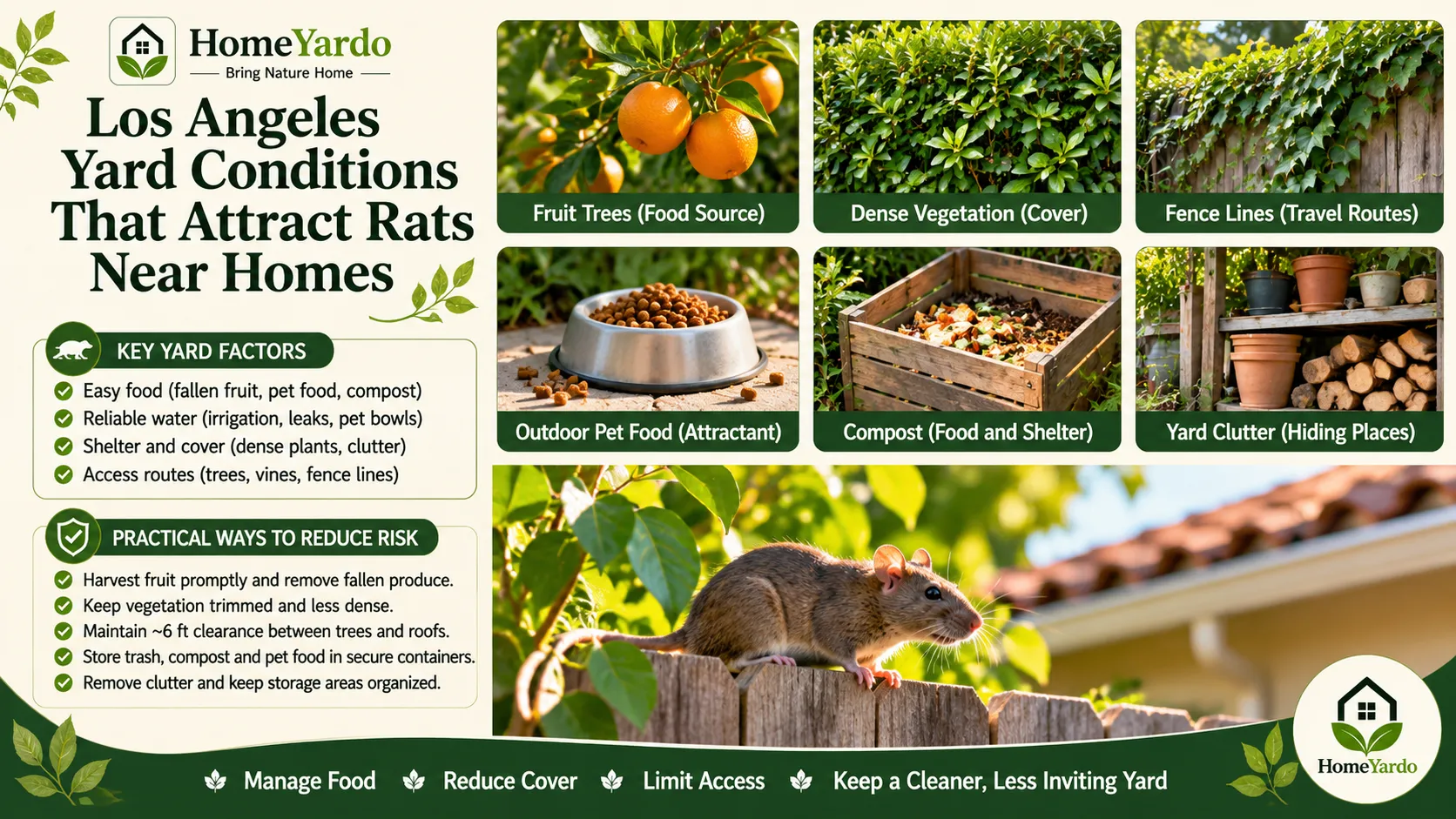
Los Angeles yard conditions that attract rats often provide three things: easy food, reliable water, and protected places to hide. Fallen fruit, dense shrubs, outdoor pet food, poorly managed compost, and cluttered storage areas can make residential yards attractive to rodents, even when the property appears well-maintained.
Los Angeles has a generally mild climate, and many residential landscapes contain fruit trees, evergreen vegetation, irrigation systems, and outdoor living spaces. These features can create favorable conditions for rats when food sources and sheltered travel routes are left unmanaged.
Roof rats are particularly relevant to Southern California properties because they are skilled climbers. They can travel along fence tops, tree branches, vines, and utility lines, sometimes reaching rooflines and attic openings without spending much time on the ground.
The important point is that a rat does not need an untidy yard to find shelter. A healthy-looking hedge, overhanging branch, or fruit tree can provide suitable habitat.
Understanding which outdoor conditions encourage rodent activity helps homeowners make targeted changes without removing every plant or undertaking a major landscape renovation.
Fruit Trees Provide a Steady Food Supply
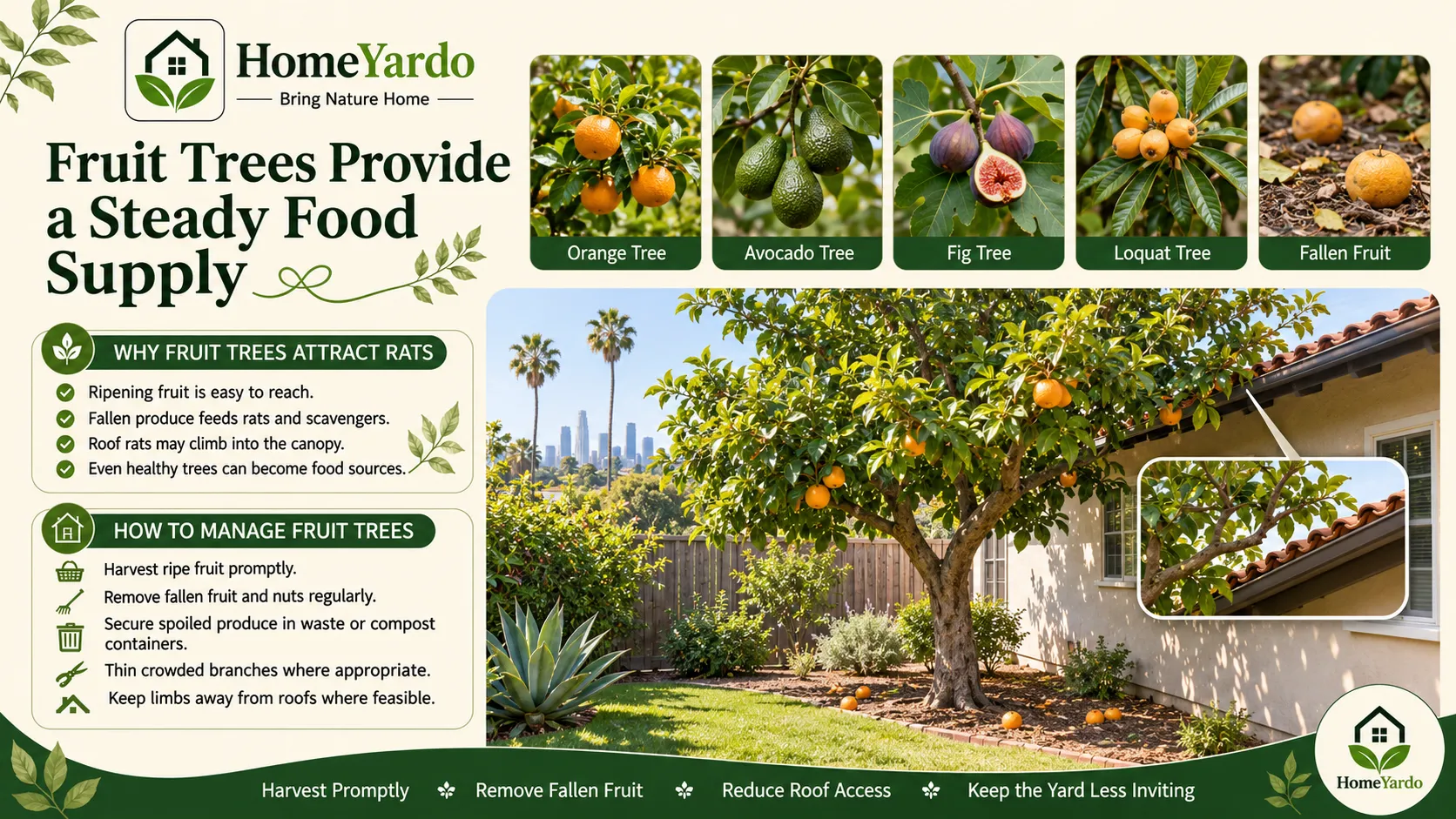
Fruit trees are one of the most recognizable food sources for roof rats in Los Angeles neighborhoods.
Orange, avocado, fig, and loquat trees may provide accessible food when their fruit ripens. Rats can feed on fallen produce or climb into the canopy to reach fruit that remains on the branches.
Roof rats sometimes leave distinctive feeding damage on citrus. An orange may have a small opening with much of the interior eaten, while other fruits show visible gnaw marks.
Fallen fruit can also attract insects and other scavengers, creating additional maintenance problems around the yard.
A tree does not have to be neglected to attract rats. Even a productive, healthy fruit tree can provide food when ripening produce is easily accessible.
How to Manage Fruit Trees Without Removing Them
Regular harvesting is one of the simplest preventive measures.
Homeowners should:
- Pick ripe fruit promptly rather than leaving it hanging for extended periods.
- Remove fallen fruit and nuts from the ground, ideally daily during heavy fruit drop.
- Dispose of spoiled produce in secured waste or compost containers.
- Thin crowded branches where appropriate for the tree species.
- Keep branches from providing direct access to roofs and other structures.
University of California Integrated Pest Management guidance recommends keeping overhanging tree limbs away from roofs where feasible. Around six feet of separation can help interrupt access, although roof rats may still reach buildings through other routes.
Pruning decisions should account for tree health, structural stability, and nearby utilities. Branches close to power lines should be handled by qualified professionals rather than homeowners.
Good pruning is not simply about cutting branches away. Maintaining healthy trees also involves suitable watering, removing damaged growth, and preserving stable branch structure.
HomeYardo’s guide to why healthy trees matter for a healthy yard provides additional guidance on keeping established trees in good condition.
For trees that produce more fruit than a household can use, sharing the harvest may help reduce the amount of ripe produce left outdoors.
Dense Vegetation and Fence Lines Offer Cover and Travel Routes
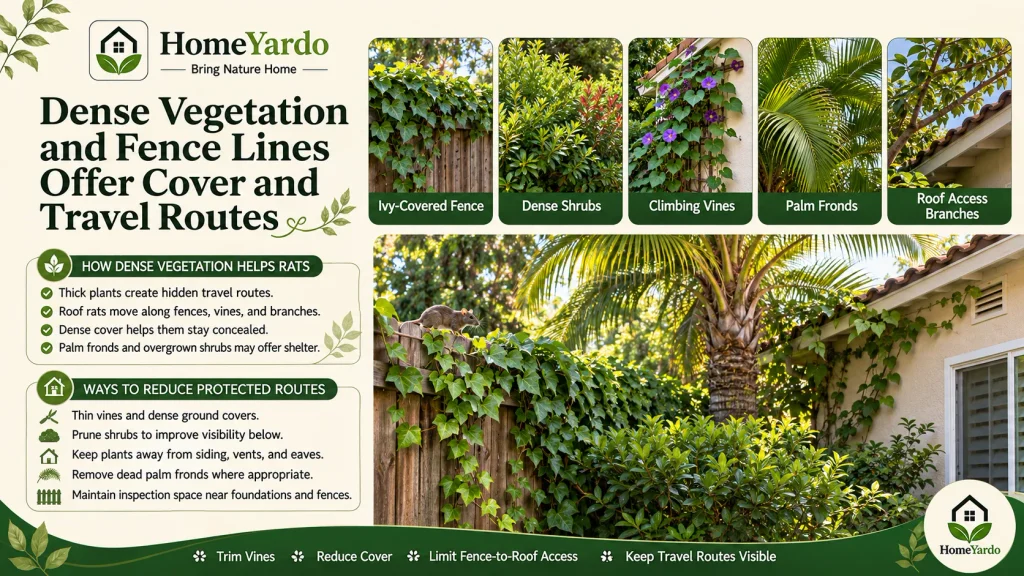
A yard can look attractive from the street while still offering protected movement routes for rats.
Thick ivy, climbing jasmine, overgrown shrubs, and tightly planted hedges can create shaded spaces where rodents shelter or travel without remaining exposed.
Roof rats are especially comfortable moving above ground. They may use connected branches, fence tops, and vines to reach different areas of a property.
Palm trees with accumulated dead fronds can also provide sheltered nesting sites.
A related local overview, “are rats a problem in Los Angeles what every homeowner should know”, discusses the broader issue. For individual yards, the priority is identifying where landscaping provides food, shelter, or access to buildings.
How Overgrown Plants Create Protected Rat Routes
Dense vegetation becomes more problematic when it connects multiple parts of the yard.
Consider a fence covered with ivy that extends toward a storage shed. If nearby branches reach the roof, rats may be able to move between these locations while remaining largely concealed.
Reducing those connections can make the property less favorable.
Useful maintenance practices include:
- Thin dense ground covers and climbing vines.
- Prune shrubs to improve visibility beneath lower branches.
- Keep vegetation from growing directly into vents or siding.
- Remove dead palm fronds where safe and appropriate.
- Maintain visible inspection space around foundations.
- Reduce unnecessary vegetation buildup along fences and gates.
The objective is not to eliminate landscaping. It is to reduce protected hiding areas and prevent continuous routes between plants and structures.
Why Fence Lines and Roof Access Matter
Fence tops can serve as elevated travel routes for roof rats, particularly where fences connect with trees and nearby structures.
Check where branches overlap fences, where vines reach eaves, and where outdoor structures sit close to the house.
Physical barriers may help at particular access points, but covering a ground-level fence gap alone will not prevent climbing rats from traveling across the property.
If overhead utility lines are involved, contact the utility provider or an appropriate professional. Homeowners should never attempt to modify electrical infrastructure to stop rodents.
Landscaping should remain accessible enough to reveal new gnaw marks, droppings, damaged screens, and other evidence before a larger infestation develops.
Pet Food, Compost, and Other Outdoor Food Sources
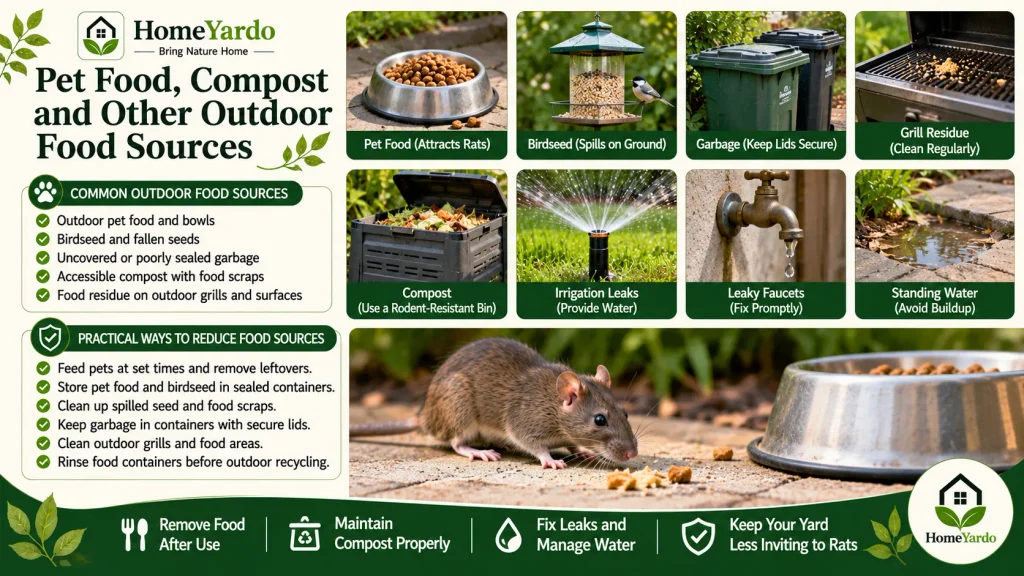
Fruit trees are not the only reason rats visit residential yards.
Outdoor feeding stations, pet bowls, birdseed, uncovered garbage, and accessible compost can provide regular food.
Dry pet food is particularly attractive because it offers a concentrated source of nutrients. A bowl left outside overnight can become an easy feeding opportunity.
Bird feeders may also contribute when seeds accumulate on the ground beneath them.
The goal is to remove food that remains available after people and pets have finished using the area.
Reduce Food Sources Around Patios and Gardens
Simple storage and cleaning habits can make a difference:
- Feed pets at scheduled times and remove leftover food promptly.
- Avoid leaving outdoor pet bowls filled overnight.
- Store pet food and birdseed in tightly closed, rodent-resistant containers.
- Clean up spilled birdseed and food scraps.
- Keep household garbage in containers with secure lids.
- Clean grease and food residue from outdoor grills.
- Rinse food containers before placing them in outdoor recycling bins.
These practices also support general household pest prevention. HomeYardo’s guide to preventing pests in your home, yard, and garden explains how food, moisture, shelter, and entry points can contribute to problems around residential properties.
Keep Compost From Becoming a Feeding Area
Composting can be useful for managing garden waste, but an accessible pile may attract rodents.
Open compost heaps containing kitchen scraps are especially concerning when food is exposed or the surrounding area offers suitable nesting space.
Consider a rigid, rodent-resistant compost container with a secure lid and protected base.
Avoid adding meat, fish, dairy products, and greasy food waste to ordinary backyard compost systems. Follow local composting guidance for acceptable materials.
Cover suitable fresh scraps with carbon-rich materials, maintain the compost properly, and inspect the base for signs of digging.
A well-managed compost system supports soil improvement without providing unrestricted access to food.
Do Water Sources Attract Rats?
Yes. Rats also need water, and residential irrigation systems may supply it.
Leaking faucets, damaged sprinkler heads, excessive irrigation, and persistent water around outdoor equipment can provide accessible moisture.
Check irrigation systems regularly, repair leaks, and avoid watering longer than the landscape requires.
Keep drainage working properly without allowing water to accumulate unnecessarily.
Water management should support healthy plants while limiting avoidable water sources near buildings.
Sheds, Storage, and the Gap Between Yard and House
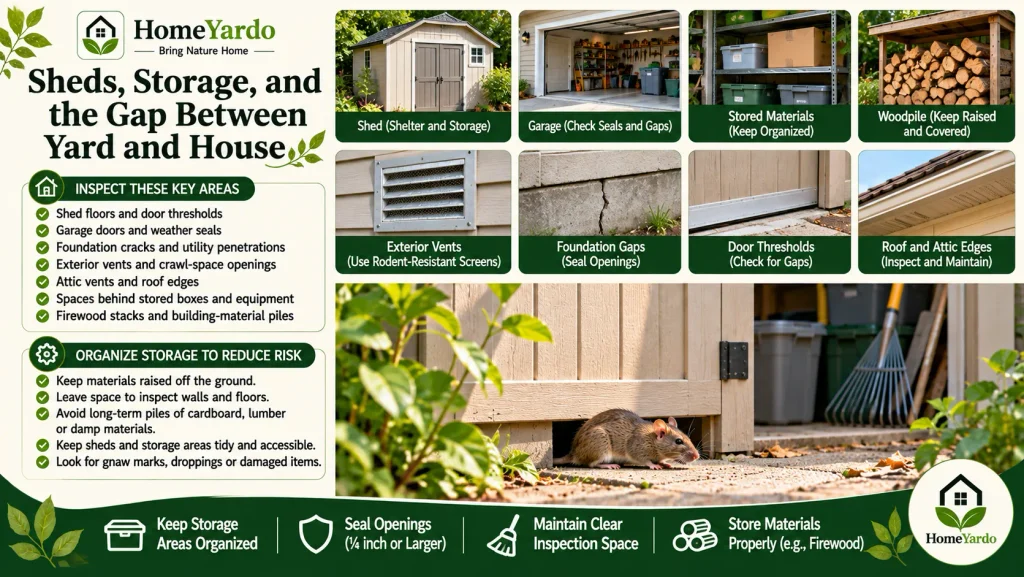
Outdoor sheds, garages, covered storage areas, and stacked building materials can provide sheltered locations for rodents.
A shed containing pet food, birdseed, cardboard boxes, and garden equipment may offer both food and nesting space.
Stored materials positioned tightly against walls can create concealed spaces that are difficult to inspect.
Woodpiles, unused furniture, and discarded equipment may provide similar shelter.
Keeping these areas organized makes rodent activity easier to detect.
Inspect Sheds, Garages, and Exterior Openings
Look around:
- Shed floors and door thresholds
- Garage doors and weather seals
- Foundation cracks and utility penetrations
- Exterior vents and crawl-space openings
- Attic vents and roof edges
- Spaces behind stored boxes and equipment
- Firewood stacks and building-material piles
Young rats may squeeze through gaps around half an inch wide, and smaller rodents can enter through even narrower openings. For comprehensive rodent exclusion, University of California guidance recommends sealing openings larger than one-quarter inch.
Durable materials, including suitable metal flashing and properly installed rodent-resistant screening, are more reliable than exposed foam or ordinary caulk alone.
Any repair should preserve required ventilation and comply with the opening’s intended function.
If active rodents may already be inside a structure, arrange an assessment before closing every opening. Improper exclusion can trap animals inside walls, attics, or other inaccessible areas.
Organize Outdoor Storage to Reduce Hiding Places
Keep stored materials raised where practical and leave enough room to inspect walls and floors.
Avoid allowing cardboard, lumber, or garden supplies to remain in damp, undisturbed piles for long periods.
A well-organized shed makes it easier to notice gnawing, disturbed packaging, droppings, or damaged materials.
For storage planning ideas, HomeYardo also covers DIY outdoor storage ideas for tools and yard gear, including approaches to organizing equipment without overcrowding outdoor spaces.
How to Recognize Rat Activity Around a Los Angeles Yard
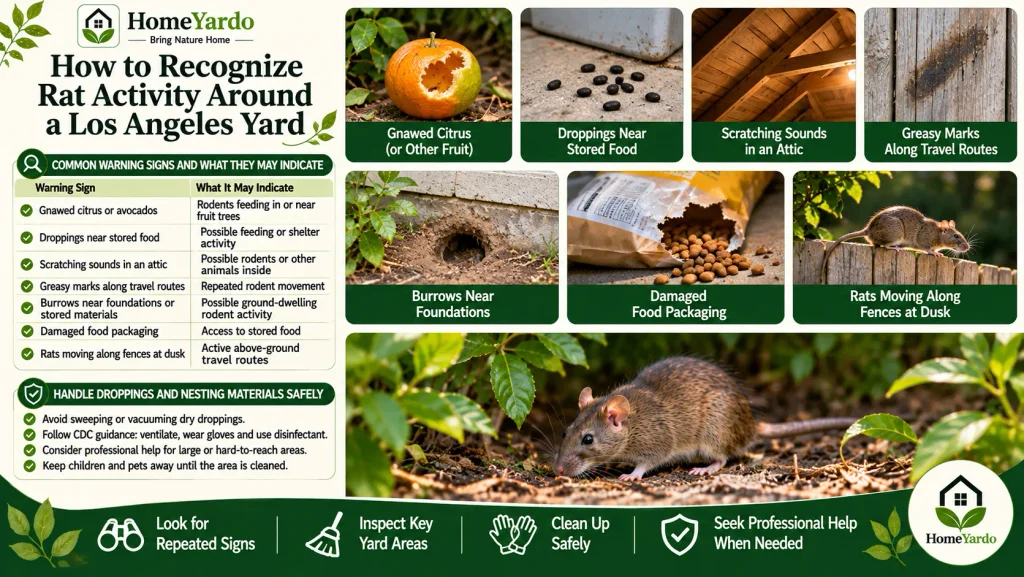
Not every damaged fruit or disturbed garden bed indicates a rat infestation.
However, repeated signs in locations that provide food and shelter deserve attention.
Common indicators include:
| Warning Sign | What It May Indicate |
|---|---|
| Gnawed citrus or avocados | Rodents feeding in or near fruit trees |
| Droppings near stored food | Possible feeding or shelter activity |
| Scratching sounds in an attic | Possible rodents or other animals inside |
| Greasy marks along travel routes | Repeated rodent movement |
| Burrows near foundations or stored materials | Possible ground-dwelling rodent activity |
| Damaged food packaging | Access to stored food |
| Rats moving along fences at dusk | Active above-ground travel routes |
These observations help identify areas needing inspection, but they do not always establish the species or size of an infestation.
Handle Droppings and Nesting Materials Safely
Avoid sweeping or vacuuming dry rodent droppings because these activities can disturb contaminated material and release particles into the air.
Follow CDC guidance for safe cleanup, including suitable ventilation, protective gloves, and properly applied disinfectant.
Large accumulations of droppings, inaccessible nesting areas, or evidence of extensive infestation are better assessed by qualified professionals.
Keep children and pets away from contaminated areas until they have been cleaned safely.
A Routine for Yards That Stay Unappealing
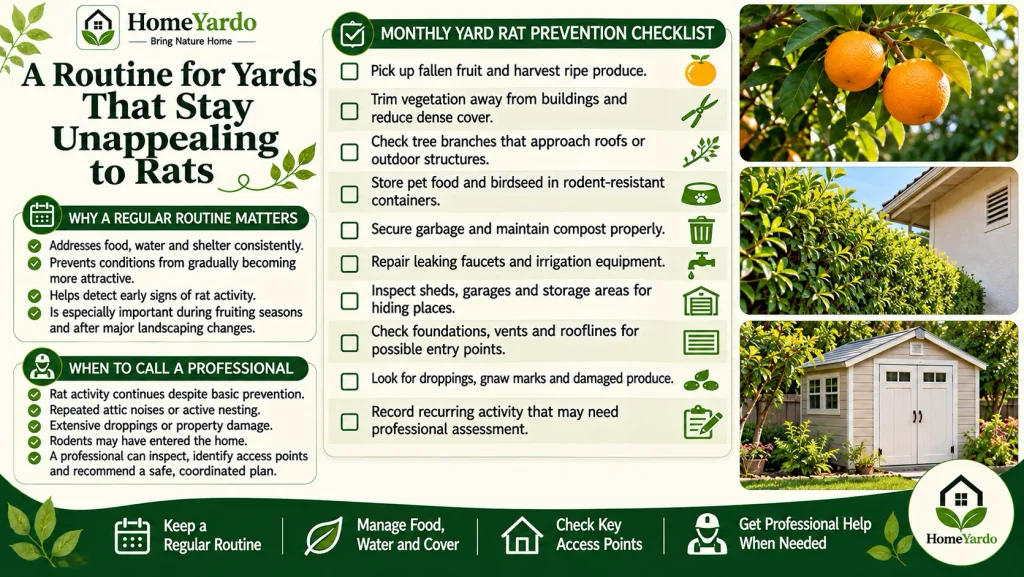
Rodent prevention works best when homeowners address outdoor conditions consistently rather than relying on one treatment.
A single cleanup may temporarily remove food and shelter, but fruit continues to ripen, plants grow, and storage areas gradually become cluttered again.
Establish a regular yard inspection routine, with extra attention during fruiting seasons and after major landscaping changes.
Monthly Yard Rat Prevention Checklist
- Pick up fallen fruit and harvest ripe produce.
- Trim vegetation away from buildings and reduce dense cover.
- Check tree branches that approach roofs or outdoor structures.
- Store pet food and birdseed in rodent-resistant containers.
- Secure garbage and maintain compost properly.
- Repair leaking faucets and irrigation equipment.
- Inspect sheds, garages, and storage areas for hiding places.
- Check foundations, vents, and rooflines for possible entry points.
- Look for droppings, gnaw marks, and damaged produce.
- Record recurring activity that may need professional assessment.
Some tasks, particularly fallen-fruit collection and outdoor food removal, should happen more frequently than once a month.
A consistent routine makes it easier to detect changes and identify areas that repeatedly attract rodents.
When Should Homeowners Contact a Pest Control Professional?
Professional assistance is appropriate when rat activity persists despite basic prevention measures or when rodents may have entered the home.
Repeated attic noises, extensive droppings, active nesting, or damage to wiring and building materials should receive prompt attention.
A qualified pest control professional can inspect the property, distinguish likely rodent species, identify access points, and recommend a coordinated management plan.
Effective rodent management generally combines sanitation, exclusion, monitoring, and appropriate population-control methods rather than depending on poison alone.
Rodenticides can present hazards to children, pets, and wildlife. They should not be used casually, and any treatment must follow applicable California requirements and product labeling.
Homeowners hiring a structural pest control company can verify relevant licensing through the California Structural Pest Control Board.
Final Takeaway
Rat activity around Los Angeles homes often begins with ordinary yard features that provide food, water, and shelter.
Fruit trees, overgrown vegetation, outdoor pet food, compost, cluttered sheds, and accessible building openings can create conditions that support rodents.
The most practical approach is to remove unnecessary food sources, manage dense landscaping, repair water leaks, organize outdoor storage, and address suitable entry points.
These changes will not guarantee that rats never enter a property, especially when surrounding yards also provide suitable habitat. They can, however, reduce many of the conditions that encourage rodents to remain nearby.
When signs of an established infestation appear, a professional inspection can help identify the problem and determine an appropriate response.
FAQ’s
Fallen fruit, overgrown shrubs, climbing vines, unsecured pet food, accessible garbage, compost scraps, and cluttered storage areas can attract rats. Leaking irrigation systems and sheltered spaces near buildings may also support rodent activity.
Yes. Roof rats are well-established in Los Angeles County and are particularly associated with mature landscaping, trees, climbing vegetation, and residential structures. They are skilled climbers and may use fences, branches, and utility lines to travel.
Fruit trees can attract roof rats when ripe or fallen fruit is available. Citrus, avocados, and other fruits may provide food. Regular harvesting, fallen-fruit removal, and appropriate pruning can reduce these feeding opportunities.
Yes. Dense ivy, vines, and thick shrubs can provide cover and protected travel routes. Managing vegetation, improving visibility, and separating climbing plants from building surfaces can make these areas less suitable for rats.
Yes. Outdoor pet food can become an accessible food source, especially when left overnight. Feeding pets at scheduled times, removing leftovers, and using rodent-resistant storage containers can help reduce the attraction.
Roof rats can climb trees, fences, vines, and other structures to reach a roofline. They may enter through damaged vents, gaps near eaves, or other accessible openings. Removing direct access routes and properly sealing vulnerable openings are important prevention measures.
Focus on reducing the conditions that support them. Remove food scraps and fallen fruit, manage dense vegetation, repair leaks, secure garbage, and eliminate suitable hiding places. Strong-smelling plants, homemade repellents, and ultrasonic devices are not reliable substitutes for habitat management and exclusion.
Contact a qualified professional when you notice repeated rodent sightings, significant droppings, active nesting, attic noises, or persistent damage. Professional assessment is especially helpful when rodents may already be inside the building or safe exclusion requires specialized work.