How Bedroom Layout for Seniors Can Reduce Nighttime Falls

Bedroom layout for seniors can help reduce nighttime fall risks by keeping walking paths clear, improving lighting, positioning furniture safely, and making it easier to get in and out of bed. These adjustments can make everyday movement safer without requiring a complete bedroom renovation.
Getting up at night may seem routine, but the short walk from the bed to the bathroom can present unexpected hazards. A loose rug, an unstable nightstand, poor lighting, or a charging cable stretched across the floor may be difficult to notice when someone is sleepy.
The good news is that many of these problems can be addressed through simple changes. Moving furniture, adding accessible lighting, adjusting bed height, and keeping mobility aids nearby can make a bedroom more comfortable and easier to navigate.
The following bedroom safety recommendations explain where to start and how to make practical improvements while preserving a familiar, welcoming space.
A Clear Path From Bed to Bathroom
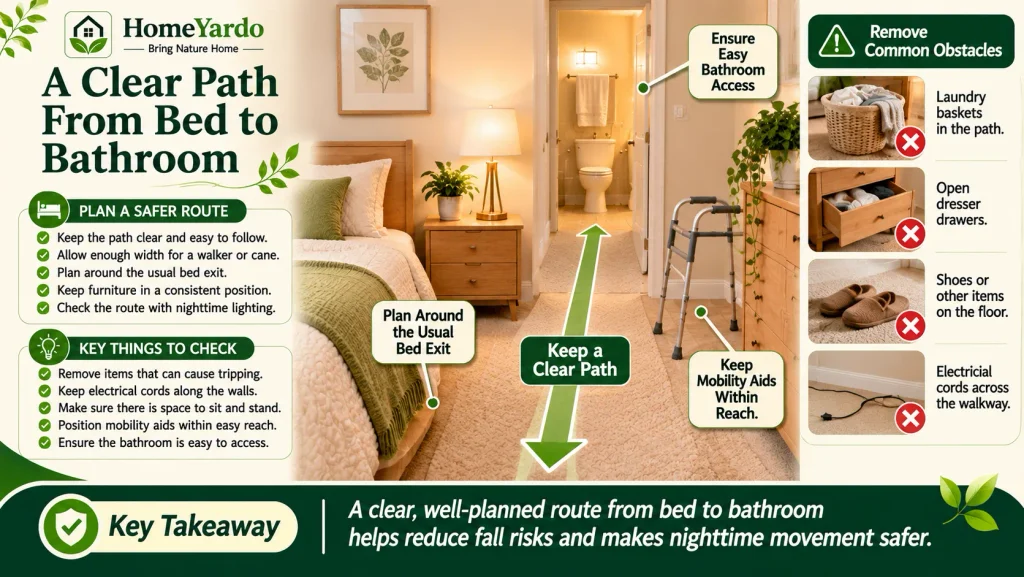
The route between the bed and bathroom should be one of the first areas examined when reducing nighttime fall hazards.
A clear walking path allows older adults to move without navigating unnecessary obstacles, making sharp turns, or stepping around furniture. The path should be wide enough for the person and any mobility device they regularly use.
Look for objects that might interfere with movement, including laundry baskets, open dresser drawers, shoes, electrical cables, and small decorative furniture.
Move these items away from the main route rather than expecting someone to remember their location during the night.
Plan Around the Usual Bed Exit
Most people have a preferred side of the bed for getting up. That side should provide enough room to sit comfortably, place both feet on the floor, and stand without bumping into furniture.
If someone uses a walker or cane, consider where it will be positioned before they stand.
Electrical cords should run safely along walls rather than across walking areas. Avoid placing extension cords beneath rugs or creating new electrical hazards while organizing the room.
Keep furniture arrangements consistent whenever possible, particularly for people who have difficulty with vision or orientation.
Check the walking route under normal nighttime lighting conditions, preferably with assistance if balance is a concern. Make sure the person can reach the bathroom without encountering tight corners or unexpected obstacles.
If the bathroom itself has limited clearance or difficult access, HomeYardo’s guide to planning a bathroom remodel explains how layout, lighting, and accessibility can be considered during future improvements.
Reachable Lighting and Stable Furniture
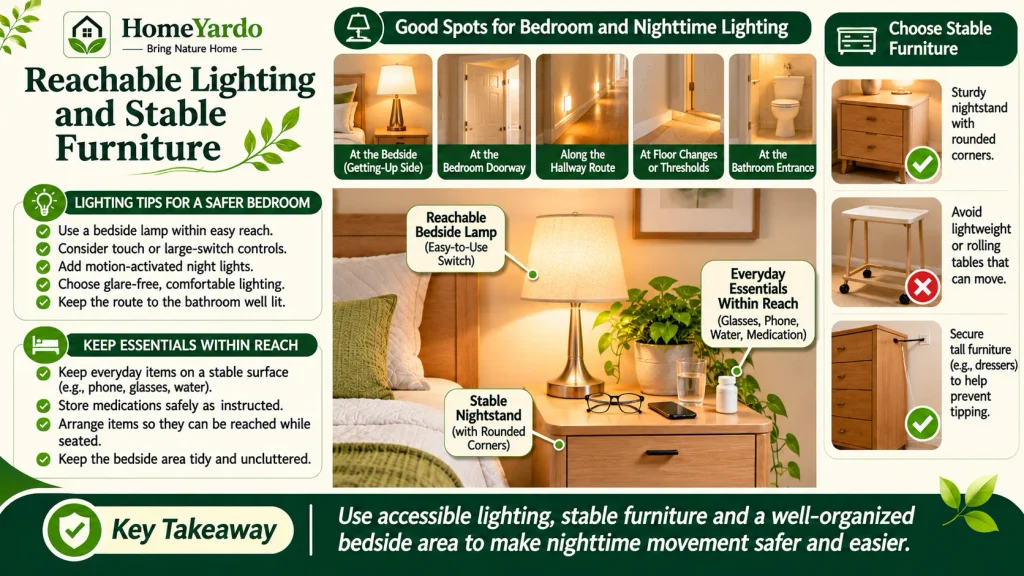
Good lighting can help older adults recognize obstacles and move more confidently after waking.
A bedroom should not require someone to cross a dark floor before reaching the first light switch.
Place a bedside lamp with an accessible switch within comfortable arm’s reach. Touch-activated lamps, large switches, and appropriately positioned wall controls may be easier to operate for someone with limited hand strength.
Motion-activated night lights can provide visibility along the route to the bathroom without requiring someone to search for a switch.
Choose lighting that makes floor surfaces and obstacles visible while avoiding uncomfortable glare.
Consider placing lights near:
- The side of the bed used for getting up
- The bedroom doorway
- Hallways leading to the bathroom
- Changes in floor level or thresholds
- The bathroom entrance
Check that lighting is reliable and does not leave dark gaps along the walking route.
Choose Furniture That Will Not Shift Unexpectedly
Lightweight chairs, rolling bedside stands, and unstable tables can move when grabbed.
Furniture should be positioned so it does not obstruct movement or encourage someone to use it as an unintended support.
A sturdy nightstand with rounded corners may reduce the risk of accidental bumps, but it should not replace a properly installed support handle or other suitable mobility equipment.
Anyone considering bedroom safety for seniors should examine the objects a person may instinctively reach for when standing.
Tall dressers and other furniture that could tip should be secured appropriately according to manufacturer instructions.
Keep Everyday Essentials Within Easy Reach
Frequently used items should remain accessible without requiring unnecessary stretching, twisting, or walking in the dark.
A stable bedside surface can hold a phone, glasses, water, and a reachable light control.
If medications are kept nearby, store them safely according to their instructions and away from anyone who should not have access.
The arrangement should allow someone to reach necessary items while seated rather than leaning awkwardly out of bed.
Rugs, Bed Height, and Transfer Space
Floor coverings and bed dimensions can affect how safely someone moves around the bedroom.
Loose rugs are particularly problematic because their edges may curl, their backing may slide, and their surface may catch the tip of a shoe or mobility aid.
Removing small throw rugs from the main walking route is usually the safer option.
If a rug must remain, ensure it is flat, appropriately secured, and does not interfere with walking or mobility equipment. Even secured rugs should be reconsidered if they create a problem.
Adjust Bed Height for Easier Movement
A bed that is too high may leave someone’s feet hanging above the floor, making standing more difficult.
A bed that is too low may require excessive effort to rise.
A practical starting point is a height that allows the person to sit near the edge of the mattress with both feet resting securely on the floor and their knees comfortably bent.
However, the best height depends on individual mobility, leg strength, and the support needed during transfers.
Consider the combined height of the bed frame, mattress, and any accessories before making adjustments.
A mattress with a stable sitting edge may make transfers easier than one that compresses excessively.
Encourage the person to sit briefly before standing, particularly if they sometimes experience lightheadedness when getting out of bed.
Leave Enough Space for Safe Transfers
The area beside the bed should allow comfortable sitting, standing, and turning.
Anyone using a walker should have enough room to position it correctly before moving.
Bedside support handles may help some people, but they must be appropriate for the individual and compatible with the bed. Portable adult bed rails can create entrapment and other injury risks if selected or installed incorrectly.
An occupational therapist or qualified healthcare professional can help determine whether a support device is appropriate.
Avoid improvising with furniture, unsecured rails, or unstable equipment.
Mobility Aids and a Practical Safety Checklist
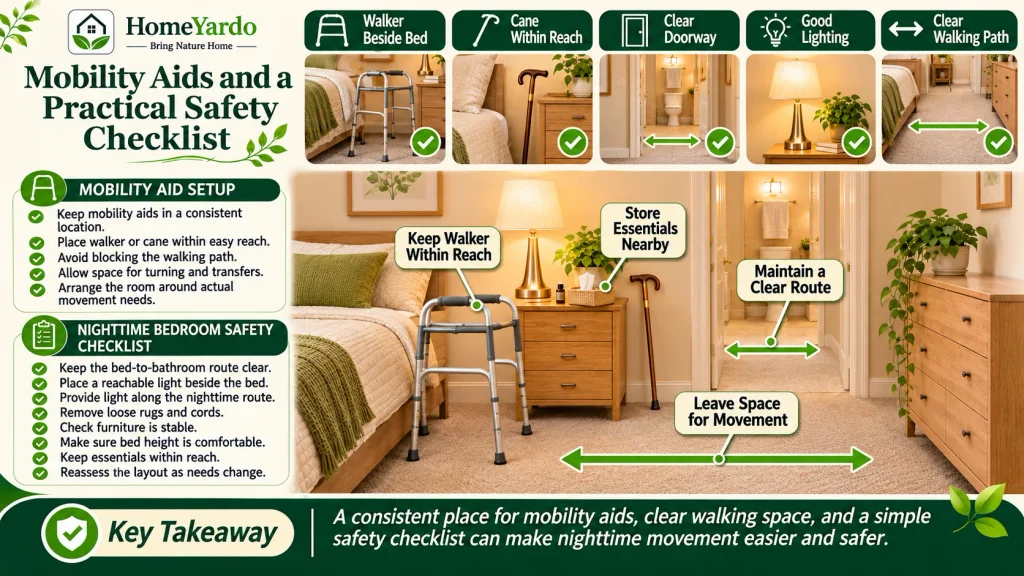
Mobility aids should be accessible when someone needs to get out of bed.
A cane or walker positioned across the room may be difficult to reach safely during the night.
Choose a consistent location near the bed where the aid can be reached without stretching. Its placement should not block the walking route or create an additional obstacle.
Wheelchair users may require a different arrangement based on transfer technique, turning space, and the type of assistance they use.
There is no single bedroom configuration that works for everyone. The layout should accommodate the person’s actual movement needs rather than relying on a standard furniture arrangement.
Nighttime Bedroom Safety Checklist
Use this checklist to review the sleeping area:
- Keep the route between the bed and bathroom clear.
- Place a reachable light beside the bed.
- Provide adequate lighting along the nighttime walking route.
- Remove loose rugs and electrical cords from walking areas.
- Check that furniture is stable and does not obstruct movement.
- Make sure bed height allows comfortable sitting and standing.
- Keep mobility aids in an accessible, consistent location.
- Store frequently needed items within comfortable reach.
- Check that doorways and walking areas accommodate mobility equipment.
- Reassess the layout whenever health or mobility needs change.
This checklist can be repeated periodically or after furniture is moved, equipment is introduced, or someone experiences a fall.
Small Changes Without a Full Remodel

Many useful bedroom safety improvements do not require structural alterations.
Rearranging furniture can immediately create a more direct route between the bed and bathroom. Removing unnecessary objects from the floor can also make the room easier to navigate.
Accessible lighting, appropriate footwear, and organized bedside storage may improve everyday convenience without changing the room’s appearance.
Keep well-fitting footwear with slip-resistant soles near the bed. Loose slippers, slippery socks, and poorly fitting shoes may make walking less secure.
A sturdy chair with arms can provide a comfortable place to sit while dressing, provided it is suitable for the person and positioned outside the walking route.
For homeowners considering changes beyond one room, HomeYardo’s guide to aging-in-place remodeling mistakes explains how flooring, doorways, lighting, and accessibility decisions can affect the home as mobility needs change.
When Should You Ask for a Professional Safety Assessment?
A professional assessment may be helpful when someone has experienced repeated falls, has difficulty transferring from bed, or needs assistance moving around the bedroom.
Occupational therapists can assess the person’s daily activities, physical abilities, equipment, and home environment to recommend suitable adjustments.
A healthcare professional should also review symptoms such as nighttime dizziness or sudden balance changes. Some medications and medical conditions can increase fall risk, and bedroom adjustments alone may not address these concerns.
Families can support the process by discussing which movements feel difficult rather than making major changes without the older adult’s involvement.
The aim is to create a space that supports independence while addressing identifiable safety concerns.
Final Takeaway
Thoughtful bedroom planning can reduce avoidable nighttime hazards and make everyday movement easier for older adults.
Start with the route between the bed and bathroom. Keep it clear, provide reliable lighting, remove loose rugs, and position stable furniture where it will not interfere with movement.
Check bed height and transfer space, then make sure mobility aids and everyday essentials are within comfortable reach.
Many improvements are inexpensive and can be completed without remodeling. When balance difficulties, repeated falls, or complex mobility needs are involved, professional guidance can help identify more appropriate solutions.
A safer bedroom should still feel comfortable and familiar while supporting the person’s changing needs.
FAQ’s
A safer bedroom arrangement reduces obstacles between the bed and bathroom, improves visibility, and provides space for standing and walking. Keeping furniture stable, removing loose rugs, and positioning mobility aids nearby can help reduce avoidable fall hazards.
The safest arrangement depends on the individual’s mobility and needs. Generally, it includes a clear route to the bathroom, accessible lighting, appropriate bed height, stable furniture, and enough space for mobility equipment.
Accessible bedside lamps and well-positioned night lights are useful options. Motion-activated lighting may make the walking route easier to see without searching for a switch. Lights should provide enough visibility without uncomfortable glare.
Small, loose rugs are best removed from walking areas because they can slide, curl, or catch a foot. If a rug is retained, it should lie flat, remain securely in place, and not interfere with mobility equipment.
A suitable bed height generally allows someone to sit on the mattress edge with both feet firmly on the floor. The ideal height varies according to the person’s strength, mobility, and transfer requirements. A professional assessment may be helpful when standing or sitting is difficult.
Provide enough open floor space beside the bed and along the bathroom route for the walker to be positioned and used correctly. Remove clutter, avoid tight turns, and keep the walker in a consistent location where it can be reached safely.
Yes. Removing clutter, rearranging furniture, improving lighting, checking rug placement, and keeping frequently used items nearby are practical changes that usually do not require construction. More extensive modifications may be needed for some mobility requirements.
References & Safety Guidance
The following public-health and safety resources support the recommendations discussed in this guide: