Living Room Flooring: Choosing the Best Option for a Cozy Home
Are you searching for the perfect flooring to make your living room feel warm, comfortable, and inviting? The right floor can change the way your entire space looks and feels. It affects how comfortable you are during family gatherings, how easily you clean up everyday messes, and how well the room handles foot traffic.
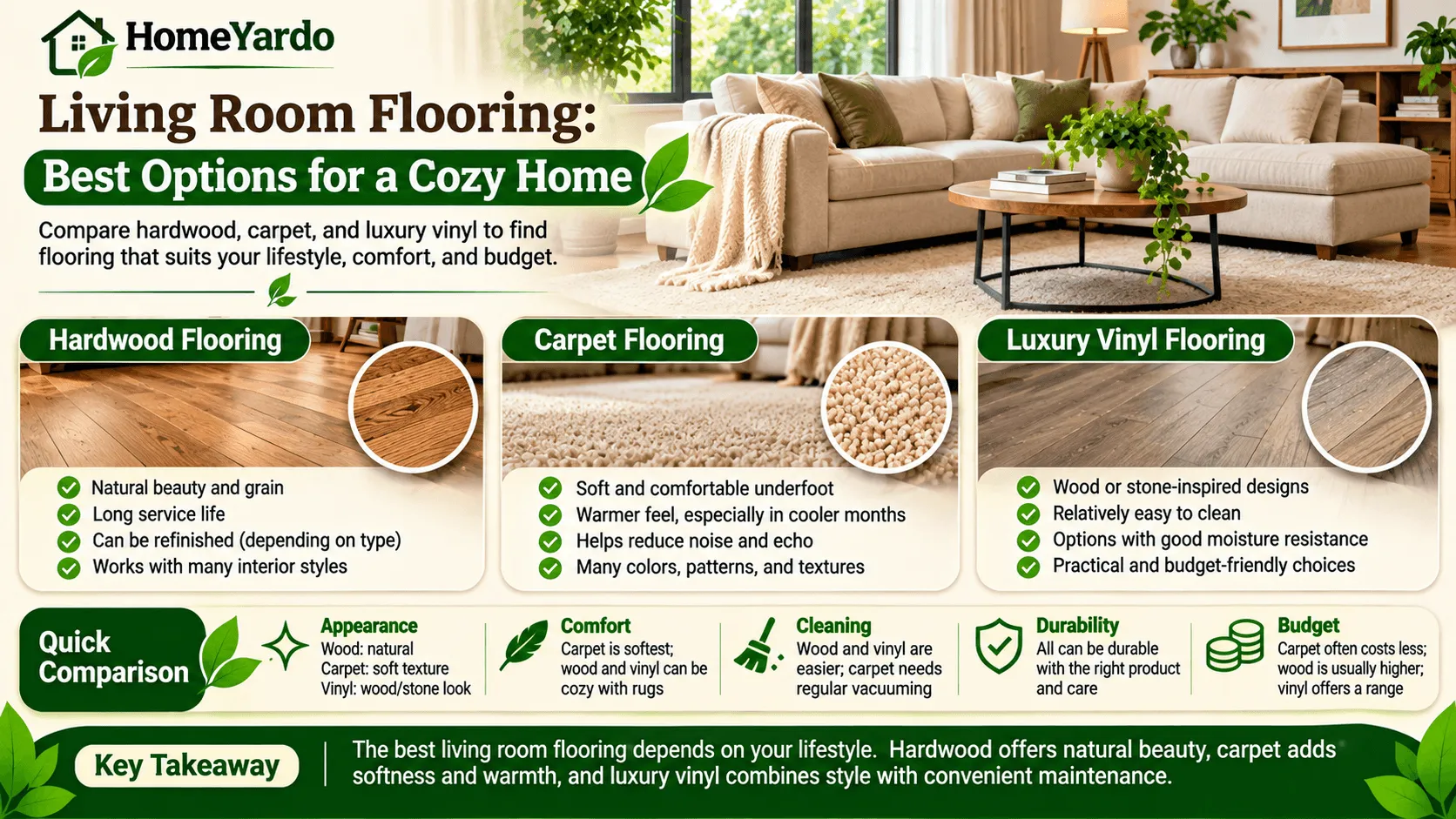
Choosing living room flooring can feel overwhelming when you have so many materials, finishes, and price points to consider. Hardwood offers natural beauty, carpet brings softness, and luxury vinyl combines attractive designs with practical maintenance.
Quick Answer: The best living room floor depends on your lifestyle. Hardwood suits homeowners who value natural materials and long-term character. Carpet is ideal for softness and warmth, while luxury vinyl works well in busy households looking for easier cleaning and moisture-resistant options.
This guide compares the main choices so you can find flooring that suits your family, budget, and decorating style.
Understanding Your Living Room Needs

Every family uses its living room differently. Some households spend evenings watching movies, while others need open space for children to play or pets to move around.
Before comparing flooring materials, think about what happens in your living room throughout the day.
Ask yourself:
- Do children or pets regularly play on the floor?
- Is the living room a high-traffic area?
- Do you prefer sitting on the floor or using large area rugs?
- Are spills, tracked-in dirt, or pet accidents common?
- Does anyone in the household have allergies or mobility concerns?
- How much time are you willing to spend on cleaning?
- What is your realistic budget for materials and installation?
A busy family room may benefit from a different flooring material than a quiet sitting room used mainly for entertaining guests.
Comfort, maintenance, durability, and safety should guide the decision alongside appearance.
What Makes a Living Room Floor Comfortable?
Comfort is influenced by more than the flooring surface.
Material hardness, room temperature, underlayment, sound absorption, and the condition of the subfloor all affect how a floor feels underfoot.
Soft carpet may feel warmer and more cushioned, while hardwood and vinyl can be made more comfortable with suitable rugs.
Consider the room as a whole rather than choosing a product based only on a showroom sample.
Hardwood Flooring: Timeless Beauty and Durability
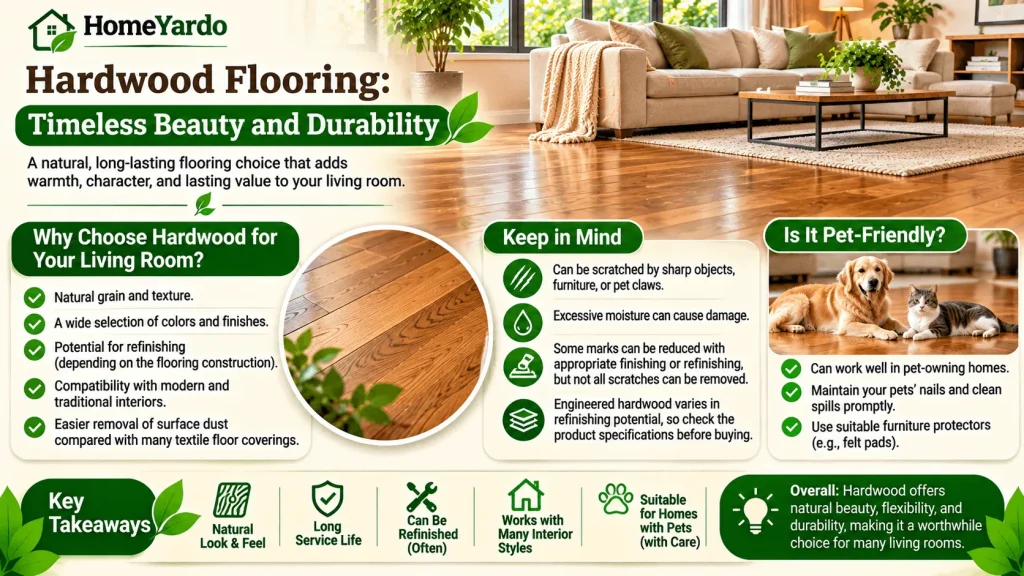
Hardwood flooring remains popular because of its natural appearance and long service life when installed and maintained appropriately. Homeowners who prefer warm wood tones can also explore red oak wood flooring to understand its durability, finishes, maintenance needs, and suitability for living rooms.
Wood grain, color variation, and finish can give a living room a welcoming feel without relying on elaborate decoration.
You can choose lighter shades for a bright, open appearance or darker finishes for a traditional, warmer look.
Why Choose Hardwood for Your Living Room?
Hardwood offers several benefits:
- Natural grain and texture.
- A wide selection of colors and finishes.
- Potential for refinishing, depending on the flooring construction.
- Compatibility with modern and traditional interiors.
- Easier removal of surface dust compared with many textile floor coverings.
However, hardwood isn’t maintenance-free.
Sharp objects, furniture movement, pet claws, excessive moisture, and abrasive dirt can damage its surface.
Some marks can be reduced through appropriate finishing or refinishing, but not every scratch can be removed with simple sanding.
Engineered hardwood also varies in refinishing potential, so check the product specifications before purchasing.
Is Hardwood Suitable for Families With Pets?
Hardwood can work in pet-owning households, particularly when owners maintain their pets’ nails, clean spills promptly, and use suitable furniture protectors.
Choose a finish that suits your household’s activity level and avoid assuming that any wood species is completely scratch-proof.
For homeowners seeking natural appearance and long-term flexibility, hardwood is worth considering.
Carpet: Softness and Warmth Underfoot
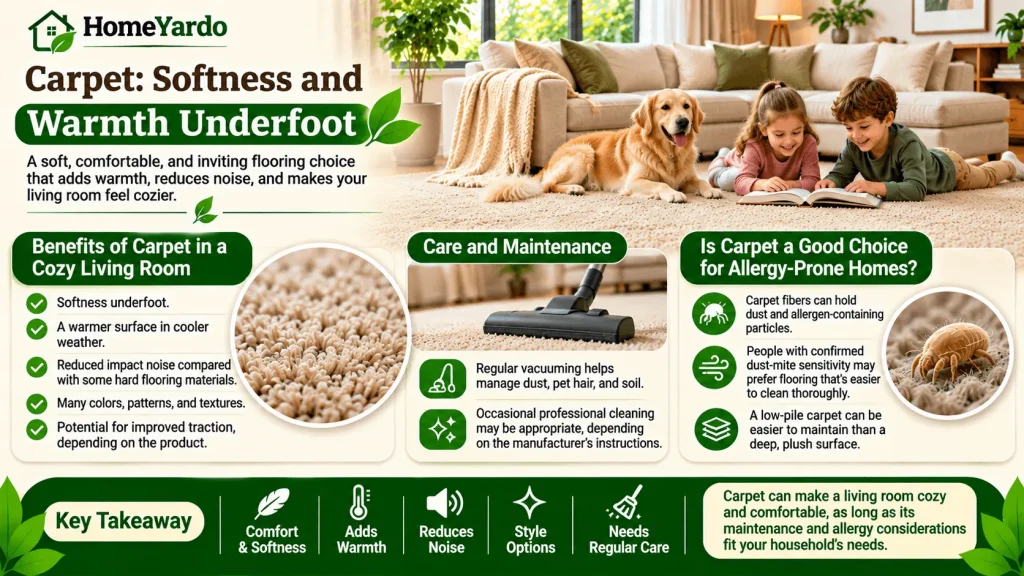
Carpet is known for its soft texture and comfortable feel.
It can make a living room especially inviting during colder months, giving children and adults a cushioned surface for sitting, relaxing, and playing.
Carpet also absorbs some sound, which may be useful in busy households or rooms where echo is a concern.
Benefits of Carpet in a Cozy Living Room
Carpet offers:
- Softness underfoot.
- A warmer surface in cooler weather.
- Reduced impact noise compared with some hard flooring materials.
- Many colors, patterns, and textures.
- Potential for improved traction, depending on the product.
However, carpet can collect dust, pet hair, soil, and other particles within its fibers.
Regular vacuuming helps manage these materials, and occasional professional cleaning may be appropriate depending on the manufacturer’s instructions.
Is Carpet a Good Choice for Allergy-Prone Homes?
Carpet isn’t automatically unsuitable for every person with allergies, but its fibers can hold dust and allergen-containing particles.
People with confirmed dust-mite sensitivity may prefer flooring that’s easier to clean thoroughly.
A low-pile carpet may also be easier to maintain than a deep, plush surface in some households.
Consider the needs of everyone using the room before choosing carpeting throughout the space.
Luxury Vinyl: Modern Comfort and Style
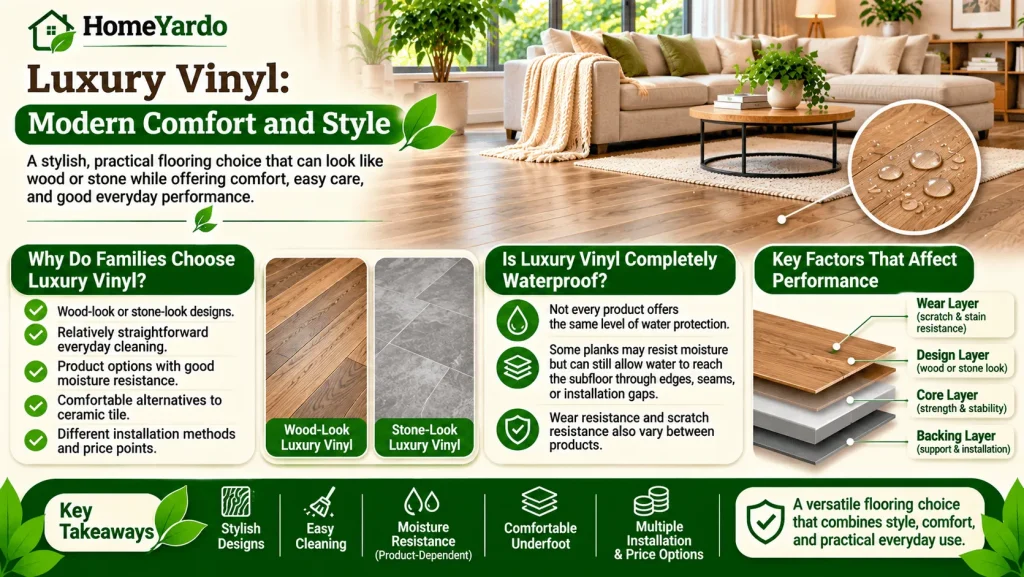
Luxury vinyl flooring can reproduce the appearance of wood or stone while offering a practical alternative to traditional hard surfaces.
Many collections are designed for residential traffic, and some offer water-resistant or waterproof-rated products.
However, performance varies by product construction, wear layer, installation method, and manufacturer warranty.
Why Do Families Choose Luxury Vinyl?
Luxury vinyl may appeal to households seeking:
- Wood-look or stone-look designs.
- Relatively straightforward everyday cleaning.
- Product options with good moisture resistance.
- Comfortable alternatives to ceramic tile.
- Different installation methods and price points.
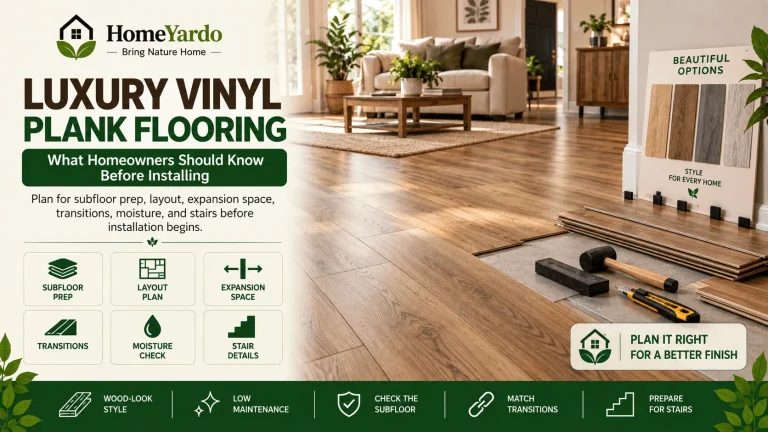
Luxury vinyl plank is commonly designed to resemble wooden boards, making it an appealing alternative to natural hardwood. Before choosing a product, review the requirements for luxury vinyl plank flooring installation, including subfloor preparation, moisture conditions, underlayment, and expansion gaps.
Is Luxury Vinyl Completely Waterproof?
Not every luxury vinyl product offers the same water protection.
Some planks may resist moisture while allowing water to reach the subfloor through edges, seams, or installation gaps.
Likewise, wear resistance and scratch resistance vary between products.
Before purchasing, confirm the manufacturer’s specifications for the particular collection.
Hardwood vs. Carpet vs. Luxury Vinyl: Quick Comparison
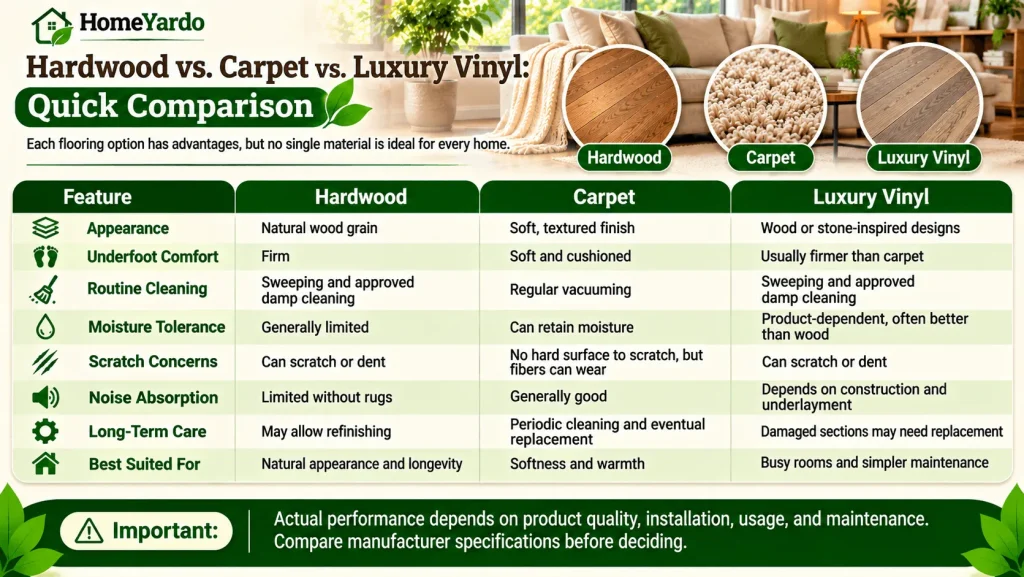
Each flooring option has advantages, but no single material is ideal for every home.
| Feature | Hardwood | Carpet | Luxury Vinyl |
|---|---|---|---|
| Appearance | Natural wood grain | Soft, textured finish | Wood or stone-inspired designs |
| Underfoot comfort | Firm | Soft and cushioned | Usually firmer than carpet |
| Routine cleaning | Sweeping and approved damp cleaning | Regular vacuuming | Sweeping and approved damp cleaning |
| Moisture tolerance | Generally limited | Can retain moisture | Product-dependent, often better than wood |
| Scratch concerns | Can scratch or dent | No hard surface to scratch, but fibers can wear | Can scratch or dent |
| Noise absorption | Limited without rugs | Generally good | Depends on construction and underlayment |
| Long-term care | May allow refinishing | Periodic cleaning and eventual replacement | Damaged sections may need replacement |
| Best suited for | Natural appearance and longevity | Softness and warmth | Busy rooms and simpler maintenance |
Important: Actual performance depends on product quality, installation, usage, and maintenance. Compare manufacturer specifications before deciding.
Comparing Maintenance Needs
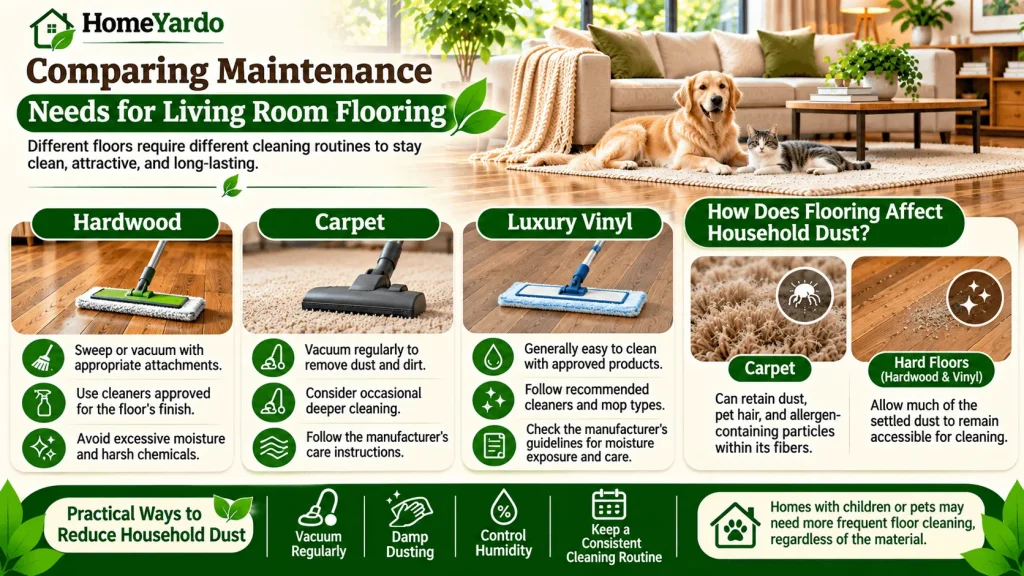
Different floors require different cleaning routines.
Hardwood should be swept or vacuumed using appropriate attachments and cleaned with products approved for its finish.
Carpet needs regular vacuuming and may require occasional deeper cleaning.
Luxury vinyl is generally easy to maintain, but cleaners, mop types, and moisture exposure should still follow the manufacturer’s instructions.
How Does Flooring Affect Household Dust?
Carpet can retain particles within its fibers, while hard flooring allows much of the settled dust to remain accessible for cleaning.
However, no flooring material eliminates household dust or allergens.
For practical cleaning methods, PetCresta’s guide on how to reduce household dust explains the role of vacuuming, damp dusting, humidity control, and consistent cleaning routines.
Homes with children or pets may need more frequent floor cleaning, regardless of material.
Choosing a floor that suits your maintenance habits can make everyday life easier.
Comfort and Safety for All Ages

Comfort matters in a room where people gather, relax, and spend time together. Flooring provides the foundation, but furniture placement, soft furnishings, and natural materials also influence how welcoming the space feels. These ideas for creating a warm, lived-in home can help you combine everyday comfort with a clean, organized interior.
Carpet provides a cushioned surface, while hardwood and vinyl can be paired with suitable area rugs.
However, softness doesn’t guarantee safety, and some flooring products may become slippery when wet.
What Flooring Is Best for Children and Pets?
For families, consider:
- Slip resistance under normal conditions.
- How easily spills can be cleaned.
- Resistance to everyday wear.
- Surface comfort during play.
- Secure placement of area rugs.
- Whether pets can maintain good traction.
Use nonslip rug pads compatible with the flooring material.
For older adults or people with mobility difficulties, avoid loose rugs, uneven transitions, and unnecessary trip hazards.
Flooring selection should account for the people and animals who use the room, not just how the floor looks.
Aesthetic Appeal and Design Flexibility

Flooring plays a major role in your living room’s appearance, but it should also complement furniture, wall colors, lighting, and adjacent rooms. Learning how to create a cohesive home interior can help you coordinate flooring materials and finishes without making the space feel disconnected.
Hardwood adds natural grain and character, while carpet introduces texture and warmth.
Luxury vinyl offers a selection of printed finishes that can resemble expensive wood or stone materials.
Which Flooring Colors Make a Living Room Feel Cozy?
Warm oak, honey, natural brown, beige, and muted neutral shades can help create a welcoming atmosphere.
Lighter flooring may make a smaller room feel more open, particularly when paired with lighter furniture and adequate natural light.
Darker finishes can create contrast and a more traditional appearance, although some surfaces may show dust or scratches more readily.
Try samples in your actual living room before making a purchase. The appearance of flooring can change under natural daylight, artificial lighting, and surrounding furniture colors. Understanding why flooring looks different from the sample can help you avoid choosing a finish that looks attractive in a showroom but feels unsuitable at home.
Lighting changes throughout the day, and a color that looks attractive in a showroom may appear different beside your furniture and walls.
Area rugs can also introduce warmth and texture without requiring a permanent flooring change.
Budgeting for Your Flooring Project
Budget is an important part of any home renovation, especially when new flooring requires subfloor repairs, furniture removal, or additional finishing work. If the flooring replacement is part of a larger renovation, a practical home improvement guide can help you plan related upgrades and organize your project around your budget.
Hardwood often involves a higher initial investment, while carpet may offer lower-cost material options.
Luxury vinyl is available across different price ranges, from basic residential products to more specialized collections.
However, material prices alone do not represent the complete installation cost.
What Should Your Flooring Budget Include?
Plan for:
- Flooring materials.
- Removal and disposal of existing flooring.
- Subfloor inspection and preparation.
- Underlayment where required.
- Installation labor.
- Trims, transitions, and baseboards.
- Furniture moving, delivery, and waste allowance.
Some click-lock luxury vinyl products may be appropriate for experienced DIY homeowners.
More complex layouts, moisture problems, damaged subfloors, and stairs often benefit from professional installation.
Request a written estimate that explains what is included rather than comparing material prices alone.
Making the Final Choice
Now it’s time to decide which flooring fits your living room best.
Think about your family’s routine, design preferences, maintenance expectations, and available budget.
Hardwood can offer natural beauty and long-term appeal, carpet provides softness and sound absorption, and luxury vinyl combines decorative flexibility with practical cleaning options.
Questions to Ask Before Buying Living Room Flooring
Before making your final decision, ask:
- Is this product rated for the traffic in my living room?
- How should it be cleaned and maintained?
- What warranty conditions apply?
- Can it handle pets, spills, and furniture movement?
- Does installation require special subfloor preparation?
- What is the total installed cost?
- How will it look under my home’s natural and artificial lighting?
Visit local flooring stores to inspect samples and compare products.
For expert advice and a wide range of options, Junge’s Flooring is a trusted place to start your search.
Make sure any professional recommendation accounts for your room’s dimensions, existing floor condition, household needs, and project budget.
The right flooring should look good while remaining practical for the way you actually live.
Final Takeaway: A Fresh Start for Your Living Space
Choosing the right flooring for a cozy living room doesn’t have to be complicated.
Start by considering what matters most in your home: softness, natural appearance, durability, maintenance, or budget.
Hardwood, carpet, and luxury vinyl each offer different benefits. Comparing those benefits against your daily routine will help narrow the options.
Remember that a good installation, suitable subfloor, and consistent care matter just as much as the flooring material itself.
With thoughtful planning, you can create a living room that feels welcoming and functions comfortably for years to come.
FAQ’s
The best choice depends on your priorities. Carpet provides softness and warmth, hardwood offers a natural finish, and luxury vinyl combines attractive designs with convenient maintenance.
Hardwood may suit homeowners who prefer natural materials and easier surface cleaning. Carpet provides a softer, quieter surface. Consider maintenance, comfort, allergies, and household activity before choosing.
Yes, many luxury vinyl products are suitable for living rooms. Check the product’s wear rating, installation requirements, moisture resistance, and warranty before purchasing.
Carpet is often the softest option underfoot. Some padded luxury vinyl products may also provide additional comfort, while hardwood can be paired with area rugs.
Hardwood and suitable luxury vinyl products generally allow straightforward surface cleaning. Carpet requires more regular vacuuming to manage dirt and particles within its fibers.
The right material depends on the dog’s size, activity, nails, traction needs, and the household’s cleaning routine. Look for suitable wear resistance, safe traction, and practical maintenance.
Hard flooring is generally easier to clean thoroughly because dust does not collect within textile fibers. However, cleaning frequency, ventilation, and indoor humidity also affect allergen exposure.
Some luxury vinyl products can be installed over existing surfaces when the manufacturer permits it. The existing floor must meet requirements for stability, flatness, cleanliness, and moisture.
Warm wood tones, natural browns, honey shades, and soft beige finishes can create a welcoming appearance. Room lighting, wall color, and furniture also influence the overall effect.
Professional installation is advisable when a project involves damaged subfloors, stairs, moisture issues, complex layouts, or unfamiliar materials. Simpler products may be suitable for experienced DIY homeowners when manufacturer instructions allow it.