
Long Summers, Busy ACs: What Duct Cleaning Services in Dubai Involve

Duct cleaning services in Dubai involve inspecting and removing accumulated dust, sand, and other debris from air conditioning ductwork using suitable professional equipment. Depending on the system’s condition, the work may also include checking vents, filters, cooling coils, and condensate drainage.
In a Dubai apartment, air conditioning rarely gets a day off. From spring well into autumn, it may run for long hours, pulling indoor air through the same system repeatedly, along with whatever dust and fine sand enter the property. Most residents only pay attention when the cooling weakens, airflow changes, or an unusual smell appears.
Not every dusty vent means the entire duct system needs cleaning. Filters and accessible grilles need regular attention, while internal ductwork, coils, and drainage components may require a trained technician.
Understanding the difference helps residents maintain their cooling systems without paying for unnecessary work or attempting unsafe repairs.
Where Dust Goes in a Cooling System
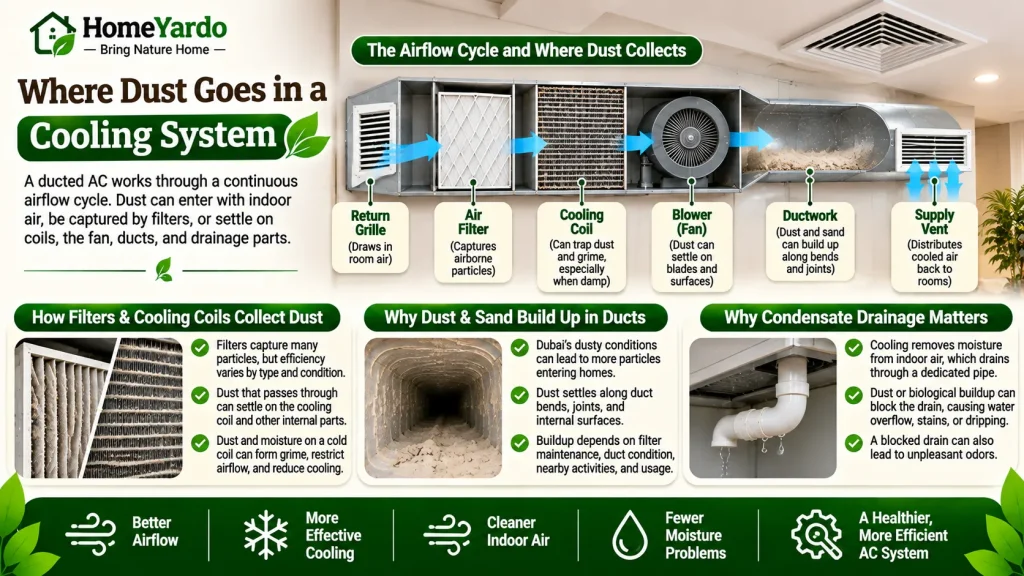
A ducted air conditioning system works through a continuous airflow cycle. Return grilles draw room air into the system, filters capture airborne particles, and air passes over a cooling coil before a fan distributes it through supply ducts and vents.
Dust can collect at several points along this route.
How Filters and Cooling Coils Collect Dust
Air filters capture many particles before they reach internal equipment. However, the amount captured depends on the filter’s design, condition, fit, and efficiency.
Dust that passes through can settle on the cooling coil, blower components, or internal surfaces.
The cold coil also produces condensation during normal cooling. When dust accumulates on a damp coil, it can form a layer of grime that restricts airflow and makes cleaning more difficult.
A dirty coil may contribute to cooling problems, but reduced performance can also result from mechanical faults, incorrect settings, or airflow restrictions elsewhere.
Why Dust and Sand Accumulate Inside Ducts
Dubai’s dusty outdoor conditions can contribute to particles entering homes through doors, windows, ventilation openings, and air leaks.
Some particles eventually reach the air conditioning system and settle along duct bends, joints, and other internal surfaces.
The amount of buildup depends on several factors, including filter maintenance, duct condition, building activities, and how the system operates.
A thin layer of settled dust does not automatically justify professional cleaning. Heavy debris, visible contamination, or evidence of an underlying problem deserves closer inspection.
Why Condensate Drainage Matters
Air conditioning systems remove moisture from indoor air during cooling.
Water collects in a condensate tray and normally drains through a dedicated pipe. If dust, biological buildup, or debris blocks the drainage route, water may overflow and cause damp patches, ceiling stains, or dripping near the indoor unit.
A blocked drain can also contribute to unpleasant odors.
Because water and electrical components may be close together, internal drainage work should be handled by an appropriately qualified technician.
If water begins leaking near electrical equipment, stop using the affected system when safe and arrange professional assistance.
What Residents Can Clean Themselves

Basic maintenance can reduce unnecessary dust accumulation and help the cooling system operate as intended.
The safest approach is to focus on accessible components identified in the manufacturer’s maintenance instructions.
Check and Clean Air Filters
Filters are among the easiest components to maintain.
In dusty environments, they may need checking more frequently, especially after sandstorms or nearby construction.
For filters designed to be cleaned:
- Turn off the air conditioning system before removing the filter.
- Carefully remove loose surface dust.
- Wash reusable filters only if the manufacturer permits it.
- Use the cleaning method specified for that filter.
- Allow washable filters to dry completely before reinstalling them.
- Replace disposable filters rather than washing them.
A damp filter should never be returned to service unless the manufacturer’s instructions specifically permit it.
The correct inspection and replacement schedule depends on the equipment, filter type, operating conditions, and manufacturer guidance.
Clean Accessible Grilles and Vents
Supply and return grilles can collect visible dust over time.
Wipe safely accessible surfaces with a soft cloth and a mild cleaning solution suitable for the grille material. Avoid allowing water or cleaner to enter the ductwork or electrical equipment.
Keep return vents clear of furniture, curtains, and stored belongings.
A blocked return opening may restrict airflow and place additional demand on the system.
If a grille cannot be removed safely, leave it in place and clean only the accessible surface.
Avoid Cleaning Methods That Can Damage the System
Household vacuum cleaners and sprays are not suitable for cleaning the entire duct system.
Avoid:
- Spraying air fresheners or household disinfectants into vents.
- Pushing vacuum attachments into concealed ductwork.
- Scrubbing insulated duct surfaces.
- Opening sealed equipment panels.
- Using unapproved chemicals inside the cooling system.
- Attempting to repair condensate pipes or electrical components without suitable training.
Some flexible or insulated ducts can be damaged by aggressive cleaning tools. Professional crews should identify the duct material before selecting a cleaning method.
For related household upkeep, HomeYardo’s guide to hidden cleaning problems at home explains why overlooked maintenance areas deserve attention.
Signs the Ducts May Need Professional Attention
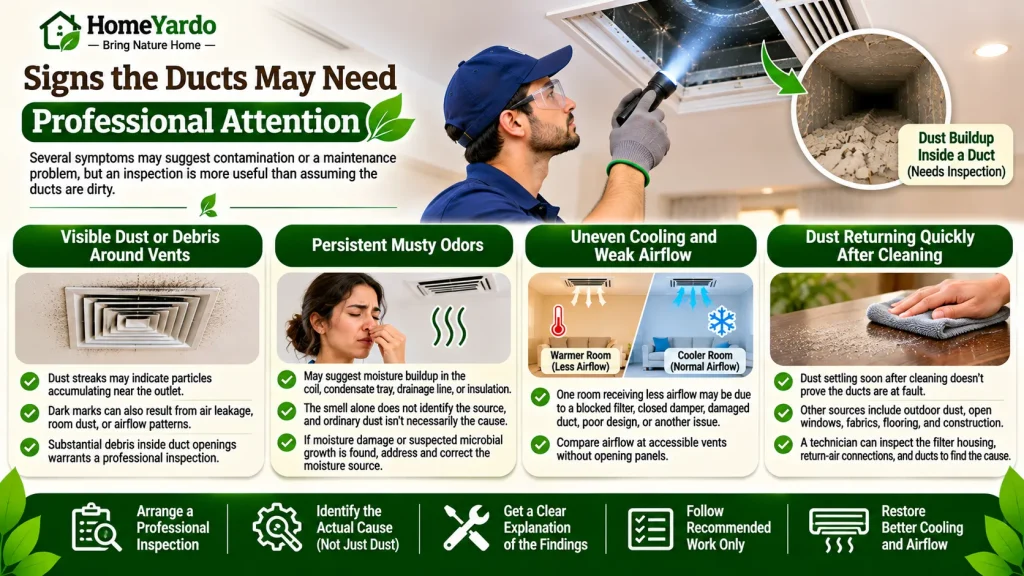
Several symptoms may suggest contamination or a maintenance problem, but none proves that the ducts are dirty.
An inspection is more useful than assuming every cooling problem requires cleaning.
Visible Dust or Debris Around Vents
Dust streaks around supply vents may indicate particles accumulating near the outlet.
However, dark marks can also result from air leakage, room dust, or airflow patterns.
If substantial debris is visible inside accessible duct openings, ask a specialist to inspect the system.
Persistent Musty Odors
A stale or musty smell when the AC starts may suggest moisture buildup somewhere in the cooling system.
Possible sources include the cooling coil, condensate tray, drainage line, or damp insulation.
The smell alone does not identify the source, and ordinary dust is not necessarily responsible.
If moisture damage or suspected microbial growth is found, identifying and correcting the moisture source matters more than simply masking the odor.
Uneven Cooling and Weak Airflow
When one room receives noticeably less airflow than another, the problem may involve a blocked filter, closed damper, damaged flexible duct, poor duct design, or another equipment issue.
Compare the airflow at accessible vents without removing panels or inserting objects.
HomeYardo’s guide to HVAC static pressure and duct design explains how duct restrictions and layout affect indoor comfort.
Dust Returning Quickly After Cleaning
Dust settling on furniture soon after household cleaning can be frustrating.
However, it does not prove the duct system is responsible. Outdoor dust, open windows, fabrics, flooring, and construction activities can all contribute.
A technician can inspect the filter housing, return-air connections, and duct interiors to determine whether contamination is entering or accumulating in the system.
If several symptoms appear together, arranging an inspection is more sensible than ordering a full cleaning immediately.
A professional crew from a company like Eco Clean or an approved building maintenance contractor can be asked to inspect the ductwork and cooling components, explain the findings, and recommend appropriate work.
What Happens During Professional Duct Cleaning in Dubai?

A professional visit should begin with an assessment of the system and a clear explanation of the agreed cleaning scope.
The procedure varies according to whether the property has a ducted split system, central air conditioning, or another cooling arrangement.
1. Inspecting Ducts and AC Components
Technicians may examine accessible vents, return openings, filters, service panels, and internal duct sections.
The inspection helps identify visible debris, damaged ducts, possible moisture problems, and areas that require careful handling.
Not every system has suitable access for the same cleaning method.
2. Protecting Rooms and Equipment
Before cleaning begins, the team should protect nearby furniture, flooring, and other household surfaces.
The air conditioning system is normally switched off and isolated as required for the work.
Technicians may also seal selected openings to prevent dislodged dust from spreading into occupied rooms.
3. Removing Dust From Ductwork
Professional source-removal cleaning commonly combines mechanical agitation with vacuum collection.
Suitable brushes, air tools, or other equipment loosen deposits while a vacuum system maintains controlled airflow to collect debris.
The purpose is to remove contaminants rather than redistribute them throughout the apartment.
The cleaning method must suit the duct material. Fragile flexible ducts and insulated surfaces may require special precautions.
4. Checking Coils, Trays, and Drainage
Some companies include coil or drainage cleaning in their service packages, while others quote these tasks separately.
If these components require attention, technicians should explain the proposed work and use methods suitable for the equipment.
Cleaning ductwork does not automatically resolve a blocked drain, refrigerant fault, or mechanical cooling problem.
5. Inspecting the System After Cleaning
After the work, the crew should check the cleaned areas, refit components correctly, and confirm that the equipment operates as intended.
Residents can request before-and-after photographs of accessible areas or another suitable explanation of the completed work.
The service report should distinguish between cleaning performed, defects identified, and repairs that remain necessary.
Is Duct Cleaning Always Necessary?
/
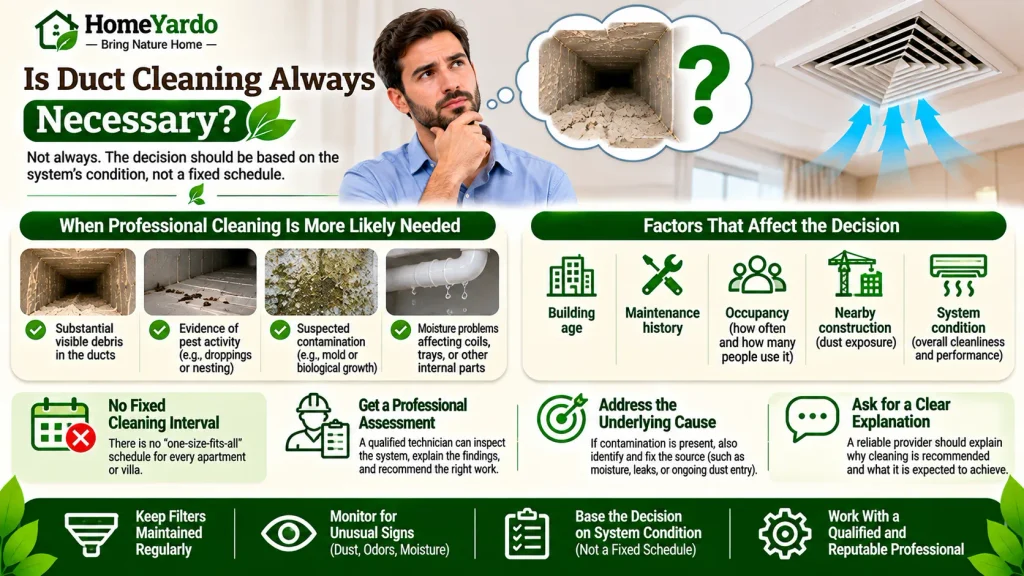
No. Regular filter maintenance does not mean the ducts themselves must be professionally cleaned on a fixed schedule.
The decision should be based on the system’s condition.
Professional inspection is particularly reasonable when there is substantial visible debris, evidence of pest activity, suspected contamination, or moisture problems affecting internal components.
If contamination is present, the underlying cause should also be addressed.
There is no reliable reason to assume every apartment needs the same duct cleaning interval. Building age, maintenance history, occupancy, nearby construction, and system condition can all affect the decision.
A professional should be able to explain why cleaning is recommended and what it is expected to achieve.
Preparing Your Home for a Duct Cleaning Visit
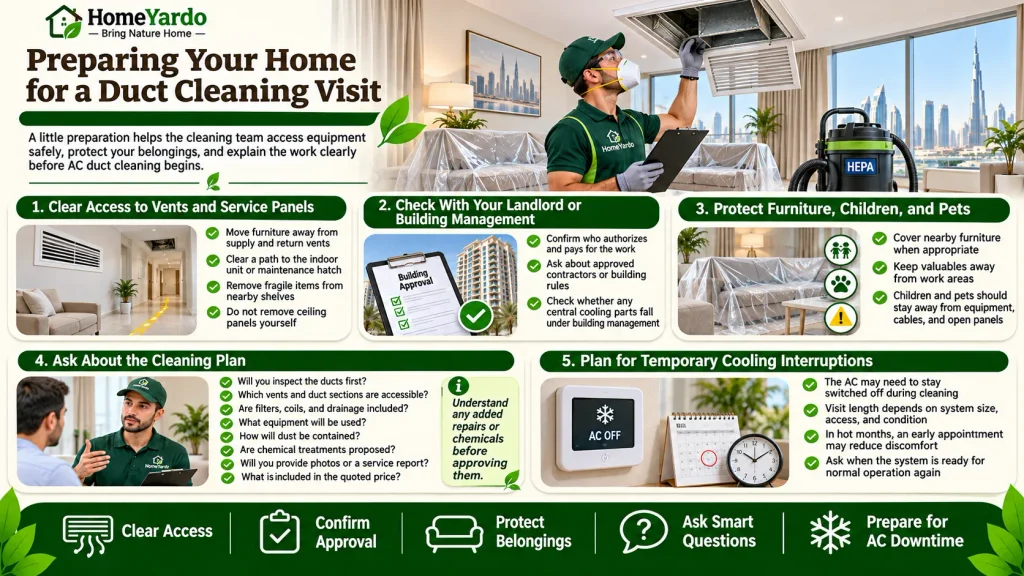
A little preparation makes it easier for the cleaning team to access equipment and protect household belongings.
Clear Access to Vents and Service Panels
Move furniture away from accessible supply and return vents.
Clear a path to any indoor unit or maintenance hatch that the contractor needs to inspect.
Remove fragile objects from nearby shelves and ask the crew which areas they expect to access.
Do not remove ceiling panels yourself.
Check With Your Landlord or Building Management
If you rent an apartment, confirm who is responsible for authorizing and paying for the work.
Some buildings have approved maintenance contractors or specific rules about access, equipment, and working hours.
Ask whether any part of the central cooling system falls under building management rather than individual apartment maintenance.
Protect Furniture, Children, and Pets
Cover nearby furniture when appropriate and keep valuables away from work areas.
Cleaning equipment can be noisy, and workers may need to move between rooms.
Children and pets should remain away from equipment, open panels, cables, and work areas.
Ask About the Cleaning Plan
Before work starts, confirm which components are included.
Useful questions include:
- Will you inspect the ducts before recommending cleaning?
- Which vents and duct sections will be accessible?
- Does the service include filters, cooling coils, and drainage?
- What cleaning equipment will be used?
- How will dust be contained?
- Are any chemical treatments proposed?
- Will you provide photographs or a service report?
- What is included in the quoted price?
Do not approve additional chemical treatments or repairs without understanding their purpose, suitability, and cost.
For general appointment planning, HomeYardo’s AC service visit checklist explains how homeowners can prepare questions and review service recommendations.
Plan for Temporary Cooling Interruptions
The air conditioning system may need to remain switched off while internal cleaning is performed.
The appointment duration depends on the system size, accessibility, condition, and agreed work.
During Dubai’s hotter months, an early appointment may help reduce discomfort.
Once the technicians finish, ask them to verify that the system is ready for normal operation and whether any additional drying, inspection, or operating instructions apply.
What to Check Before Hiring a Duct Cleaning Company

Choosing a provider should involve more than comparing advertised prices.
Look for a clear inspection process, an itemized scope of work, suitable equipment, and technicians experienced with the property’s duct materials and cooling arrangement.
Ask whether the company can explain:
- Why cleaning is necessary.
- Which components are included.
- How dust and debris will be contained.
- Whether damage or moisture problems will be documented.
- Which materials or chemicals, if any, will be used.
- How the completed cleaning will be verified.
- Whether follow-up work costs extra.
Be cautious of companies that promise guaranteed health improvements, claim that every cooling issue comes from dirty ducts, or recommend cleaning without examining the system.
A trustworthy assessment should distinguish between dust removal, routine maintenance, and actual equipment repairs.
How to Keep Ducts Cleaner After the Service
Keeping the cooling system in good condition requires ongoing maintenance, not repeated cleaning without evidence of a problem.
Check filters according to manufacturer instructions, keep accessible vents clear, and arrange qualified servicing when the cooling system develops unusual symptoms.
Address moisture leaks promptly and take reasonable steps to limit dust entry during construction or particularly dusty weather.
HomeYardo’s guide to seasonal HVAC maintenance provides more guidance on planning routine cooling and heating checks.
Final Takeaway
Dubai’s long cooling season makes regular AC maintenance particularly relevant for apartments and villas.
Residents can handle simple tasks such as checking suitable filters, wiping accessible grilles, and keeping ventilation openings unobstructed. Internal duct cleaning, cooling coil maintenance, and condensate drainage work should be assessed and completed by qualified professionals when necessary.
The most useful approach is to inspect the system, identify the actual problem, and agree on the work required.
Professional duct cleaning can remove significant accumulated contamination, but it is not a universal solution for poor cooling, unusual odors, or every indoor dust problem.
FAQ’s
Services may include inspecting the ductwork, removing accumulated debris, cleaning accessible vents, and checking related cooling components. Coil cleaning, drainage maintenance, and repairs may be separate services, so confirm the scope before booking.
There is no single cleaning interval suitable for every property. Cleaning should depend on the duct condition, contamination, maintenance history, and inspection findings rather than a fixed annual schedule.
Substantial visible debris, suspected contamination, pest activity, or persistent problems linked to internal duct conditions can justify an inspection. Weak cooling or dust around vents alone does not prove duct cleaning is needed.
Contaminated ductwork can contribute to odors, but musty smells may also originate from damp coils, condensate trays, drainage problems, or other moisture sources. The cause should be identified before cleaning.
Yes. Duct cleaning focuses on removing contamination from air distribution components. General AC servicing may involve checking filters, coils, drainage, electrical components, refrigerant-related performance, and overall system operation.
The duration varies with the number of units, duct layout, access points, contamination, and cleaning scope. Ask the contractor for an estimate based on your particular property.
Residents can clean accessible grilles and maintain approved filters, but concealed ductwork and internal cooling components require suitable equipment and technical knowledge. Avoid opening sealed panels or using unapproved chemicals.
Removing substantial contamination can address a specific source of dust or debris. However, improvements in overall indoor air quality are not guaranteed. Ventilation, filtration, moisture control, and other sources of indoor pollutants also matter.
It may be appropriate if construction debris entered the ductwork or the system was poorly protected during renovation. An inspection can determine whether cleaning is necessary.
Responsibility depends on the tenancy agreement, building maintenance arrangements, and the nature of the work. Tenants should confirm authorization and payment responsibilities with the landlord or property manager before booking.