Essential Plumbing Improvements to Consider for an Older Home
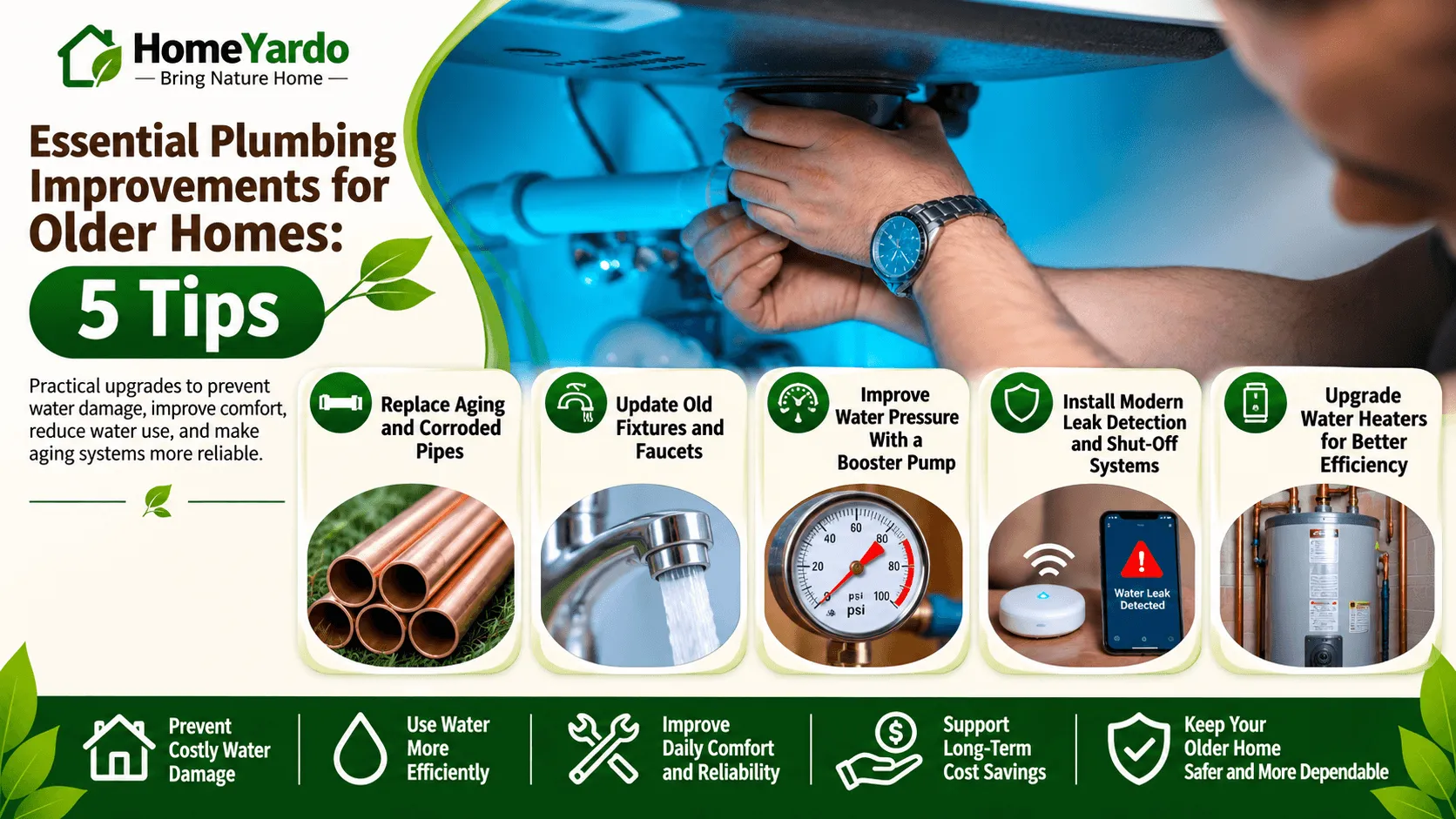
Plumbing improvements for older homes can help prevent water damage, improve everyday comfort, reduce unnecessary water use, and make aging systems more reliable. From replacing corroded pipes to installing modern leak detectors, targeted upgrades can address problems before they become expensive emergencies.
Owning a home is a major achievement for many Americans, but maintaining an older property can come with unexpected expenses. According to the Harvard University Joint Center for Housing Studies, one in four U.S. homeowners lived in a home built before 1960 as of 2023. Owners of these properties spent an average of $6,000 on improvements and maintenance that year, approximately 35% more than the $4,500 average for homes built in 2010 or later.
Plumbing is one of the systems that deserves particular attention. Pipes and fixtures installed decades ago may develop corrosion, mineral deposits, leaks, or inconsistent water pressure. Some problems remain hidden behind walls or beneath floors until significant damage occurs.
However, an older house does not automatically need a complete plumbing renovation.
A professional assessment can help homeowners identify which components need immediate replacement, which can be repaired, and which are functioning properly.
Here are five essential upgrades worth considering, along with practical advice on costs, safety, and prioritizing the work.
Why Do Older Homes Need Plumbing Improvements?
Plumbing systems experience wear from water chemistry, temperature changes, pressure fluctuations, and everyday use. Over several decades, these conditions can affect pipe interiors, fittings, valves, and appliances.
Common concerns include:
- Corroded galvanized steel supply pipes
- Repeated leaks around aging joints
- Restricted flow caused by mineral deposits
- Outdated or inefficient plumbing fixtures
- Deteriorating water heaters
- Hidden leaks behind finished surfaces
- Shutoff valves that no longer operate reliably
The age of a house alone cannot determine the condition of its plumbing. A property built in the 1950s may already have updated supply lines, while a newer home might still experience installation defects or premature component failures.
Before investing in major repairs, homeowners should identify the materials used, review previous maintenance records, and arrange a professional inspection where appropriate.
1. Replace Aging and Corroded Pipes
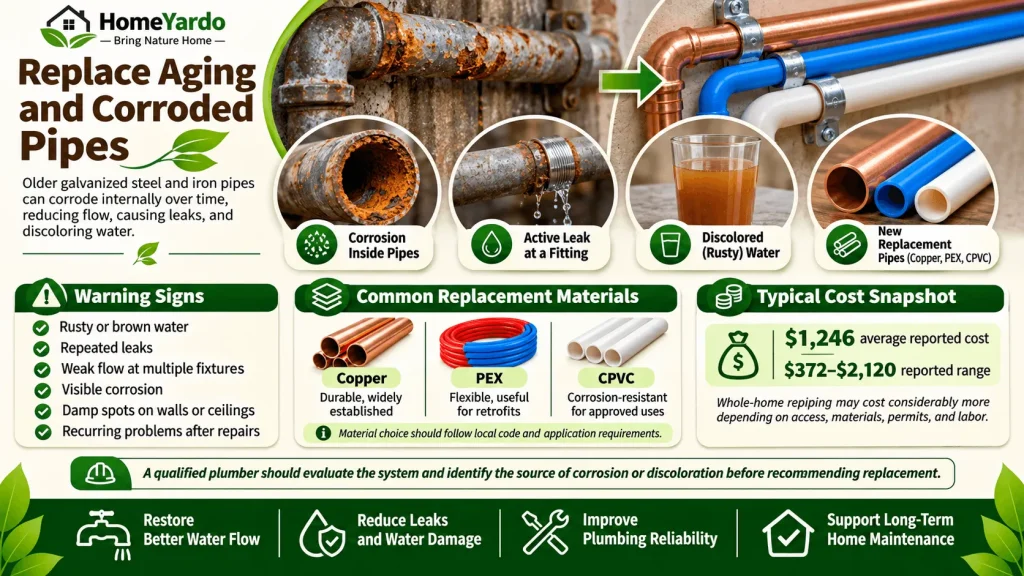
Older galvanized steel and iron pipes can corrode internally after years of service. As rust, scale, and mineral deposits accumulate, the available passage for water may narrow, restricting flow and reducing performance.
Corrosion can also contribute to recurring leaks, weakened connections, and discolored water.
What Are the Warning Signs of Deteriorating Pipes?
Watch for these symptoms:
- Rusty or brown water, especially after periods of inactivity
- Repeated leaks from supply pipes or fittings
- Weak flow at multiple fixtures
- Visible corrosion around exposed connections
- Unexplained damp spots on walls or ceilings
- Recurring problems despite previous repairs
These signs do not always mean every pipe needs replacing. Discolored water, for example, may originate from a water heater or another part of the supply system.
A qualified plumber should evaluate the condition and identify the source.
Which Plumbing Pipe Materials Are Suitable for Older Homes?
Modern replacement materials commonly include copper, PEX, and CPVC, depending on the application and local plumbing codes.
| Pipe material | Main advantages | Important considerations |
|---|---|---|
| Copper | Durable and widely established | Higher material costs; compatibility with water chemistry matters |
| PEX | Flexible and useful for many retrofits | Installation must follow manufacturer instructions and local codes |
| CPVC | Corrosion-resistant for approved applications | Temperature limits, installation requirements, and compatibility need attention |
Some older properties may contain lead service lines or other legacy plumbing materials. If lead is suspected, arrange suitable inspection and water testing through qualified professionals. Ordinary filtration or replacing a few indoor fixtures does not automatically address contamination from a lead service line.
How Much Does Pipe Replacement Cost?
Pipe replacement can cost $1,246 on average, based on data from 94,386 projects reported by Angi Pros. The reported range of $372 to $2,120 depends on the type and extent of work.
These figures should not be treated as a guaranteed whole-house repiping estimate. Replacing plumbing throughout an older property can cost considerably more, particularly when walls, ceilings, or floors must be opened.
The actual price depends on accessibility, material selection, labor rates, permits, and the condition of the remaining system.
For homeowners considering broader improvements, a home remodeling guide can help explain why plumbing work should be coordinated with other renovation activities.
2. Update Old Fixtures and Faucets
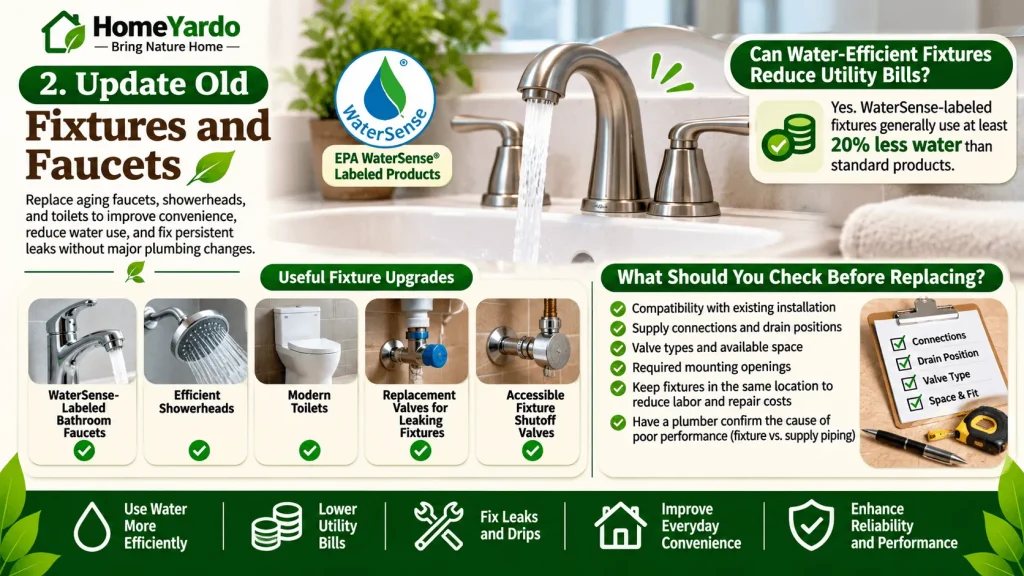
Aging faucets, showerheads, and toilets may gradually lose efficiency because of worn seals, internal corrosion, mineral buildup, or outdated designs.
Replacing these fixtures can improve convenience, reduce waste, and address persistent leaks without requiring major changes to the home’s plumbing layout.
Can Water-Efficient Fixtures Reduce Utility Bills?
Yes. Water-efficient fixtures can reduce unnecessary consumption, particularly when replacing older, high-flow models.
Joseph Wade, vice president of operations at Benjamin Franklin Plumbing, explains to Realtor.com that low-flow fixtures can help households conserve water without substantially compromising everyday performance.
EPA WaterSense-labeled products are independently certified to meet water-efficiency and performance criteria. WaterSense-labeled fixtures generally use at least 20% less water than standard products meeting the applicable baseline.
Useful upgrades include:
- WaterSense-labeled bathroom faucets
- Efficient showerheads
- Modern toilets with suitable flushing performance
- Replacement valves for leaking fixtures
- Accessible fixture shutoff valves
An inexpensive faucet aerator or replacement washer may also resolve a localized issue without replacing an entire fixture.
What Should Homeowners Check Before Replacing Fixtures?
Before purchasing, confirm that the new components are compatible with the existing installation.
Check supply connections, drain positions, valve types, available space, and mounting openings.
Keeping fixtures in their original locations often reduces labor, wall repairs, and additional plumbing modifications.
A plumber can also determine whether poor performance comes from the fixture itself or from restricted supply piping.
3. Improve Water Pressure With a Booster Pump
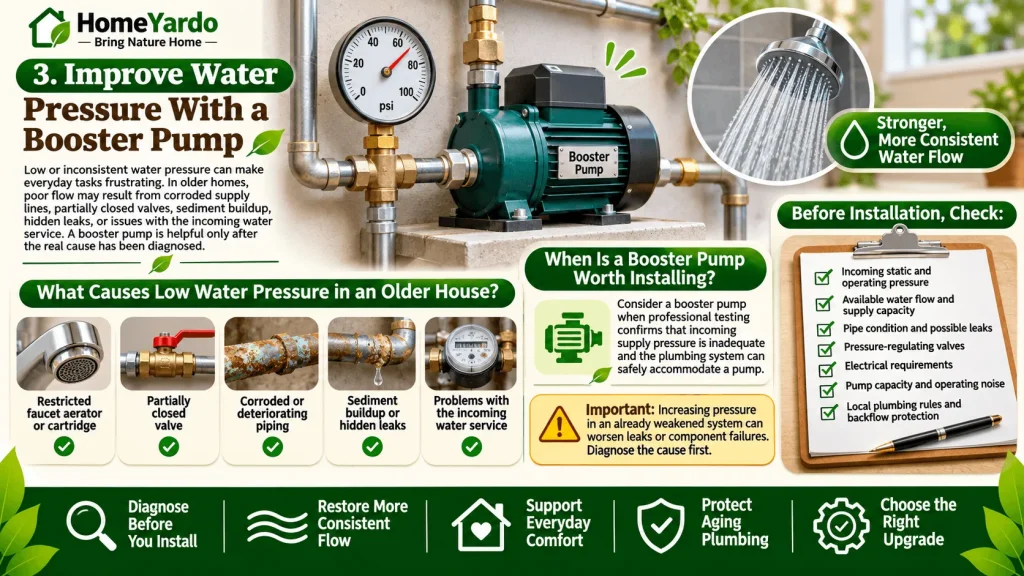
Low or inconsistent water pressure can make everyday activities frustrating, from showering to filling a bathtub.
In older homes, inadequate water flow may result from corroded supply lines, partially closed valves, sediment buildup, hidden leaks, or problems with the incoming water service.
However, a booster pump is not the correct solution for every pressure complaint.
What Causes Low Water Pressure in an Older House?
The source of the problem often depends on how many fixtures are affected.
If one faucet has weak flow, its aerator, cartridge, or supply connection may be restricted.
If several fixtures perform poorly, the issue may involve the main supply, pressure regulation, or deteriorating piping.
Homeowners should also distinguish between low static pressure and reduced flow caused by restrictions.
Increasing pressure in an already weakened system can make leaks and component failures more likely.
When Is a Booster Pump Worth Installing?
A compact and easy-to-install booster pump may be worth considering when professional testing confirms that the incoming supply pressure is inadequate and the system can safely accommodate a pump.
A correctly selected booster system can provide more consistent pressure when several water outlets are operating.
24hr.supply notes that an integrated speed controller in the booster pump can maintain constant pressure and adjust motor speed based on demand.
Before installation, a qualified plumber should evaluate:
- Incoming static and operating pressure
- Available water flow and supply capacity
- Pipe condition and potential leaks
- Pressure-regulating valves
- Electrical requirements
- Pump capacity and operating noise
- Local plumbing regulations and backflow protection requirements
Direct pumping from a municipal supply may be restricted in some jurisdictions. The installer should confirm whether a storage tank, backflow device, or another approved arrangement is required.
A booster pump should be installed only after the underlying pressure problem has been diagnosed.
4. Install Modern Leak Detection and Shut-Off Systems
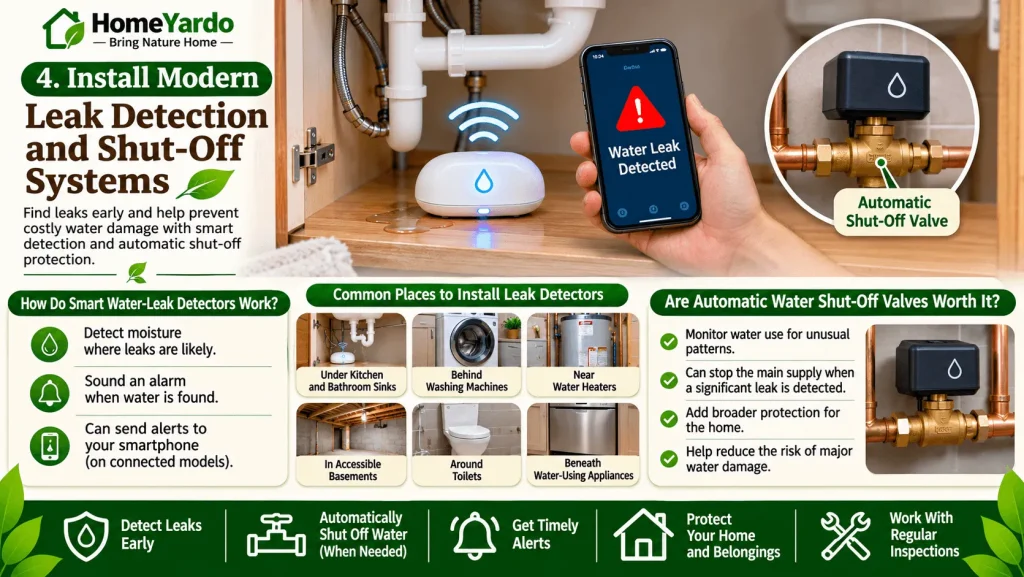
Hidden plumbing leaks can damage drywall, flooring, cabinets, insulation, and structural materials.
Older homes may be particularly vulnerable when concealed pipes, fittings, or valves have deteriorated over time.
Modern leak detection equipment provides another layer of protection by helping homeowners identify moisture or unusual water use sooner.
How Do Smart Water-Leak Detectors Work?
Small moisture sensors can be placed near areas where leaks are likely to occur.
Common locations include:
- Under kitchen and bathroom sinks
- Behind washing machines
- Near water heaters
- Inside accessible basement areas
- Around toilets
- Beneath water-using appliances
When moisture reaches a sensor, the device may sound an alarm. Connected models can also send notifications to a smartphone, depending on their connectivity and configuration.
These devices are particularly helpful in areas that homeowners rarely inspect.
Are Automatic Water Shut-Off Valves Worth It?
For broader protection, consider a whole-home leak-monitoring system paired with an automatic shut-off valve.
Some systems monitor water-use patterns and can stop the main supply when they detect conditions consistent with a significant leak.
However, detection depends on the device’s sensors, settings, and operating conditions. Not every system identifies slow leaks or stops every type of water-related emergency.
Homeowners should also know where their manual main shutoff valve is located and ensure it remains accessible.
If you suspect unexplained water consumption, HomeYardo’s guide on how to read a water meter and check for leaks explains how to look for water use when fixtures are turned off.
Smart monitoring can improve response times, but it should complement regular inspection rather than replace it.
5. Upgrade Water Heaters for Better Efficiency
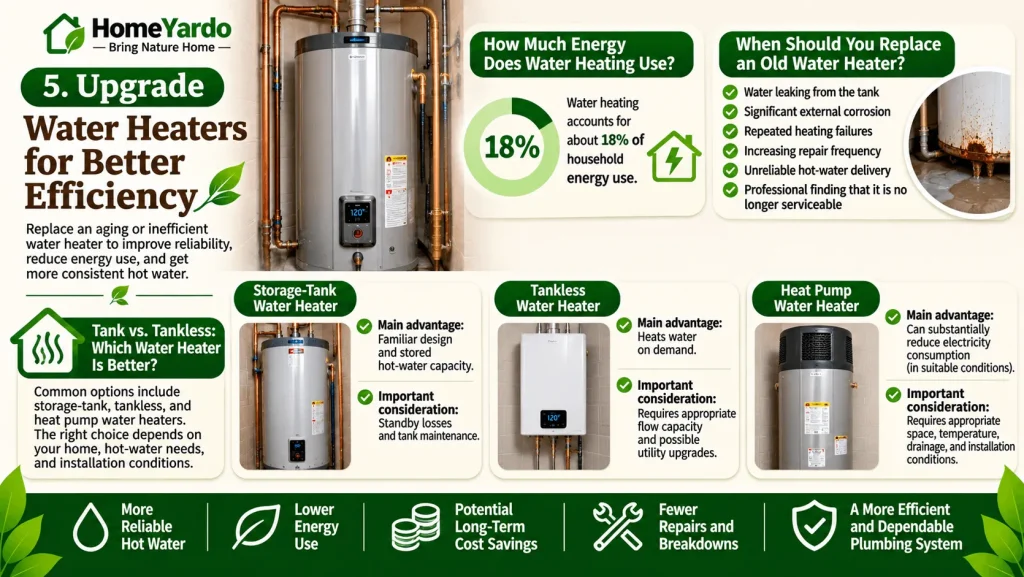
An aging water heater can become less reliable as components wear, sediment accumulates, or corrosion develops.
Depending on the equipment and water conditions, homeowners may notice inconsistent temperatures, unusual noises, slow recovery, or visible moisture around the unit.
Water heater replacement should be considered when inspection indicates that the existing system is deteriorating, inefficient, incorrectly sized, or no longer dependable.
How Much Energy Does Water Heating Use?
Consumer Reports notes that water heating accounts for approximately 18% of household energy consumption.
Choosing an efficient replacement can help reduce long-term operating expenses, although actual savings depend on energy prices, household demand, equipment type, and installation quality.
Tank vs. Tankless: Which Water Heater Is Better?
Homeowners generally have several options, including modern storage-tank systems, tankless models, and heat pump water heaters.
| Water heater type | Main advantage | Important consideration |
|---|---|---|
| Storage-tank | Familiar design and stored hot-water capacity | Standby losses and tank maintenance |
| Tankless | Heats water on demand | Requires appropriate flow capacity and possible utility upgrades |
| Heat pump | Can substantially reduce electricity consumption in suitable conditions | Requires appropriate space, temperature, drainage, and installation conditions |
Tankless systems should be sized for the household’s simultaneous hot-water demand and expected temperature rise.
Storage models should be selected using peak-hour hot-water needs, not simply the physical size of the existing tank.
Heat pump water heaters can be attractive where the installation environment is suitable.
When Should an Old Water Heater Be Replaced?
Warning signs include:
- Water leaking from the tank
- Significant external corrosion
- Repeated heating failures
- Increasing repair frequency
- Unreliable hot-water delivery
- Professional findings that the unit is no longer serviceable
Not every noise or temperature change indicates that replacement is necessary. Some problems may be corrected through appropriate maintenance or component repair.
Follow the manufacturer’s servicing instructions. Aging or heavily corroded units should be assessed by a qualified professional rather than disturbed unnecessarily.
How Should You Prioritize Plumbing Improvements in an Older Home?
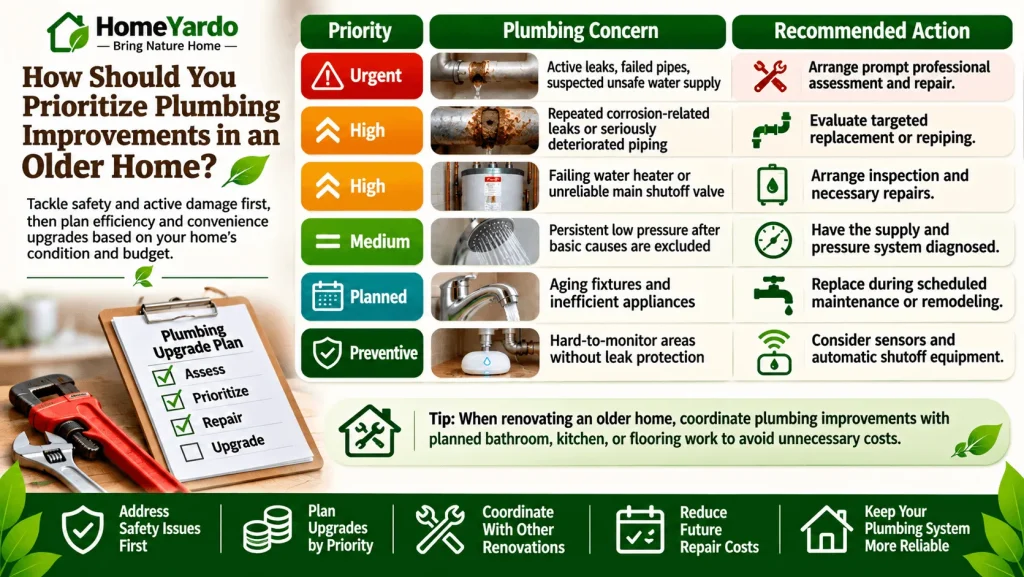
Not every upgrade needs to happen immediately.
The best approach is to address conditions that threaten safety or cause active damage before investing in convenience or efficiency upgrades.
| Priority | Plumbing concern | Recommended action |
|---|---|---|
| Urgent | Active leaks, failed pipes, suspected unsafe water supply | Arrange prompt professional assessment and repair |
| High | Repeated corrosion-related leaks or seriously deteriorated piping | Evaluate targeted replacement or repiping |
| High | Failing water heater or unreliable main shutoff valve | Arrange inspection and necessary repairs |
| Medium | Persistent low pressure after basic causes are excluded | Have the supply and pressure system diagnosed |
| Planned | Aging fixtures and inefficient appliances | Replace during scheduled maintenance or remodeling |
| Preventive | Hard-to-monitor areas without leak protection | Consider sensors and automatic shutoff equipment |
When renovating an older home, coordinate plumbing improvements with planned bathroom, kitchen, or flooring work. Opening the same wall twice can add unnecessary expense.
For broader maintenance planning, HomeYardo’s guide to preventing plumbing problems covers everyday habits and inspections that can help reduce avoidable issues.
What Should You Ask a Plumber Before Starting an Upgrade?
An older property’s plumbing history may be incomplete, particularly when previous owners have made repairs over several decades.
Before approving significant work, ask the contractor:
- Which components are failing, and what evidence supports replacement?
- Can individual sections be repaired safely instead of replacing the entire system?
- Are the proposed materials approved under local plumbing codes?
- Will walls, floors, or ceilings need to be opened?
- Does the quote include permits, testing, and restoration?
- Will water be unavailable during installation?
- Are there any concerns involving lead service lines or unsafe water pressure?
- What warranties and maintenance requirements apply?
For larger projects, request a written scope of work and an itemized estimate. Confirm licensing and insurance requirements in your jurisdiction.
This helps distinguish necessary repairs from optional improvements and reduces the risk of unexpected charges.
Final Takeaway
Essential plumbing improvements can help an older home become safer, more dependable, and more economical to maintain without requiring a complete renovation.
Replacing deteriorated pipes, installing efficient fixtures, correcting verified pressure problems, adding leak protection, and upgrading an aging water heater can each provide practical benefits.
The best starting point is a professional inspection. Address active leaks and safety concerns first, then plan efficiency and convenience upgrades around your budget and the property’s overall condition.
A phased approach makes it easier to protect the home while avoiding unnecessary replacements.
FAQ’s
Repeated leaks, rusty water, visible corrosion, and persistent flow problems can indicate deterioration. However, these symptoms may also have localized causes. A qualified plumber should inspect the system before recommending replacement.
No. Complete repiping is not always required. Targeted replacement may be suitable when deterioration affects only specific sections. The decision should depend on pipe materials, structural condition, water quality, and the frequency of previous failures.
They may support a property’s marketability and buyer confidence by addressing known defects and improving functionality. However, the amount recovered at resale depends on local property conditions, buyer demand, and the type and cost of the work.
The highest priority is addressing any active leak, unsafe water supply, or severely deteriorated piping. For a house without urgent problems, a plumbing inspection can identify which improvement would provide the greatest practical benefit.
Costs vary widely. Replacing one fixture or a short pipe section is considerably different from repiping an entire property. Labor, pipe accessibility, permits, material choices, and restoration work all affect the final price. Obtain an itemized estimate based on the actual condition of the house.
Sometimes. Cleaning a clogged aerator, repairing a faulty valve, or correcting another localized problem may restore flow. If internal pipe corrosion is responsible, more extensive repairs could be necessary. A booster pump is suitable only for certain supply-pressure problems.
Yes. Moisture sensors and whole-home monitoring systems can help detect problems before extensive damage occurs. They are especially useful near water heaters, washing machines, and concealed or rarely inspected plumbing areas, although they cannot prevent every leak.
Not necessarily. If the unit is operating safely and efficiently, replacement may not be required. However, a major renovation creates an opportunity to assess its condition, capacity, remaining service life, and suitability for household needs.