The Home Improvement Projects That Can Change Your Property’s Appearance
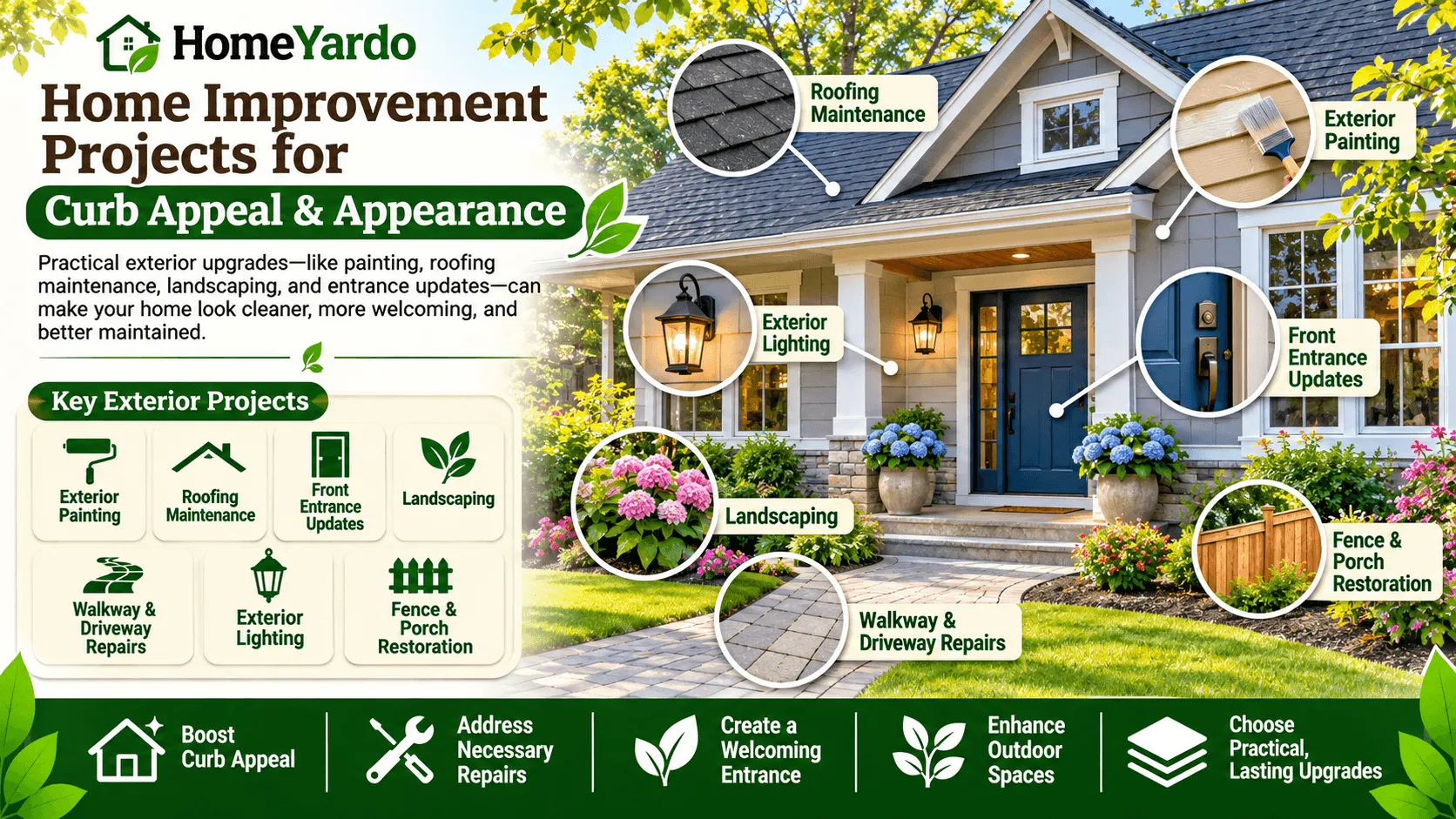
Home improvement projects for curb appeal can make a property look cleaner, more welcoming, and better maintained without requiring a complete renovation. Exterior painting, roofing repairs, landscaping, entrance updates, lighting, and restored outdoor surfaces are among the improvements that can change how a house looks from the street.
A house doesn’t have to be outdated to look tired. Faded paint, overgrown shrubs, worn roofing materials, and neglected outdoor spaces can gradually affect its appearance. These details often go unnoticed until homeowners compare their property with neighboring houses or begin planning renovations.
Fortunately, improving a home’s appearance doesn’t always require an expensive remodeling project. Some changes are relatively simple, while others involve repairing or replacing exterior features that have deteriorated over time.
The best place to start is by identifying what looks worn, what needs repair, and which improvements will make a noticeable difference without creating unnecessary maintenance.
Which Home Improvement Projects Make the Biggest Visual Difference?
The most noticeable improvements often involve parts of the property that occupy a large visible area or attract attention near the entrance.
| Home improvement project | Potential visual benefit | What to check before starting |
|---|---|---|
| Exterior painting | Refreshes faded siding and trim | Moisture damage and surface condition |
| Roofing maintenance | Improves the appearance of the roofline | Missing materials, leaks, and flashing |
| Front entrance updates | Creates a more welcoming entrance | Door, steps, railings, and hardware |
| Landscaping | Makes the yard look organized and maintained | Drainage, sunlight, and plant growth |
| Walkway and driveway repairs | Restores damaged outdoor surfaces | Cracks, settling, and runoff |
| Exterior lighting | Highlights entrances and architectural details | Electrical safety and fixture placement |
| Fence and porch restoration | Improves the appearance of existing structures | Loose boards, damaged supports, and decay |
The right choice depends on the home’s condition. A fresh coat of paint may make the biggest difference to one property, while another may benefit more from repairing damaged roofing or restoring an overgrown front yard.
Refresh Your Home’s Exterior With a New Paint Color
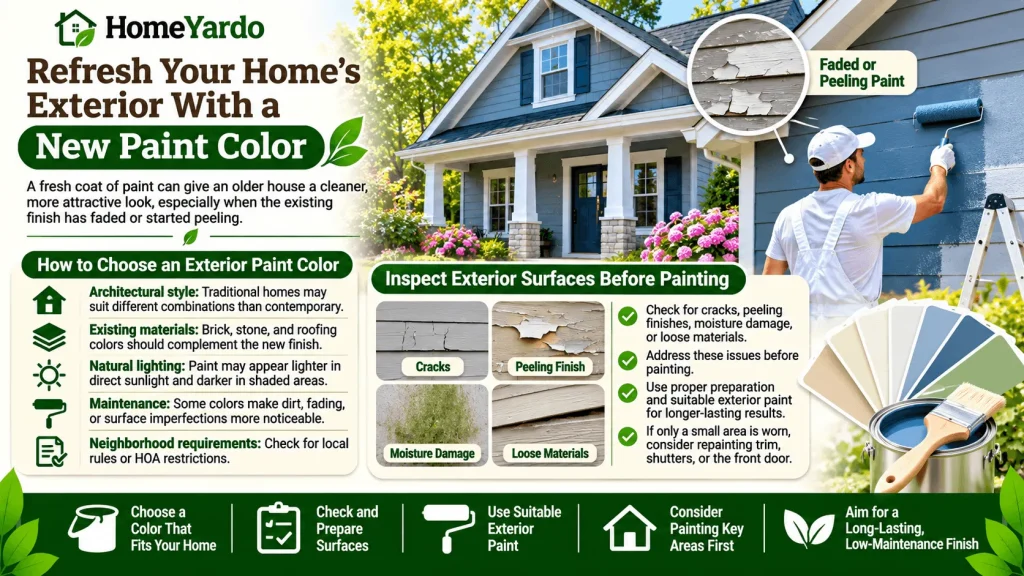
Exterior painting is one of the most noticeable improvements homeowners can make. A fresh coat of paint can give an older house a cleaner appearance, especially when existing finishes have faded or started peeling.
Choosing the right color requires looking beyond personal preference. Roofing materials, window trim, brickwork, and surrounding landscaping all influence how a particular shade will appear.
How to Choose an Exterior Paint Color
Before selecting a color, consider:
- Architectural style: Traditional homes may suit different combinations than contemporary properties.
- Existing materials: Brick, stone, and roofing colors should complement the new finish.
- Natural lighting: Paint may appear lighter in direct sunlight and darker in shaded areas.
- Maintenance: Some colors and finishes make dirt, fading, or surface imperfections more noticeable.
- Neighborhood requirements: Check whether local rules or homeowner association restrictions apply.
Testing paint samples on several exterior surfaces can help homeowners see how colors change throughout the day.
Inspect Exterior Surfaces Before Painting
Before painting, inspect siding and exterior surfaces for cracks, peeling finishes, moisture damage, or loose materials.
Painting over these problems may temporarily improve appearances, but it won’t resolve the underlying deterioration.
Proper preparation, suitable exterior paint, and attention to existing materials can help the finished project remain attractive for years.
When only a small area is worn, repainting trim, shutters, or the front door may be more practical than repainting the entire house.
Pay Attention to the Condition of Your Roof
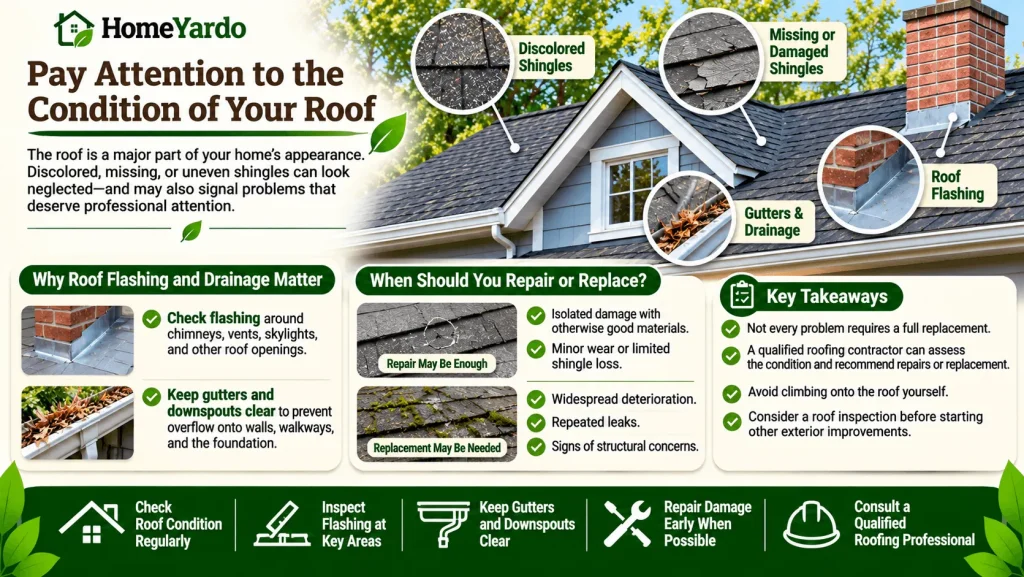
The roof occupies a significant portion of a home’s visible exterior, making its condition an important part of the property’s overall appearance.
Discolored shingles, missing materials, or uneven sections can make an otherwise attractive home appear poorly maintained.
However, appearance isn’t the only concern. Roofing materials protect the house against rain, wind, and moisture, so visible deterioration may indicate problems that deserve professional attention.
Why Roof Flashing and Drainage Matter
Homeowners should consider the condition of flashing around chimneys, vents, skylights, and other roof openings.
Damaged flashing can allow water to enter the structure, even when surrounding shingles appear intact. In these situations, professional roof flashing repair may help address a specific source of water intrusion without requiring extensive replacement work.
Gutters and downspouts also deserve attention. Blocked or damaged drainage components can allow water to overflow onto exterior walls, walkways, and areas near the foundation.
When Should You Repair or Replace Roofing Materials?
Not every visible roofing problem requires a complete replacement.
Isolated damage may be repairable when the surrounding materials remain in good condition. Widespread deterioration, repeated leaks, or significant structural concerns may require more extensive work.
A qualified roofing contractor can assess the roof’s condition and explain whether targeted repairs or replacement would be appropriate.
Avoid climbing onto the roof to inspect damage yourself, particularly when surfaces are steep, wet, or deteriorated.
Before investing in decorative exterior improvements, arranging a roof inspection can help determine whether maintenance, repairs, or more substantial work is necessary.
Give Your Front Entrance a More Welcoming Look
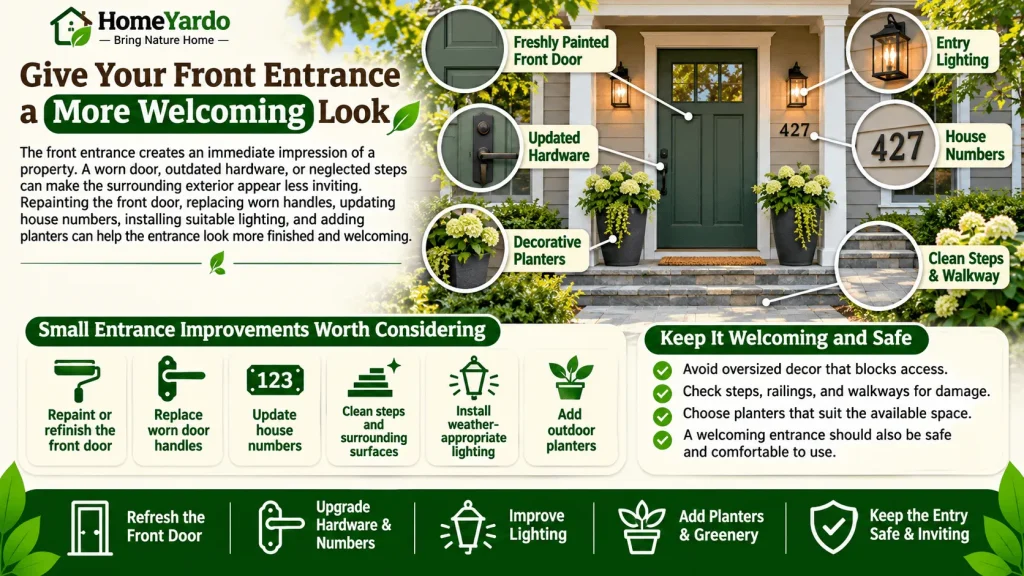
The front entrance creates an immediate impression of a property. A worn door, outdated hardware, or neglected steps can make the surrounding exterior appear less inviting.
Repainting the front door is a relatively straightforward way to introduce color without changing the entire house.
Replacing damaged handles, updating house numbers, and installing suitable lighting can also make the entrance look more finished.
Decorative planters or seasonal greenery can add character, particularly when they complement the home’s existing style.
Small Entrance Improvements Worth Considering
Several relatively simple changes can refresh the front entrance:
- Repaint or refinish a structurally sound front door.
- Replace worn door handles and damaged hardware.
- Update house numbers for better visibility.
- Clean entrance steps and surrounding surfaces.
- Install weather-appropriate lighting fixtures.
- Add outdoor planters that suit the available space.
Avoid filling a narrow entrance with oversized decorations or planters that obstruct access.
Before focusing on appearance, check steps, railings, and walkways for damage. A welcoming entrance should also be safe and comfortable to use.
For homeowners planning broader entrance changes, these welcoming and functional home exterior ideas explain how pathways, lighting, and landscaping can work together.
Use Landscaping to Improve the Overall Appearance
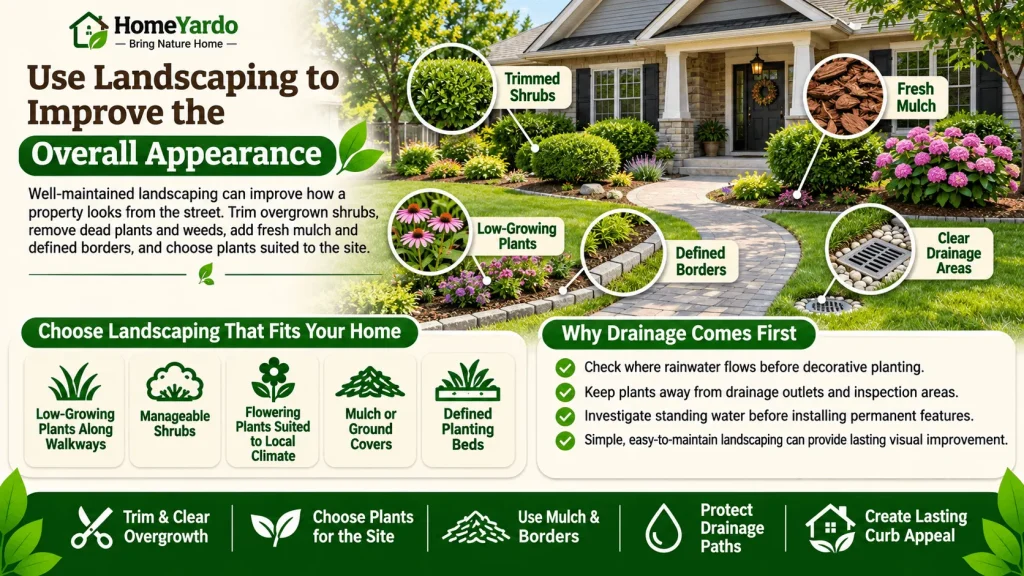
Well-maintained landscaping can change how a property looks from the street. Overgrown shrubs, patchy lawns, and neglected flower beds often make a home appear older than it is.
Start by removing dead plants, trimming vegetation, and clearing areas where weeds have become established.
Fresh mulch and defined garden borders can give outdoor spaces a more organized appearance.
Plant selection should reflect local growing conditions, including sunlight, soil quality, available space, and seasonal temperatures.
Choose Landscaping That Fits Your Home
Good landscaping should complement the property rather than overwhelm it.
Consider using:
- Low-growing plants along walkways.
- Shrubs that remain manageable at maturity.
- Flowering plants suited to the local climate.
- Mulch or ground covers to reduce exposed soil.
- Defined planting beds that follow the property’s layout.
Choose plants based on their mature size rather than how they look in nursery containers.
Large shrubs placed too close to exterior walls may eventually obstruct windows, trap moisture against surfaces, or interfere with maintenance.
Vegetation should also be kept away from drainage outlets and areas that need regular inspection.
Why Drainage Should Come Before Decorative Planting
A beautiful flower bed can become a problem if it redirects water toward the foundation or traps moisture against siding.
Before adding soil, mulch, edging, or raised planting areas, check where rainwater flows.
Maintain suitable drainage around the property and investigate standing water before installing permanent landscaping features.
A thoughtful landscape doesn’t need to be elaborate. Simple arrangements that are easy to maintain can provide lasting visual improvements.
Update Walkways, Driveways, and Outdoor Surfaces
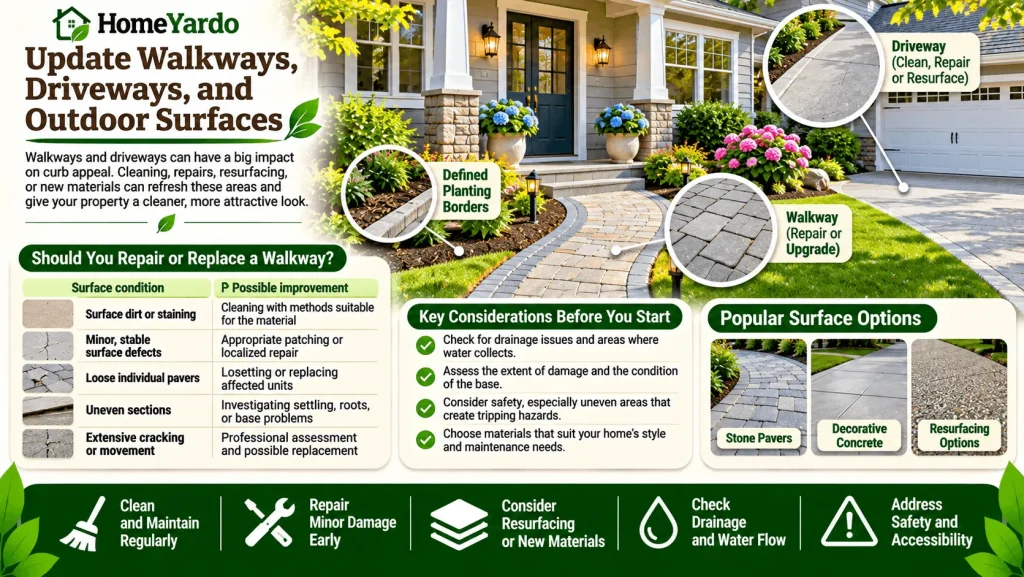
Walkways and driveways contribute to a property’s appearance more than homeowners sometimes realize.
Cracked concrete, stained paving, and uneven surfaces can distract from other exterior improvements.
Depending on their condition, cleaning, minor repairs, or resurfacing may be enough to refresh these areas. Severely damaged surfaces may require more extensive work.
Materials such as stone pavers or decorative concrete can also create a different appearance when replacing existing walkways.
Should You Repair or Replace an Existing Walkway?
The appropriate approach depends on the type and extent of damage.
| Surface condition | Possible improvement |
|---|---|
| Surface dirt or staining | Cleaning with methods suitable for the material |
| Minor, stable surface defects | Appropriate patching or localized repair |
| Loose individual pavers | Resetting or replacing affected units |
| Uneven sections | Investigating settling, roots, or base problems |
| Extensive cracking or movement | Professional assessment and possible replacement |
Surface treatments should not be used to hide active movement or underlying drainage problems.
Before starting, consider drainage and accessibility. An attractive pathway won’t be practical if water regularly collects on its surface or uneven sections create tripping hazards.
For a closer look at materials and installation considerations, HomeYardo’s guide to residential concrete projects covers driveways, patios, steps, and walkways.
Improve Exterior Lighting Without Overdoing It
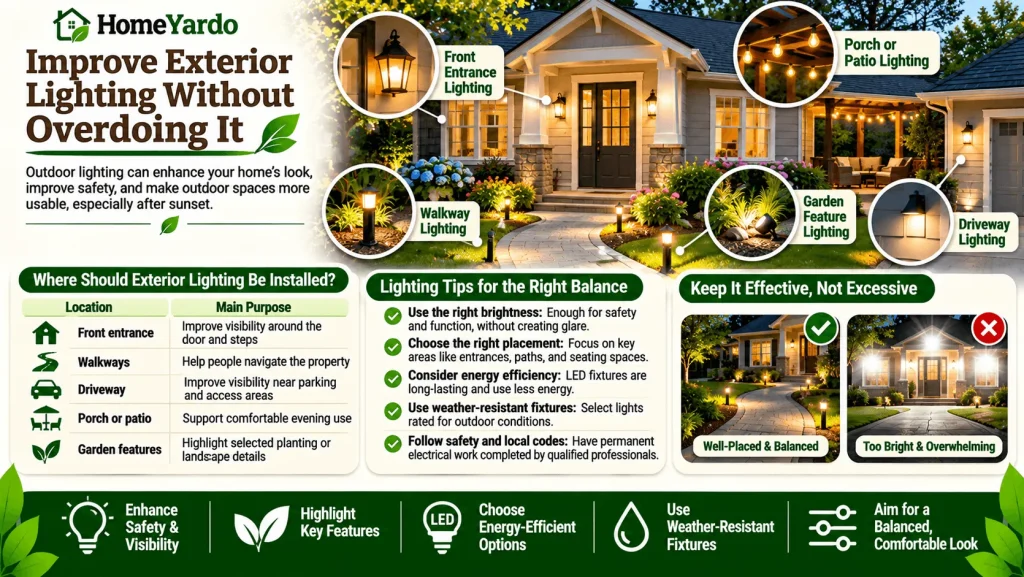
Outdoor lighting can make architectural features and landscaped areas more noticeable after sunset. It also helps residents and visitors navigate entrances, pathways, and outdoor living spaces.
Consider placing lighting near the front door, along walkways, or around frequently used seating areas.
Small accent lights can highlight garden features without overwhelming the property.
LED fixtures offer energy-efficient options, while some solar-powered lights may be suitable for locations with adequate sunlight.
Where Should Exterior Lighting Be Installed?
Different areas benefit from different lighting arrangements.
| Location | Main purpose |
|---|---|
| Front entrance | Improve visibility around the door and steps |
| Walkways | Help people navigate the property |
| Driveway | Improve visibility near parking and access areas |
| Porch or patio | Support comfortable evening use |
| Garden features | Highlight selected planting or landscape details |
Brightness and placement matter.
Excessive lighting can create glare, disturb neighboring properties, and make outdoor areas less comfortable.
Choose weather-resistant fixtures rated for their intended location. Permanent electrical installations should follow applicable codes and be completed by qualified professionals where required.
Restore Fences, Porches, and Other Outdoor Features
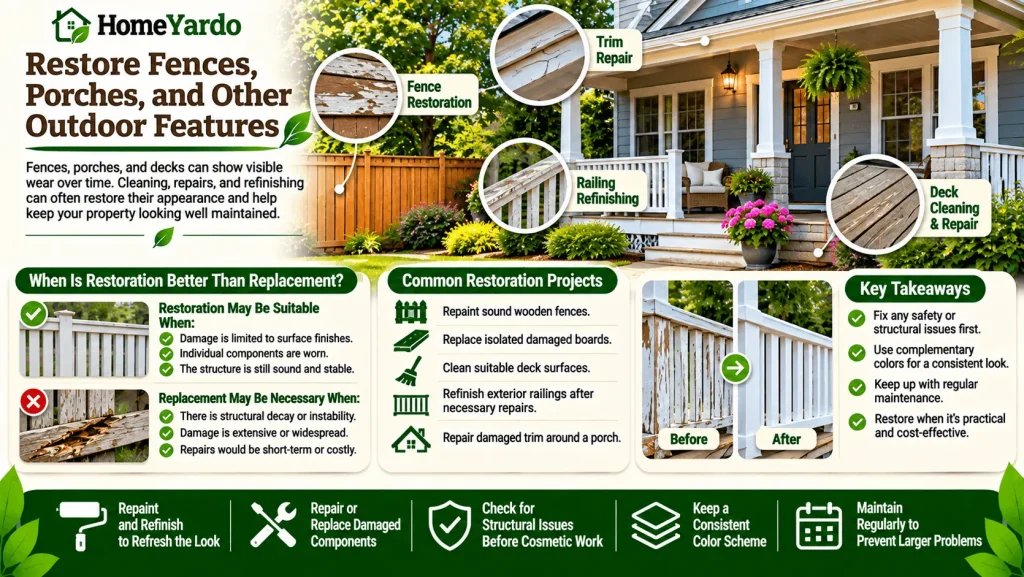
Fences, porches, and decks often develop visible wear after years of exposure to weather.
Peeling finishes, loose boards, and deteriorating railings can affect the appearance of the entire property.
Cleaning and repainting these features may restore their appearance when the underlying materials remain sound.
Damaged supports or unstable structures, however, should be assessed and repaired before cosmetic work begins.
When Is Restoration Better Than Replacement?
Restoration may be suitable when damage is limited to surface finishes or individual components.
Examples include:
- Repainting sound wooden fences.
- Replacing isolated damaged boards.
- Cleaning suitable deck surfaces.
- Refinishing exterior railings after necessary repairs.
- Repairing damaged trim around a porch.
Structural decay, significant instability, or extensive deterioration may make more substantial repairs necessary.
Using complementary colors across fences, porch railings, and exterior trim can create a more consistent appearance.
Regular maintenance also helps homeowners identify deterioration before it spreads.
Sometimes, restoring an existing structure makes more sense than replacing it with something entirely new.
How Do You Know Whether to Repair or Replace an Exterior Feature?
One of the most common renovation mistakes is replacing a feature simply because it looks old.
Appearance alone doesn’t always indicate that a material has reached the end of its useful life.
A faded fence may only need cleaning and refinishing, while a freshly painted porch can still contain deteriorated supports.
Before deciding, consider three questions.
Is the Existing Material Structurally Sound?
Check for loose components, water damage, visible movement, and signs of deterioration.
If a feature is unsafe or structurally compromised, professional assessment should come before decorative work.
Will Repairs Address the Actual Problem?
A cosmetic repair may improve the appearance temporarily without correcting the cause.
For example, repeatedly painting a damp exterior wall will not resolve an active moisture problem.
Is Replacement More Practical Over Time?
Compare the full cost of repairs, expected service life, future maintenance, and replacement.
An inexpensive repair may be worthwhile when it restores a sound feature. Repeated repairs to a severely deteriorated structure may be less practical.
The goal is to preserve materials that still perform well while replacing components that no longer meet functional or safety needs.
Decide Which Improvements Should Come First
When several areas of a property need attention, choosing where to begin can be difficult.
Homeowners may be tempted to focus on highly visible projects, but essential repairs should usually take priority.
Water intrusion, damaged roofing materials, and deteriorating exterior structures deserve attention before painting or landscaping. Otherwise, later repair work could damage recently completed improvements.
Create a list of potential projects and separate necessary repairs from decorative changes.
Consider the cost, expected maintenance, and visual impact of each improvement.
A Practical Order for Exterior Home Improvements
A useful starting sequence is:
- Address urgent repairs. Investigate roof leaks, damaged structures, electrical hazards, and drainage problems.
- Complete major exterior work. Schedule necessary roofing, siding, or other substantial repairs.
- Refresh exterior finishes. Paint suitable surfaces and repair decorative trim.
- Improve entrances and pathways. Restore damaged steps, walkways, and entry features.
- Install lighting and finishing details. Add suitable fixtures, hardware, and visible accents.
- Complete landscaping. Finish planting beds, mulch, borders, and other decorative features after disruptive construction work.
The order may change depending on the property and how different projects affect one another.
Larger projects can influence smaller decisions. For example, roofing colors and exterior materials should be considered before selecting a new paint scheme.
Homeowners organizing multiple improvements can use this residential exterior refresh planning guide to review budgets, inspections, and project sequencing.
Planning improvements in a sensible order can prevent unnecessary spending and repeated work.
Which Exterior Projects Are Suitable for DIY?
New section — added for homeowner safety and practical guidance.
Some appearance-related improvements are manageable for homeowners with basic tools and experience.
Others involve working at heights, electrical installations, structural components, or building systems that require professional assessment.
| Project | DIY considerations |
|---|---|
| Cleaning accessible outdoor surfaces | Often suitable when appropriate cleaning methods are used |
| Planting small garden beds | Usually manageable after checking drainage and underground utilities |
| Repainting a front door | Often suitable with correct preparation and ventilation |
| Replacing house numbers | Usually straightforward when installed safely |
| Minor fence refinishing | May be suitable if the structure is sound |
| Roof and flashing repairs | Best assessed by qualified roofing professionals |
| Permanent exterior electrical work | Requires appropriate electrical expertise and code compliance |
| Structural porch or deck repairs | Should be assessed by suitably qualified professionals |
Before excavating, contact the relevant utility-locating service. Check local permit requirements before beginning structural or electrical work.
An improvement should never sacrifice safety simply to achieve a better-looking exterior.
How Can You Maintain Your Home’s Appearance After Renovation?
New section — added for long-term maintenance value.
The appearance of a property depends as much on routine care as it does on major improvements.
Once projects are complete, create a manageable exterior maintenance routine.
Inspect visible roofing materials from the ground after severe weather. Check gutters, drainage outlets, exterior finishes, and accessible structural components for signs of deterioration.
Trim vegetation before it obstructs windows, pathways, or vents. Clean outdoor surfaces using methods appropriate for their materials.
Pay attention to small changes such as peeling paint, loose railings, standing water, or damaged fixtures.
HomeYardo’s guide to year-round exterior maintenance provides further guidance on keeping outdoor areas attractive between larger improvement projects.
Regular maintenance cannot prevent every problem, but it can help homeowners recognize deterioration early and protect the work they have already completed.
Final Takeaway: A Better-Looking Home Starts With Thoughtful Changes
Improving a property’s appearance doesn’t always require rebuilding major parts of the house.
Fresh paint, healthy landscaping, updated lighting, repaired walkways, and restored outdoor features can make noticeable differences.
At the same time, maintaining roofing materials and other exterior structures helps protect those improvements from avoidable damage.
The most successful home improvement projects balance appearance with practical needs.
By evaluating existing conditions, addressing necessary repairs, and choosing upgrades carefully, homeowners can create a property that looks more inviting while remaining easier to maintain over time.
FAQ’s
Exterior painting, roof maintenance, front entrance updates, landscaping, walkway repairs, and outdoor lighting can noticeably improve curb appeal. The best project depends on which features are most visible and whether existing materials need repairs.
Cleaning outdoor surfaces, trimming overgrown plants, refreshing mulch, repainting a front door, and replacing worn house numbers are often relatively affordable improvements. Costs depend on the property’s condition and local labor and material prices.
Some improvements may support resale appeal, particularly when they correct deterioration or make the property more functional. However, property value depends on market conditions, project quality, location, and total cost. A higher sale price is not guaranteed.
Yes, when the roof has active leaks or damage that could affect exterior walls and finishes. Addressing moisture problems before cosmetic improvements helps reduce the risk of damaging newly completed work.
Start with safety concerns, water intrusion, structural defects, and other necessary repairs. Then complete major exterior work before moving to painting, lighting, landscaping, and decorative improvements.
Consider repainting the front door, repairing damaged trim, cleaning suitable surfaces, maintaining landscaping, updating outdoor lighting, and restoring existing fences or walkways.
Repainting can be appropriate when the siding remains sound and its surface accepts paint. Replacement may be necessary when materials have extensive decay, severe damage, or other defects that painting cannot correct.
Common mistakes include painting over moisture damage, choosing plants that become too large, ignoring drainage, using excessive exterior lighting, and completing decorative upgrades before necessary structural repairs.
A seasonal visual check and additional inspections after severe weather are sensible starting points. Roofing, drainage systems, exterior finishes, and outdoor structures may need more frequent attention depending on their condition, climate, and manufacturer recommendations.