Boost Construction Safety With Commercial Cleaning Nashville
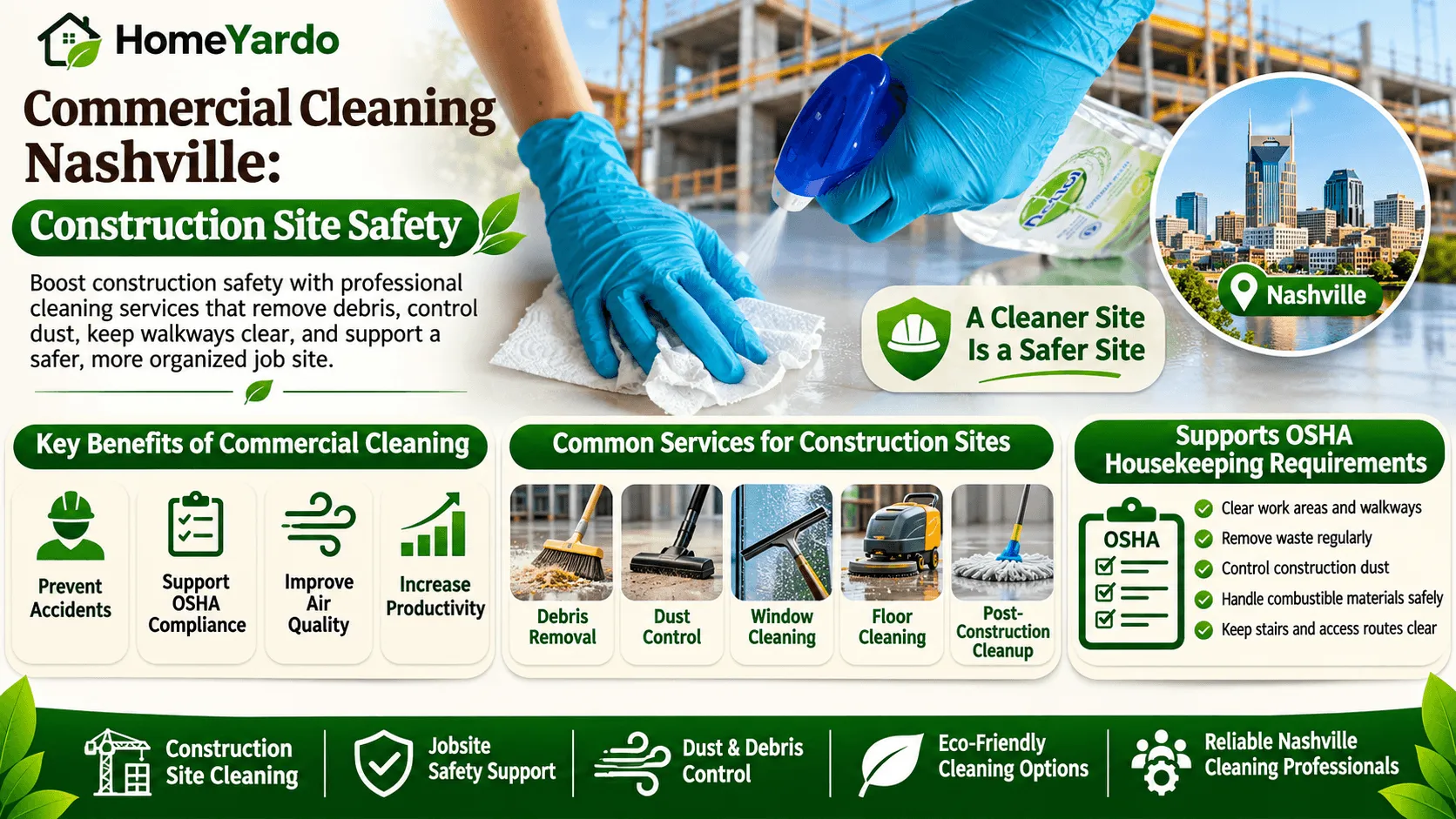
Commercial Cleaning Nashville services help construction contractors maintain safer, cleaner, and more organized job sites by removing debris, controlling dust, keeping walkways clear, and supporting routine housekeeping requirements. Regular professional cleaning also helps reduce preventable workplace hazards while improving working conditions.
Walk onto any active job site in Nashville, and the hazards are obvious: scaffolding, exposed wiring, heavy equipment moving across uneven ground. What’s less obvious, but just as dangerous, is what accumulates underfoot and in the air once work begins — sawdust, drywall debris, spilled materials, and fine particles that settle on every surface.
Managing that buildup isn’t simply housekeeping. It’s an important part of construction site safety.
The Occupational Safety and Health Administration (OSHA) addresses these concerns through its construction housekeeping requirements, which require debris to be cleared from work areas, passageways, and stairs.
For construction contractors throughout Nashville and Middle Tennessee, regular cleaning supports safer operations, better site organization, and compliance with applicable workplace safety standards.
Why Commercial Cleaning Services Matter on Nashville Job Sites
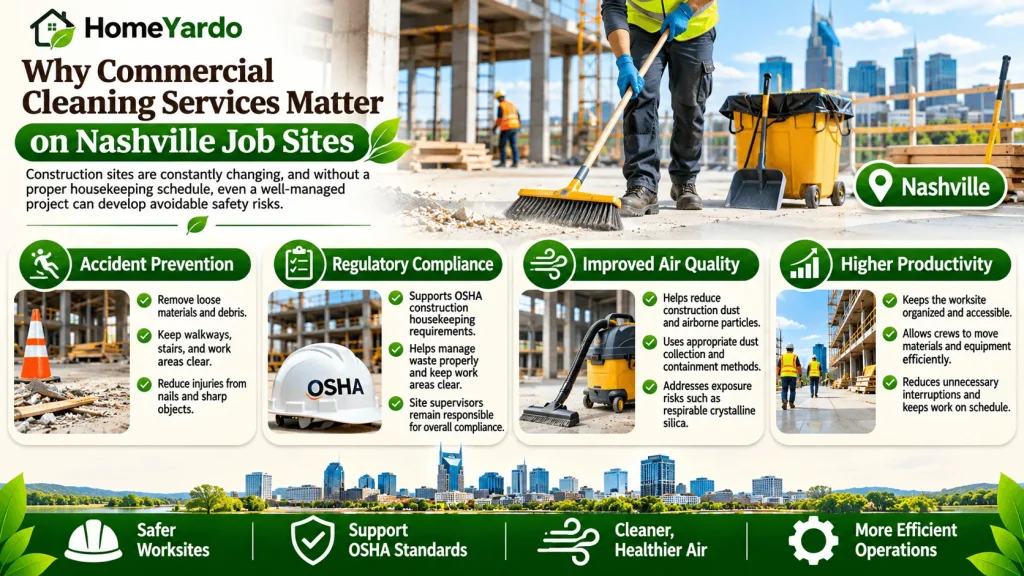
Construction sites are constantly changing. Workers move between different areas, materials are delivered, and construction activities produce new waste throughout the day.
Without a proper housekeeping schedule, even a well-managed project can develop avoidable safety risks.
Accident Prevention
A clean site reduces the risk of slips, trips, and falls — consistently among the leading causes of construction injuries.
Regulatory Compliance
Routine cleaning supports the housekeeping requirements outlined in OSHA’s construction standards.
Contractors must ensure that waste is managed appropriately and that work areas remain free from unnecessary debris.
However, hiring a cleaning company does not automatically establish OSHA compliance. Site supervisors remain responsible for identifying hazards and implementing appropriate safety measures.
Improved Air Quality
Construction activities such as cutting, drilling, sanding, and demolition can release dust into the surrounding environment.
Using appropriate dust collection equipment, containment methods, and cleaning procedures can help reduce unnecessary airborne exposure.
Some materials, including concrete and masonry, may release respirable crystalline silica, which requires specific exposure controls.
Higher Productivity
A clean and organized worksite allows employees to move materials, access equipment, and complete assignments with fewer unnecessary interruptions.
When cleaning is included in the daily construction schedule, different teams can work more efficiently without allowing waste to accumulate between tasks.
Commercial cleaning in Nashville isn’t simply about appearances. It’s a practical part of how responsible contractors maintain safer working environments.
Key Services Offered by Commercial Cleaning Companies in Nashville
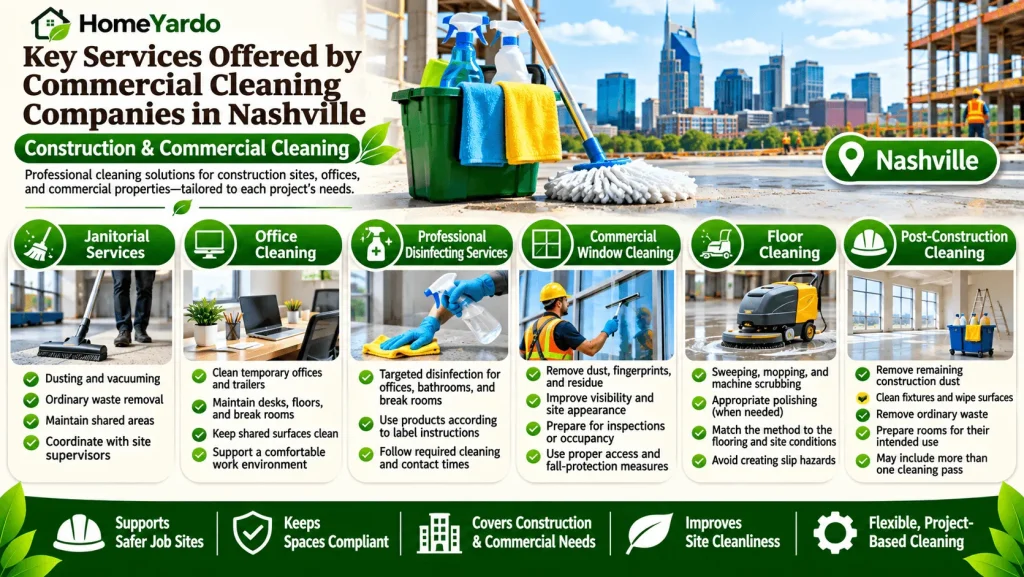
Companies serving Nashville’s construction and commercial sectors provide different cleaning solutions depending on the building’s condition, the work being performed, and the project’s stage.
Understanding these services helps contractors identify the right cleaning support for their particular needs.
Janitorial Services
Routine janitorial services may include dusting, appropriate vacuuming, ordinary waste removal, and maintaining shared areas.
On active construction sites, these tasks must be coordinated with supervisors to avoid interfering with machinery, electrical installations, or ongoing building work.
Office Cleaning
Construction projects often have temporary offices, meeting rooms, and administrative trailers.
These spaces require regular cleaning because employees frequently move between outdoor work areas and indoor facilities.
Maintaining clean desks, floors, break rooms, and shared surfaces helps create a more comfortable environment for administrative personnel and site managers.
Professional Disinfecting Services
Shared bathrooms, offices, and break rooms may benefit from targeted disinfecting procedures.
Commercial cleaning providers such as Coverall PCs, Jan-Pro, and Anago Cleaning Systems are associated with commercial cleaning services, although individual service offerings can vary by location.
Disinfecting products should be used according to their labels, including any required cleaning preparation and contact time.
Commercial Window Cleaning
Construction work frequently leaves dust, fingerprints, adhesive residue, and other materials on windows.
Professional window cleaning improves visibility and helps prepare the property for inspections or occupancy.
Cleaning elevated windows requires suitable access equipment, trained personnel, and appropriate fall-protection measures.
Floor Cleaning
Commercial floor cleaning may include sweeping, mopping, machine scrubbing, and appropriate polishing.
The correct method depends on the flooring material, surrounding equipment, and the conditions of the worksite.
Cleaning teams should avoid creating additional slip hazards while performing these tasks.
Post-Construction Cleaning
Post-construction cleaning takes place when major building work is nearing completion.
It commonly includes removing remaining construction dust, cleaning fixtures, wiping surfaces, removing ordinary waste, and preparing rooms for their intended use.
Some projects require more than one cleaning pass, particularly when finishing work continues after the initial cleanup.
How Commercial Cleaning Supports OSHA Construction Safety Requirements
Construction housekeeping is directly addressed under OSHA regulation 29 CFR 1926.25.
The standard requires construction sites to keep certain work areas clear of debris and establishes requirements for waste handling.
A site cleaning program should account for the following:
| Construction hazard | Recommended housekeeping practice |
|---|---|
| Loose construction debris | Keep passageways, stairs, and work areas clear |
| Scrap wood with protruding nails | Remove or make the materials safe |
| Combustible waste | Remove at regular intervals |
| Oily or contaminated rags | Store in appropriate covered containers |
| Dust from construction activities | Use suitable exposure controls and cleaning methods |
| Blocked access routes | Clear unnecessary materials promptly |
These measures help support safer work environments.
However, cleaning is only one component of construction safety. Contractors must also address equipment operation, electrical hazards, fall protection, worker training, and other site-specific risks.
Construction Dust Control and Worker Health
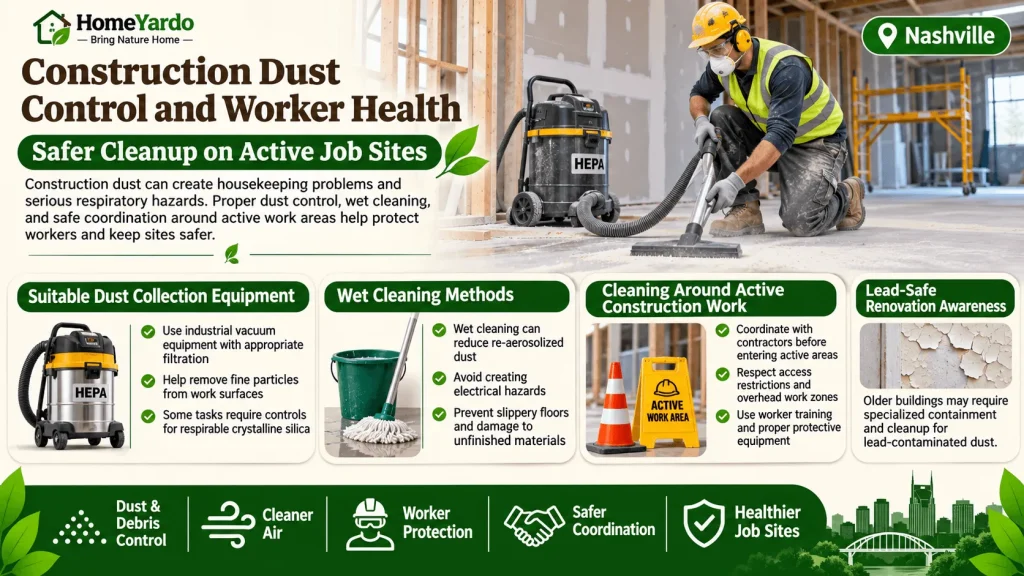
Dust generated by construction activities can create housekeeping problems and, depending on the material, serious respiratory hazards.
Wood cutting, drywall sanding, concrete drilling, and demolition work may produce different types of airborne particles.
Some require specialized controls rather than ordinary sweeping.
Using Suitable Dust Collection Equipment
Industrial vacuum equipment with appropriate filtration can help remove fine particles from work surfaces.
For certain activities involving respirable crystalline silica, OSHA requires specific controls, including restrictions on cleaning methods that may increase airborne exposure.
Wet Cleaning Methods
Wet cleaning can help prevent some particles from becoming airborne again.
However, water should not be introduced where it may create electrical hazards, damage unfinished materials, or make floors unsafe.
Cleaning Around Active Construction Work
Cleaning personnel should coordinate with contractors before entering areas where machinery, overhead work, or hazardous material handling is taking place.
Site access restrictions, worker training, and appropriate protective equipment remain important.
When renovating older buildings, contractors should also understand applicable lead certification requirements, because lead-contaminated dust may require specialized containment and cleanup procedures.
Technology Is Changing How Sites Get Cleaned
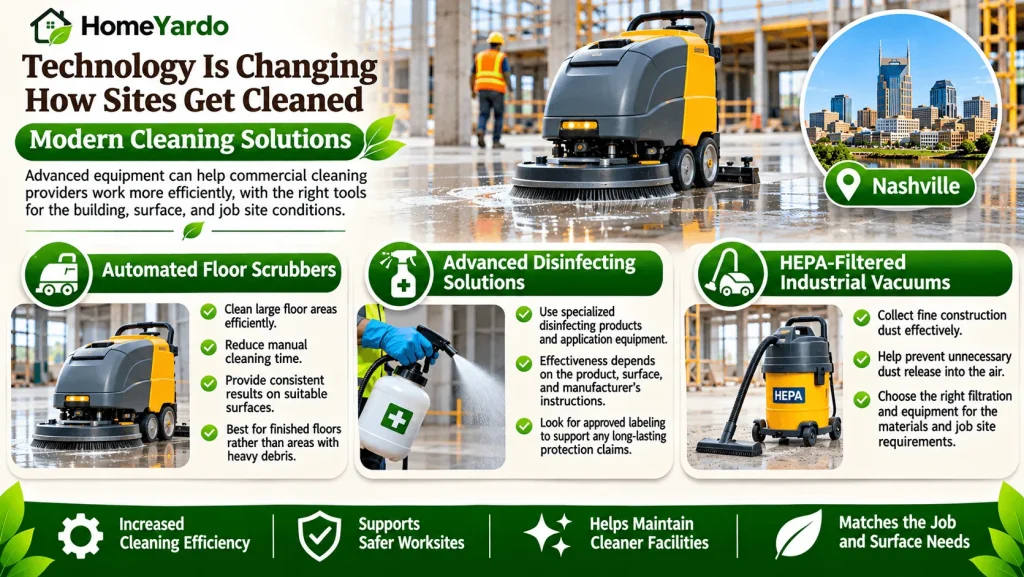
Modern equipment is helping commercial cleaning providers complete certain tasks more efficiently.
However, the benefits depend on selecting equipment that is appropriate for the building, the work surface, and the hazards involved.
Automated Floor Scrubbers
Automated floor scrubbers can clean extensive commercial flooring areas efficiently.
They may help reduce manual cleaning time while maintaining consistent results on suitable surfaces.
They are generally better suited to appropriate finished floors than areas containing large debris or unfinished construction materials.
Advanced Disinfecting Solutions
Commercial facilities may use specialized disinfecting products and application equipment in shared spaces.
Product effectiveness depends on the formulation, surface, targeted microorganisms, and manufacturer’s application instructions.
Claims about long-lasting antimicrobial protection should be supported by the product’s approved labeling rather than assumed.
HEPA-Filtered Industrial Vacuums
Appropriately selected industrial vacuums can help collect fine construction dust without unnecessarily releasing it into the surrounding environment.
Cleaning providers should choose filtration and collection equipment based on the materials involved and applicable occupational safety requirements.
The Case for Green Cleaning Products
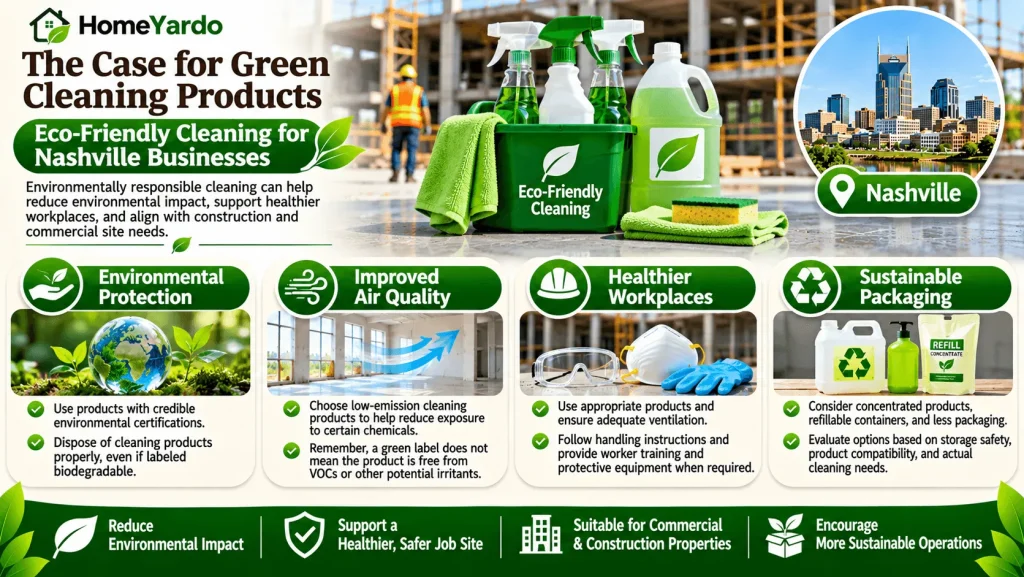
Many Nashville businesses are interested in environmentally responsible cleaning practices.
For construction and commercial properties, these practices can include careful chemical selection, waste reduction, and suitable product handling.
However, environmentally friendly marketing claims should be assessed carefully.
Environmental Protection
Selecting suitable products with credible environmental certifications may help reduce some environmental impacts.
Proper disposal remains necessary, even when products are marketed as biodegradable.
Improved Air Quality
Some low-emission cleaning products can help reduce indoor exposure to certain cleaning-related chemicals.
A green label alone does not guarantee that a product is free from volatile organic compounds or other potential irritants.
Healthier Workplaces
Using appropriate cleaning products, ensuring adequate ventilation, and following handling instructions can reduce unnecessary chemical exposure.
Workers should receive suitable training and protective equipment when required.
Sustainable Packaging
Concentrated cleaning solutions, refillable containers, and reduced packaging may help limit waste.
Businesses should evaluate these options alongside storage safety, product compatibility, and actual cleaning requirements.
Specialized Cleaning for Different Facility Types
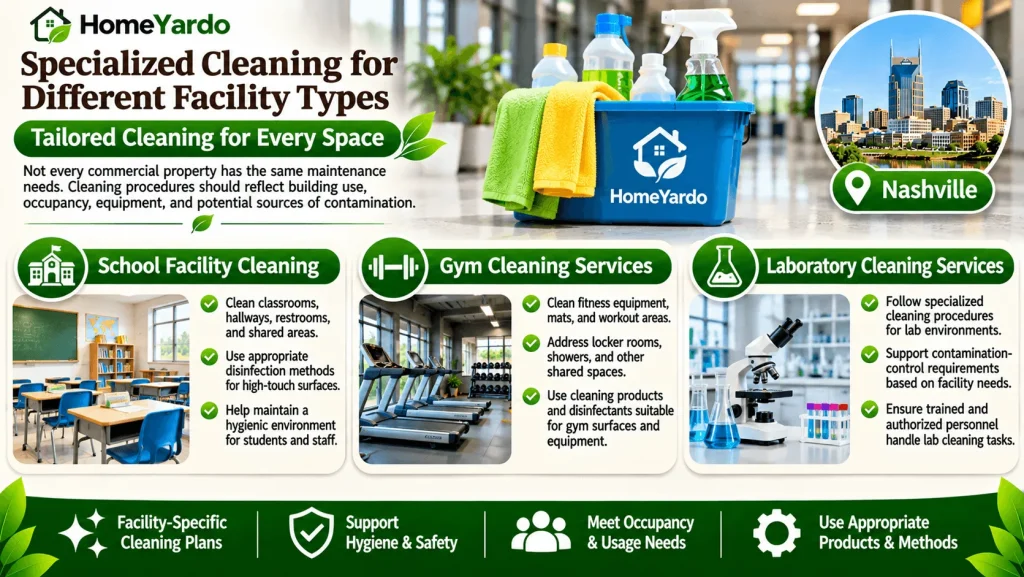
Not every commercial property has the same maintenance requirements.
Cleaning procedures should reflect building use, occupancy, equipment, and potential sources of contamination.
School Facility Cleaning
Schools require regular attention to classrooms, hallways, restrooms, and shared facilities.
Routine cleaning and appropriate disinfection help maintain hygienic environments for students and staff.
Gym Cleaning Services
Fitness centers need cleaning schedules that address equipment, mats, locker rooms, and frequently touched surfaces.
Cleaning products and disinfectants should be appropriate for the surfaces involved.
Laboratory Cleaning Services
Laboratories may have specialized contamination-control requirements.
Cleaning teams should not handle hazardous substances, sensitive laboratory equipment, or regulated waste without the appropriate training and authorization.
How Often Should Commercial Construction Sites Be Cleaned?
Cleaning frequency should reflect the type of construction activity, amount of debris produced, site occupancy, and potential exposure hazards.
Rather than relying entirely on weekly or monthly cleaning appointments, contractors should organize housekeeping around actual work conditions.
| Construction stage | Main cleaning priority |
|---|---|
| Demolition | Debris removal, dust containment, and appropriate hazard controls |
| Active construction | Walkways, ordinary waste, and shared areas |
| After dust-producing tasks | Suitable dust collection and cleanup |
| Before inspections | Clear access routes and remove unnecessary debris |
| Final construction stages | Detailed surface and fixture cleaning |
| Before occupancy | Final cleaning and inspection of completed spaces |
Immediate cleanup may be required when materials create hazards, regardless of the regular cleaning schedule.
Cleaning schedules should also be coordinated with project planning. HomeYardo’s home remodeling planning guide provides related information about organizing renovation stages and responsibilities.
Choosing the Right Commercial Cleaning Company in Nashville
Selecting a cleaning company deserves the same attention contractors give to other subcontractor decisions.
The right provider should understand commercial cleaning requirements, construction hazards, and the importance of coordinating with site supervisors.
Experience With Construction Environments
Ask whether the company has previously handled active construction sites, commercial renovation projects, or final post-construction cleaning.
Experience with general office cleaning does not necessarily establish competence in construction-related hazards.
Certifications and Safety Training
Check the provider’s relevant training, insurance documentation, and safety procedures.
Industry certifications may provide useful information, but they should be evaluated alongside actual training and experience.
Customer Reviews and References
Independent feedback can help assess a provider’s reliability and communication.
References from comparable construction projects are particularly useful when evaluating specialized cleaning services.
Service Range
Determine whether the company offers routine janitorial work, construction debris removal, floor cleaning, window cleaning, and final project cleanup.
Clearly identify any tasks excluded from the contract.
Eco-Friendly Practices
Ask about cleaning products, waste management, and environmental certifications.
Specific product information is more reliable than broad environmental marketing claims.
Questions to Ask Before Hiring Commercial Cleaning Services
Before committing to a cleaning contract, project managers should establish exactly what work the provider will perform.
Useful questions include:
- Do you have experience cleaning active construction sites?
- Are your employees trained to recognize common jobsite hazards?
- What methods do you use to control construction dust?
- Does your service include ordinary debris removal?
- How do you handle materials requiring specialist cleanup?
- Can cleaning be scheduled around other subcontractors?
- What insurance and safety documentation can you provide?
- Is post-construction cleaning included in your estimate?
Written answers help contractors compare service proposals and reduce confusion once work begins.
Final Takeaway: Cleaning as a Safety Investment, Not an Expense
Treating commercial cleaning as part of a construction safety program, rather than a cosmetic task completed at the end of a project, helps contractors maintain more organized and manageable worksites.
For Nashville construction companies, regular cleaning supports clearer access routes, better waste management, appropriate dust-control practices, and improved coordination between workers.
The strongest results come from combining suitable cleaning procedures with trained personnel, site supervision, and clear safety responsibilities.
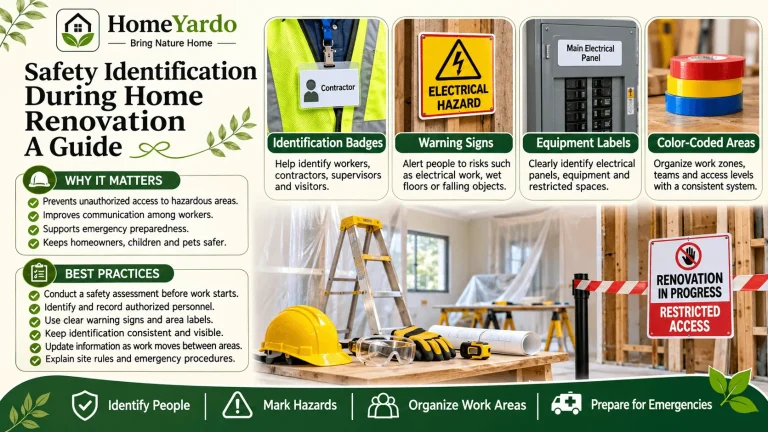
Contractors developing a broader safety program can also review HomeYardo’s guide to safety identification during home renovation for related information about warning signs, access restrictions, and worksite organization.
FAQ’s
Commercial cleaning Nashville refers to professional cleaning services for commercial buildings, offices, construction properties, and other workplaces in Nashville, Tennessee. Available services may include janitorial maintenance, floor care, sanitation, and construction cleanup.
Commercial cleaning helps remove debris, keep access routes clear, manage dust accumulation, and support routine housekeeping requirements. These measures reduce certain avoidable hazards associated with poorly maintained work areas.
Yes. OSHA regulation 29 CFR 1926.25 establishes housekeeping requirements for construction sites, including clearing debris from work areas, passageways, and stairs and removing combustible waste at regular intervals.
Cleaning frequency depends on the work being performed and the hazards present. Some areas require attention throughout the day, while detailed cleaning may be scheduled after specific construction stages or before final inspections.
Post-construction cleaning commonly includes removing remaining ordinary debris, collecting dust, cleaning fixtures, wiping surfaces, and preparing finished areas for inspection or occupancy. The exact scope depends on the agreement.
Appropriate dust-control and cleaning methods can help reduce particle accumulation and some airborne exposures. However, hazardous construction dust requires suitable engineering controls and compliance with applicable safety standards.
Costs vary according to building size, cleaning frequency, project conditions, service requirements, and specialized equipment. Contractors should request written estimates that clearly describe the work included.
Some environmentally certified products are suitable for commercial cleaning, but their safety depends on ingredients, application methods, surfaces, and working conditions. All products should be used according to their instructions.
Contractors should evaluate relevant construction experience, insurance, employee training, equipment, service scope, and references. Providers should also be able to coordinate their work with active construction operations.
Not exactly. Janitorial cleaning generally focuses on recurring maintenance tasks, while commercial cleaning can include more specialized services such as post-construction cleanup, floor restoration, and facility-specific sanitation.