
10-Yard, 15-Yard, or 20-Yard Dumpster: Which One Gives You Enough Room?
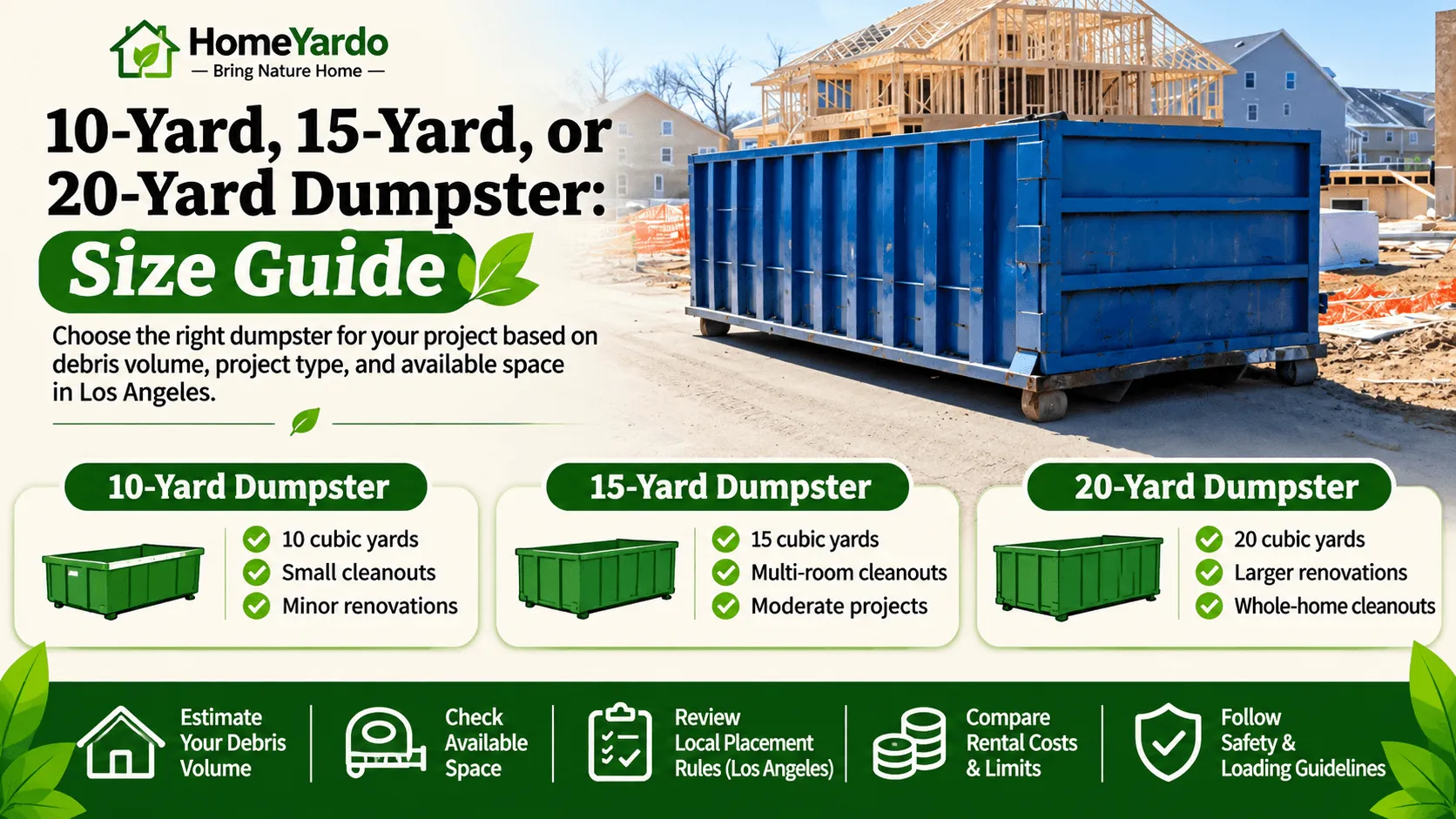
Choosing a 10-yard, 15-yard, or 20-yard dumpster depends on how much debris your project will generate, the type of materials being removed, and the space available for delivery. A 10-yard container generally suits smaller cleanouts, a 15-yard option handles moderate projects, and a 20-yard dumpster provides more room for larger renovations.
Los Angeles is one of California’s largest cities, with a diverse mix of residential neighborhoods, apartment complexes, commercial districts, and construction developments. From small apartment cleanouts to major home renovations and construction work, projects across the city can generate different amounts of waste.
Choosing the right dumpster size can make a cleanup or renovation project much easier.
A container that is too small may fill up before the work is finished, while an oversized one can take up unnecessary space and increase rental costs. The best choice depends on the amount and type of debris, the available placement area, and how long the project will take.
Limited driveway space, busy residential streets, and varying property layouts can also affect where a dumpster can be placed.
Before arranging a rental, reviewing a dumpster size guide in Los Angeles can help you narrow down the options. A 10-yard dumpster may suit smaller cleanups, a 15-yard container offers additional capacity, and a 20-yard dumpster is generally better for larger projects.
10-Yard vs. 15-Yard vs. 20-Yard Dumpster: Quick Comparison
Each dumpster size serves a different purpose. Understanding the capacity differences can help you avoid ordering a container that is too small or unnecessarily large.
| Dumpster Size | Capacity | Common Projects | Best Suited For |
|---|---|---|---|
| 10-yard | 10 cubic yards | Small garage cleanouts, minor bathroom renovations | Smaller projects with limited debris |
| 15-yard | 15 cubic yards | Multi-room cleanouts, moderate flooring replacement | Medium-sized projects |
| 20-yard | 20 cubic yards | Larger renovations, whole-home cleanouts | Projects generating substantial debris |
A cubic yard represents a volume of 27 cubic feet. These measurements describe how much space a container holds, not how much weight it can safely carry.
Actual container dimensions, loading limits, and permitted materials vary between rental companies.
When a 10-Yard Dumpster Is Enough
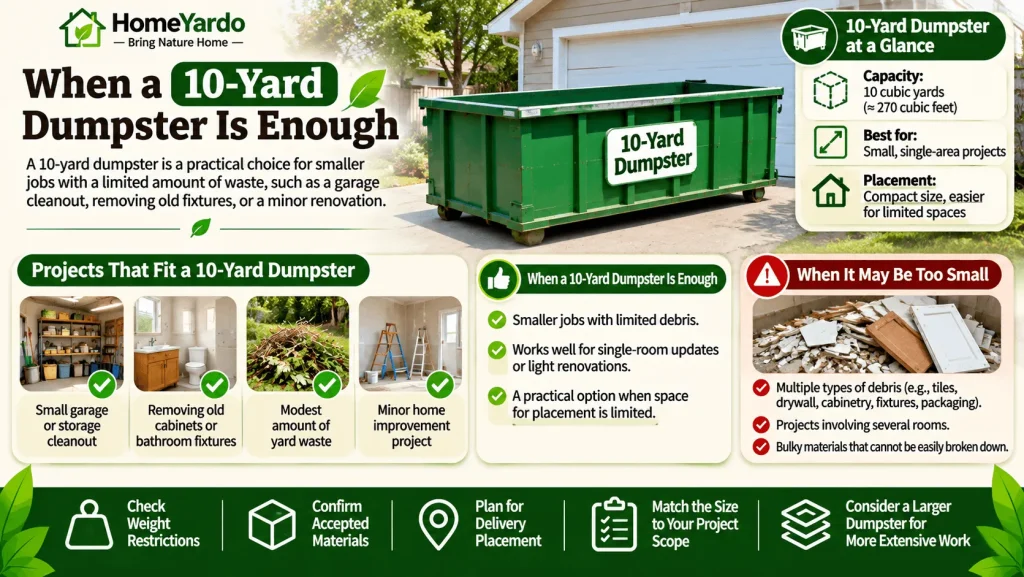
A 10-yard dumpster is a practical option for smaller jobs that produce a limited amount of waste. It can work well when clearing out a garage, removing old household items, or handling a small bathroom renovation.
Its compact size can also make placement easier on properties with limited available space. However, its capacity may not be sufficient for large furniture, extensive remodeling debris, or bulky construction materials.
Projects That Fit a 10-Yard Dumpster
Consider this size when:
- Cleaning out a small garage or storage area.
- Removing old cabinets or bathroom fixtures.
- Disposing of a modest amount of accepted yard waste.
- Completing a minor home improvement project.
Check the rental provider’s weight restrictions before booking, especially if the waste includes heavy materials.
When a 10-Yard Dumpster May Be Too Small
A smaller container can become restrictive when several types of debris are combined.
For example, a bathroom renovation might produce old tiles, drywall, cabinetry, fixtures, and packaging. Although the room itself is relatively small, the materials removed during demolition may occupy more space than expected.
If the project involves several rooms or bulky materials that cannot be safely broken down, consider whether a larger container would be more practical.
When to Choose a 15-Yard Dumpster
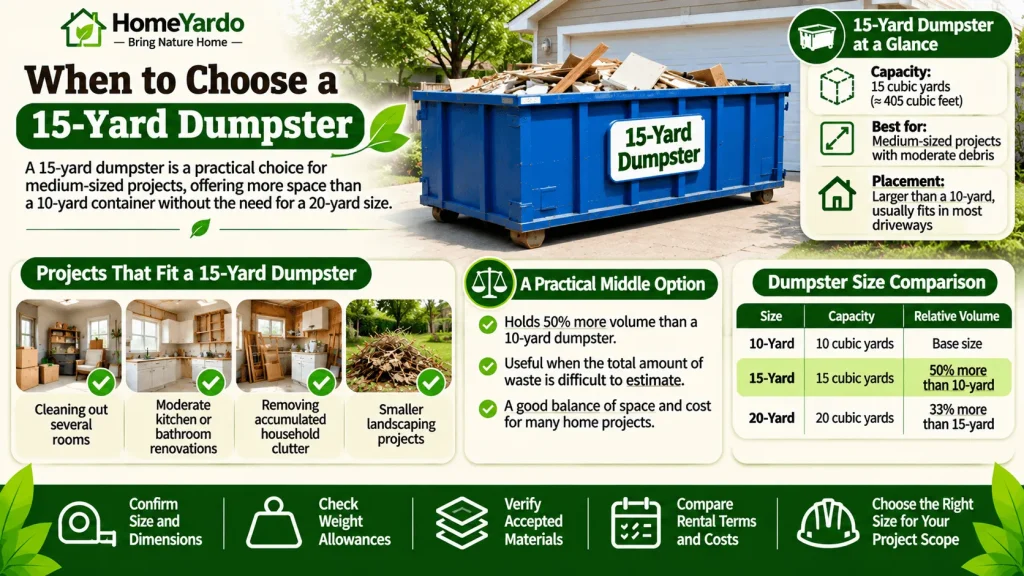
A 15-yard dumpster provides more room than a 10-yard container without moving up to the largest option in this comparison. It can be suitable for medium-sized projects where several rooms need attention or a renovation generates a moderate amount of debris.
For example, replacing flooring in multiple rooms may produce more waste than expected. Old flooring, packaging, damaged fixtures, and other materials can quickly occupy available space.
Projects That Fit a 15-Yard Dumpster
A 15-yard dumpster may be a good fit for:
- Cleaning out several rooms.
- Moderate kitchen or bathroom renovations.
- Removing accumulated household clutter.
- Handling debris from smaller landscaping projects.
It offers a useful middle ground when a 10-yard container seems too restrictive but a 20-yard dumpster may be unnecessary.
Why a 15-Yard Dumpster Can Be a Practical Middle Option
A 15-yard container holds 50% more volume than a 10-yard dumpster. That extra capacity can be useful when the total amount of waste is difficult to estimate.
However, the additional space does not automatically make it suitable for heavier debris.
Ask the rental company about weight allowances, available container dimensions, and whether the materials from your project are permitted.
When a 20-Yard Dumpster Makes More Sense
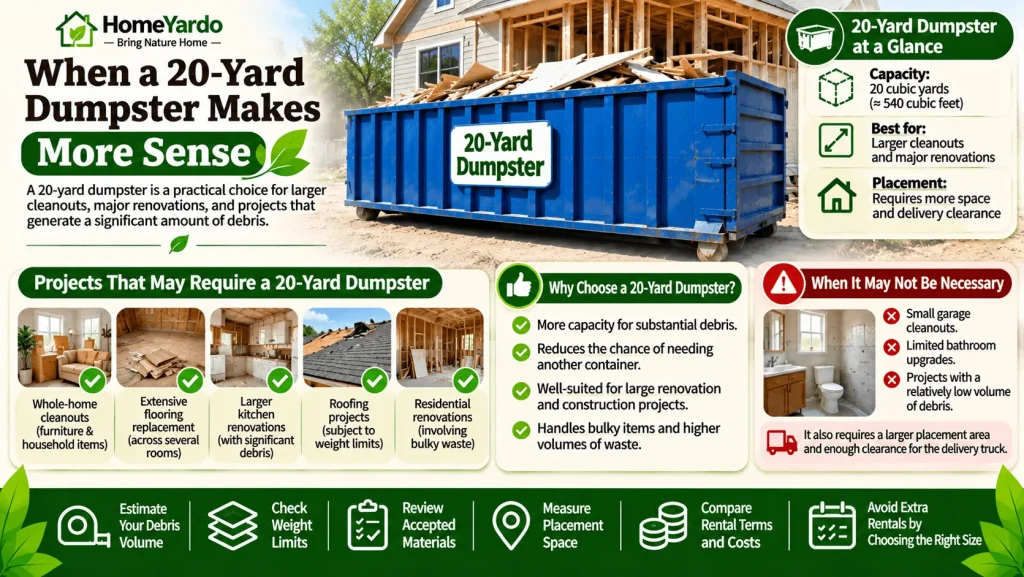
A 20-yard dumpster is generally suited to larger cleanouts, substantial renovations, and projects that generate considerable debris. Its additional capacity can reduce the likelihood of needing another container during the job.
It may be appropriate for whole-home decluttering, larger flooring projects, roof replacement, or construction work involving significant waste.
However, capacity is not the only consideration. Heavy materials such as concrete, soil, and roofing debris may reach the permitted weight limit before the container is full.
Always confirm the accepted materials and weight allowance with the rental provider.
Projects That May Require a 20-Yard Dumpster
A larger container may be appropriate for:
- Whole-home cleanouts involving furniture and household belongings.
- Extensive flooring replacement across several rooms.
- Larger kitchen renovations with substantial demolition debris.
- Roofing projects, subject to material and weight restrictions.
- Residential renovation projects involving bulky waste.
When a 20-Yard Dumpster May Not Be Necessary
More capacity is not always better.
A 20-yard container might be excessive for a small garage cleanout or a limited bathroom upgrade. It can also require a larger placement area and sufficient clearance for the delivery truck.
Before choosing this size, compare the estimated waste volume with the actual container dimensions and the quoted rental terms.
How to Estimate the Dumpster Size Your Project Needs
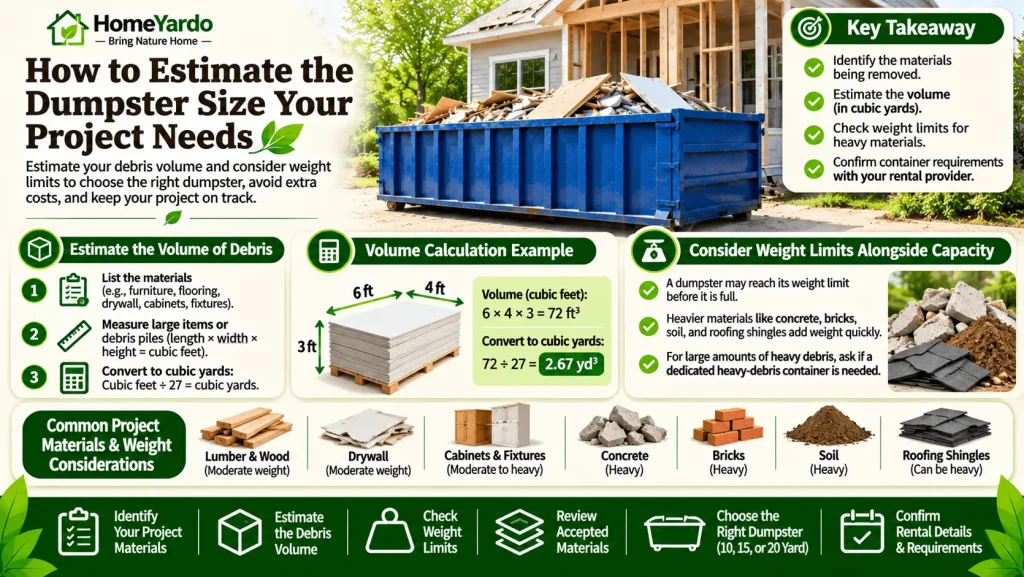
Estimating debris before ordering can reduce unnecessary rental expenses and prevent interruptions during cleanup.
A useful starting point is to identify the materials being removed rather than judging the project only by the number of rooms involved.
Estimate the Volume of Debris
List the major items your project will generate.
For household cleanouts, consider furniture, boxes, shelving, and other bulky belongings. For renovation work, account for flooring, drywall, cabinets, fixtures, packaging, and construction offcuts.
Measure large debris piles or items where practical. An approximate volume in cubic feet can be calculated by multiplying length, width, and height. Divide that result by 27 to convert it into cubic yards.
This calculation is only an estimate. Irregular items, gaps between materials, and loading restrictions can affect usable container space.
Consider Weight Limits Alongside Capacity
A dumpster may reach its allowable weight before reaching the fill line.
Concrete, bricks, soil, roofing shingles, and similar materials can be particularly heavy.
If your project includes substantial quantities of these materials, ask whether the rental provider requires a dedicated heavy-debris container.
Homeowners planning larger renovations can also review how to manage household waste during home improvements to understand sorting, recycling, and disposal arrangements.
Consider Placement and Project Requirements
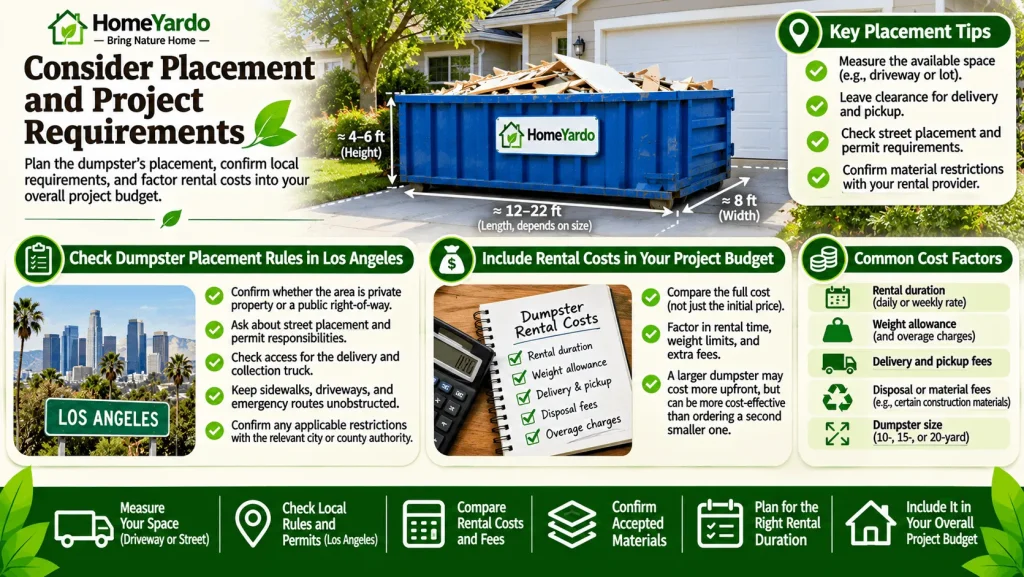
Before choosing a container, estimate the volume of debris and identify where the dumpster will sit. Measure the available driveway or designated placement area, and leave enough clearance for delivery and pickup.
If you plan to place the container on a public street, check local placement requirements before scheduling delivery. You should also ask the provider whether specific materials require separate disposal arrangements.
Check Dumpster Placement Rules in Los Angeles
Placement requirements depend on the property’s location and whether the dumpster will occupy private property or a public right-of-way.
In the City of Los Angeles, placing construction materials or equipment in certain public spaces may require authorization under applicable street-use regulations.
Before scheduling delivery:
- Confirm whether the proposed placement area is private or public property.
- Ask the rental provider about street placement and permit responsibilities.
- Check access requirements for the delivery and collection vehicle.
- Keep sidewalks, driveways, and emergency access routes unobstructed.
- Confirm any applicable restrictions with the relevant city or county authority.
A property outside Los Angeles city limits may be subject to different local requirements.
Include Dumpster Rental Costs in Your Project Budget
The cheapest initial rental quote may not represent the final cost.
Compare rental duration, weight allowances, delivery and pickup charges, additional disposal fees, and charges for exceeding the agreed limits.
A larger container may cost more upfront, but a smaller one can become expensive if the project requires an additional rental.
For broader budgeting and renovation planning, HomeYardo’s home remodeling guide explains how debris removal fits into an overall home improvement budget.
Safety Tips When Using a Rental Dumpster
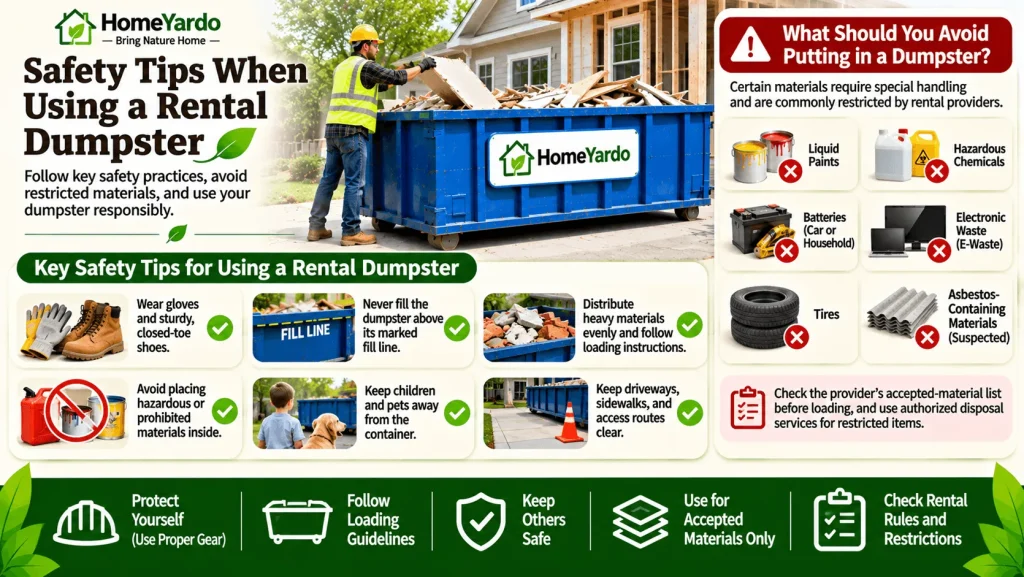
Safe loading protects homeowners, contractors, and waste collection workers. It also reduces the risk of problems during pickup.
Follow these basic precautions:
- Wear gloves and sturdy, closed-toe shoes when handling debris.
- Never fill the dumpster above its marked fill line.
- Distribute heavy materials evenly and follow the provider’s loading instructions.
- Avoid placing hazardous or prohibited materials inside.
- Keep children and pets away from the container.
- Keep driveways, sidewalks, and access routes clear.
What Should You Avoid Putting in a Dumpster?
Rental providers commonly restrict certain materials, particularly those that require special handling or disposal.
Examples may include hazardous chemicals, batteries, liquid paints, certain electronic waste, tires, and suspected asbestos-containing materials.
Do not assume that every construction material can be mixed into the same container.
Check the provider’s accepted-material list before loading, and use authorized disposal services for materials that cannot be included.
Final Takeaway: Which Dumpster Size Should You Choose?
The right dumpster depends on the actual cleanup workload rather than simply choosing the largest available container.
A 10-yard dumpster is generally appropriate for smaller cleanouts and minor renovations. A 15-yard dumpster offers additional capacity for moderate projects, while a 20-yard container is better suited to larger cleanups and substantial remodeling debris.
For Los Angeles homeowners, placement restrictions, available driveway space, accepted waste materials, and rental weight limits deserve just as much attention as container capacity.
Before booking, estimate your debris, compare the provider’s specifications, and confirm the full rental terms.
FAQ’s
A 10-yard dumpster may be enough for a minor bathroom renovation, small garage cleanup, or limited household project. Larger renovations involving several rooms or bulky debris may require additional capacity.
Choose a 10-yard dumpster for a relatively small quantity of waste. A 15-yard container provides more room for multi-room cleanouts and moderate renovations. Compare estimated debris volume, weight restrictions, and rental costs before deciding.
A 20-yard dumpster holds five cubic yards more than a 15-yard container, approximately 33% additional volume. It may suit larger renovation projects, although physical dimensions and permitted weight vary by provider.
A 20-yard dumpster holds 20 cubic yards of material by volume, equivalent to 540 cubic feet. The actual amount of debris it can carry depends on its weight limit, the materials involved, and loading restrictions.
Some companies accept concrete, roofing shingles, and other heavy construction materials, but special weight restrictions or dedicated containers may apply. Confirm the requirements before loading.
A permit or other authorization may be required when a dumpster occupies a public street or another regulated public right-of-way. Requirements depend on the jurisdiction and placement conditions. Check with the appropriate local authority before delivery.
Not necessarily in terms of the total project cost. Larger containers often have higher initial rental prices, but a smaller dumpster can generate additional expenses if it must be exchanged or rented again. Compare the complete rental terms.
Identify your project materials, estimate their combined volume, account for heavy debris, and measure the available placement area. Share those details with the rental provider to confirm the most suitable size and weight allowance.