What Actually Keeps Pests Out of Your Home for Good?
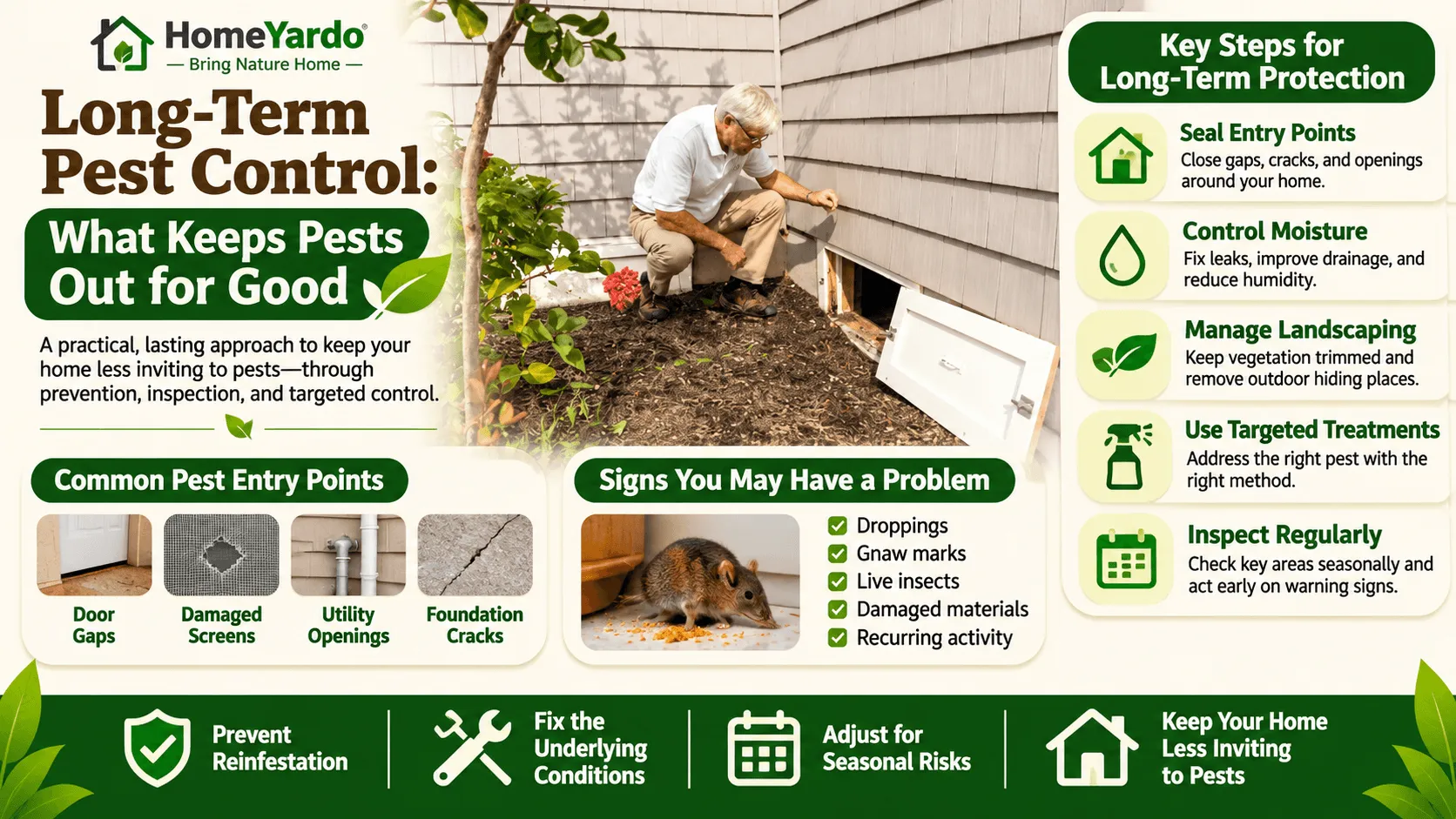
Long-term pest control starts with understanding why pests enter your home, where they find shelter, and what allows them to return. Sealing entry points, controlling moisture, removing food sources, and using targeted treatments can reduce recurring infestations more effectively than relying on occasional sprays alone.
You can clean every counter, seal every snack, and still end up hearing scratching inside a wall or spotting ants near the kitchen sink. It is frustrating, especially when the problem returns after you thought you had handled it.
Pest control often gets treated like a quick fix. In reality, lasting results usually come from understanding how pests move, feed, breed, and nest around your property.
If you want fewer repeat infestations, you need a plan that combines prevention, inspection, and targeted treatment instead of relying on random products from the hardware store.
Start With Entry Points, Not the Bugs You Can See
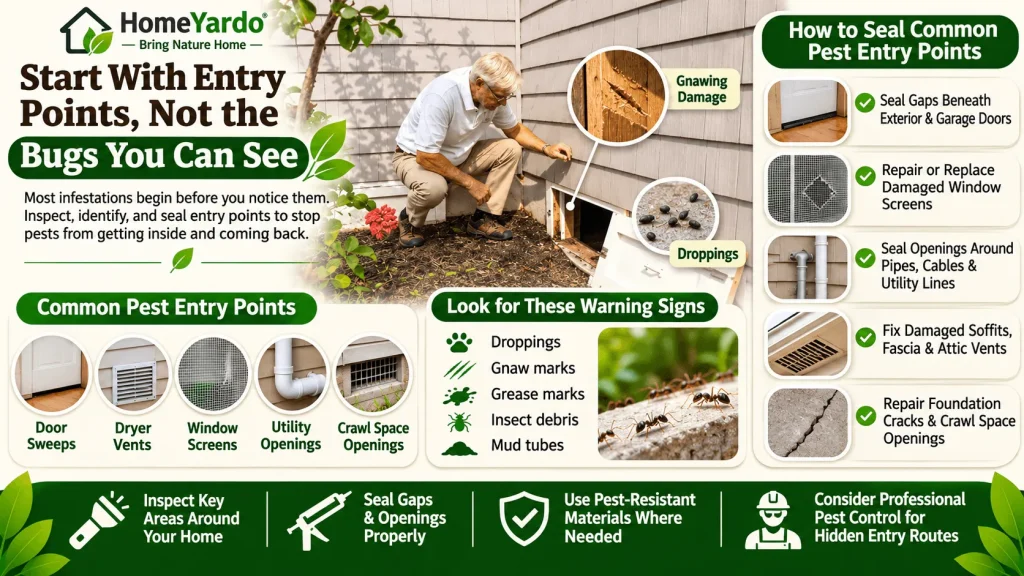
Most infestations begin long before you notice visible activity. Rodents can squeeze through surprisingly small gaps, while insects may enter through utility openings, damaged weatherstripping, attic vents, and foundation cracks.
If you only react to the pests you can see, you may miss the larger problem developing behind walls, beneath floors, or around the exterior.
Walk around your home during daylight and inspect accessible areas with a flashlight. Check door sweeps, dryer vents, crawl space openings, window screens, and places where plumbing or electrical lines enter the structure.
Look for droppings, grease marks, gnawing damage, insect debris, or mud tubes. These signs can help identify where pests are entering or sheltering.
How to Seal Common Pest Entry Points
Different openings require different repairs. Small gaps around stationary frames may be suitable for exterior-grade sealant, while openings exposed to rodent activity often need more durable, pest-resistant materials.
Pay particular attention to:
- Gaps beneath exterior doors and garage doors.
- Cracked or damaged window screens.
- Openings around pipes, cables, and utility lines.
- Damaged soffits, fascia, and attic vents.
- Foundation cracks and accessible crawl space openings.
Avoid blocking ventilation, drainage, or equipment clearances during repairs. Existing vent openings may need appropriate pest-resistant screening rather than being sealed completely.
Garage doors are easy to overlook. Worn bottom seals and damaged side weatherstripping can create accessible gaps even when the door appears closed. HomeYardo’s guide to garage door weather stripping explains how these seals work and when replacement may be necessary.
This is where professional pest control solutions often make a real difference. A trained technician may recognize hidden entry routes and sheltering areas that homeowners miss, particularly around rooflines, wall voids, and moisture-prone spaces.
Moisture Control Does More Work Than Most Sprays
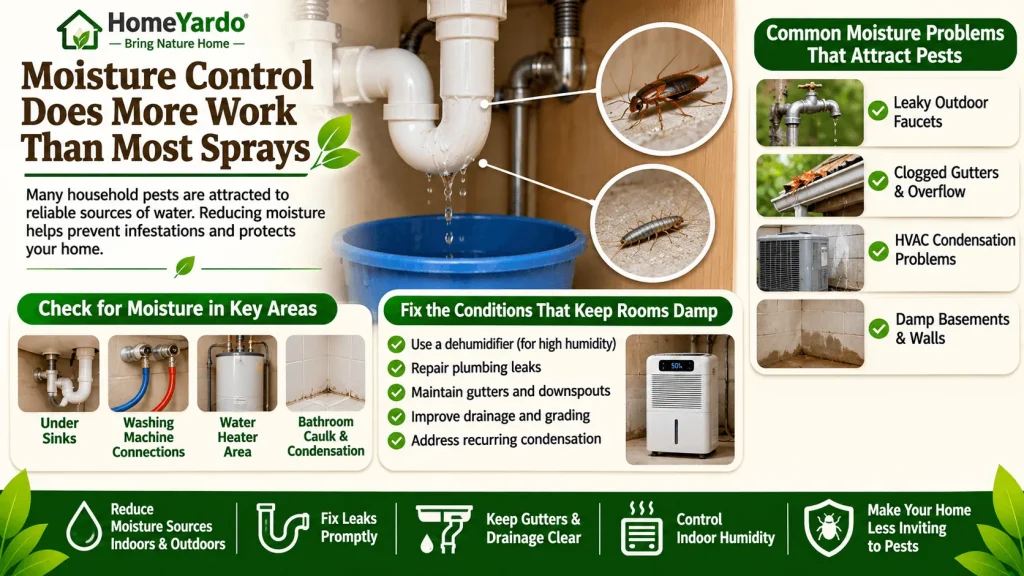
Many household pests are attracted to reliable sources of water. Cockroaches, silverfish, termites, and certain other pests can thrive where moisture remains available.
That means leaky outdoor faucets, clogged gutters, dripping pipes, HVAC condensation problems, and damp basements can contribute to pest activity even when the home looks clean.
Check beneath sinks for slow leaks. Inspect the washing machine connections and the area around your water heater. In bathrooms, deteriorating caulk, soft drywall, and recurring condensation may indicate moisture problems that deserve attention.
Outside, poor grading or overflowing gutters can direct water toward the foundation. This may create favorable conditions for moisture-dependent pests and contribute to deterioration of building materials.
Fix the Conditions That Keep Rooms Damp
A dehumidifier may help control excessive humidity in a basement or crawl space, provided the underlying water problem is also addressed.
Repair plumbing leaks, maintain drainage systems, and make sure gutters and downspouts direct water away from the building.
If rainwater repeatedly collects near the house, HomeYardo’s guide on how to fix yard drainage explains common drainage problems and possible corrections.
A pest problem that keeps returning to the same damp room deserves more than another application of insect spray. Investigate the moisture source before deciding what treatment is needed.
Landscaping Can Either Protect Your Home or Support an Infestation
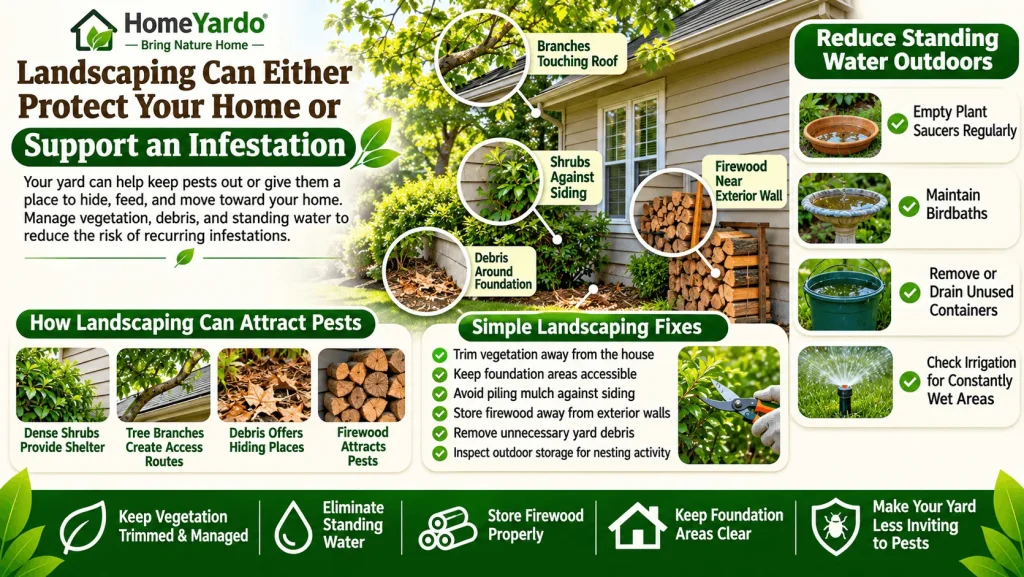
Your yard is part of your pest management system, even when the problem appears indoors.
Dense shrubs pressing against siding, tree branches touching the roof, thick debris around foundations, and firewood stacked beside exterior walls can provide shelter or convenient routes toward the house.
Trim vegetation where it contacts the structure. Keep foundation areas accessible for inspection and avoid piling mulch directly against vulnerable siding or wooden materials.
Store firewood away from exterior walls and off the ground when practical. Remove unnecessary debris and inspect outdoor storage areas for nesting activity.
Reduce Standing Water and Outdoor Hiding Places
Mosquitoes can breed in water collected by plant saucers, buckets, neglected birdbaths, and other containers.
Empty unnecessary standing water regularly. Maintain water features appropriately and check that irrigation equipment is not creating permanently wet areas around the foundation.
You do not need to remove every shrub or insect from your garden. The goal is to reduce conditions that encourage pests to settle near the building.
For a broader approach to the outdoor environment, see HomeYardo’s guide on preventing pests around the home, yard, and garden.
Store-Bought Treatments Often Miss the Real Target Zone
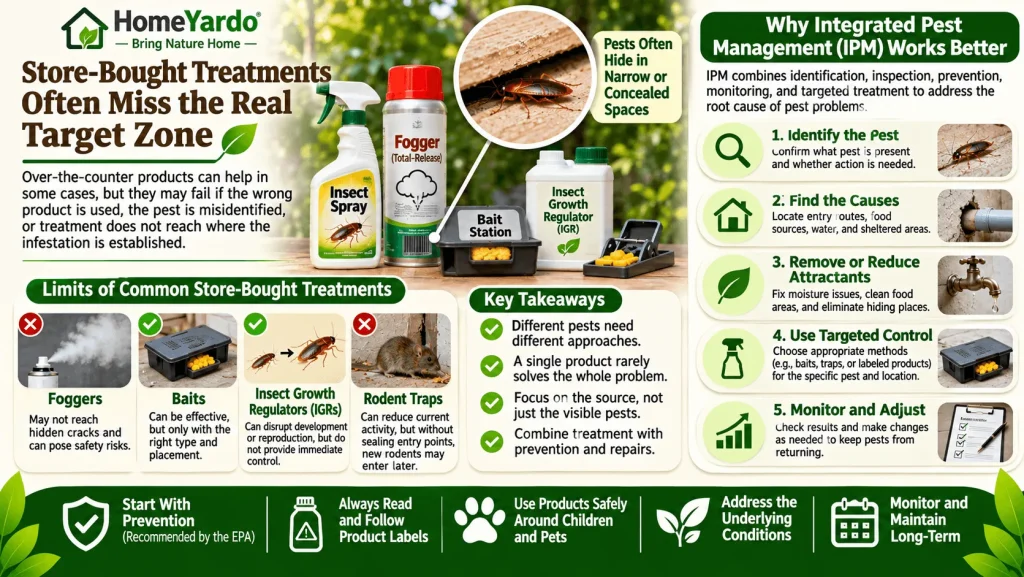
Over-the-counter pest products can be useful in certain limited situations. However, they may fail when the wrong product is used, the pest is incorrectly identified, or treatment never reaches the area where the infestation is established.
Total-release foggers, for example, may not reach the narrow cracks and concealed spaces where cockroaches hide. They can also create unnecessary exposure and safety risks when used incorrectly.
Different pest problems require different management approaches.
Baits depend on correct selection and placement. Insect growth regulators can interfere with development or reproduction in susceptible insects, but they do not necessarily provide immediate control.
Rodent management usually requires more than setting traps. Without finding and correcting access points, another animal may enter later.
Why Integrated Pest Management Works Better
Integrated Pest Management, or IPM, is an approach that combines pest identification, inspection, prevention, monitoring, and appropriate treatment.
Rather than treating every insect sighting with a spray, IPM focuses on identifying the conditions responsible for the pest problem and selecting methods suited to the pest and location.
The process generally involves:
- Identifying the pest and confirming whether action is necessary.
- Finding entry routes, food sources, water, and sheltered areas.
- Removing or reducing conditions that support the infestation.
- Selecting targeted control methods when required.
- Monitoring activity to determine whether the approach is working.
The U.S. Environmental Protection Agency recommends prevention as a starting point and emphasizes following pesticide labels and appropriate safety practices. US EPA+1
Never assume a product is safe around children or pets simply because it is described as natural. Use only products labeled for the intended pest and application site, and follow the full instructions.
Timing Matters More Than People Expect
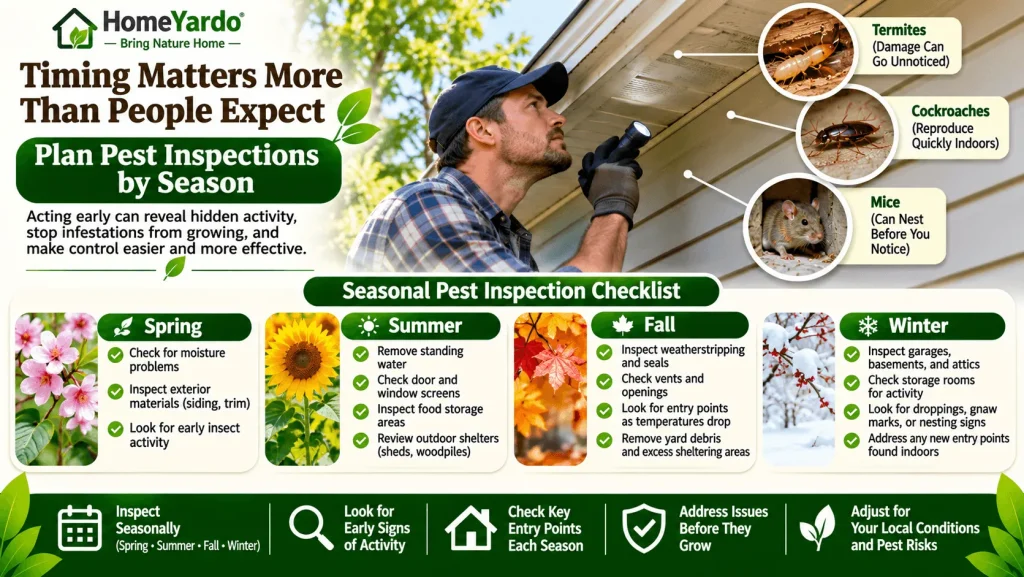
Many homeowners take action only after pest activity becomes obvious. By that time, a population may already be established in a hidden location.
Termites may remain unnoticed while damaging wood. German cockroaches can reproduce in protected indoor areas, while mice may establish nesting sites before the homeowner discovers their entry route.
Early inspections help uncover the conditions that allow these problems to develop.
Adjust Pest Inspections With the Seasons
Spring is a useful time to check for moisture problems, damaged exterior materials, and emerging insect activity.
During warmer months, pay attention to standing water, door screens, food storage areas, and outdoor shelters.
In late summer and fall, inspect weatherstripping, vents, and other openings that could provide access as temperatures change.
Winter checks can focus on garages, basements, accessible attics, and storage rooms where signs of indoor activity may be easier to notice.
Seasonal patterns vary by location and pest species, so inspection priorities should reflect local conditions.
For more location-specific guidance, see HomeYardo’s seasonal pest inspection checklist for Michigan properties.
How to Tell Whether Your Pest Control Plan Is Working
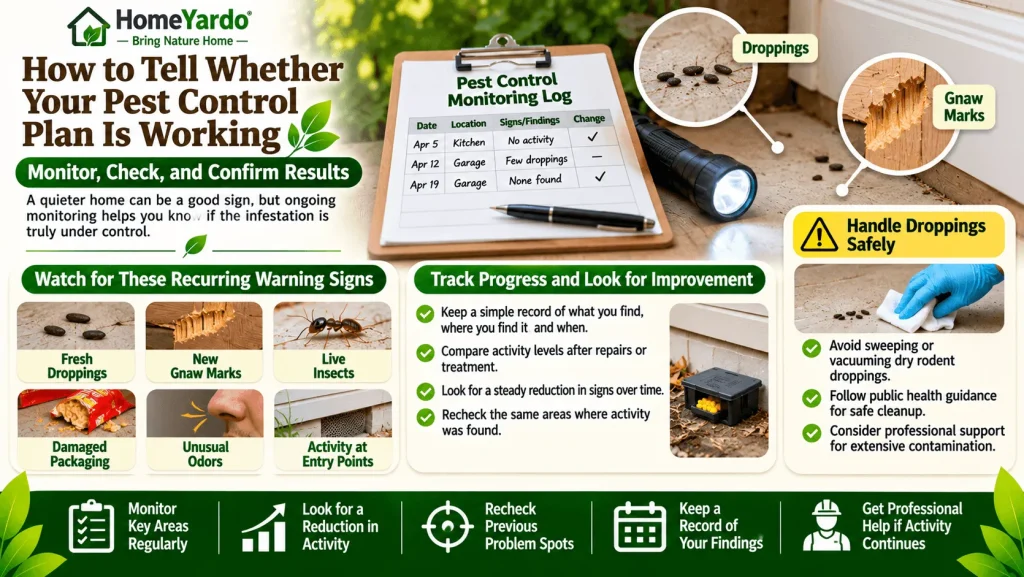
A quieter house does not always mean an infestation has been eliminated. Some pests remain hidden for long periods, and visible activity may change with weather, food availability, or treatment.
Monitoring helps determine whether the underlying problem is improving.
Watch for Recurring Warning Signs
Look for fresh droppings, new gnaw marks, live insects, damaged packaging, unusual odors, or activity around previously identified entry points.
Keep a simple record of what you find, where you find it, and whether conditions change after repairs or treatment.
A reduction in activity is encouraging. However, continued evidence in the same location may indicate that an entry point, nesting site, or other contributing condition has not been addressed.
Avoid sweeping or vacuuming dry rodent droppings. Follow public health guidance for safe cleanup and consider professional support for extensive contamination.
When Should You Call a Professional Pest Control Service?
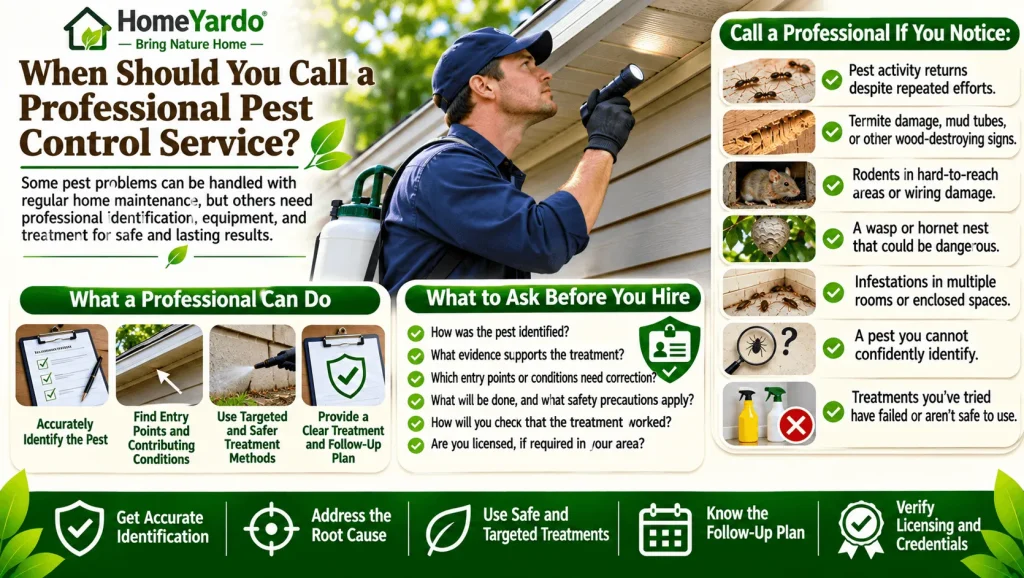
Some pest problems can be reduced through ordinary home maintenance. Others require identification, specialist equipment, or treatments that should not be attempted without proper training.
Professional help is particularly appropriate when:
- Pest activity returns despite repeated prevention efforts.
- Termite damage, mud tubes, or other signs of wood-destroying organisms appear.
- Rodents are entering inaccessible spaces or damaging wiring.
- A wasp or hornet nest presents a safety concern.
- Infestations affect multiple rooms or enclosed structural spaces.
- The pest cannot be confidently identified.
- Available treatments have failed or cannot be used safely.
Ask the provider how the pest was identified, what evidence supports the proposed treatment, and which entry points or environmental conditions need correction.
A good treatment plan should explain what will be done, what safety precautions apply, and how success will be checked afterward.
Where pest-control licensing is required, verify that the business holds the appropriate credentials.
Long-Term Pest Control Is Really About Systems
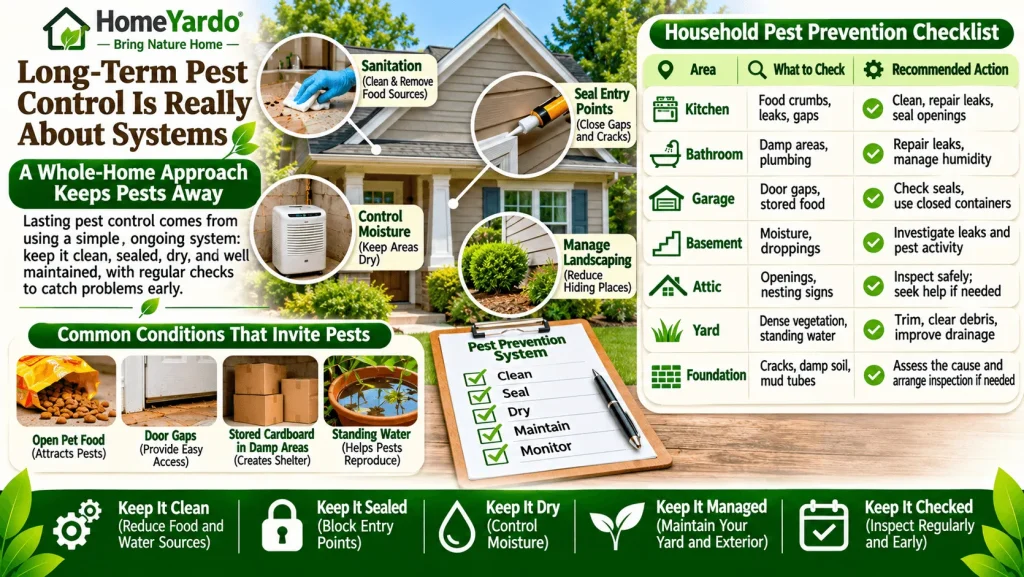
Homes with fewer recurring pest problems are not necessarily those using the most chemicals. Often, they are the properties where inspection, maintenance, and treatment work together.
That means consistent sanitation, sealed access points, controlled moisture, managed landscaping, and follow-up checks that catch problems early.
If the same pest keeps returning, stop asking only which product to buy. Ask what condition is allowing it to stay.
A bag of pet food left open in the garage, a gap beneath the back door, cardboard stored in a humid basement, or standing water near the foundation may be contributing to the problem.
A Practical Household Pest Prevention Checklist
Use this table to identify common conditions and the appropriate next step.
| Area | What to check | Recommended action |
|---|---|---|
| Kitchen | Food crumbs, leaks, gaps | Clean, repair leaks, seal openings |
| Bathroom | Damp areas, plumbing | Repair leaks, manage humidity |
| Garage | Door gaps, stored food | Check seals, use closed containers |
| Basement | Moisture, droppings | Investigate leaks and pest activity |
| Attic | Openings, nesting signs | Inspect safely; seek help if needed |
| Yard | Dense vegetation, standing water | Trim, clear debris, improve drainage |
| Foundation | Cracks, damp soil, mud tubes | Assess the cause and arrange inspection if needed |
Keeping up with these smaller jobs is usually easier than responding to a larger infestation later. HomeYardo’s year-round exterior maintenance guide can help you connect exterior inspections with other routine upkeep.
Final Takeaway
Keeping pests out of your home over the long term requires more than removing the insects or rodents you can see.
The strongest approach combines entry-point repairs, moisture control, proper food storage, outdoor maintenance, correct pest identification, and targeted treatment where necessary.
Regular monitoring matters too. It allows you to recognize returning activity before the problem becomes more difficult to manage.
No method can guarantee that pests will never return. However, removing the conditions that attract and support them can substantially reduce the likelihood of recurring infestations.
Real control is less about one dramatic treatment and more about making your home a difficult place for pests to enter, feed, and establish shelter.
FAQ’s
The most reliable approach combines sealing entry points, removing accessible food and water, reducing sheltered hiding places, and inspecting the property regularly. Pest identification and targeted treatment may also be necessary when an infestation is already established.
No prevention method guarantees that pests will never enter a home. Buildings change over time, new openings develop, and pest activity varies with local conditions. Regular maintenance and monitoring can reduce the risk of repeat infestations.
Pests may return because the original entry route, nesting site, moisture source, or food supply remains available. Treatment may reduce the current population without eliminating the environmental conditions responsible for the problem.
A seasonal inspection is a useful starting point for many households. More frequent checks may be appropriate when there is an active infestation, recent pest activity, recurring moisture, or a known structural vulnerability.
Professional services are often more appropriate for recurring, widespread, difficult-to-identify, or potentially hazardous infestations. Homeowners can still handle many preventive maintenance tasks, such as repairing accessible screens, improving sanitation, and reducing unnecessary standing water.
Sealing suitable gaps can reduce access for many pests. However, the materials and repair methods must match the opening and the type of pest. Some openings require rodent-resistant materials, while vents must retain their necessary airflow.
Treatments may reduce existing pest populations, but persistent moisture can continue to support certain pests. Fixing leaks and drainage issues is often an important part of preventing repeat activity.
Start with nonchemical measures such as sealing openings, managing moisture, securing food, and reducing clutter. When pesticides are needed, follow product labels, prevent unintended access, and seek qualified advice for situations involving additional exposure risks.