
When a Big Job Needs a Big Bin: Is a 40-Yard Bin Right for Your Project?
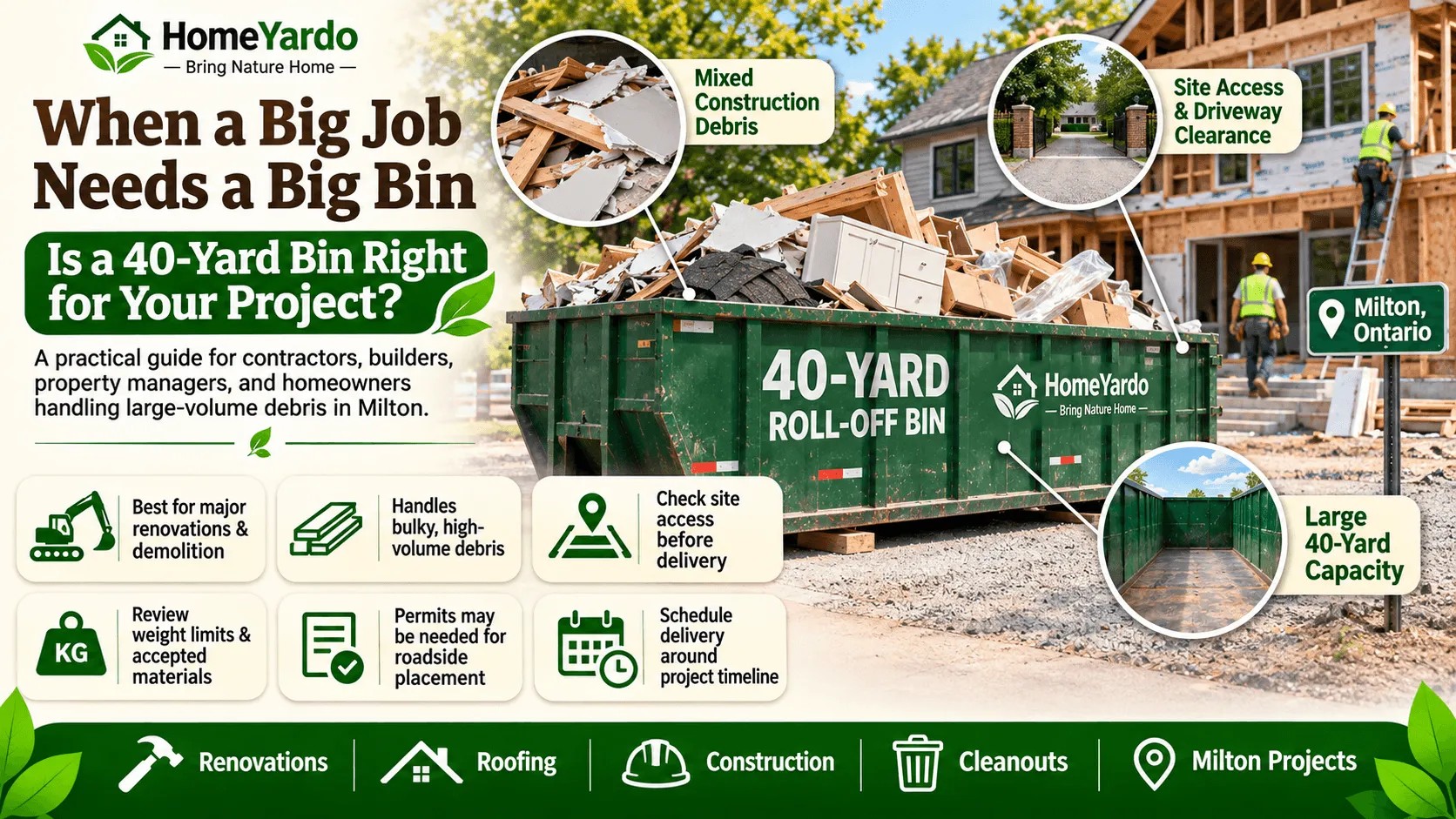
If you’re considering a 40 yard bin rental Milton service for a major renovation, demolition, or construction project, choosing the right container size can save time and prevent avoidable waste-handling problems. Large projects often produce more debris than expected, from discarded drywall and lumber to old roofing materials, flooring, and packaging.
A 40-yard roll-off bin offers substantial capacity for bulky waste, but it isn’t suitable for every job. Before arranging delivery, homeowners, contractors, builders, and property managers should consider waste volume, material weight, site access, local permit requirements, and project timing.
Understanding these factors can help you decide whether one large bin is the practical choice or whether a smaller container would work better.
What Is a 40-Yard Bin?
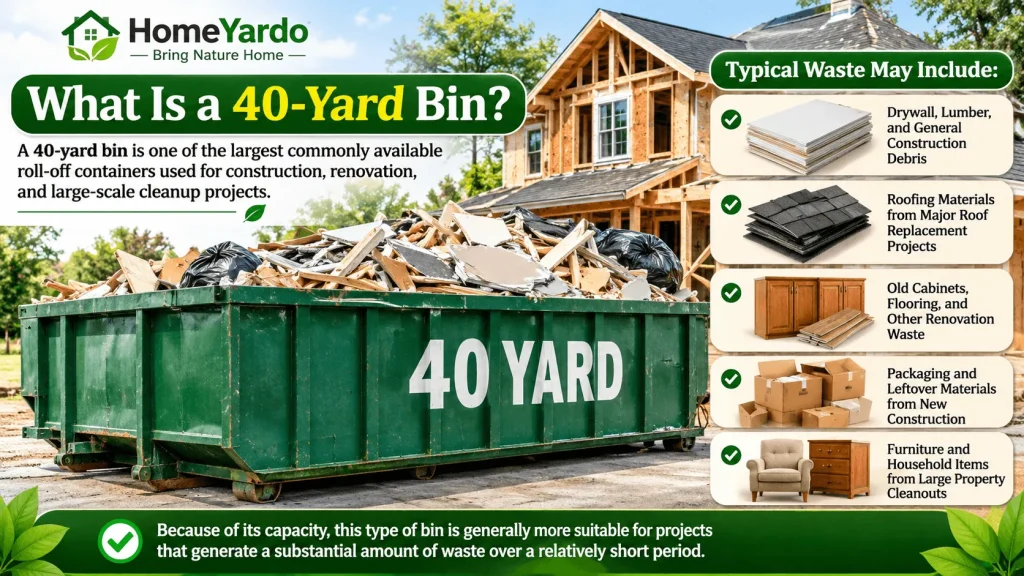
A 40-yard bin is one of the largest commonly available roll-off containers used for construction, renovation, and large-scale cleanup projects. It is designed to handle bulky, high-volume materials that would quickly fill smaller containers.
Typical waste may include:
- Drywall, lumber, and general construction debris
- Roofing materials from major roof replacement projects
- Old cabinets, flooring, and other renovation waste
- Packaging and leftover materials from new construction
- Furniture and household items from large property cleanouts
Because of its capacity, this type of bin is generally more suitable for projects that generate a substantial amount of waste over a relatively short period.
How Big Is a 40-Yard Bin?
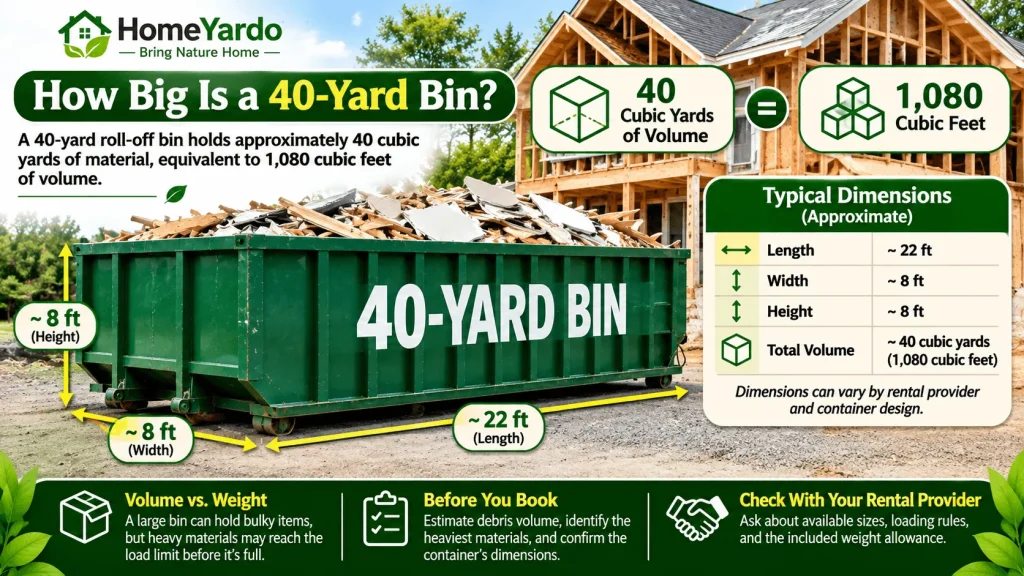
A 40-yard roll-off bin holds approximately 40 cubic yards of material, equivalent to 1,080 cubic feet of volume. Its dimensions vary by rental provider and container design, so the actual length, width, and height should always be confirmed before booking.
The important distinction is between volume and weight. A large container can accommodate bulky items, but heavy materials may reach the permitted load limit long before the bin is full.
Before choosing this size, estimate the debris volume, identify the heaviest materials, and ask the rental company about its available container dimensions, loading rules, and included weight allowance.
When Does a 40-Yard Bin Make Sense?
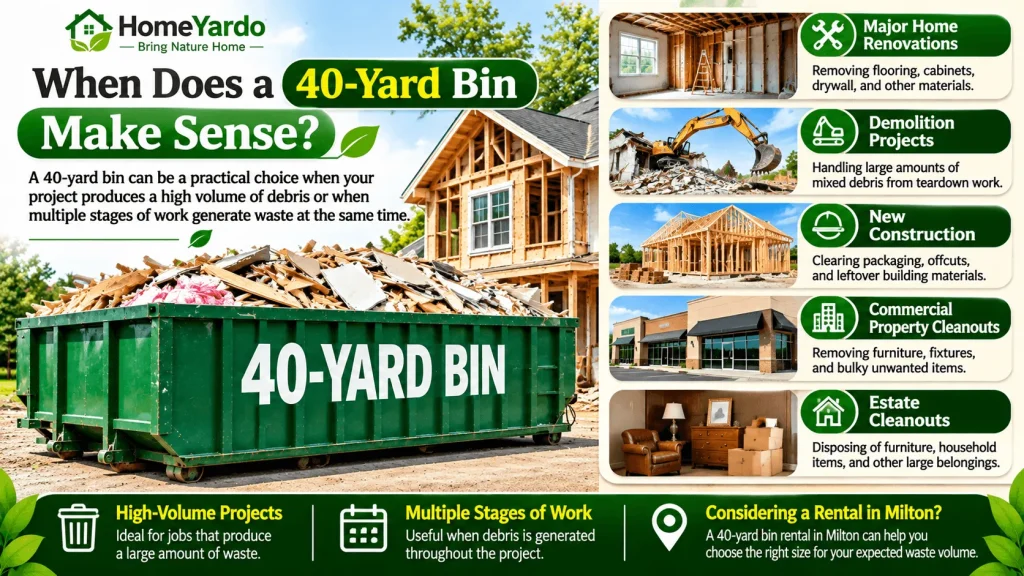
The right bin size depends on the amount and type of material your project will produce. A larger container can be especially useful when several stages of work generate waste at the same time.
For example, a major home renovation may involve removing old flooring, cabinets, drywall, and other unwanted materials. Similarly, demolition projects and new construction sites can produce large amounts of mixed debris that need to be cleared regularly.
“Before ordering a container, estimate how much debris each renovation stage will create. HomeYardo’s guide to managing household waste during home improvement projects explains how to organize disposal, separate materials, and avoid unnecessary waste-handling costs.”
Commercial property cleanouts and estate cleanouts may also benefit from a larger container, particularly when furniture, fixtures, and other bulky items need to be removed.
If you are managing a project in Milton, looking into a 40 yard bin rental Milton service can help you determine whether a larger container is suitable for your expected waste volume.
One Large Bin or Several Smaller Ones?
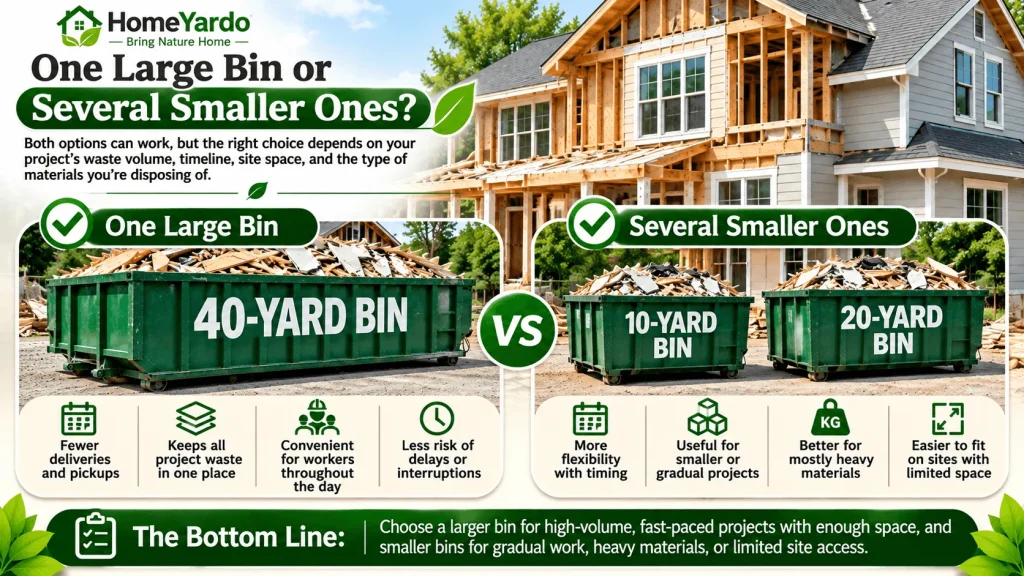
Choosing one large bin instead of multiple smaller containers can make site management more straightforward. Rather than arranging several deliveries or scheduling repeated exchanges, you may be able to collect most of the project’s waste in one place.
This can be helpful when:
- The project produces a large amount of debris in a limited timeframe.
- There is enough room on-site for a larger container.
- Workers need a convenient place to dispose of waste throughout the day.
- Repeated bin swaps could interrupt construction or renovation work.
However, a larger bin is not always the better choice. If the project produces waste gradually or involves mostly heavy materials, smaller containers may be more practical. The goal is to match the container to the project’s actual needs.
Container selection should also match the construction schedule. If you are coordinating several stages of a renovation, HomeYardo’s residential remodeling guide explains how demolition, material deliveries, contractor access, and project timelines fit together
Check Site Access Before Scheduling Delivery
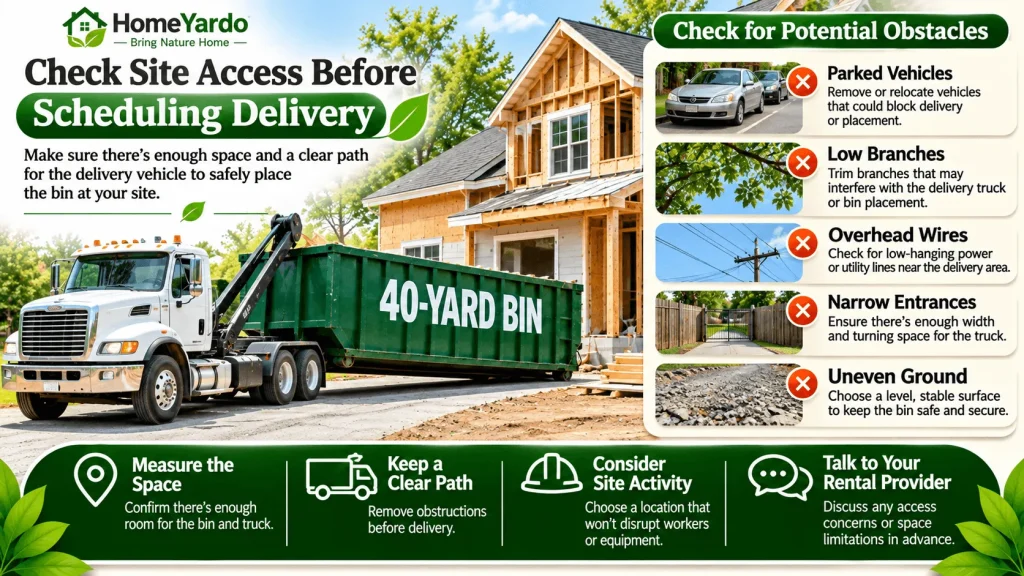
Space is one of the most important considerations when ordering a large roll-off bin. Before arranging delivery, check the available space on your property and make sure the delivery vehicle can reach the intended placement area.
Look for potential obstacles such as parked vehicles, low branches, overhead wires, narrow entrances, and uneven ground. Contractors and property managers should also consider how the bin’s location will affect workers, equipment, and everyday site activity.
A clear delivery area helps reduce the chances of delays or placement problems. If access is limited, discuss the situation with the rental provider before confirming the booking.
Understand Weight Limits and Accepted Materials
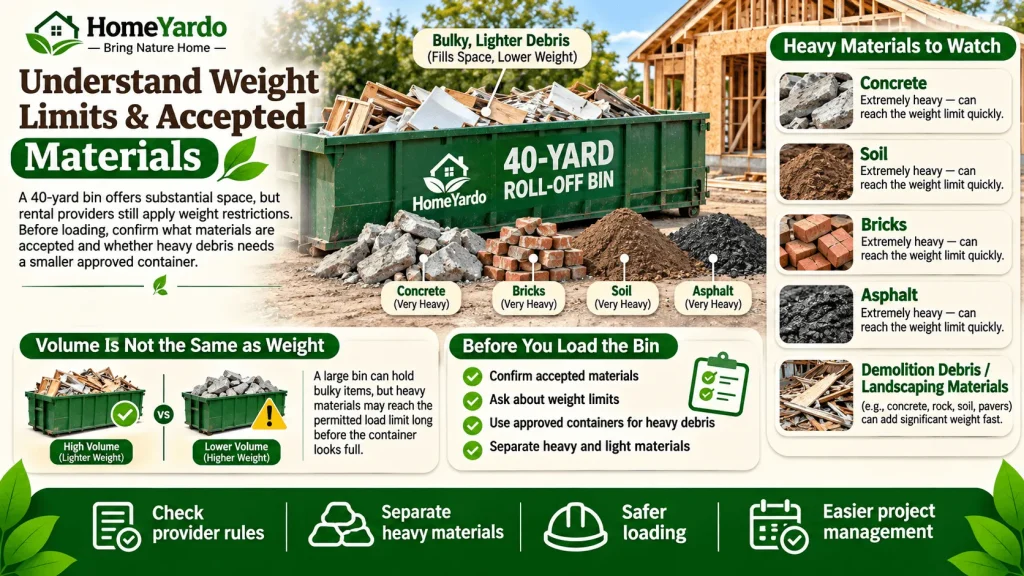
Although a 40-yard bin offers substantial capacity, that does not mean it can be filled with unlimited weight. Rental providers generally apply weight restrictions, and these limits are important when planning a construction or demolition project.
Materials such as concrete, soil, bricks, and asphalt can become extremely heavy even when they do not fill much space. These materials are often better suited to smaller, specifically approved containers.
Before loading the bin, confirm which materials are accepted and whether any weight restrictions apply. This is particularly important for contractors handling demolition work or major landscaping projects.
Separating heavy materials from lighter construction debris can make waste disposal safer and easier to manage.
Not every material removed during demolition should go into the same container. Understanding where demolition waste goes after a house teardown can help project managers identify materials suitable for recycling, reuse, or separate disposal.
Do You Need a Permit for a Bin in Milton?
The placement location can affect whether a permit is required. If the bin will sit entirely on private property, different rules may apply than when it needs to be placed on a public road or other municipal property.
Before scheduling delivery, check with the Town of Milton to understand the applicable requirements for placing a container on a roadway. You should also confirm whether there are restrictions involving parking, pedestrian access, or traffic movement.
Planning this step early can help prevent unexpected issues once the project is underway.
Schedule Delivery Around Your Project Timeline
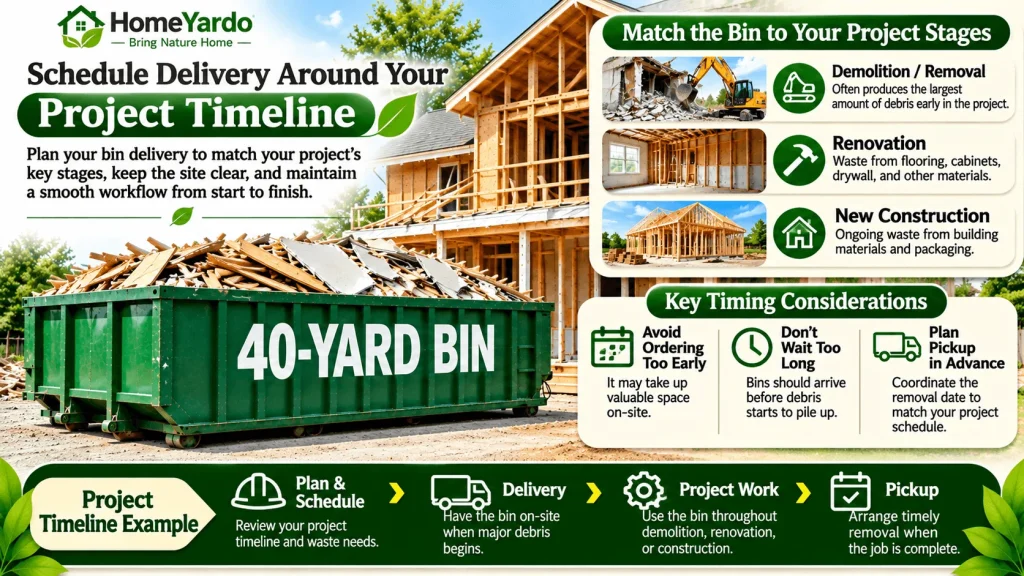
Timing is another important part of waste management. Ordering a bin too early may take up valuable space, while arranging delivery too late can leave workers dealing with piles of debris.
For larger projects, consider when the main waste-producing activities will begin. For example, demolition and material removal may create most of the debris during the first stage of a renovation. In other cases, waste may accumulate gradually throughout construction.
Coordinating delivery with your contractor, site manager, or property manager helps ensure the container is available when needed. It is also worth discussing pickup arrangements in advance, especially if the project has a tight completion schedule.
Hersey Bins is one option for those arranging waste container rentals in the Milton area, and checking availability and accepted materials ahead of time can help make the process smoother.
Choose a Bin That Fits the Job
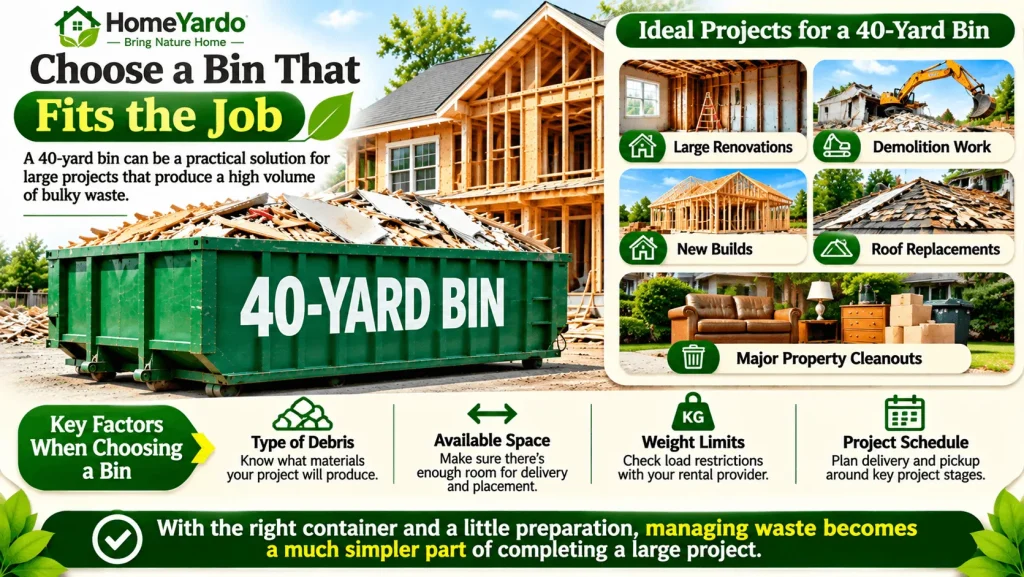
A 40-yard bin can be a practical solution for large renovations, demolition work, new builds, roof replacements, and major property cleanouts. Its capacity makes it useful when a project produces a high volume of bulky waste and repeated smaller-bin exchanges would create unnecessary work.
Still, the best choice depends on the type of debris, available site space, weight restrictions, and project schedule. Taking time to review these factors before delivery can help keep the work area organized and prevent avoidable delays.
With the right container and a little preparation, managing waste becomes a much simpler part of completing a large project.
FAQ’s About 40-Yard Bin Rentals
A 40-yard bin holds approximately 40 cubic yards, or 1,080 cubic feet, of material. It is commonly used for bulky renovation debris, large cleanouts, and construction waste. The permitted load weight depends on the rental company’s restrictions and the materials being discarded.
A 40-yard bin may be suitable for a major home renovation involving flooring, drywall, cabinets, lumber, and other bulky materials. Smaller renovations may need less capacity. The best choice depends on the volume and weight of the expected waste.
Accepted materials may include drywall, wood, flooring, furniture, packaging, and certain construction debris. However, every provider has its own restrictions. Concrete, soil, asphalt, hazardous chemicals, and other heavy or regulated materials may require separate disposal arrangements.
Concrete is extremely heavy and may exceed the container’s permitted load weight before it reaches its volume capacity. Many providers require dedicated heavy-debris containers for concrete. Confirm acceptance and weight restrictions before loading any masonry materials.
The Town of Milton requires a road occupancy permit for bins placed within its road allowance. A bin located entirely on private property may not require that permit, depending on the placement and applicable requirements. Confirm the location with the Town and your rental provider before delivery.
Not necessarily. A single large container may reduce delivery or exchange costs, but the total price depends on the rental period, included weight, material restrictions, transportation charges, and disposal fees. Comparing itemized quotes is the best way to assess the cost.
The required space depends on the container’s dimensions and the delivery truck’s operating requirements. You need enough room for placement, unloading, collection, and safe vehicle access. Ask the rental provider for its minimum clearance requirements before scheduling delivery.
Rental periods vary by provider and contract. Some companies offer a standard rental period with additional daily charges, while others arrange custom collection schedules. Confirm the rental duration, extension fees, and pickup requirements before booking.