
Water Heater Replacement: A Selection Guide for Harrisburg Homeowners Comparing Plumbers in Harrisburg, PA
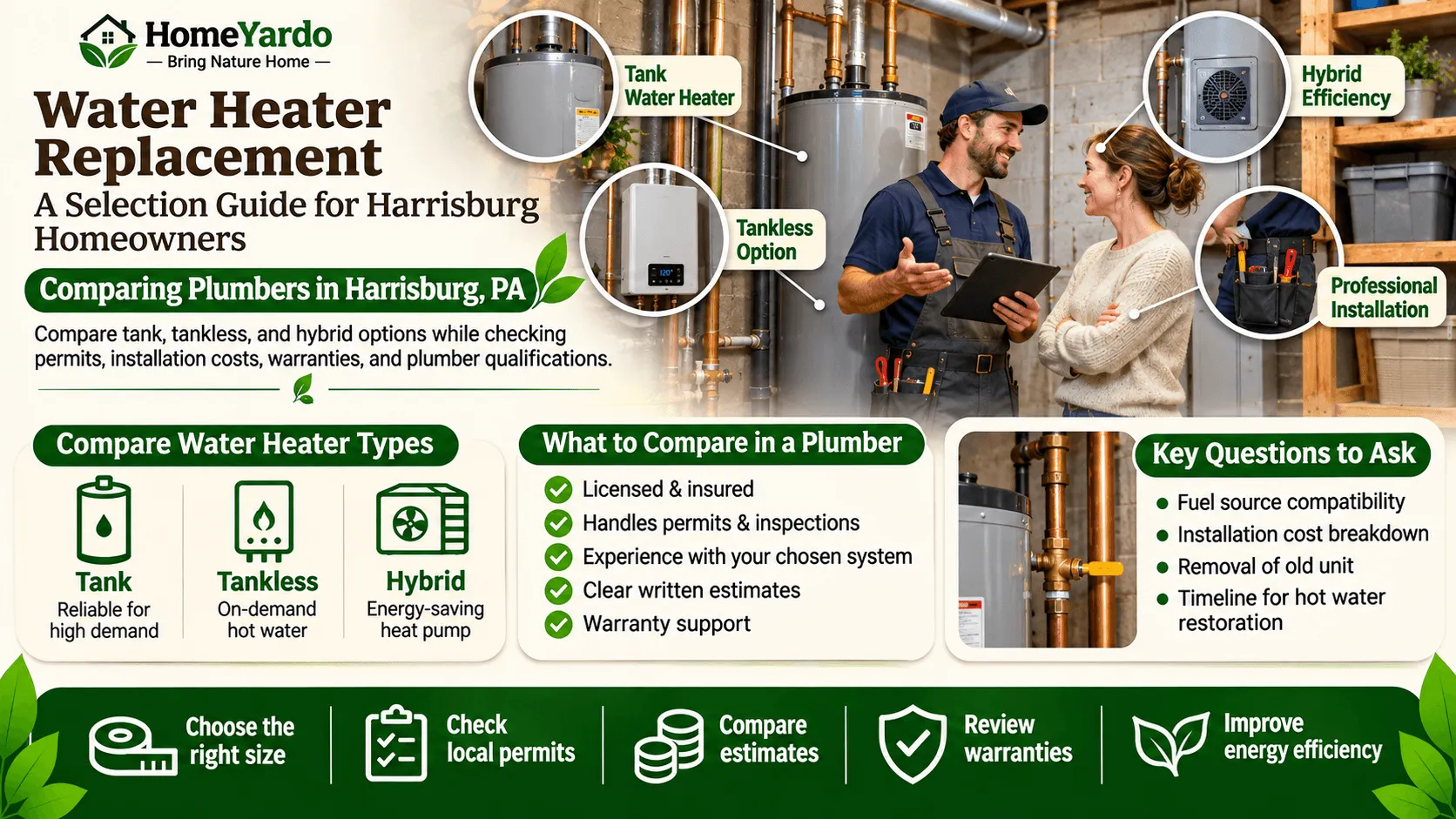

The sudden chill of a Harrisburg winter morning is a sharp reminder of how much homeowners rely on a steady supply of hot water. When an older water heater fails, knowing what replacement options fit your home, as well as which local plumbers to trust, can make all the difference between a quick fix and ongoing frustration. Homeowners face a maze of choices: traditional tank-style water heaters, tankless systems, and hybrid models, each with unique installation requirements and benefits. Sorting through these options—and understanding how to vet a water heater replacement plumber in Harrisburg, PA—ensures you get reliable hot water and avoid unexpected costs or code violations.
Choosing the right replacement is more involved than simply matching the old unit’s size. Harrisburg’s climate, local building codes, and your household’s hot water needs all affect which type of water heater will perform efficiently. Just as critical is selecting a plumber with the right experience and credentials to handle the specific installation, permitting, and disposal requirements involved. Taking a close look at product options, comparing plumbers, and asking the right questions up front saves time, money, and hassle in the long run.
Water Heater Replacement Options for Harrisburg, PA Homeowners
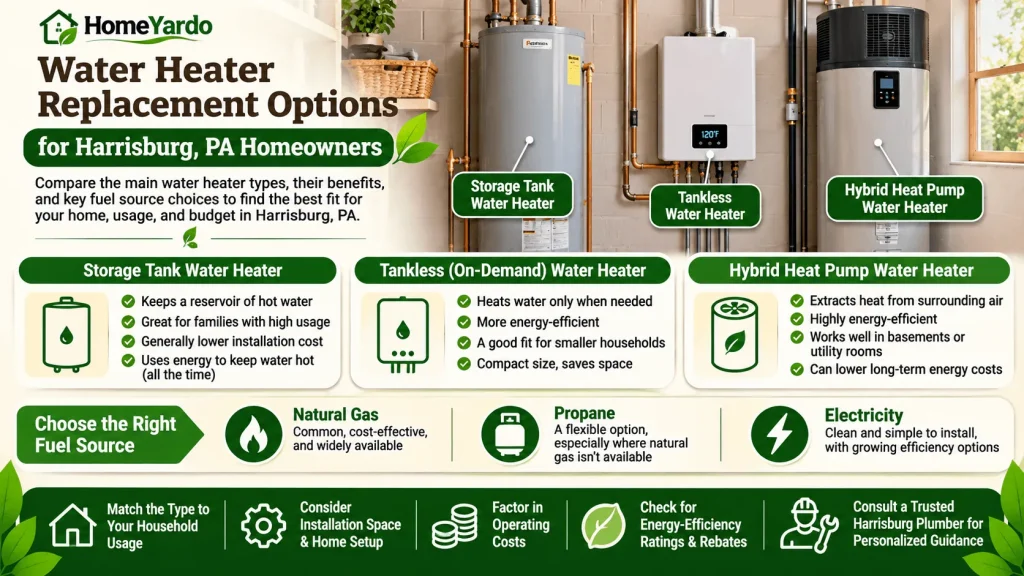
The main types of water heaters available in Harrisburg include traditional storage tank models, tankless (on-demand) units, and hybrid heat pump water heaters. Each option offers distinct advantages. For example, storage tank water heaters maintain a reservoir of hot water, making them a common choice for families with high simultaneous usage. However, they consume energy to keep water hot even when not in use, which can impact utility bills.
Tankless water heaters, by contrast, heat water as it flows through the system. This means they only use energy when hot water is needed, leading to potential energy savings for smaller households. Hybrid heat pump water heaters extract heat from the surrounding air, making them highly efficient in basements or utility rooms that maintain moderate temperatures. Understanding the differences between tank and tankless water heaters can help homeowners select the best option for their usage patterns and installation space.
Older plumbing systems can affect how a new water heater performs, especially when existing connections, water pressure, or electrical capacity need attention. HomeYardo’s guide to plumbing improvements for older homes explains why homeowners should evaluate the surrounding plumbing before making major equipment upgrades.
It’s also important to consider the water heater’s fuel source—natural gas, propane, or electricity—based on what is already available in your home. Your choice will affect installation complexity and operating costs. Consulting a water heater replacement plumber Harrisburg PA residents trust can clarify which type fits both your budget and your household needs.
How to Compare Plumbers in Harrisburg, PA

Once you’ve determined your preferred water heater type, finding the right plumber means looking beyond price alone. Before hiring a plumber, verify that they hold the appropriate City of Harrisburg plumbing credentials for the proposed work and carry suitable liability insurance. Harrisburg has local plumbing licensing and permit requirements, so homeowners should confirm that the contractor is authorized to perform the installation and arrange any necessary inspections. Experience with the specific water heater model you’ve chosen is equally important—tankless and hybrid installations, for example, require different skills and tools than standard tank replacements.
Harrisburg’s building codes may require a permit for water heater replacements, especially if the installation involves changes to gas or electrical lines. Ensure the plumber will handle the necessary paperwork and schedule required inspections. Comparing local licensing and permitting requirements for water heater installation helps avoid delays and potential fines.
When you’re ready to move forward, review estimates from multiple Plumbers in Harrisburg, PA to compare what’s included in each quote. A reputable local provider should be willing to explain their process, outline warranty coverage, and provide references from recent water heater installations.
Water Heater Installation Costs, Warranties, and Energy Efficiency
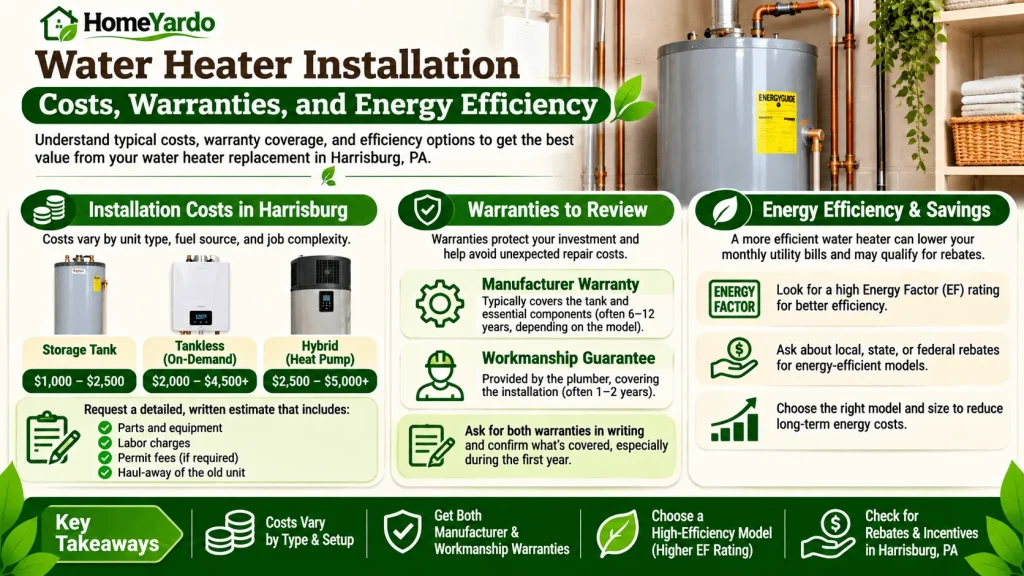
Installation costs for water heaters in Harrisburg vary depending on the unit type, fuel source, and the complexity of the job. For example, replacing a standard gas tank with another similar model is typically less labor-intensive than swapping to a tankless system, which may require new venting or electrical upgrades. Always request a detailed breakdown of parts, labor, permit fees, and any additional charges for haul-away of the old unit.
Warranties should be reviewed carefully. Most manufacturers offer standard warranties that cover the tank and essential components, but some plumbers also provide workmanship guarantees for the installation itself. Ask for both documents in writing, and clarify what is covered if a problem arises within the first year.
A replacement water heater still needs appropriate maintenance after installation. Following a regular inspection routine can help homeowners identify leaks, corrosion, and performance changes before they turn into larger repairs. HomeYardo’s guide on how to prevent plumbing problems covers practical maintenance habits that support long-term system reliability.
Energy efficiency is a major factor for long-term savings. Look for models with a high Energy Factor rating and ask about rebates for energy-efficient appliances that may be available to Harrisburg residents. The right water heater can reduce monthly utility bills and may even qualify for local or federal incentives, depending on the system chosen.
Questions to Ask Before Hiring a Harrisburg Water Heater Plumber
Before signing a contract, ask the plumber whether they will obtain all required local permits and schedule inspections as needed. Confirm they are familiar with Harrisburg’s unique building codes, especially if your home has older plumbing or electrical systems. Inquire about the disposal process for your old water heater, as improper removal can lead to fines or environmental hazards.
Ask for a written estimate that details every aspect of the job, including potential complications such as outdated connections or restricted installation spaces. Clarify how long the replacement will take and whether your hot water will be disrupted for more than a day. Checking references from past customers who had similar water heater installations can provide insight into the plumber’s reliability and quality of work.
If the home has unexplained water consumption or recurring damp areas, ask the plumber to investigate those symptoms before installing new equipment. HomeYardo’s guide on how to read a water meter and check for leaks explains how basic water-use checks can help identify possible plumbing problems.
Finally, discuss how the plumber handles warranty claims and post-installation service. Knowing who to contact if a problem arises ensures you’re not left searching for help if an issue appears after installation.
FAQ’s About Water Heater Replacement
The cost depends on the water heater type, capacity, fuel source, installation complexity, and necessary plumbing or electrical upgrades. A standard tank replacement may involve less installation work than converting to a tankless or heat pump system. Request itemized quotes from local plumbers to understand the full cost.
Water heater installation may require plumbing permits and inspections under the City of Harrisburg’s applicable codes. Requirements depend on the proposed work and property location. Confirm the permit requirements with the City’s Bureau of Codes and ask your plumber who will obtain the necessary approvals.
Look for a contractor with appropriate local plumbing credentials, liability insurance, relevant installation experience, and clear written estimates. Ask about permits, warranties, removal of the old unit, and experience with the specific type of water heater you are considering.
Neither option is automatically better for every household. Tankless models heat water on demand and may reduce standby energy losses, but they need sufficient heating capacity for simultaneous usage. Traditional storage tanks provide a reservoir of hot water and may be simpler to replace when the existing installation is compatible.
Hybrid heat pump water heaters can be a good option when there is adequate installation space, suitable ambient temperature, electrical capacity, and condensate drainage. Basements and utility rooms may work well, but homeowners should have the proposed location evaluated before purchasing.
A straightforward replacement may be completed within a working day, but the actual schedule depends on equipment availability, installation conditions, permits, inspections, and required upgrades. Converting to a different system may take longer.
Common warning signs include water leaking from the tank, significant corrosion, repeated heating failures, and unreliable hot-water delivery. Some symptoms may be repairable, so a qualified plumber should evaluate the unit before replacement is recommended.
The choice depends on the heater’s age, condition, repair history, warranty coverage, and the cost of fixing the problem. Replacement may be more practical when the tank is leaking, the unit has extensive corrosion, or repairs are becoming frequent. A minor component problem may justify repair instead.
Conclusion
Start your water heater replacement by selecting the right model for your home’s needs, then compare plumbers based on licensing, experience, and service guarantees. Request detailed estimates and clarify every step before work begins to avoid surprises. A thorough approach ensures your new water heater delivers comfort and efficiency for years to come.