Furnace Repair vs. Replacement: How San Jose Homeowners Can Make the Right Choice
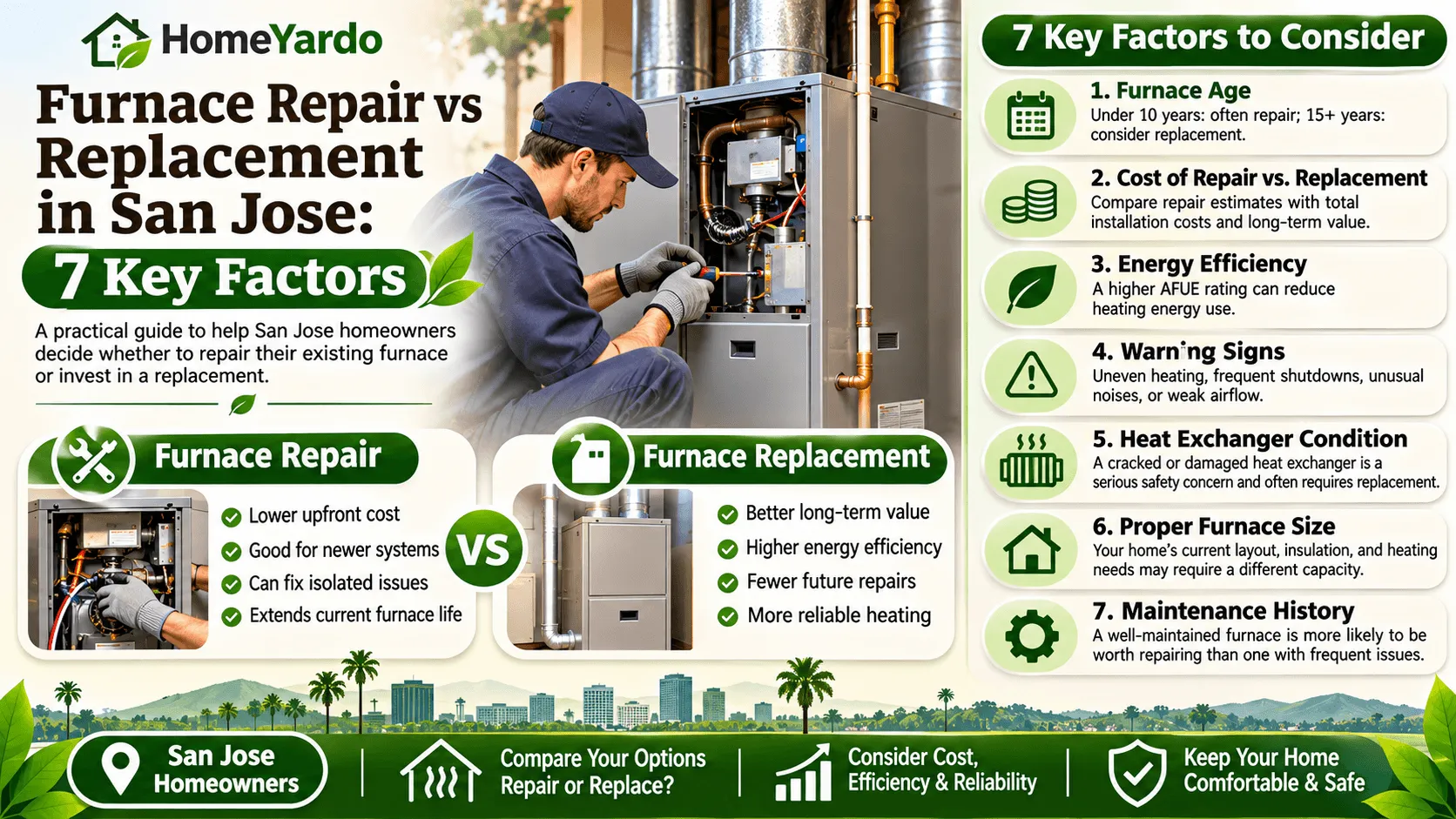
Most residential furnaces last approximately 15–20 years, but deciding whether to repair or replace one depends on its age, repair costs, energy efficiency, maintenance history, and overall condition. For San Jose homeowners, understanding these factors can help prevent unnecessary expenses and maintain reliable indoor comfort during colder months.
Although San Jose, California, generally experiences milder winters than many other parts of the country, a properly functioning heating system remains important. When a furnace starts breaking down frequently or struggles to maintain comfortable temperatures, homeowners must decide whether repairing the existing equipment or investing in a replacement makes more financial sense.
Here are seven important factors to consider before making that decision.
1. How Old Is Your Existing Furnace?
Most conventional furnaces last approximately 15–20 years, making equipment age an important factor when deciding between repair and replacement.
If your furnace is less than 10 years old and has developed an isolated mechanical problem, repairing it is often a practical option. Components such as thermostats, sensors, igniters, and blower motors can sometimes be repaired or replaced without installing an entirely new heating system.
However, furnaces approaching or exceeding 15 years of operation may experience more frequent mechanical problems. As equipment ages, individual repairs can become more expensive, and replacement parts may become harder to find. Homeowners can also review the signs your furnace is dying to understand which warning symptoms deserve professional attention before the system stops working.
Consider the following general guidelines:
- Under 10 years: Repair is often worth considering if the system is otherwise in good condition.
- 10–15 years: Compare repair expenses, equipment performance, and remaining service life before deciding.
- 15–20 years: Evaluate replacement, particularly if the furnace requires frequent repairs.
- Over 20 years: Replacement may provide better long-term value, depending on the system’s condition.
These age ranges are general guidelines rather than fixed replacement rules. A well-maintained older furnace may continue operating effectively, while a poorly maintained newer system may require significant repairs.
2. Should You Repair or Replace a Furnace Based on Cost?
Furnace repair is generally less expensive upfront, but replacement may offer better long-term value when the existing system requires repeated or major repairs.
A minor repair involving a thermostat, ignition component, or replaceable part may cost considerably less than installing a new furnace. However, repeated service visits can gradually increase the total cost of maintaining an aging heating system.
Before making a decision, request a detailed estimate covering parts, labor, installation requirements, and any additional expenses. Understanding a heating repair recommendation can also help you distinguish necessary repairs from optional maintenance and compare the technician’s findings with the quoted costs.
Consider these situations:
- Minor repairs: A relatively inexpensive component replacement may justify keeping the existing furnace.
- Recurring repairs: Multiple breakdowns within a short period may indicate declining equipment reliability.
- Major component failures: Expensive repairs involving important internal components may make replacement worth considering.
- Extensive system damage: When several major components are deteriorating, installing a new furnace may be a more practical investment.
Compare the estimated repair cost with the complete installation cost of a suitable replacement system. Also consider warranty coverage, expected remaining equipment life, and the possibility of additional repairs.
The cheapest immediate solution is not necessarily the most economical option over several years.
3. Can Replacing an Old Furnace Reduce Energy Bills?
Replacing an inefficient older furnace with a properly sized, higher-efficiency model may reduce heating energy consumption, depending on the existing system and household conditions.
Older furnaces may consume more energy because of outdated technology, worn components, airflow restrictions, or declining operating efficiency. Homeowners may also notice increasing heating bills even when their thermostat settings and usage habits remain relatively consistent.
One important measurement to consider is Annual Fuel Utilization Efficiency (AFUE). This rating indicates how effectively a fuel-burning furnace converts its energy input into usable heat.
For example, a furnace with a higher AFUE rating converts a greater percentage of its fuel into usable heat under the rating conditions.
However, installing a new furnace does not automatically guarantee lower utility bills. Actual savings depend on several factors:
- The efficiency rating of the existing furnace.
- The AFUE rating of the replacement system.
- Proper equipment sizing and installation.
- Home insulation and air leakage.
- Existing ductwork condition.
- Thermostat settings and local energy rates.
If your current furnace operates inefficiently despite regular maintenance, upgrading to a more efficient model may be worth evaluating.
4. What Are the Signs That Your Furnace Needs Repair or Replacement?
Frequent breakdowns, uneven heating, unusual noises, and inconsistent indoor temperatures are common warning signs that a furnace needs professional attention. Some problems may also involve the thermostat, ductwork, or airflow rather than the furnace itself. Learning about common HVAC warning signs can help homeowners recognize these symptoms without assuming that every issue requires a complete system replacement.
Some heating problems can be resolved through relatively simple repairs, while recurring symptoms may indicate more serious equipment deterioration.
Watch for these common warning signs:
- Uneven heating: Some rooms remain cold while others become uncomfortably warm.
- Frequent shutdowns: The furnace repeatedly turns off before completing a heating cycle.
- Weak airflow: Supply vents produce noticeably less warm air than usual.
- Unusual noises: Banging, grinding, or squealing sounds may indicate mechanical problems.
- Delayed ignition: The furnace takes longer than usual to start producing heat.
- Inconsistent thermostat response: Indoor temperatures do not match the selected thermostat settings.
Not every performance issue requires furnace replacement. Dirty filters, thermostat malfunctions, restricted airflow, and certain ignition problems may be resolved through appropriate repairs.
However, repeatedly experiencing the same problems can indicate an underlying issue that needs further investigation.
A professional HVAC inspection can help determine whether the problem involves an individual component, the ductwork, or the overall condition of the furnace.
5. Should You Replace a Furnace With a Damaged Heat Exchanger?
A cracked or damaged furnace heat exchanger requires immediate professional attention because it can create a risk of combustion gases, including carbon monoxide, entering the indoor air stream.
The heat exchanger is an important component of a gas furnace. It transfers heat from the combustion process to the circulating indoor air while keeping combustion gases separate from the air distributed throughout the home.
Over time, heat exchangers can experience corrosion, cracks, and material fatigue due to operating conditions.
If a technician identifies heat exchanger damage, homeowners should request a clear explanation of the inspection findings and available repair or replacement options.
Whether the entire furnace needs replacement depends on several factors:
- The extent and location of the damage.
- The furnace’s age and overall condition.
- Manufacturer repair requirements.
- The availability and cost of replacement components.
- The total cost of repairing the existing system versus installing a new one.
Homeowners should never attempt to inspect or repair internal combustion components themselves.
If a carbon monoxide alarm sounds, leave the property and contact emergency services from a safe location. Working carbon monoxide alarms should also be installed and maintained according to manufacturer recommendations.
6. Does Your Home Need a Different Furnace Size or Heating System?
A replacement furnace may need a different heating capacity when changes to your home’s layout, insulation, or heating requirements affect the property’s current heating demand.
Replacing an old furnace with another unit of exactly the same capacity is not always the best solution.
For example, adding a new room, converting a garage into living space, or upgrading home insulation can change the amount of heating required to maintain comfortable indoor temperatures.
An older furnace may no longer be appropriately sized for the property’s current layout.
Before installing a replacement system, an HVAC professional should evaluate:
- Total conditioned floor area.
- Ceiling heights and room layouts.
- Insulation levels and air leakage.
- Window size and placement.
- Existing ductwork condition.
- Local climate and heating requirements.
Proper furnace sizing is essential for consistent indoor comfort and efficient operation.
An oversized furnace may cycle on and off too frequently, while an undersized system may struggle to maintain the desired temperature during colder weather.
A professional assessment helps determine the appropriate heating capacity rather than simply replacing the old equipment with a unit of similar size.
What Should San Jose Homeowners Consider Before Replacing a Furnace?
San Jose’s relatively mild winters can influence how homeowners compare heating system options. Because heating demand may be lower than in colder regions, the financial benefits of upgrading to a more efficient furnace will depend on household usage, existing equipment efficiency, fuel costs, and installation expenses.
Before investing in a replacement, homeowners should consider whether a high-efficiency gas furnace, electric heat pump, or another suitable heating system best meets their property’s needs.
A qualified HVAC contractor can assess the home’s heating load, existing ductwork, electrical capacity, and equipment requirements.
Homeowners should also verify applicable San Jose building permits, California energy requirements, and current local incentive programs before installation. Requirements can vary depending on the equipment and scope of work.
7. How Does Furnace Maintenance History Affect the Repair-or-Replacement Decision?
A well-maintained furnace is generally a better candidate for repair than an aging system with a history of frequent breakdowns and neglected maintenance.
Regular professional maintenance helps identify developing mechanical problems, maintain airflow, and keep important components operating within manufacturer specifications.
If your furnace has received consistent maintenance, its internal components may remain in relatively good condition even after several years of operation.
On the other hand, a system that has gone through long periods without inspection may develop dust accumulation, airflow restrictions, worn components, and other maintenance-related problems.
Before deciding between repair and replacement, review your furnace’s service history. Keeping a home heating service record with previous repair invoices, inspection results, replaced components, and maintenance dates can help you recognize recurring problems and provide useful information to your HVAC technician.
Ask these questions:
- How frequently has the furnace required repairs?
- Have the same problems returned after previous service visits?
- Are replacement parts still available?
- Has the system received annual professional maintenance?
- Does the equipment still operate within manufacturer specifications?
If the furnace is generally in good condition and the current problem is isolated, repair may be the more practical option.
However, if maintenance expenses continue increasing and several components are approaching the end of their service life, replacing the system may provide a more dependable long-term solution.
Furnace Repair vs. Replacement: Which Option Is Better?
Furnace repair is generally more suitable for newer systems with isolated problems, while replacement is worth considering for older equipment with recurring breakdowns, declining efficiency, or significant component damage.
The following comparison highlights when each option may be more appropriate.
| Consideration | Furnace Repair | Furnace Replacement |
|---|---|---|
| Equipment age | Relatively newer system | Older system nearing the end of its service life |
| Repair history | Occasional minor issues | Frequent or recurring breakdowns |
| Initial expense | Usually lower | Usually higher |
| Energy efficiency | Existing efficiency is acceptable | Opportunity to upgrade efficiency |
| Component condition | Major components remain functional | Multiple components are deteriorating |
| Long-term planning | Extend existing equipment life | Invest in a new heating system |
These are general guidelines rather than fixed rules. A professional inspection is necessary to determine which option makes the most financial and practical sense for your property.
When Should You Contact a Professional HVAC Technician?
You should contact a professional HVAC technician whenever your furnace repeatedly shuts down, produces unusual noises, struggles to heat your home, or shows signs of ignition or combustion problems.
Although homeowners can perform basic maintenance tasks such as replacing air filters and keeping vents unobstructed, diagnosing internal furnace problems requires appropriate training and equipment.
An experienced HVAC technician can:
- Inspect the furnace and identify the source of the problem.
- Evaluate important components and overall system condition.
- Check airflow and heating performance.
- Assess whether the existing equipment is appropriately sized.
- Explain the costs and benefits of repair versus replacement.
- Provide an estimate for the recommended work.
For San Jose homeowners comparing their options, professional furnace repair and installation services can help determine the condition of the existing heating equipment and identify a suitable solution based on the property’s requirements and budget.
Getting a detailed estimate before authorizing work also helps homeowners understand the expected expenses and make an informed decision.
Make the Right Furnace Investment for Your San Jose Home
The best furnace repair or replacement decision depends on the equipment’s age, overall condition, maintenance history, energy efficiency, and expected future repair expenses.
For a relatively new furnace with an isolated mechanical problem, repairing the existing system is often the more practical choice. However, an older furnace with recurring breakdowns, declining efficiency, or significant component damage may be a better candidate for replacement.
Taking time to compare both options can help homeowners avoid unnecessary spending while maintaining reliable indoor heating.
Whether you choose to repair your existing furnace or invest in a new installation, regular maintenance and professional inspections remain important for keeping your heating system operating effectively throughout the colder months.
FAQ’s
It may be worth repairing if the problem is minor, replacement parts are available, and the furnace is otherwise operating safely and efficiently. Major repairs, repeated breakdowns, or significant safety concerns may make replacement more practical.
The total cost depends on the equipment type, heating capacity, installation complexity, ductwork modifications, permit requirements, and labor charges. Homeowners should request itemized quotes from qualified local contractors rather than relying on a single national price estimate.
A heat pump may be worth considering because it can provide both heating and cooling. The best choice depends on installation costs, electricity and gas rates, home insulation, existing ductwork, and the property’s heating and cooling requirements.