Build A Useful Home Record Before A Foundation Evaluation
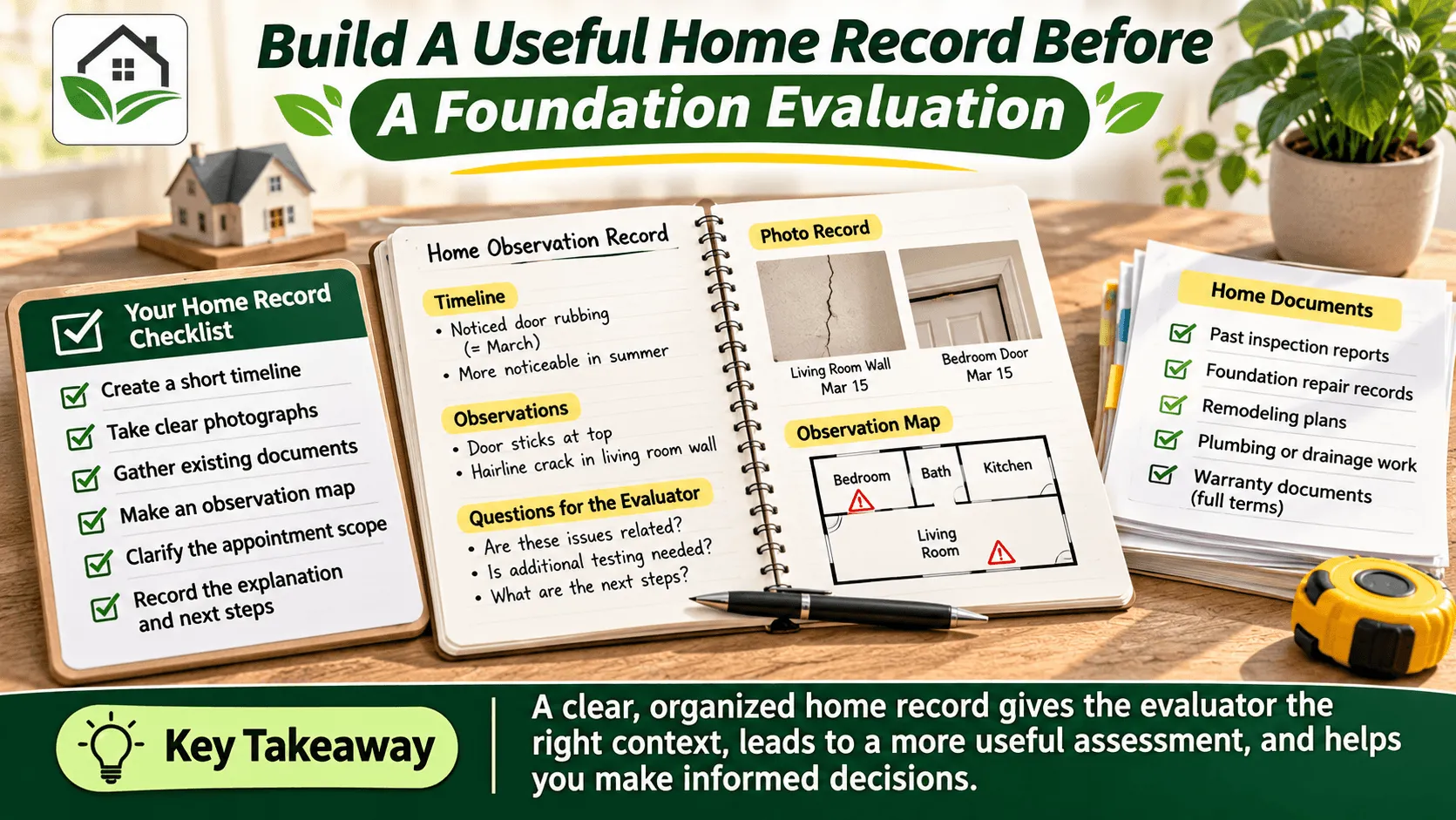
When something changes in a house, the first question is often whether it matters. A door feels different, a line appears in a wall, or an old patch becomes noticeable again. Those observations deserve attention, but they do not identify a cause by themselves. A professional evaluation is more useful when the homeowner can explain what changed and provide a clear history.
Creating that history does not require special equipment or a technical diagnosis. Think of it as a house record: a practical collection of observations, photographs, and existing documents. Its purpose is to help the person assessing the property understand your concerns without asking you to become a foundation specialist.
Start With a Short Timeline
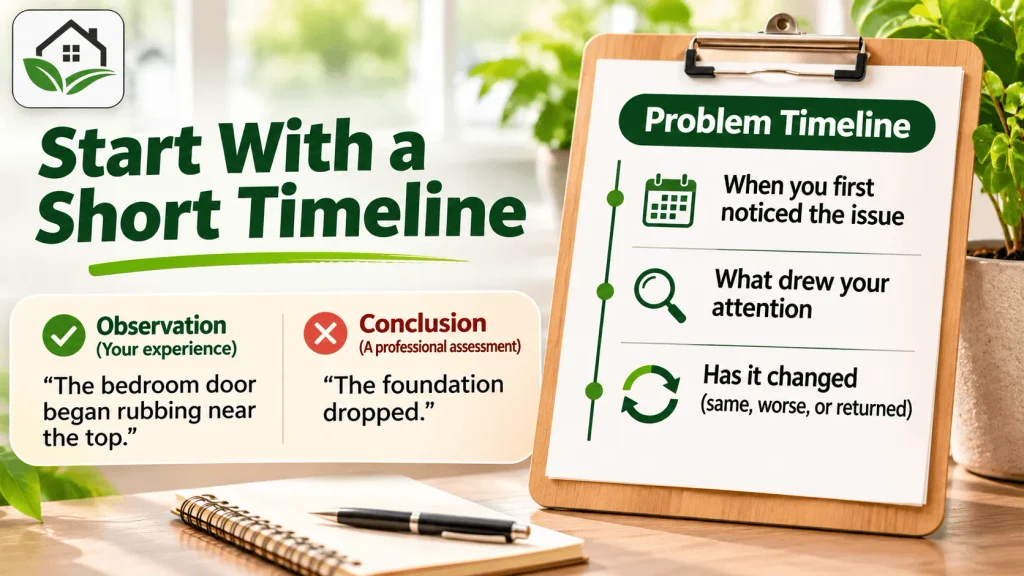
Write down when you first noticed the issue and what drew your attention to it. If you do not remember the exact date, say so. An approximate month is more useful than an invented date that makes the record appear precise. Include whether the concern has changed, remained similar, or disappeared and returned.
Separate observations from conclusions. “The bedroom door began rubbing near the top” describes something you experienced. “The foundation dropped” is a diagnosis that should come from an appropriate assessment. Keeping those categories separate helps the evaluator consider the property rather than simply confirm a theory you brought to the appointment.
Use Photographs To Establish Location
A close photograph can show a detail while leaving its location unclear. When it is safe to do so, take an ordinary room view as well as a closer image of the concern. Label the room and date in your notes. You do not need to enter a hazardous space, move heavy furniture, or climb to collect a complete record.
If you already have older photographs, keep them available rather than assuming they are irrelevant. A family picture or a previous listing image may show the same area at another time. Describe the source honestly and avoid drawing technical conclusions from an image that was taken for a different purpose.
Do not wait to build a perfect photo collection if you believe there is an immediate safety issue. Avoid the affected area and seek appropriate professional or emergency assistance. Documentation supports an assessment; it should never become a reason to delay a necessary response or expose yourself to danger.
Gather Documents You Already Own
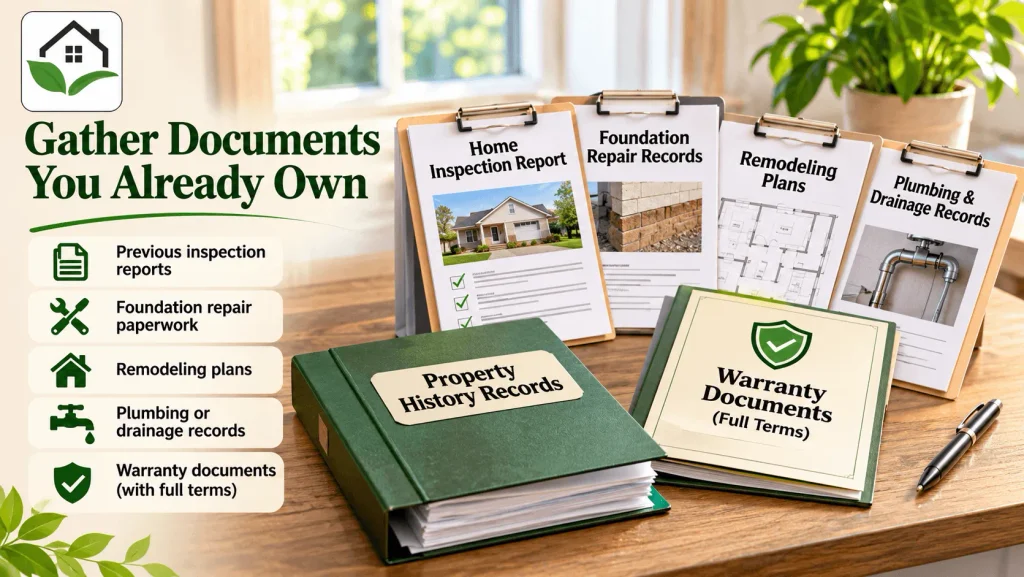
Look for previous inspection reports, foundation repair paperwork, remodeling plans, and records of relevant plumbing or drainage work. Include any available warranty documents with the full terms, not just a sales brochure. The fact that work was performed does not establish the cause of a new concern, but it can help clarify the property’s history.
Keep original documents intact. If you want to highlight a section, work from a copy and retain the complete version. A single paragraph may be less useful without the assumptions and limitations elsewhere in the report. Tell the evaluator when records are incomplete rather than filling the gaps with recollections presented as facts.
Make an Observation Map
A simple sketch of the rooms can help organize several concerns. Mark where you noticed a sticking door, a visible crack, or a change in a floor’s appearance. This is a communication aid, not a technical drawing. Use everyday room names that the person visiting can easily recognize.
Include a separate list of questions beside the sketch. Perhaps you want to know whether two observations appear related, whether another type of specialist should be involved, or what additional information would be useful. Asking those questions is more productive than assuming every mark in the house belongs to the same problem.
Clarify The Purpose of the Appointment
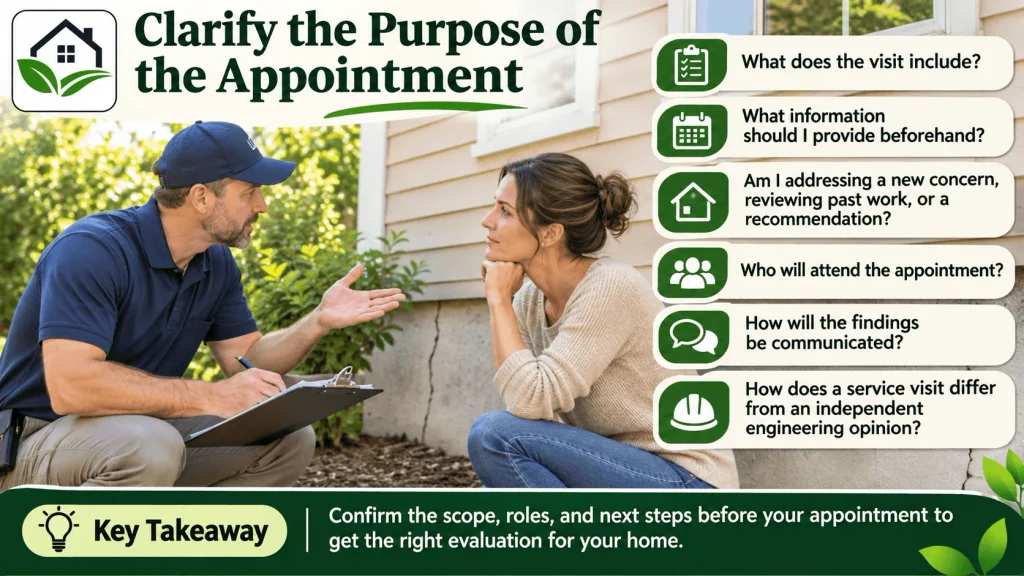
When scheduling, ask what the visit includes and what information the company would like beforehand. Explain whether you are investigating a new concern, reviewing previous work, or considering a recommendation someone else made. Ask who will attend and how the findings will be communicated.
For homeowners reviewing Hy Tech’s concrete foundation repair services, the company’s concrete foundation page provides a starting point for discussing an evaluation. Bring your observations and records to that conversation, then ask how the assessment will distinguish what is known from what requires further investigation.
A service visit and an independent engineering opinion may have different scopes. Ask the relevant professionals to explain their roles and whether your circumstances call for additional expertise. Avoid assuming that every appointment includes the same testing, documentation, or advice simply because each is described as an inspection.
Record The Explanation, Not Just The Recommendation
During the visit, ask the evaluator to connect recommendations to the findings. Which observations support the explanation? What remains uncertain? Are there other conditions that should be assessed before a repair decision is made? You should be able to understand the reasoning in ordinary language, even when the technical work is specialized.
Request a written description of the proposed scope and any limitations. If there are alternatives, ask how they differ and why one is recommended for the property. Do not treat a named repair method as a complete explanation of the project. The important question is how the proposed work addresses the assessed conditions of your house. Keeping a record of estimated costs can also help when planning for unexpected home repair costs.
Before the appointment ends, repeat your understanding back to the evaluator. This gives both of you a chance to correct a misunderstanding while the details are fresh. Note the next step, who is responsible for it, and whether you are waiting for a report, another visit, or information from a different professional.
Keep the Decision Record Separate
Once a proposal arrives, create a separate section for decisions. Keep the assessment, proposed work, exclusions, price, and unanswered questions together. If a document is revised, label the version so you do not accidentally compare an older scope with a newer price.
Ask how any additional findings would be handled and approved. Clarify responsibilities for access, surrounding property, cleanup, and related work without assuming those items are included. Read applicable warranty terms and ask who handles future questions. Avoid interpreting a warranty name as a promise that every later issue will be covered.
A well-organized house record does not determine whether repairs are needed. It gives the professional assessment a clearer starting point and helps you understand the decisions that follow. Keep the record factual, acknowledge uncertainty, and update it when new information becomes available. That is more useful than trying to diagnose the house from a single photograph or an alarming search result.
Final Takeaway
Preparing for a foundation evaluation is primarily an exercise in clear documentation, not structural diagnosis.
A short timeline, labeled photographs, previous reports, and an observation map can help a professional understand your home’s history. Written findings and carefully organized proposals can then support decisions about further investigation, monitoring, or repairs.
Keep the record factual, acknowledge missing information, and avoid unsafe inspections. A useful home record makes the evaluation easier to discuss without replacing professional judgment.
FAQ’s
Prepare a timeline of observed changes, dated photographs, previous inspection reports, relevant repair records, and a short list of questions. A simple property sketch can also help identify the locations of concerns.
Useful documents include earlier inspection reports, structural assessments, foundation repair invoices, warranty paperwork, and records of relevant plumbing, drainage, or remodeling work. The evaluator can explain which documents are needed for your property.
Yes, when it is safe. Take a wider photograph showing the crack’s location and a closer photograph showing the visible detail. Record the date and avoid altering the surface.