8 Exterior Upgrades That Make Your Whole House Look Better
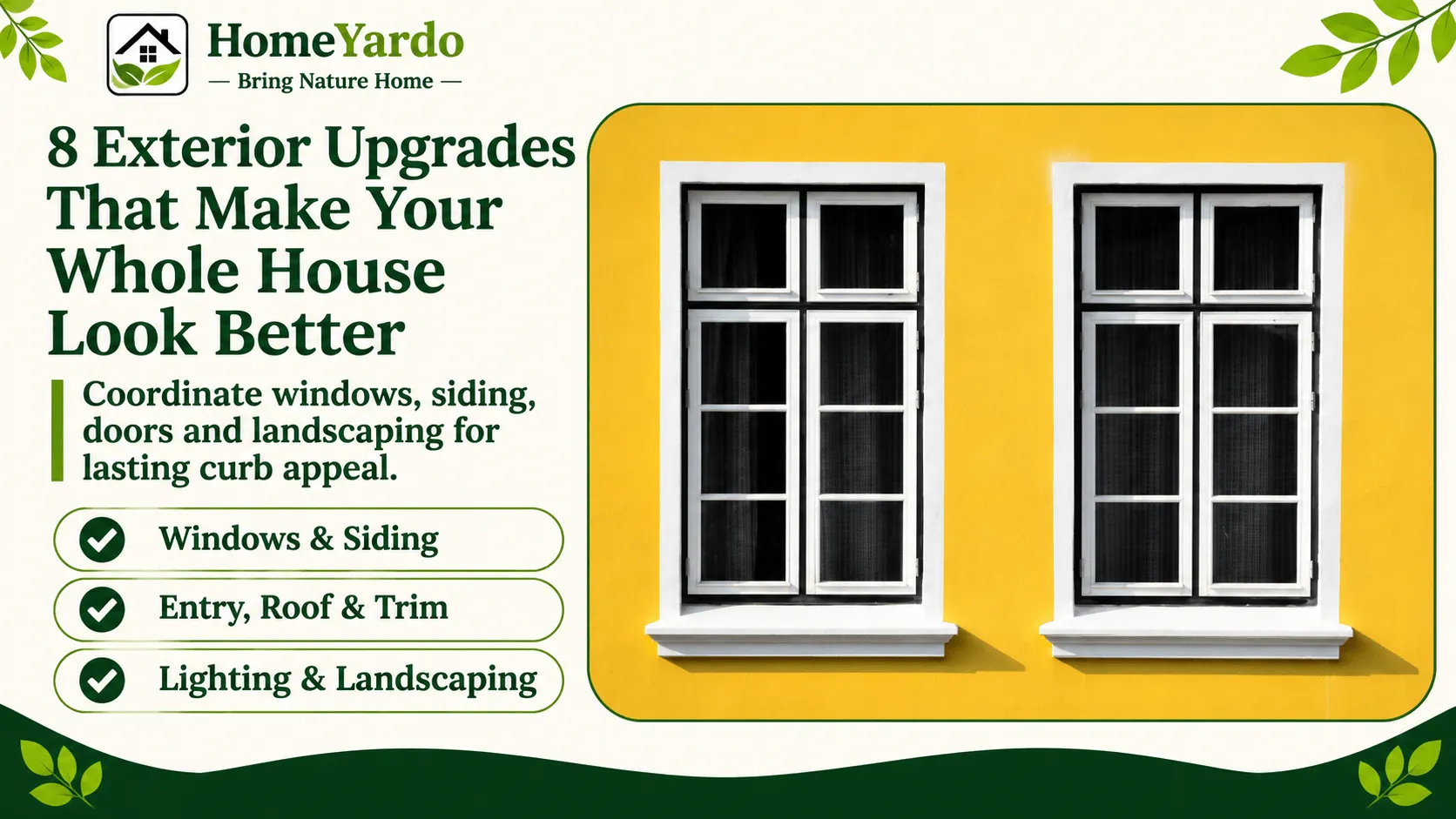
A house can have a beautiful interior and still feel tired from the street. Faded siding, aging windows, mismatched trim, and a neglected entryway can make an otherwise well-maintained property look older than it is.
The solution isn’t necessarily a complete exterior renovation. Often, one carefully chosen improvement makes several surrounding features look better. Fresh windows highlight the siding, a new front door draws attention to the entrance, and updated landscaping brings the entire design together.
This chain reaction is what makes exterior upgrades particularly rewarding. By understanding how different elements interact, homeowners can create a cohesive appearance while improving comfort, weather protection, and long-term maintenance.
Let Your Windows Set the Direction for the Exterior
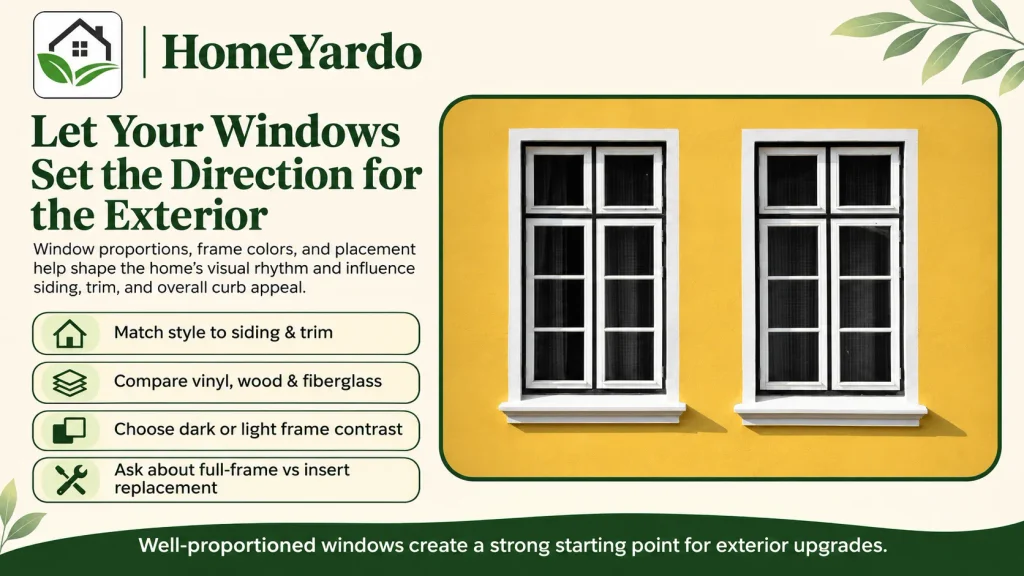
Windows influence a home’s appearance more than many homeowners realize. Their proportions, frame colors, and placement help establish the visual rhythm of the facade.
When existing units become drafty, difficult to operate, or visibly deteriorated, replacement windows can improve both the home’s appearance and its everyday functionality.
Before choosing a style, examine the surrounding siding, trim, and architectural details. Dark frames may create striking contrast, while lighter finishes often blend with traditional exteriors.
Material choices deserve equal attention. Vinyl, wood, and fiberglass offer different combinations of appearance, maintenance requirements, durability, and cost.
Ask contractors whether full-frame installation or an insert replacement is appropriate for the existing openings. The condition of the frames, surrounding materials, and desired glass area can influence that decision.
Well-proportioned windows provide a useful starting point for coordinating the remaining improvements. For more ideas on how windows influence your home’s overall appearance, explore these home exterior design tips.
Use Siding To Create a Consistent Visual Foundation
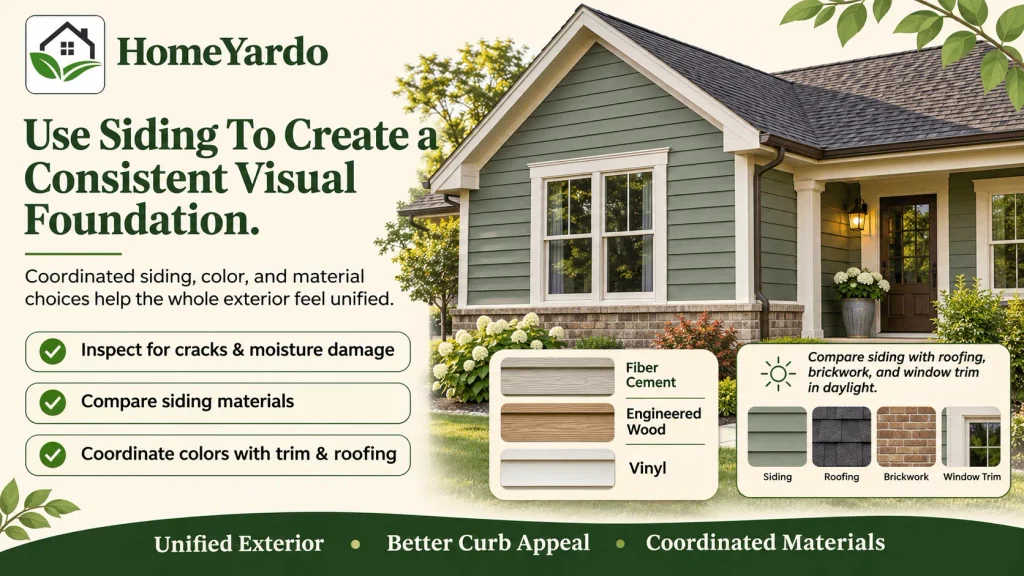
Siding covers a large portion of most homes, making its condition essential to overall curb appeal.
Even attractive windows and doors can appear disconnected when surrounded by warped, faded, or damaged exterior panels.
Start by inspecting siding for cracks, loose sections, moisture damage, and areas requiring frequent repairs.
If replacement is necessary, consider how different materials suit the home’s architecture and maintenance expectations.
Fiber cement, engineered wood, and vinyl siding offer distinct advantages and limitations.
Color selection also matters. Rather than choosing a shade in isolation, compare samples beside roofing, brickwork, and window trim under natural daylight.
Subtle combinations often create a more unified appearance than several competing accent colors.
A coordinated siding upgrade can make an older property look refreshed without changing its basic architectural character.
Make The Front Door the Home’s Focal Point
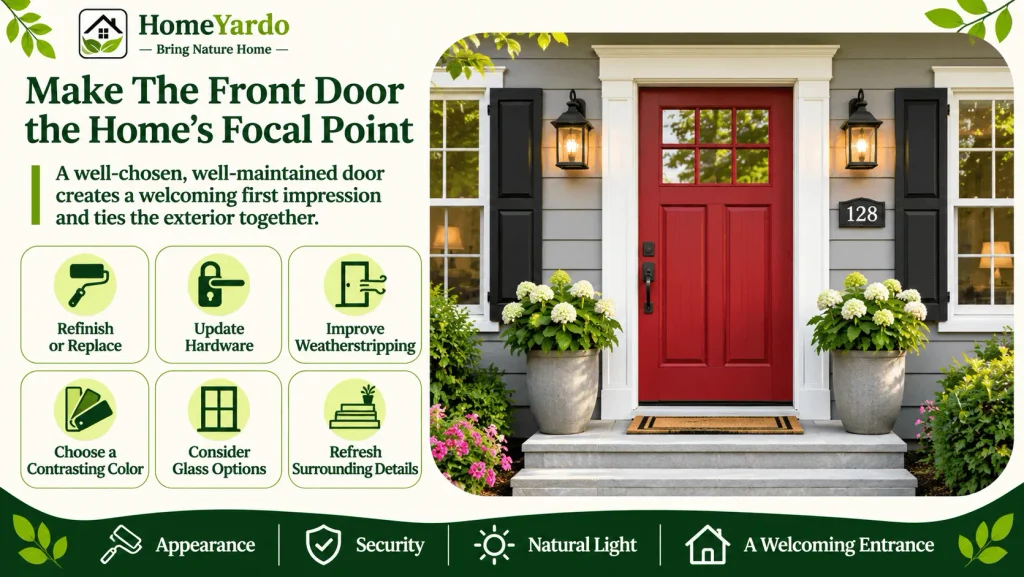
The front door is a relatively small feature with an unusually strong visual impact.
A faded or damaged entrance can undermine the appearance of an otherwise attractive facade.
Consider whether the existing door needs refinishing, new hardware, improved weatherstripping, or complete replacement.
A contrasting color can create an inviting focal point, particularly when it complements nearby shutters or trim.
Glass inserts may introduce natural light, but privacy and security should influence the choice.
Hardware finishes should coordinate with exterior lighting and house numbers.
Don’t overlook the surrounding details. A clean threshold, properly sealed frame, and well-maintained steps make the entrance feel more complete.
The goal is to create a welcoming transition from the street to the interior. Homeowners can also explore ways to create a welcoming home exterior to improve the entrance and surrounding outdoor spaces.
Give Rooflines and Gutters Equal Design Attention
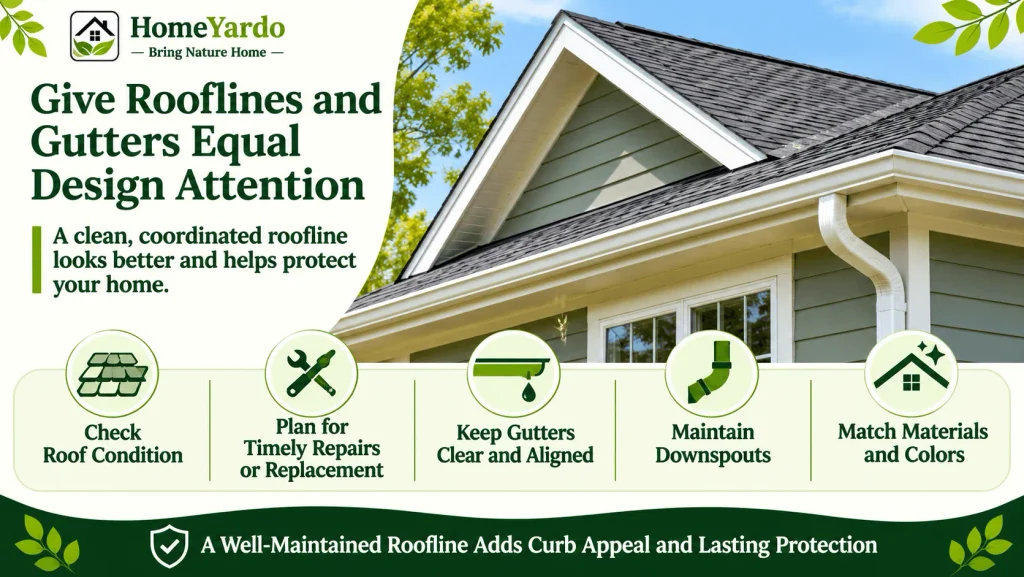
Roofs and gutters perform essential protective functions, but they also shape a home’s appearance.
Stained shingles, uneven gutter lines, and deteriorating fascia can make the entire exterior seem neglected.
Inspect visible roofing conditions from the ground and arrange professional evaluation when damage is suspected.
Avoid walking on the roof without proper training and equipment.
When roof replacement becomes necessary, consider how the selected color and material will coordinate with siding and trim.
Gutters should direct rainwater away from vulnerable areas while fitting neatly along the roofline.
Damaged downspouts or overflowing gutters may contribute to staining and moisture problems.
A clean, properly maintained roofline creates a more polished appearance while helping protect the building beneath it.
Refresh Trim Without Overcomplicating the Color Scheme
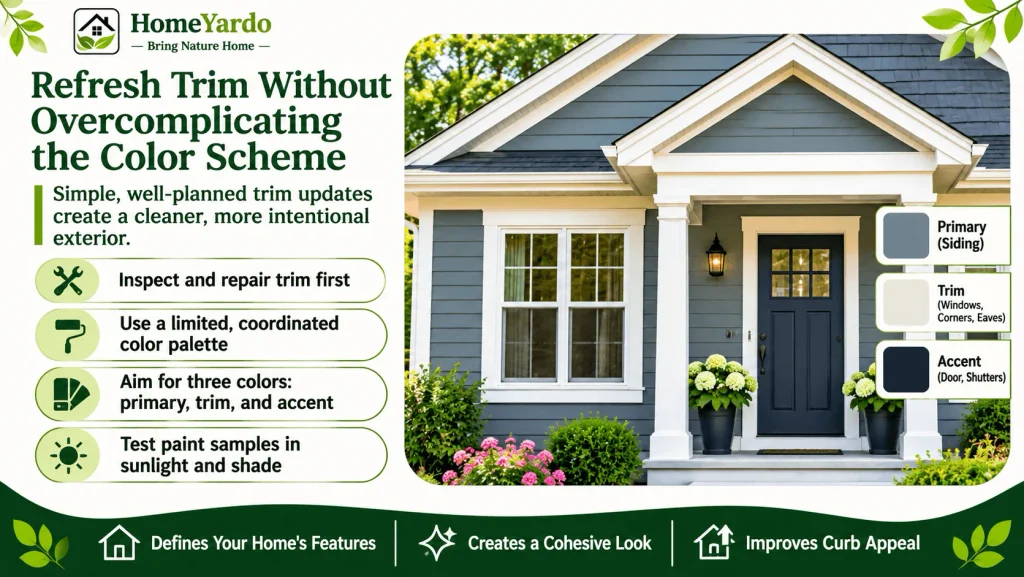
Exterior trim acts like a frame around a picture. It defines windows, doors, roof edges, and architectural features that might otherwise disappear into the background.
Peeling paint, damaged boards, and inconsistent colors can make these details look unfinished.
Begin by identifying which trim components need repair before repainting. Covering deteriorated wood with fresh paint won’t solve underlying moisture problems.
Choose a limited color palette that connects the roof, siding, windows, and entryway.
For many homes, one primary exterior color, a complementary trim shade, and a carefully chosen accent provide enough variety.
Test paint samples in sunlight and shade before committing.
Thoughtful trim improvements can give the entire exterior a sharper, more intentional appearance without requiring major structural changes.
Improve Outdoor Lighting for Safety and Atmosphere
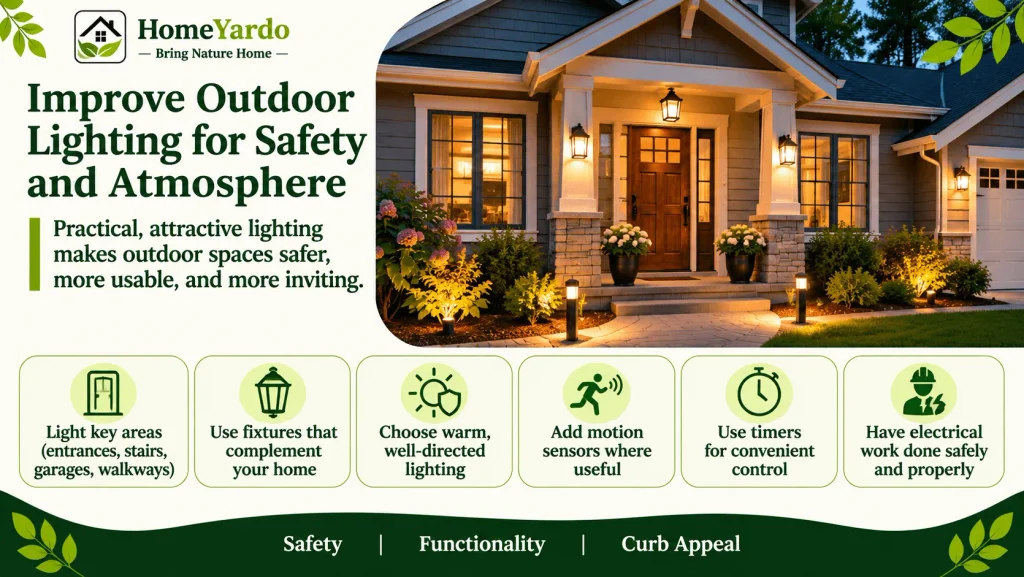
Exterior lighting serves two purposes: helping people navigate safely and highlighting the home’s best features after sunset.
Start with practical locations such as entrances, stairs, garages, and frequently used walkways.
Replace damaged fixtures and choose designs that complement the property’s architectural style.
Warm, restrained lighting often creates a welcoming atmosphere without making the exterior excessively bright.
Consider shielded fixtures that direct light where it’s needed rather than into neighboring windows.
Motion-activated lighting can be useful near certain access points, while timers provide convenient control.
Electrical installations should be completed safely and in accordance with applicable requirements.
Well-planned lighting makes outdoor spaces more usable and gives the property a finished appearance during evening hours.
Connect the House to the Yard With Simple Landscaping
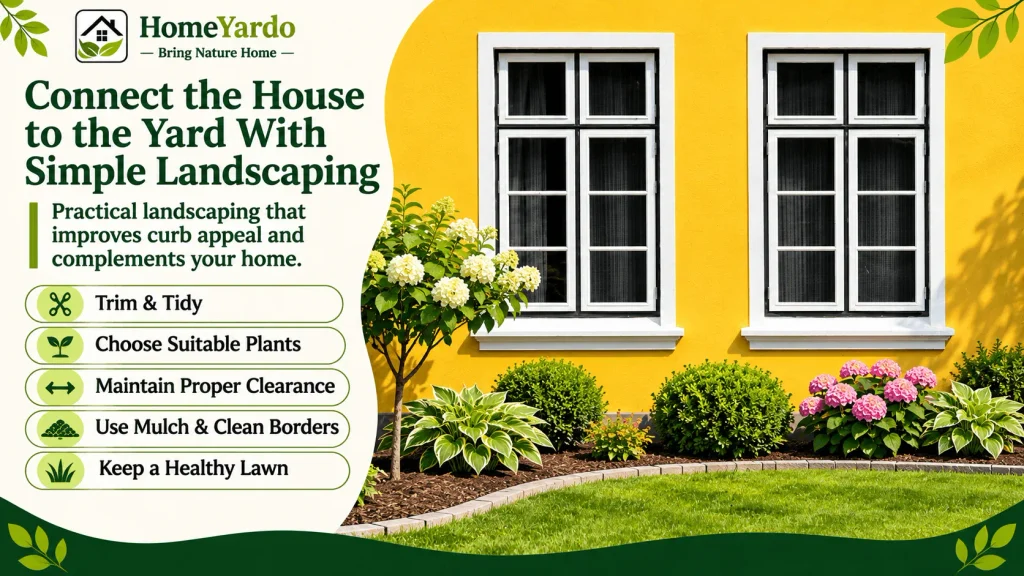
Landscaping can soften hard architectural lines and make exterior improvements feel connected.
However, elaborate gardens aren’t necessary to create an attractive result.
Begin by removing overgrown vegetation, edging planting beds, and maintaining clear walkways.
Choose plants suited to local growing conditions and the amount of sunlight available.
Consider mature plant sizes before placing shrubs near windows, siding, or foundations.
Leave sufficient clearance for maintenance and airflow around the building.
A few carefully positioned plants can frame an entrance without concealing attractive architectural features.
Mulch, clean borders, and healthy lawn areas can also improve the overall presentation.
The best landscaping supports the home’s design while remaining manageable throughout the year.
Plan Exterior Projects in the Right Order
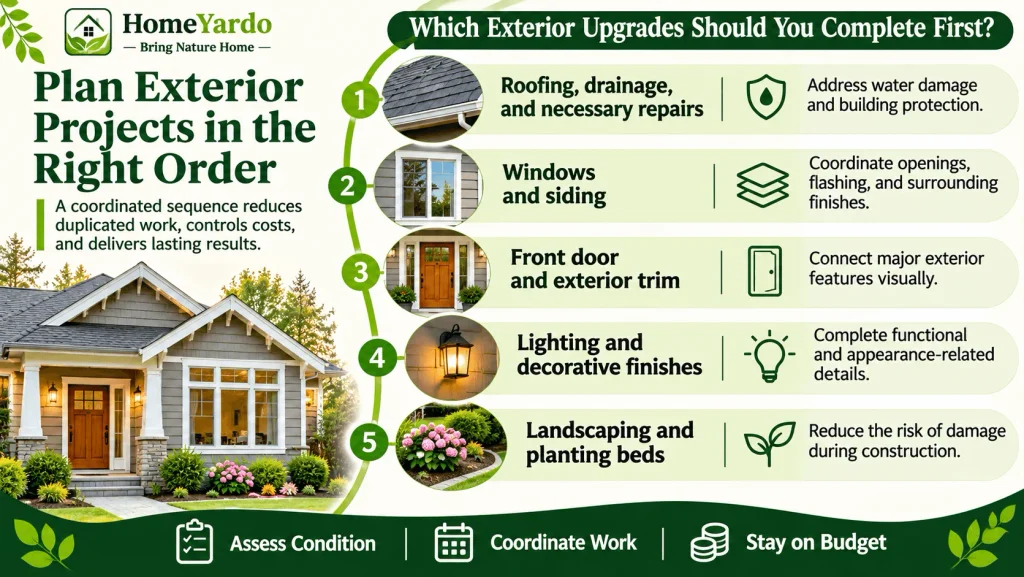
One of the most expensive renovation mistakes is completing improvements in an inconvenient sequence.
For example, painting exterior trim immediately before replacing windows may result in unnecessary touch-ups.
Similarly, installing new landscaping before major construction can expose plants and pathways to damage.
Begin with a professional assessment of roofing, drainage, siding, windows, and structural concerns.
Prioritize repairs that protect the home from water intrusion and deterioration.
Next, coordinate projects that affect overlapping materials, such as window installation and siding replacement.
Leave decorative painting, lighting adjustments, and landscaping for later stages when practical.
Request detailed estimates and discuss how contractors will protect surrounding surfaces.
A coordinated plan can reduce duplicated work and help homeowners control their budgets.
Ultimately, a successful exterior makeover isn’t defined by how many features are replaced. It’s measured by how well the improvements work together.
By starting with essential repairs, choosing complementary materials, and completing projects in a sensible order, homeowners can create an exterior that looks inviting, performs reliably, and remains easier to maintain for years.
Which Exterior Upgrades Should You Complete First?
Use this general sequence as a starting point:
| Priority | Exterior project | Reason |
|---|---|---|
| 1 | Roofing, drainage, and necessary repairs | Address water damage and building protection |
| 2 | Windows and siding | Coordinate openings, flashing, and surrounding finishes |
| 3 | Front door and exterior trim | Connect major exterior features visually |
| 4 | Lighting and decorative finishes | Complete functional and appearance-related details |
| 5 | Landscaping and planting beds | Reduce the risk of damage during construction |
The actual order will depend on the property’s condition, project scope, and contractor recommendations.
Request itemized estimates for major work, confirm permit requirements where applicable, and discuss how contractors will protect surrounding materials.
For broader renovation sequencing and budgeting considerations, see HomeYardo’s residential exterior refresh planning guide.
A coordinated schedule can help homeowners avoid duplicate labor, unnecessary repairs, and conflicting design choices.
Bringing Your Exterior Upgrades Together
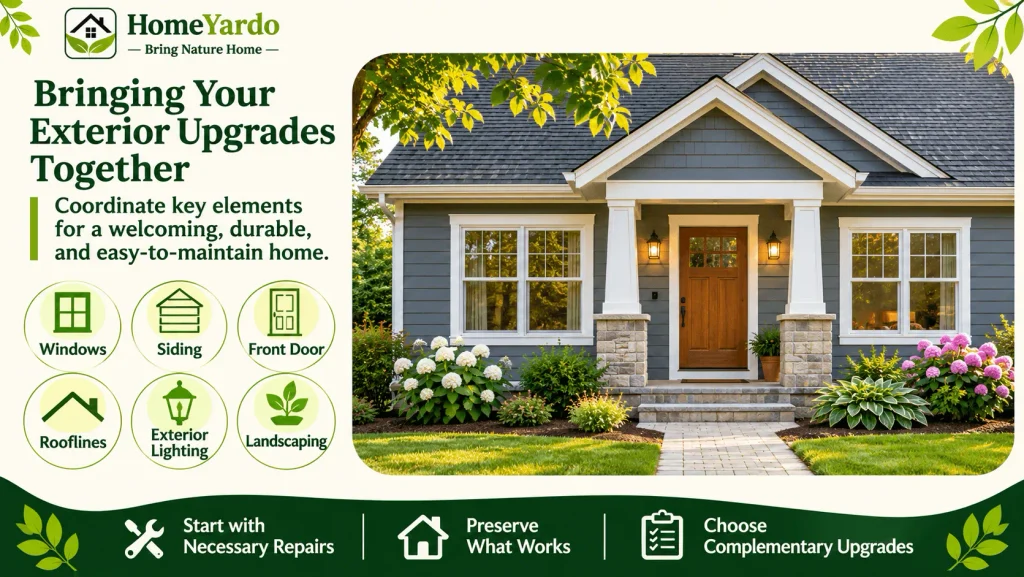
Improving curb appeal isn’t about replacing every visible feature or choosing the most expensive materials.
It’s about understanding how different parts of the home’s exterior work together.
Windows can influence siding and trim decisions. A coordinated color scheme can make the front door more inviting. Rooflines, exterior lighting, and landscaping can reinforce the same architectural direction.
Begin with necessary repairs, preserve features that already work well, and choose upgrades that complement the home’s existing character.
With thoughtful planning, homeowners can create an exterior that looks welcoming, performs reliably, and remains manageable to maintain for years.
Frequently Asked Questions
Windows, siding, front doors, roofing, exterior trim, lighting, and landscaping can all improve curb appeal. The most noticeable changes depend on the home’s existing condition, architectural style, and which features are visible from the street.
Start with improvements that address visible wear, such as repairing trim, repainting the front door, maintaining landscaping, cleaning suitable exterior surfaces, and updating damaged fixtures. Coordinate the colors and finishes to create a consistent appearance.
The best sequence depends on the condition of both components and the installation methods involved. When replacing windows and siding together, coordinate the projects so flashing, trim, and weather-resistant barriers are properly integrated. Ask the installation contractors to establish the appropriate order before work begins.
Colors that complement a home’s architecture, roofing, brickwork, and surroundings generally work best. Neutral siding colors paired with complementary trim and a restrained accent can create a cohesive appearance, although the ideal combination varies by property.
Some exterior improvements may support resale appeal and property value, particularly when they address visible deterioration or functional problems. However, the financial return depends on local housing conditions, the quality of the work, and the total project cost. Not every upgrade will recover its expense at resale.
Establish a consistent design direction before selecting individual materials. Coordinate window frames, siding colors, roof finishes, trim, door hardware, and lighting. Use landscaping to connect the house to surrounding outdoor spaces without hiding important architectural features.