Alocasia Frydek Care Guide: How To Grow Green Velvet Alocasia Indoors
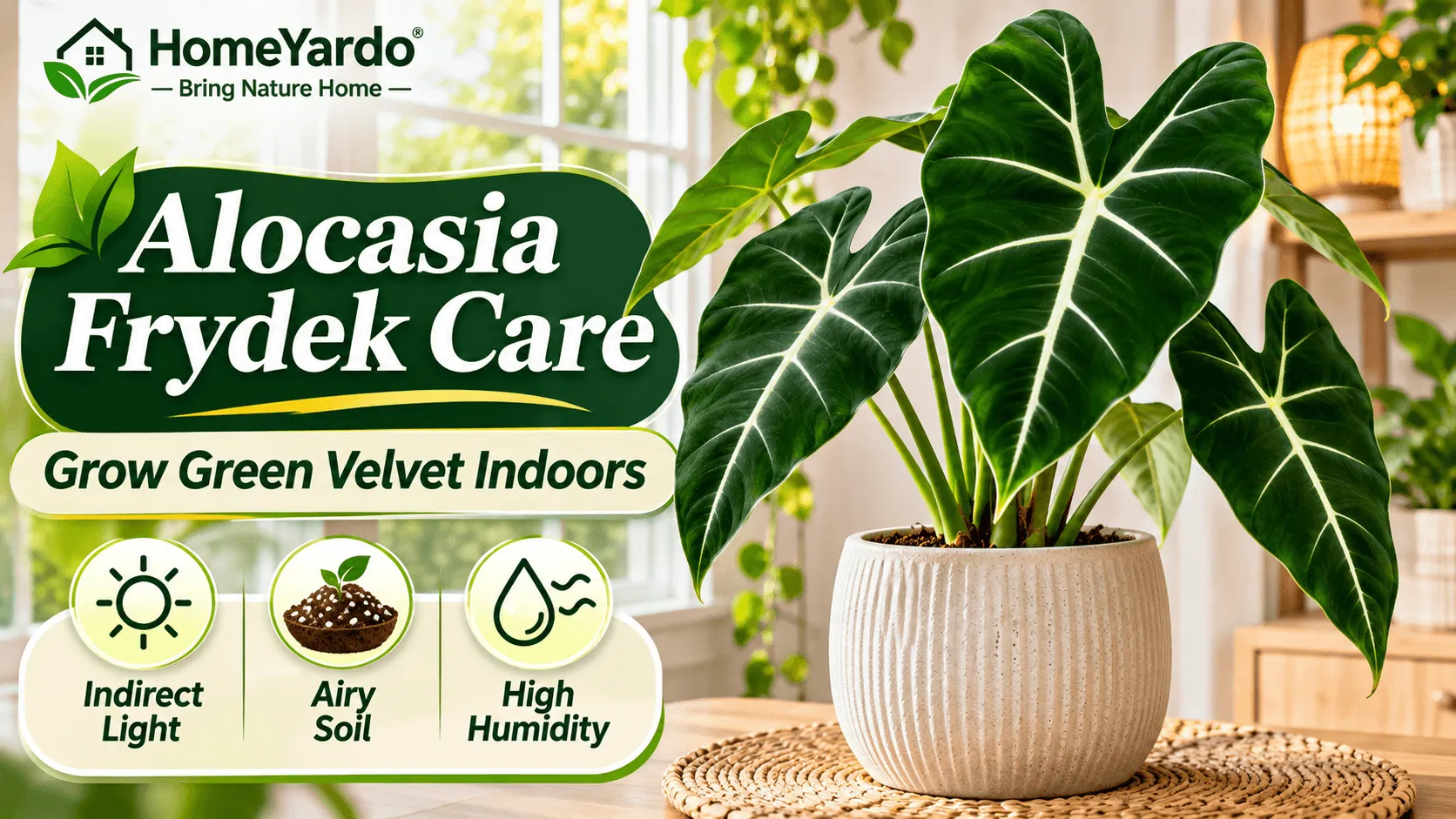
Alocasia Frydek, or Green Velvet Alocasia, is a plant that is cultivated for its smooth texture in dark leaves and bright veins. Elegant, but it is not asking for magic. It requires equilibrium.
Typically, the worst care problems stem from soggy soil, dry air, poor light, cold drafts or abrupt changes. After all the thrill of the shop, a plant that appears to be just right in the shop ends up drooping at home for a while. However, it is typically stress and not failure that elicits such a reaction.
This is a practical guide for Alocasia Frydek care. Light, watering, soil, humidity, temperature, fertilising, repotting, outdoor maintenance, propagation, leaf issues, pests, flowers, toxicity, buying advice and care of variegated Frydek.
The plant should look easier to read at the end. Not silent. Not mysterious. Slightly dramatic when it’s time to make a change.
Key Takeaways: Alocasia Frydek Care
Plant maintenance is easier when the plant’s internal conditions are stable. Does not like extremes; it is not perfection. The aim is a stable configuration.
- This plant will grow in bright indirect light but won’t burn the leaves.
- Water when the upper 1-2″ of soil starts to turn dry.
- Be sure to use chunky, airy soil, allowing roots to breathe.
- More humidity is beneficial to minimize crispy tips and curled leaves.
- Warm rooms are preferred to cold drafts or air conditioning.
- Monitor for roots and pests when leaves have drooped, yellowed, or wilted rapidly.
These are care tips that complement each other. If the soil is tight and is causing root rot, watering will do little good and humidity will not cure root rot. A well-rounded schedule will be rewarded in Frydek.
Alocasia Micholitziana Care Table
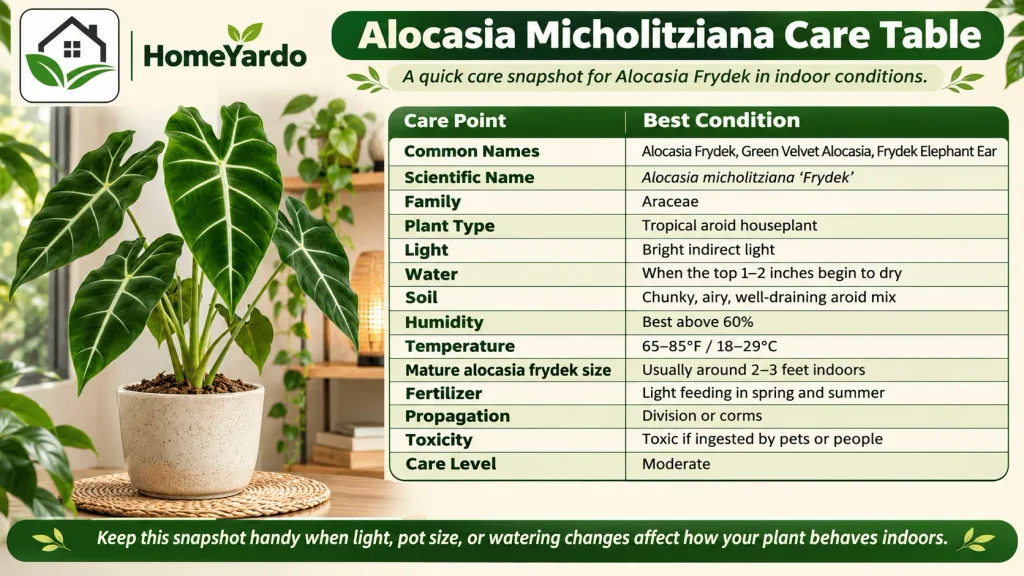
Below is the fast care snapshot. If the plant becomes moody and the source of the issue is unclear, have it on hand.
| Care Point | Best Condition |
|---|---|
| Common Names | Alocasia Frydek, Green Velvet Alocasia, Frydek Elephant Ear |
| Scientific Name | Alocasia micholitziana ‘Frydek’ |
| Family | Araceae |
| Plant Type | Tropical aroid houseplant |
| Light | Bright indirect light |
| Water | When the top 1–2 inches begin to dry |
| Soil | Chunky, airy, well-draining aroid mix |
| Humidity | Best above 60% |
| Temperature | 65–85°F / 18–29°C |
| Mature Alocasia Frydek size | Usually around 2–3 feet indoors |
| Fertilizer | Light feeding in spring and summer |
| Propagation | Division or corms |
| Toxicity | Toxic if ingested by pets or people |
| Care Level | Moderate |
The basic care target is provided in the table. The following information provides instructions on how to use each point in an indoor setting, where slight adjustments to light, pot size and watering can have a significant impact.
What Is Alocasia Frydek?
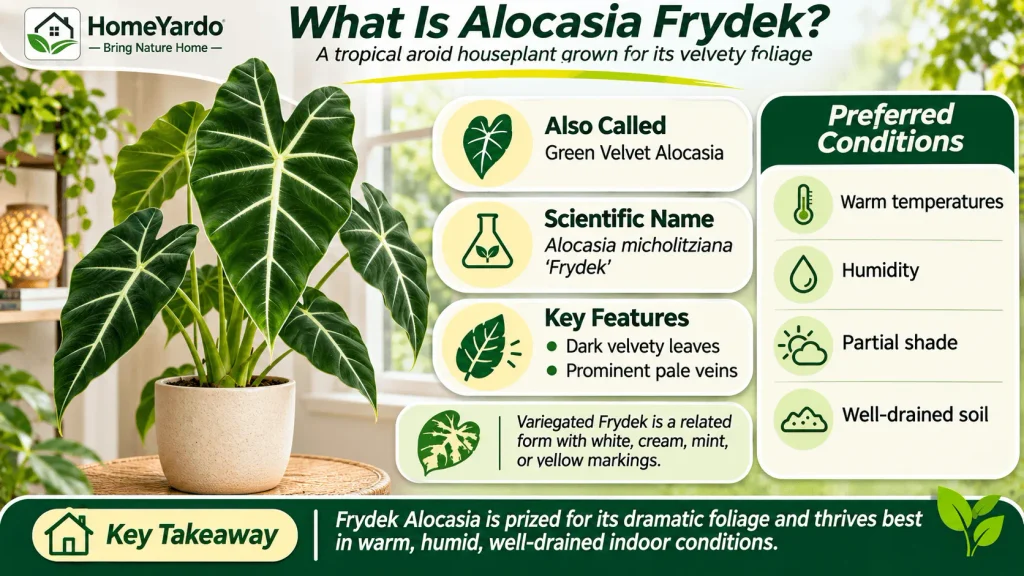
It is a tropical aroid houseplant, primarily propagated for its foliage. It’s often referred to as Frydek Alocasia, with its scientific name being Alocasia micholitziana ‘Frydek’.
The dark velvety leaves with prominent pale veins are well sought after for ornamental purposes. The contrast is clear and crisp, and this creates a polished appearance to the plant.
Alocasia Frydek is a tropical plant that prefers warm temperatures, high humidity, filtered light, and well-draining soil. These requirements are shared by many tropical house plants, although each species has different watering and lighting needs. Indoors, the goal is to maintain consistent growing conditions without leaving the roots in waterlogged soil.
Is Alocasia Frydek The Same As Green Velvet Alocasia?
They are typically the same plant. The common name is derived from the dark, soft-looking surface of the leaves.
Scientific name: Alocasia micholitziana ‘Frydek’. The names can be found on nursery labels and on plant lists on the internet.
Variegated Alo Frydek is another variety that features white, cream, mint or yellow markings. It’s described later, since its care requirements are similar, but not the same.
What Is The Scientific Name Of Alocasia Frydek?
It goes by the scientific name Alocasia micholitziana ‘Frydek’. The species is Alocasia micholitziana and the cultivated form is known as ‘Frydek’.
Sellers of plants tend to use shorter names as this is easier for the common buyers. Having the scientific name is useful when comparing care advice. It will also aid in the identification of Frydek from other Alocasia plants that may be similar in appearance at first glance.
Alocasia Frydek Appearance, Leaves, And Mature Size
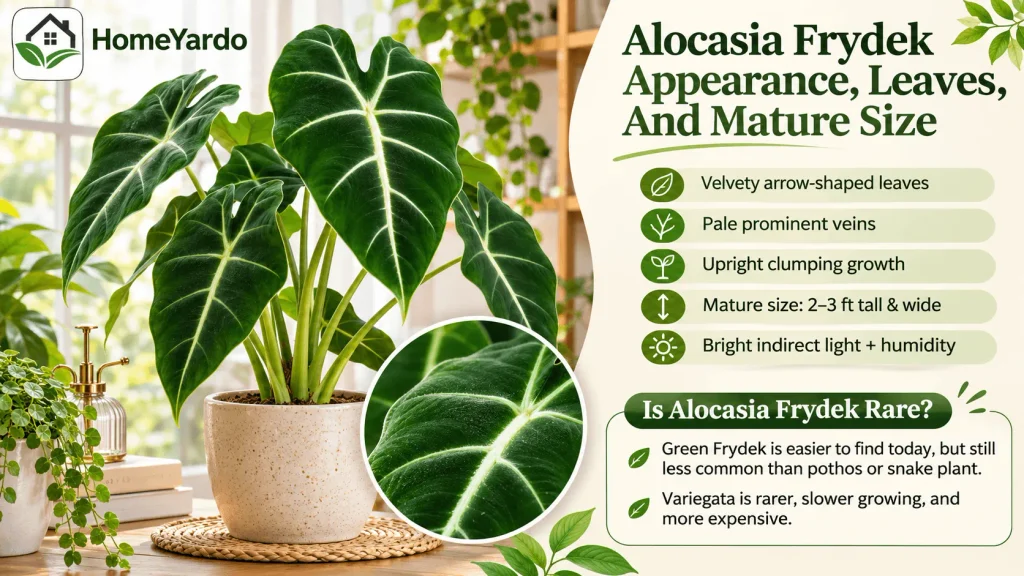
Its leaves are softly velvety and in an arrow shape or shield shape. Usually, the veins are pale white, cream, or light green and they are very prominent on the dark leaf surface.
The plant has an upright clumping growth.
The Alocasia frydek leaves and stems can be smaller on young plants and thicker on the older plants; the plants are more dramatic on mature plants. In the container, an Alocasia frydek growth to 2–3 feet tall and wide and can mature into a vigorous plant.
Alocasia frydek mature thrives in bright, indirect light, warm temperatures and increased humidity. New leaves grow slowly in low light, dry air, or winter.
Is Alocasia Frydek Rare?
Alocasia Frydek full grown which is green, is easier to find these days. It’s available in many local plant shops, online stores and collectors.
Although green Frydek is more widely available than some rare collector plants, it may be harder to find locally than pothos or snake plants. Its velvety foliage makes it an attractive choice for indoor displays, but its humidity and watering needs require attention. If you’re looking for more compact alternatives, our guide to the best small indoor plants includes options for different spaces, lighting conditions, and care levels.
Alocasia frydek variegata is typically less common and costly. This form is slower to develop and requires additional attention and is therefore often used as a collector plant.
Alocasia Frydek Indoor Plant Care
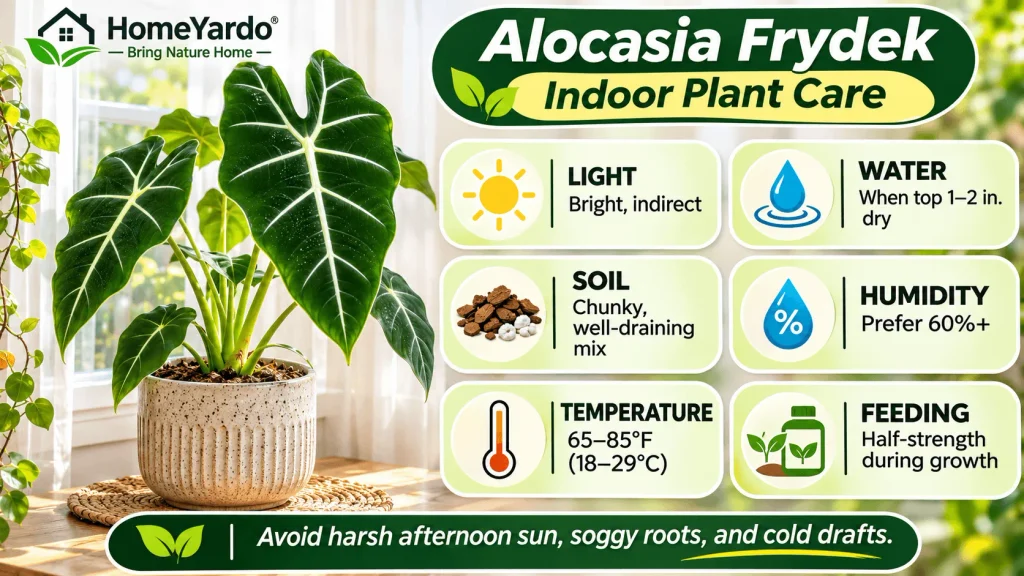
Care at home involves a steady environment. The plant prefers direct light with a bit of shade, chunky soil, careful watering, warm soil and humidity.
It is easy to provide care: air, light, water, no hard sun or cold stress – for the roots. As one piece becomes out of balance, the leaves tend to reveal that in a short time.
It’s better to make some small adjustments than to have panic care. Stress may be caused by repotting, fertilizing, heavy watering, cutting back, and repotting the plant at the same time.
How Much Light Does Alocasia Frydek Need?
Ideal growing conditions are bright indirect light. If you’re looking for an interior window, an east-facing option is usually a better choice, as it avoids the heat of the afternoon sun.
If the room is not too dark, a bright north-facing window may help. Windows to the south or west can also be used, provided the plant is sheltered from the window or a sheer curtain is used.
The leaves of the velvet may scorch in direct sun. Low light intensity can lead to weak stems, reduced leaf size, growth retardation and leaning.
| Placement | Result |
|---|---|
| East window | Usually safe and bright |
| Bright north window | Can work if not too dim |
| Filtered south/west window | Good with curtain or distance |
| Direct afternoon sun | Can scorch leaves |
| Dark corner | Slow, weak growth |
If the plant leans towards the light, rotate the pot every week or two. This little habit helps to keep the shape even and helps to ensure that each side gets its turn.
How Often Should I Water Alocasia Frydek?
Alocasia Frydek watering is initiated when the upper 1-2 inches of soil are dry. The soil should be slightly moist, but not damp or muddy, down below.
Problems can occur with a fixed weekly watering. A small pot in a bright, warm place may start to dry quickly; a large pot in a cool room may remain moist for a prolonged period.
Before watering, check the soil. If the top can be seen to be dry and the pot is lighter, water it thoroughly until it drips through. Wait until the soil is dry if it still feels moist.
| Situation | Watering Response |
|---|---|
| Top soil dry, pot feels light | Water thoroughly |
| Top soil wet, pot feels heavy | Wait |
| Leaves drooping, soil dry | Water soon |
| Leaves drooping, soil wet | Check roots |
| Winter growth slows | Water less often |
Sensitive plants are also sensitive to water quality. If tips continue to get worse despite proper humidity and watering practices, you may have a problem with the water quality. Tap water that contains too many minerals could be a problem.
Resting tap water, rainwater or filtered water may help. It’s not required, but helpful when “everything else seems right.”
What Kind Of Soil Does Alocasia Frydek Need?
Alocasia Frydek soil needs are chunky, well-draining, and porous, but not overly damp. A soil mix used in the home is sometimes too compact and will retain water around the roots if it is used alone.
A good aroid mix provides moisture, as well as oxygen, to the roots. The balance is important because the roots of Alocasia tend to rot in wet soil without air.
| Ingredient | Why It Helps |
|---|---|
| Indoor potting mix | Holds light moisture |
| Orchid bark | Adds chunky air pockets |
| Perlite or pumice | Improves drainage |
| Coco coir or peat | Holds controlled moisture |
| Worm castings or compost | Adds gentle nutrients |
| Charcoal, optional | Helps keep the mix fresh |
For simplicity, you can combine 2 part indoor potting mix, 1 part orchid bark, 1 part perlite/pumice, and 1 part coco coir. Worm compost can provide some light fertilizer.
The blended mixture should not be muddy. It should not be heavy and wet and form into a clump when squeezed, as this will stay wet for days.
Does Alocasia Frydek Need High Humidity?
Yes, Alocasia Frydek humidity is typically greater than 60%. Dry indoor air will result in crispy tips, curled leaves, poor growth and spider mite issues.
A humidifier is one of the most reliable ways to maintain steady indoor humidity. Grouping plants or placing Frydek in a bright bathroom may also help, provided there is enough indirect light and air circulation. If you’re considering other humidity-loving species, explore these best plants for bathroom recommendations to find options suited to your room’s lighting and moisture conditions.
| Method | Usefulness |
|---|---|
| Humidifier | Best for steady humidity |
| Plant grouping | Helpful |
| Bright bathroom/kitchen | Good if enough light |
| Plant cabinet | Strong but needs airflow |
| Pebble tray | Mild help |
| Misting | Temporary |
Although the misting can be rewarding, it does not increase humidity levels for extended periods of time. A light leaf wash will help remove dust and pests, but not substitute for regular humidity.
Humid air also requires ventilation. If the plant feels like it’s in a damp, still air, it may be at risk for leaf spot.
What Temperature Is Best For Alocasia Frydek?
The optimum temperature is 65-85°F or 18-29°C and warm, steady rooms assist the roots in remaining active and utilizing water properly.
If possible, avoid temperatures below 60°F (16°C). Cold rooms inhibit root growth and wet soil is more hazardous because the plant is not growing.
Drooping or yellowing can result from AC vents, open winter windows or cold corners. It prefers a secure location with relatively constant temperature conditions.
How Should You Fertilize Alocasia Frydek?
Lightly feed this plant in spring and summer while it is growing. Regular ½ strength liquid fertilizer generally provides satisfactory results.
For most indoor plants, a single feeding every 3-4 weeks while the plants are actively growing is effective. Reduce feeding or stop feeding if growth is reduced in the fall or winter.
Never fertilize a stressed, rotting or dormant plant. Alocasia Frydek fertilizer will not heal damaged roots and excessive salts can cause brown edges if the plant suffers from them.
If fertiliser salts have accumulated, occasional soil flushing may be helpful. Feed a small stream of clean water through the pot and let it dry back to the normal pot watering level.
Should You Prune Alocasia Frydek?
Pruning is primarily done for yellow, dead, diseased or severely damaged leaves. Use clean scissors or pruners and cut the stem of the leaf close to the base, but not harming other growth.
It’s not necessarily a sign of trouble when a single older yellow leaf appears. As Alocasia is a fast-growing plant, older leaves may remain on the plant while new ones emerge.
Remove leaves that are not healthy. They feed the new growth and cutting down for looks may slow the plant down.
Can This Plant Grow Outdoors?
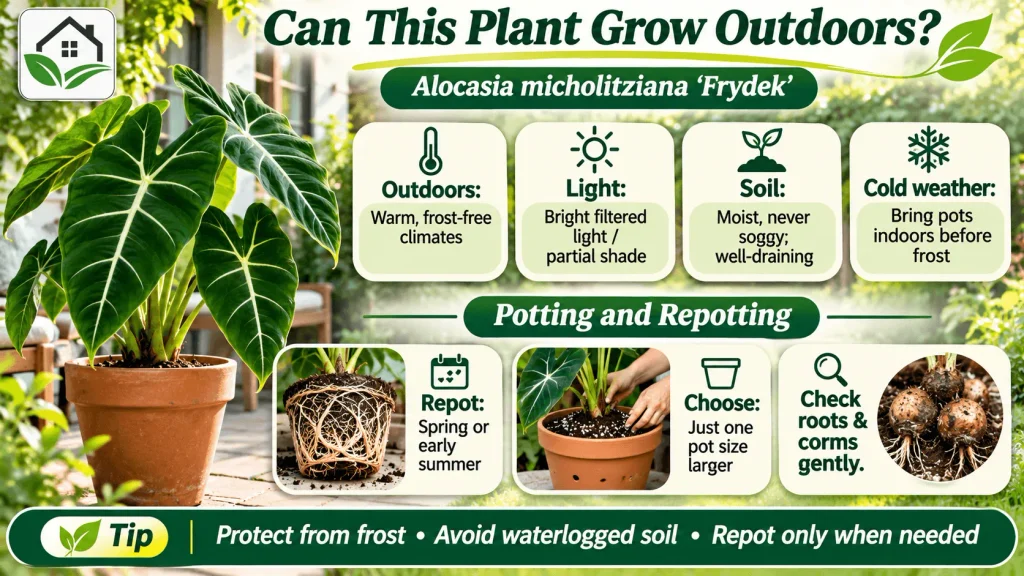
Can be grown outdoors in warm frost-free regions. It should be in bright filtered light or partial shade, but not strong afternoon light.
Outdoor soil should be light in moisture, but allow the soil to drain. The densely packed (indoor pot) soil can be as damaging as heavy, soggy ground.
It is safer to grow in a pot in cooler regions. Move to the indoors before cold weather and shield from cold winds and frost.
Potting And Repotting
Repot this plant when the pot is full of roots, the soil crumbles, water drains through too rapidly, or the plant is unstable. Spring or early summer is generally the optimum time as the plant is going into growth.
It does not require frequent repotting. If it’s a healthy plant and the water is still flowing through the mix, it will be okay if it’s just a little too tight.
Select a pot that is just one size larger. There is excess wet soil around the roots in a large pot that may cause root rot before the plant has grown into the pot.
Repotting is also an opportunity to look for corms. Take care of the roots; the frydek may fall over for a brief period after moving.
First 7 Days After Buying Alocasia Frydek
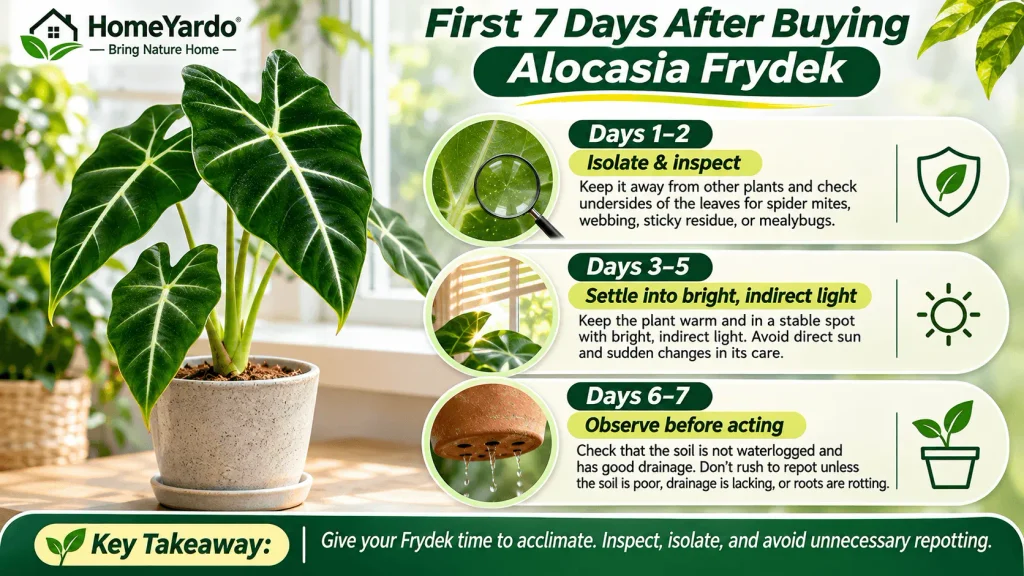
The first week is a very important one. The baby Alocasia Frydek has often spent its growing years in warm, humid growing conditions before being transplanted to a very different environment.
Isolate it initially from other plants. Look for spider mites, webs, speckling, sticky residue or cottony insects on the underside of the leaves.
Don’t repot right away unless the soil is really bad, there is no drainage in the pot or the roots are rotting out. Put the plant in bright indirect lighting and warm it up; allow the plant to acclimatize.
Some droop after purchase is possible. Take it gently and gradually, and don’t make major shifts in its care during the first few days, as excessive “helping” can exacerbate stress.
How To Propagate Alocasia Frydek?
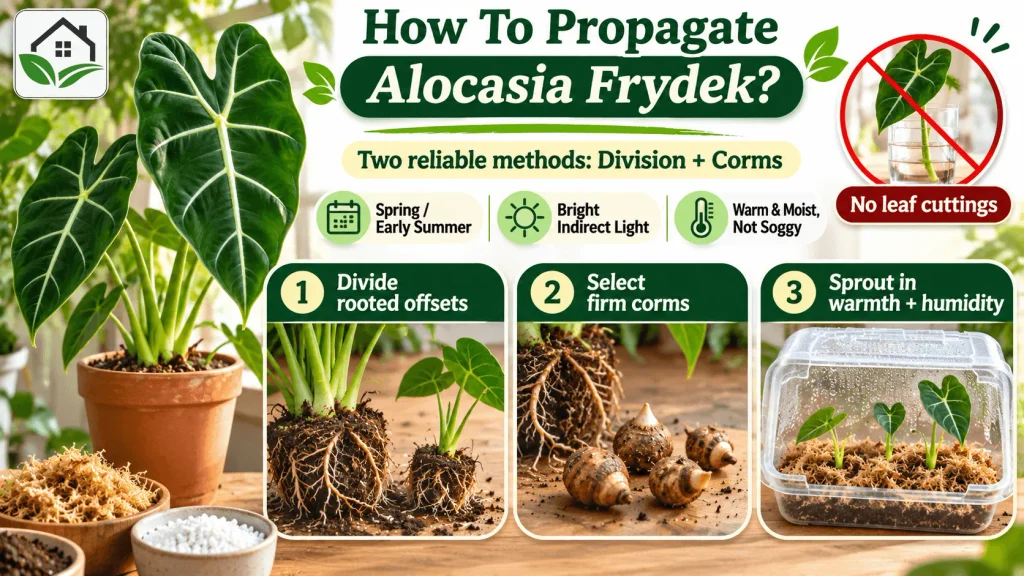
Alocasia Frydek propagation starts by division or corms. Unlike pothos, it will not grow from a simple cutting of a leaf in water, so one leaf in water will not regenerate a whole new plant.
Propagation is best in the spring or early summer. A healthy plant growing is more capable of recovery.
Small corms can form around the roots of mature plants. With warmth, moisture and patience, these firm little structures can grow to baby frydek plants.
How To Propagate This Plant By Division
Division is best done when the plant has 2 or more crowns, growing points or offsets. Roots and a growth point are needed for each division to survive.
Water the day before and take the plant from the pot, gently loosening the soil. Search for a natural division that does not involve excessive scissor action.
Use clean hands or a sterilized blade (if necessary). Divide and pot in light indirect, warm, moist conditions until established.
It is normal for some plants to droop after division. The roots have been disturbed and calm is preferable to constant moving and extra fertilizer.
Can Alocasia Frydek Grow From Corms?
Yes, it can be propagated from the corms that are located near the roots of established plants. Bulbs with a small, corm-like shape store energy.
Corm should feel firm. Usually damaged or dead, soft, hollow or mushy corms will not survive.
Division is faster than corm propagation. Some sprout in a few weeks, others in months before they produce a root or shoot.
How To Grow Alocasia Frydek Corms?
It is good practice to gather firm corms when repotting. Only gently clean them and remove loose brown husks if they can be easily removed.
Arrange in moist sphagnum moss, perlite, peat moss or shallow water. If water is used, don’t submerge the entire corm, and if planted in soil, do not plant it too deeply.
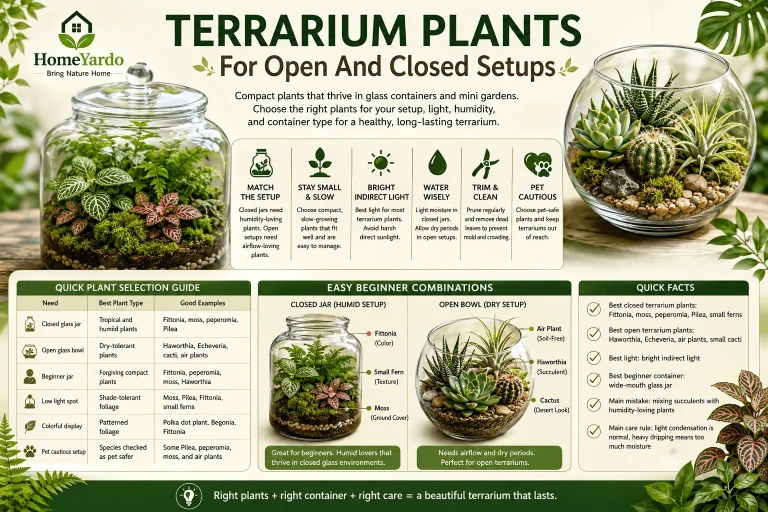
Cover the propagation container with a clear lid or humidity dome to reduce moisture loss. Keep it warm, provide bright indirect light, and allow occasional ventilation to limit mold growth. Similar humidity-management principles are useful when growing terrarium plants, although mature Alocasia Frydek generally needs more space and airflow than a small closed terrarium.
Once the roots and small shoots have appeared, transplant the corm into a small pot filled with light soil. That first little leaf is a big achievement, after weeks of anticipation.
Why Do Alo Frydek Corms Fail?
Corms can often fail due to being dead, hollow, mushy, too cold, too wet, or too dry. A soft corm can’t come back.
The sprouting may be retarded if the humidity is too low, or the corm might be destroyed by soggy conditions before sprouting. If it is buried too deeply, it may also cause difficulties.
Too frequent a corm inspection can disrupt new root formation. Usually, warmth, regular moisture and patience are more effective than frequent poking.
Common Alocasia Frydek Problems And Fixes
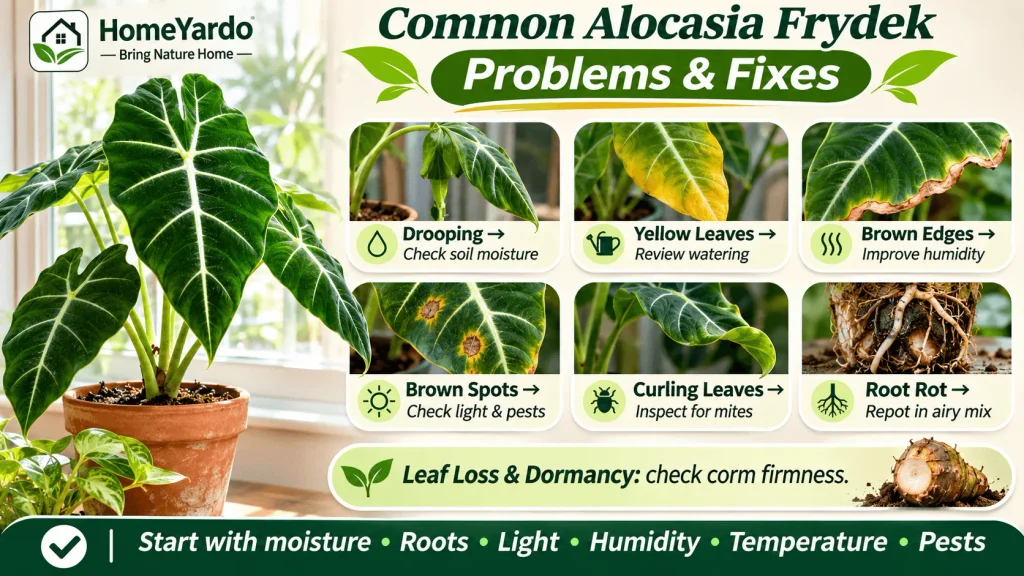
The symptoms of Alocasia Frydek leaves may appear dramatic. The droopy Frydek has a special knack for making everything seem urgent.
The majority of problems always end up with soil moisture, roots, light, humidity, temperature or pests. Go through those basics before you start to guess.
| Problem | Likely Cause | What To Check | Best Fix |
|---|---|---|---|
| Alocasia frydek Drooping leaves | Dry soil, shock, wet roots, low humidity | Soil, roots, recent move | Adjust water and stabilize care |
| Alocasia frydek leaves turning yellow | Overwatering, underwatering, old leaf, cold | Soil, drainage, temperature | Correct moisture and remove dead leaf |
| Alocasia frydek brown edges | Dry air, dry soil, minerals, fertilizer salts | Humidity, soil crust, water quality | Raise the humidity and flush the soil |
| Alocasia frydek brown spots | Sunburn, pests, disease, wet leaves | Leaf underside, light, airflow | Isolate if needed and correct the cause |
| Alocasia frydek leaves curling | Low humidity, pests, heat, dry soil | Humidity, mites, soil | Improve humidity and inspect leaves |
| Alocasia frydek losing leaves | Dormancy, shock, cold stress | Season, bulb firmness, roots | Reduce stress and keep the bulb healthy |
| Alocasia frydek root rot | Soggy soil, dense mix, oversized pot | Mushy roots, smell, wet soil | Trim rot and repot |
| Alocasia frydek spider mites | Dry air, weak plant | Webbing, stippling, leaf undersides | Isolate, rinse, treat early |
The table provides a good point of reference for getting started. The information below can assist in the identification of the symptom to the appropriate fix as there may be more than one cause for the same leaf problem.
Why Is My Alocasia Frydek Drooping?
Drooping is usually a result of dry soil, wet roots, transplant shock, low humidity, low light, or cold drafts. The first thing to check is soil moisture.
If the soil is dry and the pot is light, water well so that the pot is light and the soil barely touches the rim of the pot. Hanging outer leaves may also be an indicator of dryness, which is another possibility.
Root stress is more likely if the soil is wet with the leaves drooping. New plants can also droop from the greenhouse into average home air.
Why are my Alocasia Frydek Leaves Turning Yellow?
Overwatering, underwatering, cold stress, low light, root rot and old leaf decline are all potential causes of yellow leaves. A yellow lower leaf is typically not a problem, especially when it’s an older one.
The simultaneous appearance of several yellow leaves is a cause for concern. Observe if the soil remains moist for too long, if there is enough drainage and if the plant is out of cold drafts.
If the leaf has a crispy edge and is yellow, it may indicate a lack of moisture or humidity. Rot can be indicated by a yellow leaf that has a soft stem or a sour smell in the soil.
Why Does My Alocasia Frydek Have Brown Spots Or Brown Edges?
Dry air, uneven watering, hard water and fertilizer salt buildup are likely causes of brown tips and brown edges. These marks tend to have a crispy appearance.
Sunburn, pests, leaf disease, water on foliage or stress can cause brown spots. Small, mottled spots could indicate spider mites.
Extra care must be taken with wet looking dark spots. If the spots spread, isolate the plant; improve air circulation; do not allow water to stay on the plant leaves.
Why Are My Alocasia Frydek Leaves Curling?
When leaves start to curl, it is most likely a sign of stress. Frequently induced by low humidity, dry soil, heat, pests, and light stress.
Look in the soil before examining the undersides of the leaves. Spider mites will be found there, particularly in dry rooms.
Adjusting humidity and watering promotes better growth of new leaves. It’s normal if older, curled leaves don’t recover their shape.
Why Is My Alocasia Frydek Losing Leaves?
Loss of leaves may occur following shipping, repotting, cold exposure, dormancy or root issues. It is normal for an old leaf to drop off as a new leaf emerges.
Multiple leaf loss that occurs suddenly should be addressed. Run a hand along the base of the plant and roots, if possible.
If the leaves are rough and a firm bulb, the plant may recover. A mushy base is more serious and will frequently indicate rot.
Does Alocasia Frydek Go Dormant?
Yes, it can go dormant or semi-dormant. This is typically at times of the year when it is cooler and darker, or when the animal is under stress.
Growth may slow or halt and leaves may drop. The dormancy is not like death, if the bulb remains firm!
Reduce watering when the plant is not growing, as it consumes less water at this time. Allow the bulb to remain fairly moist, warm and in bright indirect light until growth is once again evident.
How Do I Treat Root Rot In Alocasia Frydek?
Alocasia frydek root rot symptoms may include yellowing, drooping or soft stems, black roots, odor, and wet soil. The plant has a better chance of survival if swift action is taken.
Transplant the plant out of the pot and brush off the old soil. Normal roots are firm and may be pale, tan or light brown. The roots are typically soft, dark, musky, and odorless.
Use clean scissors to cut off any damaged roots. Maintain the firm roots, bulbs and corms, and repot in a new chunky mix with drainage. Carefully irrigate during recovery. Avoid fertilizing until new growth is made.
How Do I Save A Dying Alocasia Frydek?
Use a calm rescue check first. Don’t change everything at once; before changing, consider soil moisture, root health, bulb firmness, temperature, light, and pests.
Place in a warm position in direct light (but not too direct). Increase humidity if the air is low, but do not allow the plant to become smothered in stale, wet air.
If the bulb is hard, it can be recovered. Fertilizer is not recommended during rescue as damaged roots require stability before additional nutrients are added.
Alocasia Frydek Pests And Diseases
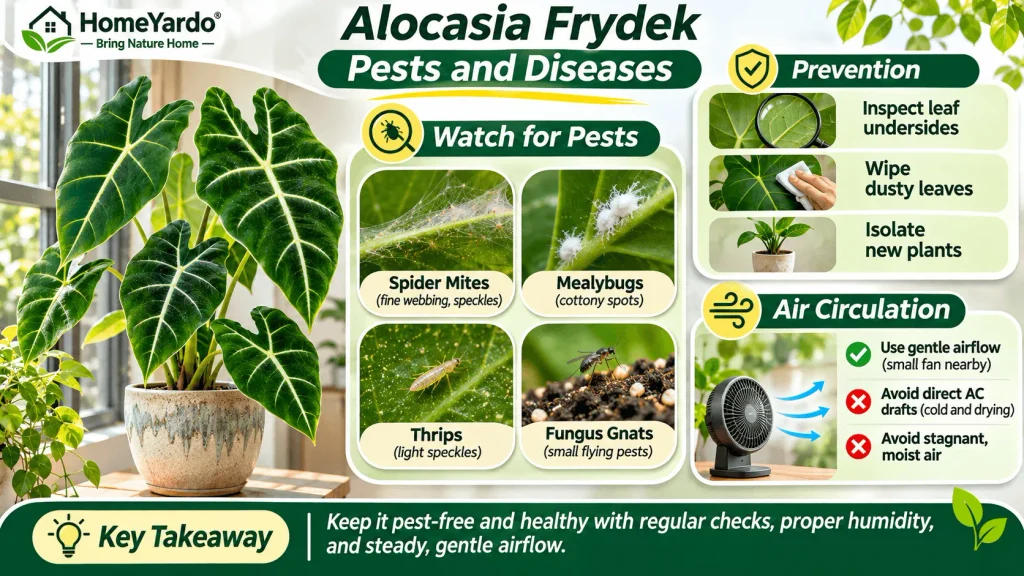
It can draw spider mites, aphids, mealybugs, scale, thrips and fungus gnats. Spider mites are the most important pests to control as they are attracted to dry indoor air.
Regularly inspect the undersides of leaves. Inspect for fine webbing, light speckles, sticky spots, cottony spots or small moving spots.
It’s easier to prevent than clean up. Maintain humidity, gently wipe leaves that are dusty, quarantine new plants and don’t leave the plant weak due to inadequate light and/or watering practices.
Why Air Circulation Matters For This Plant?
It thrives in moist air, but can be affected by fungal issues with humid, stale air. There is a gentle flow of air to prevent moisture from remaining on the leaves for long periods of time.
If not blowing directly at the plant, a small fan can be used nearby. Direct AC flow is unlike the others and is cold and drying. If good airflow feels cool, it is not good. Consider fresh air flow, not a breezy balcony.
Alocasia Frydek Flower
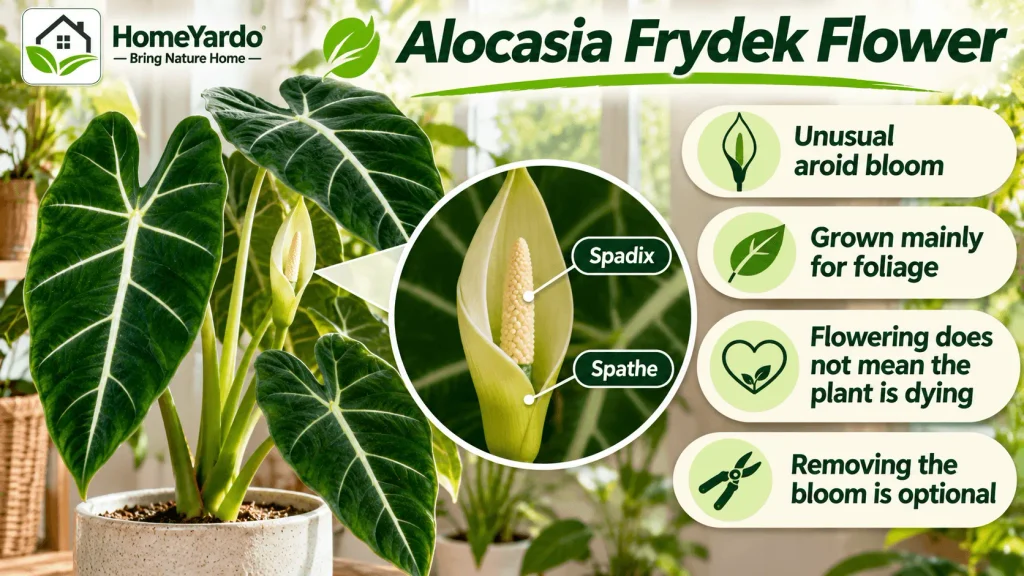
It is sometimes grown for flowering indoors, but is primarily grown for its foliage. The bloom is an aroid inflorescence made of a spadix and spathe.
May not look like the typical flower if expecting a traditional one. It’s a strange form for plants in the aroid family.
Flowering is no big deal and it doesn’t imply death for the plant. A few growers take the bloom to allow the plant to grow its leaves, but it is also okay not to remove the bloom.
Alocasia Frydek Vs Variegated Alocasia Frydek
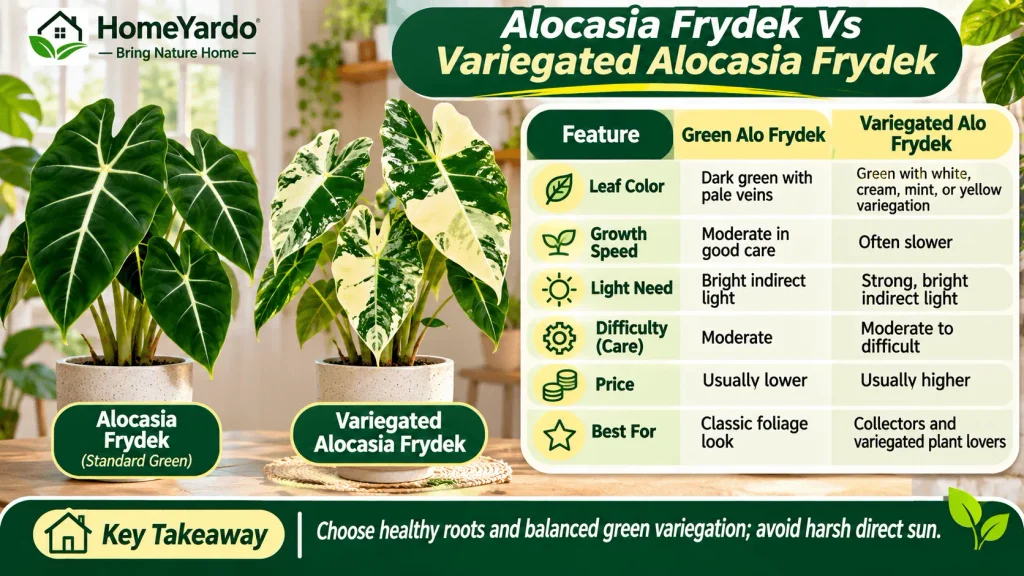
The leaves of Standard Alocasia Frydek are dark green and velvety with light veins. The leaves of Variegated Frydek are green with white, cream, mint or yellow variegation.
Variegated Frydek has areas of pale foliage containing less chlorophyll, which can contribute to slower growth. Similar differences appear in variegated Monstera varieties, where the balance between green and pale leaf tissue can affect growth and care requirements. Maintaining sufficient healthy green foliage is especially important for highly variegated plants.
| Feature | Green Alo Frydek | Variegated Alo Frydek |
|---|---|---|
| Leaf Color | Dark green with pale veins | Green with white, cream, mint, or yellow variegation |
| Growth Speed | Moderate in good care | Often slower |
| Light Need | Bright indirect light | Strong, bright indirect light |
| Difficulty | Moderate | Moderate to difficult |
| Price | Usually lower | Usually higher |
| Best For | Classic foliage look | Collectors and variegated plant lovers |
Variegated Frydek growth can be suppressed and the quality of leaves may be lowered under low light. Bright indirect light is preferable, although the sun will burn the leaves if it is too intense.
Is Variegated Alocasia Frydek Worth It?
It may be worth it to collectors who appreciate unusual foliage and are able to give it consistent care. Requires Warmth, Humidity, proper watering and bright, indirect light.
It is not ideal for a low-maintenance plant. If a plant doesn’t grow well, this can be frustrating because it is more expensive and slower.
Prior to purchase, examine the balance of roots, foliage and variegation. Plants with green leaves will grow better than those with almost white leaves.
Is Alocasia Frydek Toxic To Cats, Dogs, And Children?
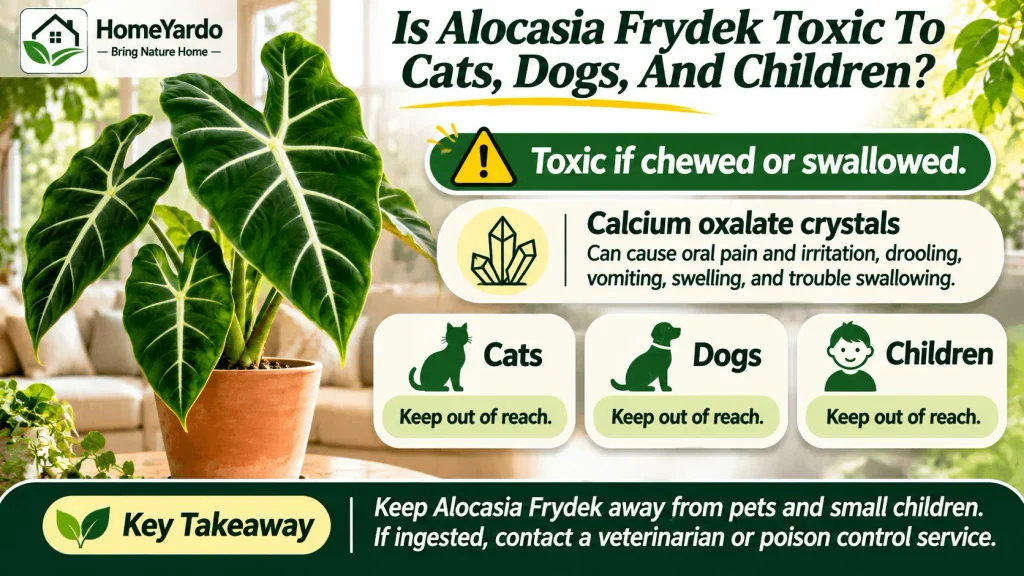
It must be regarded as poisonous when ingested. This includes the risk to cats, dogs or children who chew or bite leaves of plants.
The plant is poisonous due to calcium oxalate crystals. These may lead to pain in the mouth, salivation, vomiting, swelling and difficulty swallowing.
If children and pets explore with their mouths, keep the plant away. If your pet consumes a portion of the plant, see your vet or a poison control centre.
Safety Note: Do not put this plant in reach of cats, dogs or small children. A little poking around can irritate.
Where Can I Buy Alocasia Frydek?
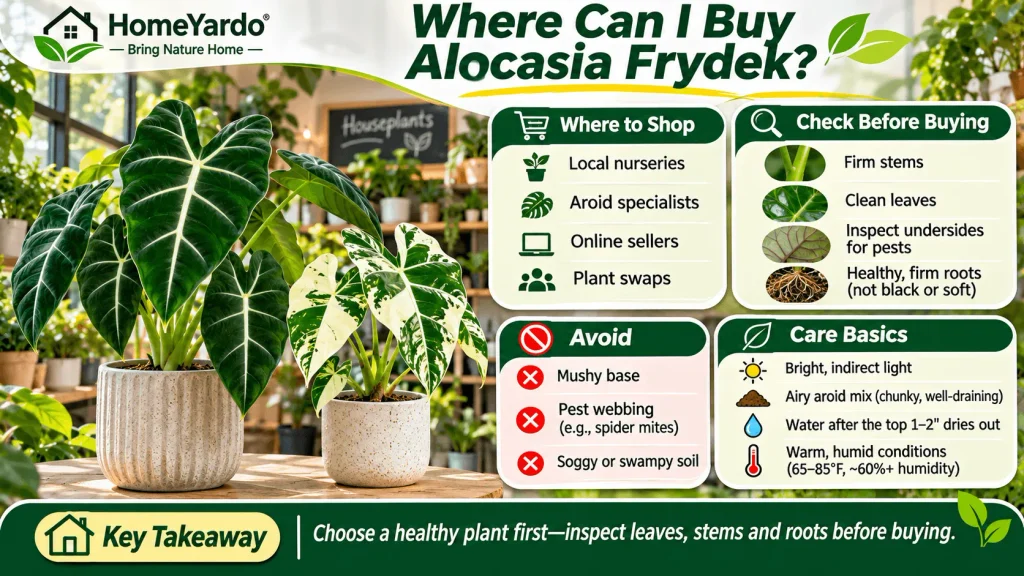
This plant is available at houseplant shops, online houseplant stores, specialty aroid shops, and plant swaps. The green form is typically more readily available than the variegated form.
The prices are dependent on the size of the plants, their health, season, sellers and variegation. It is generally easier to find a small green Frydek than a larger variegated plant.
When shopping, you can examine the plant carefully up close and personal. Online purchasing is a possibility as well, but it’s important to have good photos, reasonable shipping costs, and a healthy plant policy.
What Should I Look For When Buying Alocasia Frydek?
Check for firmness of stems, clean foliage and lack of webbing. Look on the underside of leaves for pests.
Do not purchase plants that have mushy bases, sour-smelling soil, sticky residue, cottony pest clusters or swampy potting mix. The roots should be firm and not black and soft.
In the case of variegated Frydek, select a plant that has variegation and a sufficient amount of green tissue. A healthy plant with a balance of both green and white leaves will always be better than a plant that has predominantly white leaves.
Care Checklist
A care checklist for common problems is used to prevent them at the outset. Maintain its regular schedule and watch for small signs in the early stages.
- Put in sunny, but indirect, light.
- Irrigate when the upper 1-2″ dries out.
- Fill with chunky aroid soil.
- Maintain humidity levels ≥ 60% if possible.
- Maintain the temperature at 65-85 degrees F.
- Do not place AC units in cold drafts.
- Feed sparingly in spring and summer.
- Check weekly for spider mites.
- Repot if necessary.
- Water sparingly during the non-growing season.
- Avoid handling pets and children.
The most important habit is frequent observation. Many problems can be detected by a quick look at the underside of the leaves, stem and soil.
FAQ’s
It has moderate care needs. It reacts quickly to dry air, poor watering, cold drafts, and dense soil. Once light, water, humidity, warmth, and drainage are steady, it becomes much easier to manage.
Yes, they usually refer to the same plant. The name Green Velvet comes from its dark, soft-looking foliage. Its botanical name is Alocasia micholitziana ‘Frydek’.
This can be worth it for collectors who can provide bright indirect light, warmth, humidity, and careful watering. It is usually slower, pricier, and less forgiving than the green form, so it is not ideal for every beginner.
It may tolerate lower light for a short time, but it will not grow its best there. Leaves may become smaller, stems may weaken, and growth can slow. Bright indirect light is better for healthy indoor growth.
Brown tips often come from dry air, dry soil, mineral-heavy water, or fertilizer salts. Check humidity, watering consistency, and water quality first. If the soil has salt buildup, flushing the pot may help.
Cost depends on plant size, seller, season, and whether the plant is green or variegated. Small green Frydek plants are usually more affordable than mature plants. Variegated AloFrydek often costs more because it grows more slowly and is treated as a collector plant. Always check plant health, roots, shipping policy, and pest signs before buying.
Yes, it is toxic to dogs if chewed or eaten. The plant contains insoluble calcium oxalate crystals that can irritate the mouth, tongue, throat, and stomach. Signs may include drooling, vomiting, pawing at the mouth, swelling, or trouble swallowing. Keep the plant out of reach and contact a veterinarian if a dog eats any part of it.
It is not considered safe for children who may chew or bite plants. It can irritate the mouth and throat if ingested because of calcium oxalate crystals. As a display plant, it can be kept in homes with children only when placed well out of reach. Wash your hands after handling damaged leaves, sap, roots, or corms.
The best time to propagate is in spring or early summer. During this period, the plant is usually entering active growth and can recover more easily after root disturbance. Avoid propagation when the plant is stressed, dormant, rotting, or recently shipped. A healthy plant with firm roots, corms, or multiple crowns gives better results.
Corms can sprout in a few weeks, but some may take several months. Warmth, moisture, high humidity, and bright indirect light help speed up growth. A firm corn has a better chance than one that feels soft, hollow, or mushy. Avoid checking too often because small new roots can break easily.
It is propagated by division or corms, not by single leaf cuttings. For division, separate a rooted offset or crown from the parent plant and pot it in airy soil. For corms, place firm corms in moist sphagnum moss, perlite, or shallow water with high humidity. Keep them warm and move them into soil once roots and a small shoot appear.
To treat root rot, remove the plant from its pot and inspect the roots. Cut away soft, black, mushy, or smelly roots with clean scissors. Repot the healthy roots, bulb, or firm corms into fresh chunky soil with good drainage. Water lightly during recovery and avoid fertilizer until new healthy growth appears.
It usually grows around 2 to 3 feet tall and wide indoors. Size depends on light, humidity, warmth, pot size, soil quality, and overall care. Young plants may stay smaller for a while before producing larger leaves. In bright indirect light with steady humidity and careful watering, the plant can develop a fuller upright shape.
It grows at a moderate pace when indoor conditions are warm, bright, and humid. Growth is usually faster in spring and summer and slower in fall or winter. Low light, dry air, cold drafts, root stress, or dense soil can slow new leaves. Healthy plants may produce new growth regularly during the active season, but they are not as fast as easy vines like pothos.
References
- https://plnts.com/en/care/houseplants-family/alocasia-frydek
- https://www.thespruce.com/alocasia-frydek-growing-guide-5225402
- https://www.gardeners.com/blogs/gardening-tips/alocasia-frydek-care-7911
- https://www.ohiotropics.com/2019/12/19/alocasia-frydek-care/
- https://corisears.ca/alocasia-frydek-how-to-grow-the-green-velvet-alocasia/
- https://www.gardenia.net/plant/alocasia-micholitziana-frydek-green-velvet
- https://bwhplantco.com/blogs/care-guides/variegated-alocasia-frydek-the-complete-guide
- https://plantaddicts.com/variegated-frydek-alocasia
- https://powo.science.kew.org/taxon/urn:lsid:ipni.org:names:84208-1
- https://www.aspca.org/pet-care/aspca-poison-control/toxic-and-non-toxic-plants/alocasia