How A New Deck Adds Value To Your Home

Imagine stepping outside and finding a comfortable place to enjoy your garden. Later, the same space becomes somewhere to share dinner, welcome friends, or watch the children play. A new deck creates these possibilities by turning an underused outdoor area into a practical extension of your home.
A well-designed deck can add value to a home in several ways. It improves everyday comfort, creates more usable outdoor space, enhances the property’s appearance, and may make it more attractive to potential buyers.
The greatest benefits come from thoughtful planning. When the size, materials, and layout suit the property and the people living there, a deck can remain useful and appealing for years.
Turn Outdoor Potential into Everyday Use
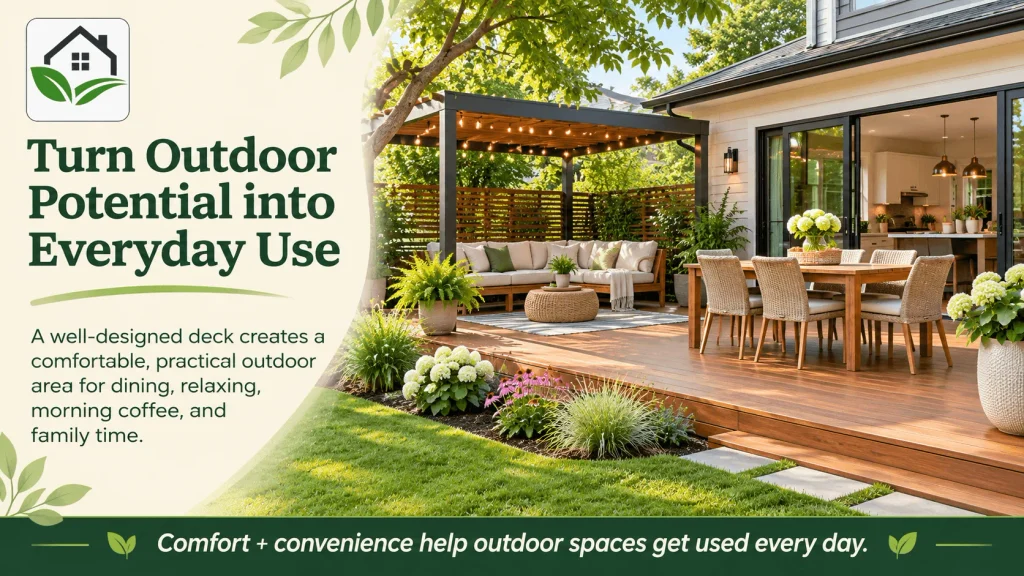
Many gardens have space that looks promising but rarely gets used. Furniture sinks into the grass, the ground feels uneven, or there is no comfortable place to sit.
A deck establishes a defined outdoor area where everyday activities can happen naturally.
A dining table near the kitchen makes outdoor meals easier. A sheltered seating corner offers somewhere to unwind after work. Even a compact deck can provide a practical setting for morning coffee or family conversations.
The difference often comes down to convenience. When an outdoor area is comfortable, accessible, and ready to use, people are more likely to spend time there.
For more ideas on arranging outdoor spaces around daily routines, explore our guide to designing a backyard around your lifestyle.
Give Buyers a Lifestyle to Picture

When potential buyers inspect a property, they often imagine how its rooms and outdoor areas might suit their lives.
A well-maintained deck gives them an easy way to picture outdoor dining, weekend gatherings, or quiet afternoons in the garden.
A simple dining setting can demonstrate how the area works for entertaining. Comfortable chairs and surrounding greenery may suggest a peaceful place to relax.
These details help buyers understand the practical possibilities of the space without elaborate decoration.
A deck that complements the property may also make the outdoor area feel more complete.
Does a New Deck Increase Property Value?
A new deck can increase a home’s resale appeal and may contribute to its market value, but the financial return is not guaranteed.
Its impact depends on factors such as:
- The property’s location and local housing market
- The deck’s size, quality, and condition
- The materials used during construction
- How well the design complements the house
- The total installation and maintenance costs
A deck that provides useful outdoor space without overwhelming the garden may be more appealing than an oversized or expensive installation.
It is also important to distinguish between increased property value and recovering the full cost of construction. Buyers may appreciate a deck without paying enough extra to cover everything the homeowner spent.
Homeowners considering improvements primarily for resale can also explore our guide to home improvements that increase property value.
Bring Warmth to the Exterior
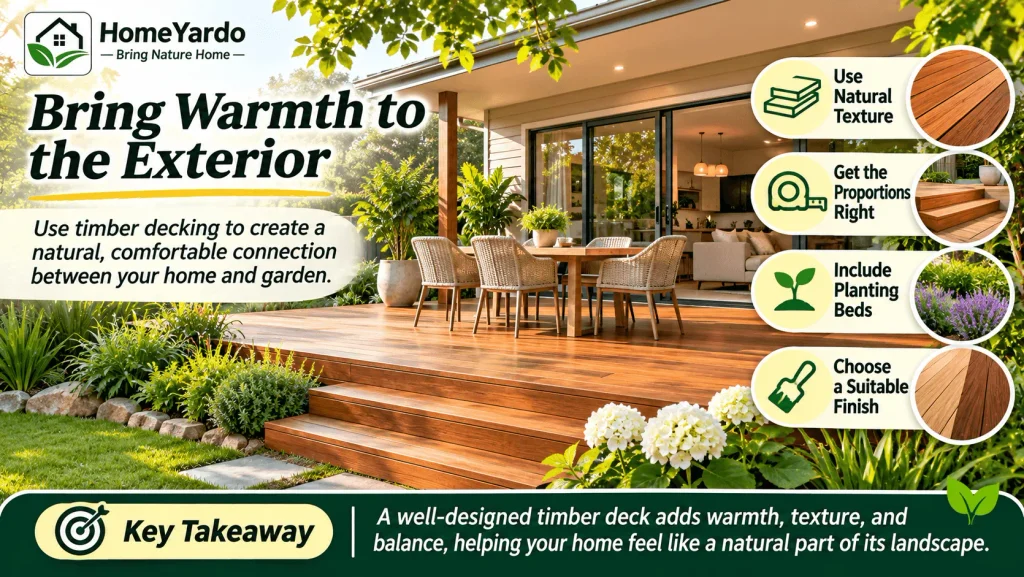
A home can feel disconnected from its garden when the transition consists of bare paving, an uneven lawn, or an awkward step down from the back door.
Timber decking introduces natural texture and warmth, helping the house connect more comfortably with its surroundings.
The right proportions are important. Deck boards, steps, railings, and edges should complement the building rather than compete with it.
Leaving room for planting beds can soften the structure and help it fit into the existing landscape.
Colour and finish also influence the overall effect. Lighter timber tones may suit contemporary homes, while richer finishes can complement traditional exteriors.
Homeowners searching for custom timber decks Gold Coast can use their design discussions to explore how the structure might suit their home’s character, available space, and preferred outdoor activities.
The aim should be a deck that looks like a natural part of the property rather than an addition that feels disconnected.
Create Space That Adapts With You

Household needs change over time, and outdoor spaces should be flexible enough to accommodate them.
A couple might initially want somewhere for quiet breakfasts. Years later, the same area could become a place for visiting grandchildren, family meals, or gatherings with friends.
An open, practical deck makes these changes easier.
Moveable chairs, folding tables, and portable planters allow homeowners to rearrange the space without making expensive alterations.
Permanent seating and built-in storage can also work well, provided they do not restrict movement or limit how the deck can be used.
A flexible layout helps the deck remain useful as the household’s routines and priorities change.
Spend Where It Makes a Difference
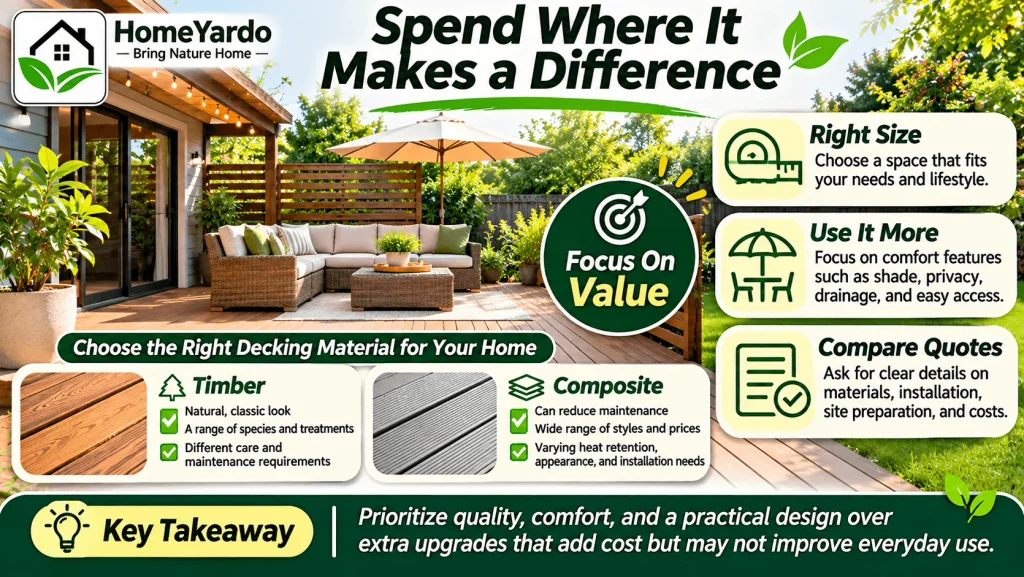
An effective deck does not need every available upgrade.
Decorative lighting, elaborate railings, and expensive finishes can look appealing, but they should not take priority over construction quality, comfort, and practical design.
Start by deciding how much space you actually need.
A compact deck with comfortable seating and convenient access may deliver more everyday value than a larger deck that is difficult to maintain or exposed to intense sunlight.
Consider the features that influence how often you will use the area, including shade, privacy, drainage, and access from the house.
When requesting quotations, ask contractors to explain the materials, installation work, site preparation, and any additional costs.
Comparing quotations based on the same scope of work makes it easier to understand where your money will go.
Choose Decking Materials That Suit Your Home
Material selection affects the deck’s appearance, initial cost, durability, and ongoing maintenance.
Timber creates a natural finish, but different species and treatments have different care requirements.
Composite decking may reduce certain maintenance tasks, although individual products vary in price, appearance, heat retention, and installation requirements.
Neither option is automatically better for every home.
Consider the local climate, sunlight exposure, expected foot traffic, and the manufacturer’s maintenance instructions before choosing.
For a closer look at material considerations, read our guide to chemical-free decking options.
Plan for Safe Construction and Local Requirements
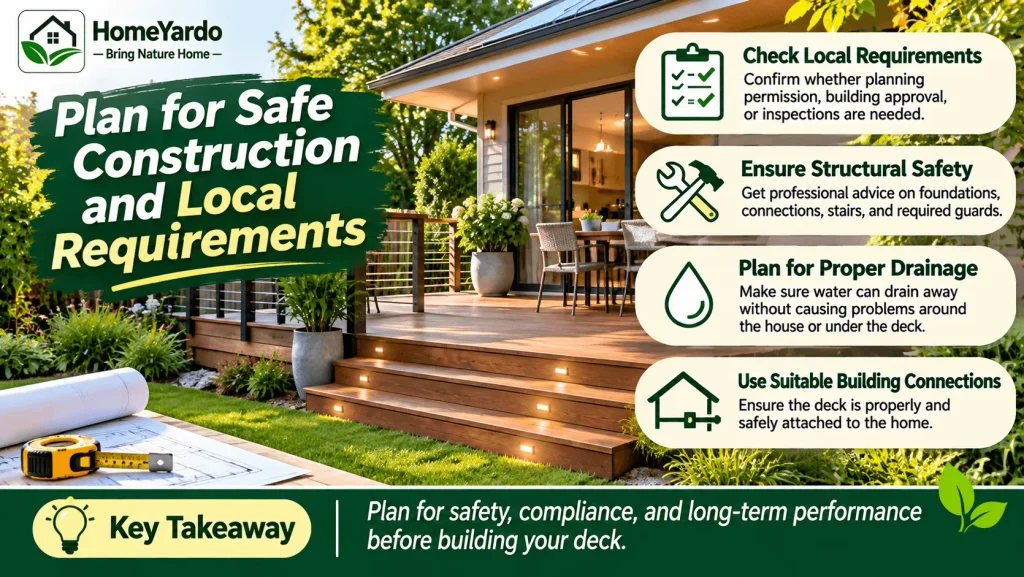
A deck needs more than an attractive surface to provide lasting value.
Proper structural support, safe access, appropriate drainage, and suitable connections to the building all influence its long-term performance.
Before construction begins, check whether local planning permission, building approval, or inspections are required.
Requirements vary depending on location, deck height, design, and other site conditions.
Ask an appropriately qualified contractor or design professional to assess structural requirements, including foundations, connections, stairs, and guards where needed.
Water should also be able to drain away without creating problems around the house or beneath the decking.
Addressing these matters during planning can help prevent expensive changes and reduce the risk of safety problems after installation.
Preserve the Benefits with Regular Care

A deck’s condition affects how comfortable, attractive, and safe it remains over time.
Before choosing a decking material or surface finish, understand the maintenance it requires.
Timber care depends on the species, treatment, climate, and finish. Follow the manufacturer’s recommendations for cleaning, coating, and routine upkeep.
Keep debris from accumulating between boards and around drainage areas. Check accessible surfaces for loose boards, protruding fasteners, splinters, and signs of deterioration.
Pay attention to movement, unstable railings, or visible structural damage. Arrange professional inspection and repairs when necessary.
Regular care helps preserve the deck’s appearance and can prevent smaller problems from becoming more expensive.
Final Takeaway: Build for the Life You Want at Home
A new deck adds value in ways that go beyond resale figures.
It creates room for outdoor meals, family conversations, relaxation, and everyday activities without requiring more indoor space.
Financial returns depend on the property, construction costs, and local market conditions. However, a thoughtfully designed deck can improve how a home looks and feels while making its outdoor space more useful.
Choose a size, layout, and material that suit your needs. Prioritise quality construction and manageable maintenance.
The most rewarding deck is one that continues to serve your household long after the project is complete.
Frequently Asked Questions
Adding a deck may increase a home’s market value by improving outdoor usability and buyer appeal. The financial benefit depends on construction quality, materials, location, and local buyer preferences.
A new deck can be worthwhile when it provides outdoor space that the household will use regularly. Its financial value should be considered alongside installation costs, maintenance requirements, and potential resale benefits.
A well-built deck that suits the property’s size, design, and local climate is often a sensible choice. The best material and layout depend on the homeowner’s needs, budget, and maintenance preferences.
A timber deck can improve a property’s appearance and outdoor functionality. Its contribution to resale value depends on the quality of construction, its condition, and how well it suits the home.
Composite decking may require less routine surface maintenance than some timber products, but it can have a higher initial cost. Timber offers a natural appearance and a range of finishes. The better choice depends on the product, climate, budget, and desired appearance.
Yes, a small deck can improve a home’s usefulness and appeal when it creates a comfortable outdoor area. A compact, carefully designed deck may suit a smaller property better than a large structure.
Permission and permit requirements depend on local building rules, deck height, location, and design. Check with the relevant local authority before beginning construction.
Keep the deck clean, follow the manufacturer’s maintenance recommendations, and address damaged boards, loose fittings, drainage problems, or structural concerns promptly. Regular inspections help protect its appearance and usability.